


More news on this day
U.S. Transportation Secretary Sean Duffy has unveiled a new artificial intelligence backed air traffic tool designed to reduce flight delays at Washington area airports, while emphasizing that human controllers will remain in full control of American airspace.
Get the latest news straight to your inbox!
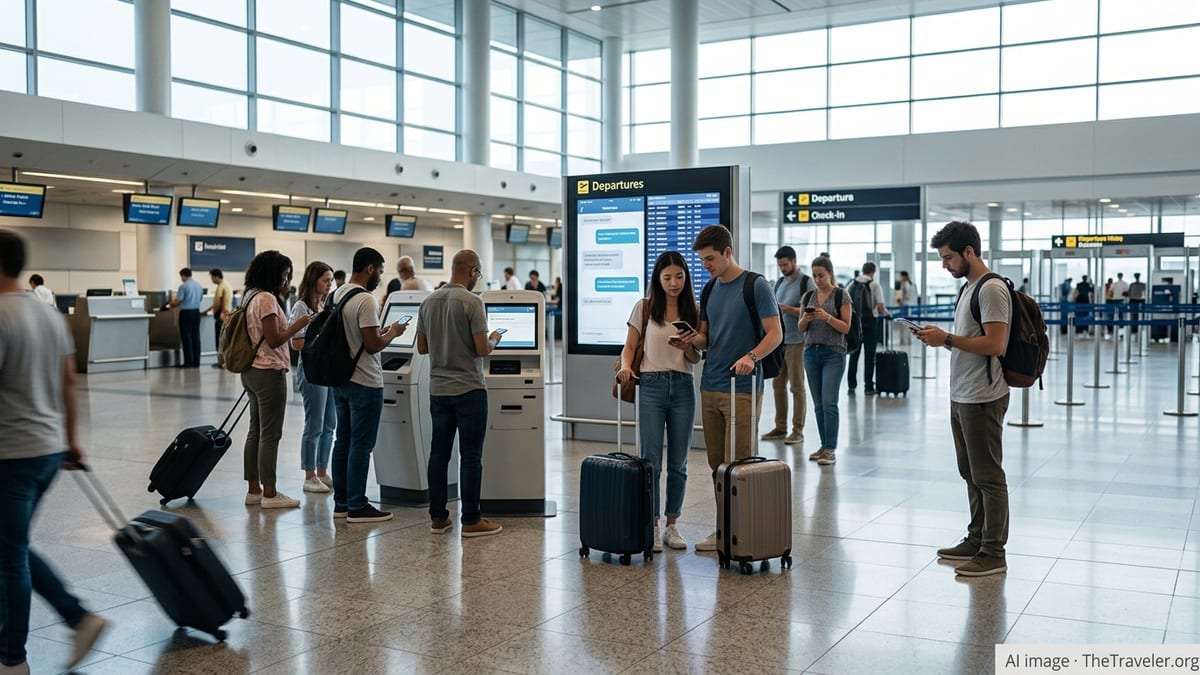
SMART Launches in Washington Testbed After Summer of Disruptions
The Federal Aviation Administration has begun limited live testing of the Strategic Management of Airspace, Routes and Trajectories platform, known as SMART, in the busy airspace around Washington, D.C. The system went into operation this week serving Ronald Reagan Washington National, Washington Dulles International, and Baltimore Washington International Thurgood Marshall airports following a demonstration at the Department of Transportation headquarters.
Publicly available information indicates that SMART is entering service at a time of heightened frustration for U.S. air travelers, after repeated rounds of weather related disruptions and isolated technology outages exposed the fragility of the national air traffic network. Coverage of the launch notes that a communications outage affecting the Northeast on the same day snarled thousands of flights, underscoring the stakes for any tool that promises to keep aircraft moving more smoothly.
According to published coverage, the FAA plans a 90 day initial evaluation focusing on Washington area operations. During this period, officials will compare recommended traffic flows with actual performance to determine how much delay SMART can realistically remove from departure and arrival banks at the three pilot airports.
How the AI Supported SMART Platform Works
SMART is described as a decision support platform that pulls together roughly 200 separate data streams into a single, continuously updated picture for air traffic managers. Reports indicate that these feeds include live radar tracks, filed flight plans, airport arrival and departure schedules, convective weather forecasts, real time storm movement, and staffing information from local control facilities.
The system uses artificial intelligence techniques and predictive analytics to flag likely bottlenecks before they ripple across the network. For example, if thunderstorms are forecast to move over a key departure corridor at a specific time, SMART can identify which runway configurations and departure routes are most likely to become saturated and recommend alternative routing or schedule adjustments while there is still time to act.
Coverage of the launch also highlights another use case involving overlapping arrival peaks. When multiple flights are converging on the same airport within a narrow time window, SMART can suggest modest changes in speeds or routings so that landings are automatically spaced more efficiently. The FAA says these recommendations are presented to human traffic managers, who can accept, modify, or reject them based on their own judgment and local knowledge.
Duffy Stresses Human Control Amid Public AI Concerns
In announcing the rollout, Duffy repeatedly sought to draw a bright line between AI assistance and AI control. According to multiple news reports, he told attendees at the Washington event that there has been extensive public debate about who is controlling the airspace, and that “it is always going to be a human” managing U.S. skies. He framed SMART as a tool that provides better data, not a system that issues binding instructions to aircraft or replaces air traffic controllers.
That emphasis reflects broader unease about artificial intelligence in highly regulated sectors, including aviation. Published accounts note that aviation labor groups have insisted that new systems must complement, not supplant, the training and experience of certified controllers. The FAA has stated that local facility leaders retain the authority to accept or ignore any AI generated suggestion, and that SMART is not authorized to take direct control of aircraft or transmit clearances to pilots.
Duffy’s messaging also aligns with a wider political conversation in Washington about where to draw boundaries around AI in critical infrastructure. By stressing human oversight at every stage, the Transportation Department is positioning SMART as an incremental upgrade to the current system rather than a wholesale handoff of traffic management responsibilities to software.
What Travelers Can Expect in the Near Term
For passengers flying into or out of the Washington region in the coming months, the immediate effects of SMART may be subtle. Reports on the launch note that the tool is aimed at cutting preventable delays and cancellations, reducing wasted fuel, and creating more predictable operations over time rather than delivering an overnight transformation of the travel experience.
Duffy has indicated that the agency intends to “slow roll” the deployment, with expectations focused on measurable improvements by the summer 2027 travel season rather than the upcoming winter holidays. Because the current test is limited to three airports, its impact on nationwide on time performance will depend on how quickly the FAA decides to expand the platform to other regions once initial results are analyzed.
Published information from the Department of Transportation suggests that benefits could eventually extend beyond shorter waits at the gate. By allowing airlines and controllers to anticipate constraints earlier in the day, the system is expected to reduce last minute ground holds, lower overtime needs for ground staff, and decrease fuel burn from extended taxi and holding patterns. Industry coverage notes that, over time, those savings could help ease cost pressures that contribute to higher ticket prices, though no specific forecasts have been released.
Part of a Broader Airspace Modernization Push
The debut of SMART fits into a larger modernization program that the FAA and Department of Transportation have been promoting throughout 2026. Public briefings over the past year have highlighted efforts to retire aging hardware and software, replace paper based workflows in control towers, and overhaul legacy systems used for notices to air missions and route planning.
Reports indicate that the FAA awarded a long term contract earlier this year to a private technology provider to support development and operation of the SMART platform, with a potential value in the hundreds of millions of dollars over more than a decade. The contract is one of several major investments the agency is making in data infrastructure as it seeks to handle growing traffic volumes without proportionally increasing controller headcount.
Industry analysts quoted in recent coverage view the Washington rollout as an important test of whether AI enhanced tools can win the trust of controllers, airlines, and the traveling public. If the evaluation shows meaningful reductions in delay minutes without eroding safety margins or human authority in the cockpit and tower, SMART could become a template for similar systems in other congested regions around the world.