


More news on this day
The Bilaspur division of South East Central Railway in central India has brought a new digital monitoring hub online, introducing an advanced live train oversight system that aims to tighten safety, reduce delays and prepare the busy freight‑and‑passenger corridor for future growth.
Get the latest news straight to your inbox!
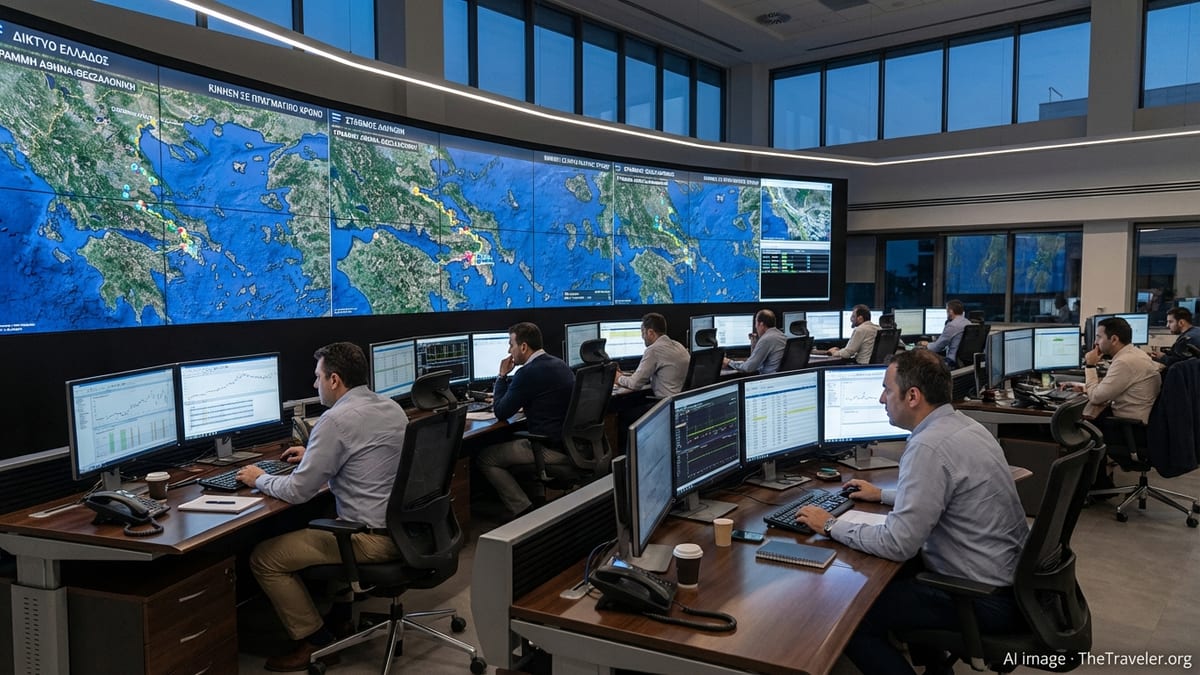
New live monitoring system comes online in Bilaspur
Recent coverage from regional media describes how the Bilaspur division has commissioned an advanced Live Train Monitoring System that aggregates data from across key sections of the South East Central Railway network into a single digital control environment. Reports indicate that the platform provides dispatchers with a continuously updated view of train movements, infrastructure status and operational alerts across the division.
According to published coverage, the system is housed within a modern control office set up at Bilaspur, the zonal headquarters of South East Central Railway, which serves parts of Chhattisgarh, Madhya Pradesh, Odisha and Maharashtra. The zone is recognised as one of Indian Railways’ heavy‑haul freight corridors, particularly for coal, and also carries dense passenger traffic, placing a premium on precise traffic management and fast incident response.
Information available through tenders, digital initiatives and divisional documents shows that Indian Railways has been progressively shifting from paper‑based and voice‑driven control to integrated electronic platforms. The new Bilaspur monitoring hub aligns with this wider trend by fusing location, signalling, commercial and maintenance information into a consolidated dashboard view for controllers.
By centralising information on a large video wall and workstation displays, the Bilaspur control team can see conflicts building in real time, from converging trains to work blocks or infrastructure restrictions, and adjust paths or priorities before those conflicts translate into delays on the ground.
How the next‑generation digital hub works
Technical descriptions of Indian Railways control systems and recent case studies on live train monitoring indicate that the Bilaspur hub draws on multiple feeds, including train describer data from signalling systems, crew and rake availability, timetable information, and reports from field staff. These feeds are stitched together by software that plots each train’s current position, schedule adherence and expected arrival times at upcoming stations.
Published material on similar command and control centres shows that advanced hubs rely on high‑capacity telecom links, resilient power supply and redundant servers to ensure 24x7 availability. South East Central Railway’s own digital initiatives, including purpose‑built communication networks along core routes, suggest that the Bilaspur centre sits on top of a modern fibre and IP network designed specifically for railway operations.
In practice, this architecture allows controllers to zoom from a zone‑wide schematic down to the level of individual signals or block sections. When a disruption occurs, such as a speed restriction, infrastructure failure or path conflict, the system automatically highlights affected trains and recalculates how far delays are likely to propagate. Controllers can then re‑sequence crossings and overtakes, or arrange diversions and regulated halts, with a clearer view of system‑wide effects.
The hub’s design also reflects a shift toward predictive rather than purely reactive control. By continuously comparing real‑time data with planned timetables and historical performance, the software can flag sections that are trending toward congestion before headways are visibly compromised, giving staff a longer window to intervene.
Implications for safety, punctuality and passenger experience
Control organisation manuals and disaster management plans on Indian Railways highlight that a central control room is already regarded as the nerve centre of train operations. The Bilaspur division’s move to a fully digital monitoring hub builds on that foundation by improving the speed and quality of information that flows into operational decisions.
From a safety perspective, a unified live view of train movements helps reduce the risk of miscommunication between stations, maintenance teams and controllers. When work blocks, speed restrictions or exceptional loads are entered into the system, they become visible across the network map rather than remaining in local logs or voice messages. This supports more consistent enforcement of safety margins and better coordination during emergencies or restoration work.
For punctuality, near real‑time monitoring of running times and dwell durations allows staff to identify bottlenecks while trains are still on the move. Experience from other integrated command centres in Indian Railways and on dedicated freight corridors suggests that this kind of visibility can translate into higher average speeds, fewer unscheduled halts and improved right‑time arrivals, particularly on busy mixed‑traffic routes.
Passengers, in turn, can benefit from more reliable schedules and clearer information. As back‑end systems become more accurate, public‑facing channels such as station displays and mobile applications can draw on the same data being used in the control room, narrowing the gap between operational reality and what travellers see on their screens.
Part of a wider digital push across Indian Railways
The roll‑out of a next‑generation monitoring hub in South East Central Railway is emerging alongside a broader digital modernisation drive across Indian Railways. Annual reports, telecom project summaries and operational planning documents describe a transition toward integrated command and control centres, common operational data platforms and application‑based workflows for staff.
Within the SECR zone itself, digital tools already extend beyond train movement control to areas such as asset management, staff workflows and passenger services. A growing family of mobile and web applications has been created to handle tasks ranging from maintenance approvals to performance tracking, reflecting a shift to data‑driven decision making across departments.
At the national level, other zones and specialised corridors have commissioned similar operations control centres that bring together signalling, power, rolling stock and commercial data in one location. These facilities are often cited in public documents as key enablers for higher‑speed operations, automatic train protection technologies and more fine‑grained capacity planning.
Observers note that South East Central Railway’s new hub effectively positions the zone to plug into this evolving national digital ecosystem. By standardising how operational data are collected and visualised, the Bilaspur centre can more easily exchange information with neighbouring zones and freight corridors, a critical factor on long, inter‑zonal routes.
Preparing a freight‑heavy corridor for future growth
Indian Railways organisational data show that South East Central Railway manages some of the country’s most important mineral and coal routes, with a high proportion of its traffic made up of heavy freight trains interwoven with passenger services. This mix creates operational complexity, as controllers must balance tight passenger schedules with the pathing needs of long, heavy freights that accelerate and brake more slowly.
By providing a consolidated real‑time picture of how freight and passenger flows interact across the network, the Bilaspur digital monitoring hub offers planners a new tool for capacity analysis. Over time, historical data from the system can be mined to identify chronic pinch points, test alternative timetabling patterns and evaluate the impact of new infrastructure or signalling upgrades before they are built.
Preparedness for disruption is another focus. Disaster management plans for SECR and other zones emphasise the value of unified command centres during incidents such as derailments, extreme weather or infrastructure failures. With its video wall, data feeds and communication links, the Bilaspur hub can serve as a coordination point for multi‑agency responses, providing a clearer operational picture than was possible with traditional paper train charts.
As Indian Railways continues to pursue higher line speeds, greater electrification and wider deployment of automatic train protection, digital monitoring hubs like the one now active in South East Central Railway are expected to play a central role. For travellers and freight customers using this pivotal central Indian corridor, the shift to real‑time, data‑driven operations is intended to translate into safer journeys and more dependable schedules in the years ahead.
Bilaspur division live train monitoring coverage
South East Central Railway official information