


More news on this day
A semi trailer was sliced in two after a collision with a train near Hartley, Iowa, prompting an emergency response, disrupting traffic in the rural area, and renewing attention on rail crossing safety in the region.
Get the latest news straight to your inbox!
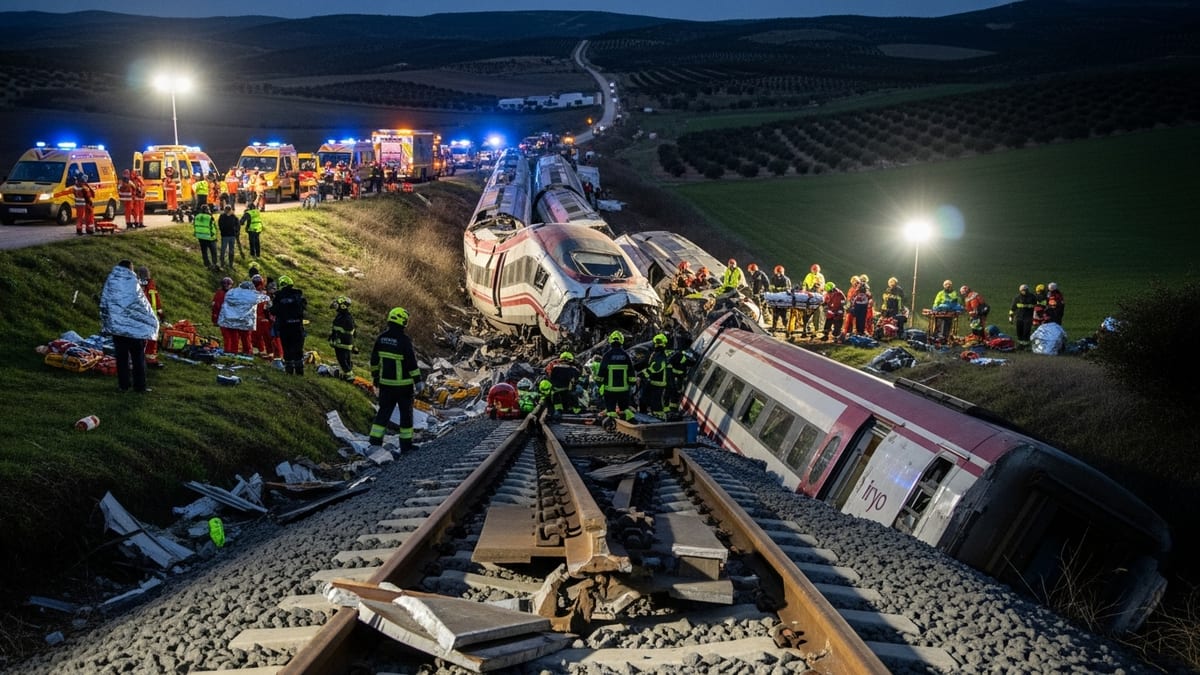
Collision Near Hartley Severely Damages Semi Trailer
Reports indicate that the crash occurred at a grade crossing near Hartley, a small community in northwest Iowa, when a freight train struck a semi trailer that was on the tracks. Initial descriptions from local coverage describe the force of the impact as strong enough to shear through the trailer, leaving it effectively cut in half and scattering debris along the right of way.
Publicly available information suggests the trailer was loaded at the time of the impact, contributing to the dramatic scene as cargo spilled alongside the tracks. The tractor portion of the rig appeared to remain largely intact, consistent with other recent rail-semi collisions in the region in which trailers have absorbed most of the force of impact.
Early summaries from the scene did not indicate any fatalities. Any injuries reported so far appear to be minor compared with the extent of property damage, although a full accounting is typically completed only after formal crash reports and railroad incident documentation are compiled.
The collision took place in an area where agriculture and trucking are central to the local economy, and where farm-to-market routes frequently intersect with active freight rail corridors. The combination often results in heavy truck traffic across rural grade crossings that may have more limited warning infrastructure than urban locations.
Emergency Response and Disruption to Local Travel
Following the collision, local law enforcement, fire services, and medical responders converged on the crossing, with access roads around the site temporarily blocked to allow emergency crews to work. Nearby residents and motorists were asked to avoid the area while responders assessed potential fuel leaks, cleared debris, and coordinated with railroad personnel.
Road traffic around the crossing was diverted, with some vehicles routed onto parallel gravel roads and section-line routes that form the backbone of the rural roadway network in that part of Iowa. For drivers unaccustomed to those alternatives, the detours added both travel time and navigation challenges.
Rail traffic on the affected line was interrupted while crews inspected the track and the locomotives involved. In comparable incidents elsewhere in Iowa, publicly available railroad and state transportation records show that trains are typically held until track geometry is verified, debris is removed, and the integrity of signaling and communications equipment near the crossing is confirmed.
Depending on the extent of damage to both the train and the track, clearance and repair work can range from a few hours to much longer closures. Freight railroads in Iowa have repeatedly emphasized the need to restore service quickly while also documenting incidents thoroughly for federal reporting databases.
Crossing Conditions and Ongoing Safety Concerns
The Hartley-area crash comes amid a broader pattern of serious rail-vehicle collisions across Iowa and neighboring states. Published coverage over recent months has highlighted other train-versus-semi crashes in rural settings where crossings may lack full sets of gates and flashing lights, or where road profiles create sharp humps that can challenge longer trailers.
Federal Railroad Administration incident summaries and state transportation reports describe recurring risk factors at rural grade crossings, including limited sight lines, higher train speeds on mainline tracks, and truck drivers navigating unfamiliar or poorly signed routes. In several recent cases, semi trailers have become stuck or high-centered on tracks, or have attempted to cross with insufficient time as trains approached.
Rail safety advocates often point to these incidents as evidence of the need for continued investment in crossing upgrades, such as improved signage, better approach grades, or the installation of active warning devices where traffic volumes justify the cost. Iowa rail and roadway agencies have recently publicized projects elsewhere in the state that aim to rebuild aging crossings and smooth approaches for heavy trucks.
In addition to physical improvements, many safety campaigns stress driver awareness at rural crossings, especially for commercial vehicle operators hauling long or low-clearance trailers. Training materials for truck drivers typically emphasize stopping well before tracks when necessary, verifying that there is adequate space to clear a crossing completely, and treating passive crossings with the same caution as signalized locations.
Impact on Freight, Agriculture, and Regional Travel Patterns
The Hartley area is a hub for grain, livestock, and agricultural inputs, and both trucks and trains play critical roles in moving commodities to and from local elevators, ethanol plants, and processing facilities. A collision that severely damages a semi trailer and halts train movements, even temporarily, can ripple through local supply chains, especially during peak shipping periods.
When incidents of this type occur, trucking firms often need to reposition equipment, reroute drivers, and manage delays in pickup and delivery schedules. Farmers and agribusinesses relying on just-in-time shipments of feed, fertilizer, or grain marketing contracts may encounter short-lived disruptions while damaged equipment is recovered and replacement capacity is arranged.
On the rail side, freight carriers typically adjust train lineups to work around a blocked segment, sometimes holding trains upstream, sending reroutes over parallel lines where available, or assembling work trains with equipment to repair track and signaling infrastructure. In regions with relatively sparse rail networks, a single blocked main line can affect movements over a wide area.
Even after a crossing reopens, damaged roadside infrastructure, signage, or signal equipment may require follow-up maintenance, meaning that travel patterns and driver expectations can remain altered for days or weeks after the initial crash.
Investigations and Potential Safety Measures Ahead
As with other train-vehicle collisions in Iowa, the Hartley-area crash is expected to be documented in both state crash records and federal rail safety databases. These records typically include information on weather and lighting, the type of warning systems in place at the crossing, train speed, vehicle movements, and the condition of both roadway and track.
Publicly available summaries of past incidents show that investigators often examine whether vehicles stopped at or near the tracks, whether any mechanical issues played a role, and how long warning signals, if present, were active before impact. For commercial vehicles such as semi trailers, attention may also turn to cargo loading, trailer configuration, and any company safety policies relevant to route planning and rail crossings.
Findings from such investigations sometimes feed into broader safety initiatives, including grant-funded programs to upgrade crossings or adjust roadway approaches. Transportation agencies in Iowa have recently highlighted projects, supported in part by state and federal funds, that focus on rebuilding rail crossings and improving surfaces at locations carrying substantial truck traffic.
For residents and travelers near Hartley, the sight of a semi trailer torn in half by a freight train serves as a vivid reminder of the risks present wherever rail lines intersect with public roads. As officials compile data and consider potential improvements, the incident adds to an ongoing regional conversation about how best to balance the needs of freight movement with the safety of drivers using rural crossings every day.