


More news on this day
Travel across the Philadelphia region was severely disrupted on Wednesday morning after a SEPTA Regional Rail train derailed in North Philadelphia, triggering widespread suspensions, long delays and crowded platforms at key hubs.
Get the latest news straight to your inbox!
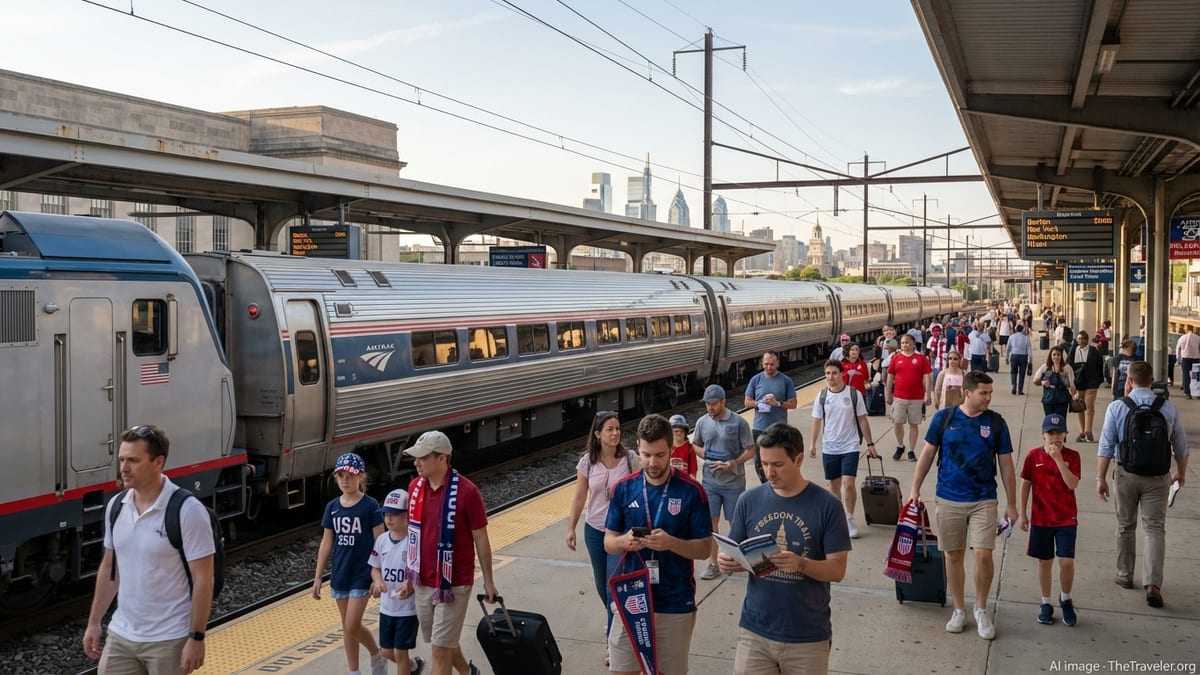
Derailment in North Philadelphia Halts Multiple Lines
Reports indicate the derailment occurred along the Manayunk–Norristown Regional Rail line in North Philadelphia early Wednesday, affecting at least one train and damaging track infrastructure in the area. Initial coverage describes several rail cars leaving the tracks but remaining upright, with no early indications of life-threatening injuries among those on board. The incident took place near a busy segment of the Regional Rail network that funnels trains toward Center City, amplifying the impact across the system.
According to publicly available service alerts, Manayunk–Norristown Line trains were suspended in both directions during the morning commute as crews inspected tracks and equipment. Shuttle buses were deployed on portions of the route, but limited capacity and traffic congestion on nearby roads made replacement travel significantly slower than usual rail journeys.
Rail operations staff also restricted movements on adjacent tracks while inspections continued, further constraining the number of trains that could safely pass the area. As a result, capacity into central Philadelphia was sharply reduced during peak travel hours, affecting commuters, airport-bound travelers and visitors relying on Regional Rail connections.
Early visual reports from riders showed rail cars at an angle beside the tracks and a substantial emergency response presence, underscoring the seriousness of the disruption even as formal investigations into the cause had only just begun.
Cascading Delays Across the Regional Rail Network
The outage on the Manayunk–Norristown corridor quickly rippled through SEPTA’s wider Regional Rail network. Published coverage notes that at least three lines were fully suspended for portions of the morning, while others experienced delays of 30 minutes or more as trains were rerouted or held to avoid congestion near the derailment site.
Lines that typically share tracks or junctions with Manayunk–Norristown services were particularly affected, with truncated routes and terminations short of Center City stations. Even routes not directly connected to the derailment location saw equipment shortages and crew displacements, forcing agencies to consolidate services or cancel select departures to keep the remainder of the schedule running.
Travelers reported packed platforms at Fern Rock, Suburban Station, Jefferson Station and 30th Street as riders from suspended lines attempted to transfer to the Broad Street Line subway and other transit modes. Some trains that did operate into Center City were described as severely crowded, with riders standing in aisles and vestibules after multiple scheduled trips were canceled.
Publicly posted alerts advised riders to expect “significant disruptions” for most of the day, indicating that full service restoration would likely extend well beyond the initial response as tracks were repaired, inspections completed and trains repositioned throughout the system.
Impact on Commuters and Visitors to Philadelphia
The derailment posed immediate challenges for commuters who rely on Regional Rail for work and school, but it also affected out-of-town visitors and travelers connecting to Philadelphia International Airport. The Manayunk–Norristown Line is a key link for suburban communities northwest of the city, and on a typical weekday carries riders heading to offices, universities, medical centers and tourist destinations in Center City.
With trains suspended or heavily delayed, many riders shifted to alternative options such as the Broad Street Line, buses, rideshare services and personal vehicles. Traffic congestion increased on major corridors paralleling the rail line as commuters who normally park-and-ride opted to drive all the way into the city, adding to delays for taxis, shuttles and airport-bound travelers.
For visitors unfamiliar with the network, rapidly changing service patterns created an additional layer of confusion. Station announcements and digital information boards urged riders to check real-time updates before boarding, while some travelers reported missing connections or arriving late to events and appointments because of extended travel times.
The disruption also had a downstream effect on suburban communities that depend on predictable rail links to attract visitors to recreational areas along the Schuylkill River and Main Street Manayunk. Reduced train service can temporarily dampen day-trip and evening activity, especially during peak travel seasons when events and festivals draw crowds from across the region.
Ongoing Repairs, Safety Checks and Service Restoration
Rail infrastructure repairs and safety checks were expected to continue throughout Wednesday and potentially into subsequent days, depending on the extent of damage at the derailment site. Published information indicates that responder crews were working to re-rail the affected cars, inspect the track bed and overhead power equipment, and verify the condition of signaling systems before gradually reopening the route.
In recent months, SEPTA has already been operating under heightened safety scrutiny following federal directives aimed at improving inspections, equipment reliability and overall risk management on Regional Rail. The latest derailment adds fresh urgency to ongoing work that includes expanded train monitoring, more frequent track inspections and upgrades to older rolling stock.
Service planners were expected to implement interim timetables and adjusted stopping patterns while work progressed, prioritizing connections into Center City and maintaining at least a baseline level of service for communities most directly affected by the suspension. Riders were advised through public alerts and media reports to allow extra travel time, consider flexible work arrangements where possible and monitor updates throughout the day as conditions evolved.
Travelers with flexible itineraries, including leisure visitors, may find it easier in the short term to rely on the subway, trolleys or buses within Philadelphia city limits, only returning to Regional Rail once clear information about restored frequencies and routes becomes available.
What Travelers Should Watch for in the Coming Days
For those planning trips in and around Philadelphia in the coming days, transit analysts suggest closely monitoring Regional Rail alerts and checking morning and afternoon peak forecasts before finalizing departure times. Even after the immediate incident is cleared, knock-on effects such as altered train sets, repositioning moves and residual speed restrictions can continue to generate irregular service and scattered delays.
Travelers heading to the city from suburban counties may want to identify at least one backup option, such as a park-and-ride facility connected to the Broad Street or Market–Frankford lines, in case Regional Rail frequencies remain limited during peak periods. Those with time-sensitive commitments, including business meetings, medical appointments or flight departures, are advised by publicly shared guidance to build in additional buffer time or consider alternative modes.
For visitors already in Philadelphia, this incident highlights the value of multimodal flexibility within the regional network. The city’s dense core offers several viable options beyond Regional Rail, including subway, trolley and bus services that can often substitute for short to medium-distance trips, particularly when staying within city limits or near major attractions.
While investigations into the cause of the derailment continue, this latest disruption underscores the importance of resilient, well-maintained rail infrastructure for a region that depends heavily on public transit for both daily commuting and tourism-related travel. The pace at which full service is restored will shape rider confidence as Philadelphia moves through the busy summer season.