


More news on this day
A freight train derailment in Bensalem Township, Bucks County, disrupted travel and briefly rattled nearby neighborhoods on Tuesday afternoon, as overturned cars forced rail suspensions, detoured road traffic, and prompted shelter-in-place alerts before safety checks cleared the area.
Get the latest news straight to your inbox!
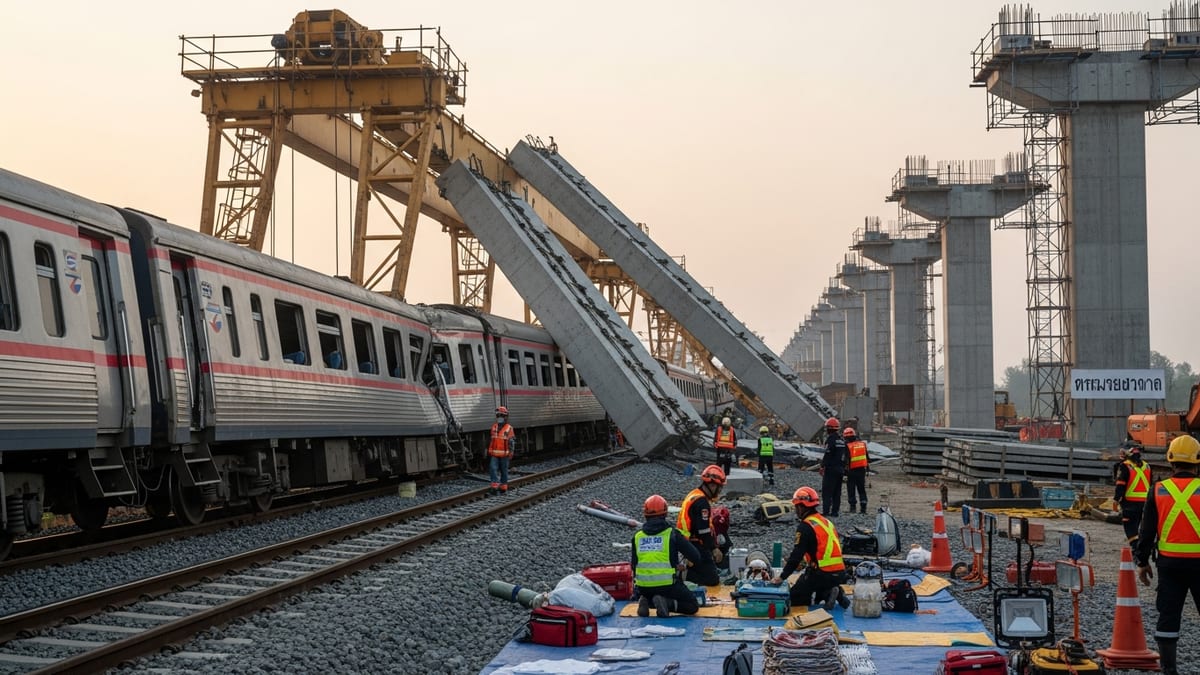
Derailment near Neshaminy Falls disrupts afternoon commute
Publicly available information indicates that the derailment occurred on Tuesday, June 30, between Street Road and the Neshaminy Falls station in Bensalem, along a busy freight corridor that runs parallel to commuter tracks used by SEPTA’s West Trenton Regional Rail line. Early reports described a dramatic scene of rail cars toppled beside the right-of-way and lining the embankment.
Various news outlets report that the CSX eastbound freight train was hauling 72 cars when more than a dozen left the tracks. Updated counts from local coverage place the number of derailed cars at about 16, concentrated toward the rear of the train. Initial alerts estimated as few as five to ten derailed cars before assessments on the ground confirmed a higher total.
The derailment occurred in mid-afternoon, a time when both highway and rail traffic through Lower Bucks County are ordinarily building toward the evening peak. The location, wedged between residential blocks, commercial properties near Old Lincoln Highway, and the Neshaminy Mall area, amplified concern among local residents watching hazmat teams and fire crews converge on the tracks.
Images and video shared through local media and social platforms show boxcars and tank cars canted at steep angles or lying on their sides, some partly blocking sightlines toward nearby streets. Debris fields appeared largely confined to the rail corridor, but the scale of the wreckage made clear that recovery would be an extended operation.
Shelter-in-place alerts and evacuations lifted after safety checks
Shortly after the derailment, emergency notifications advised residents in parts of Bensalem to shelter in place while responders evaluated the train’s cargo. Published alerts and police advisories describe a layered response that included local police, fire, emergency medical services, and hazardous materials teams, all focused on verifying whether any tank cars were compromised.
According to regional news coverage, three of the derailed cars were reported to be carrying hazardous materials. Subsequent inspections found no active leaks, and multiple outlets later reported that no release of hazardous cargo occurred. The absence of any breach allowed emergency managers to scale back their posture more quickly than in comparable freight incidents elsewhere in the country.
During the initial response, some homes and businesses close to the tracks were temporarily evacuated as a precaution. Road barricades and police tape restricted access to portions of Old Lincoln Highway, Bristol Road, and nearby side streets while crews staged equipment and established safety perimeters. Hotel guests and workers in adjacent commercial strips were seen remaining outside as officials kept them at a distance from the rail line.
By late afternoon, local media noted that the shelter-in-place advisories and evacuation orders had been lifted after roughly two hours, and that businesses in the immediate area were allowed to reopen. Statements cited in published reports characterized the situation as posing no ongoing threat to public safety once hazmat teams completed their checks.
Travel impacts for rail passengers and drivers
The derailment had immediate implications for travel in and around Bucks County, particularly for commuters relying on SEPTA’s West Trenton Regional Rail line. Agency statements cited in news coverage note that service on the line was suspended near the derailment site because emergency crews needed access across or alongside nearby tracks, even though the derailed train itself was on a freight-only alignment.
Regional rail passengers reported delays and service gaps on social media, while local broadcasters included the freight derailment among a series of rail disruptions affecting the Philadelphia region this week. For riders, the timing added another layer of complexity to already fragile commutes, with some travelers opting for alternate routes or bus connections when trains were halted.
On local roads, closures rippled out from the scene. Coverage from Bucks County outlets describes Bristol Road closed between key intersections, with ramps and feeder streets shut to keep cars away from emergency staging areas. Drivers encountered detours around the Neshaminy Mall complex and residential neighborhoods that funnel into the same corridor.
For travelers heading toward shore points or returning through the northern suburbs, the combination of blocked streets and suspended rail service added time and uncertainty to familiar routes. While traffic remained passable on larger highways, congestion near the derailment site persisted as curious onlookers slowed to view the damaged train and heavy equipment arriving to support the cleanup.
Investigation and cleanup expected to stretch on
As of Wednesday, publicly available accounts indicate that no injuries have been reported in connection with the Bucks County derailment, a fact that sets this incident apart from more severe freight crashes that can involve hazardous releases or collisions with vehicles. The cause of the derailment has not yet been publicly detailed, and federal and railroad investigators are expected to examine track conditions, train handling, and equipment performance.
Local and regional outlets note that the wreckage is likely to remain beside the tracks for an extended period. Cranes and heavy-duty maintenance-of-way machinery will be required to re-rail or dismantle some of the overturned cars, and crews must inspect and potentially rebuild portions of the underlying rail bed and track infrastructure before freight and commuter trains resume their normal paths.
For nearby residents and frequent travelers in and out of Bensalem, that means weeks in which the derailed cars and ongoing work become part of the landscape. Noise from cutting torches, idling equipment, and ballast tampers may add to the usual hum of highway traffic, even as normal train movements remain limited or rerouted.
Transportation advocates and rail watchers following the case are linking it to a broader conversation about freight safety, infrastructure investment, and how derailments affect communities located along busy rail corridors. While national statistics still describe freight rail as one of the safer modes for heavy cargo, the sight of toppled cars in a dense suburban setting underscores the stakes when something does go wrong.
What the incident means for travelers in the region
For visitors and residents planning trips through Bucks County in the coming days, the derailment adds a practical layer of planning. Travelers who typically rely on the West Trenton Line are being encouraged, through agency advisories reported by local media, to confirm schedules before heading to stations and to budget extra time in case of lingering disruptions.
Drivers should be prepared for intermittent lane closures or detours around the Neshaminy Falls area as rail and utility crews continue their work. Even after major roads reopen fully, occasional short-term closures may be required to move cranes or large replacement components into position, which can briefly halt traffic near the tracks.
Hotels, shopping centers, and dining districts near the scene remain open, according to local coverage, and the rapid lifting of safety alerts suggests that everyday activities can continue with relatively modest inconvenience. For many travelers, the main visible reminder of the derailment will be construction-style activity along the rail corridor rather than broad restrictions on movement.
At the same time, the Bensalem derailment serves as a fresh example of how transportation networks intersect in the dense suburbs surrounding major cities. Freight, commuter rail, and arterial roads share tight corridors and limited crossings, so even a freight-only incident can quickly reverberate across the travel patterns of an entire region.