


More news on this day
SEPTA Regional Rail service is gradually coming back online after an overnight derailment at a key junction in North Philadelphia suspended three lines and triggered cascading delays and reroutes across the system during the Wednesday morning commute.
Get the latest news straight to your inbox!
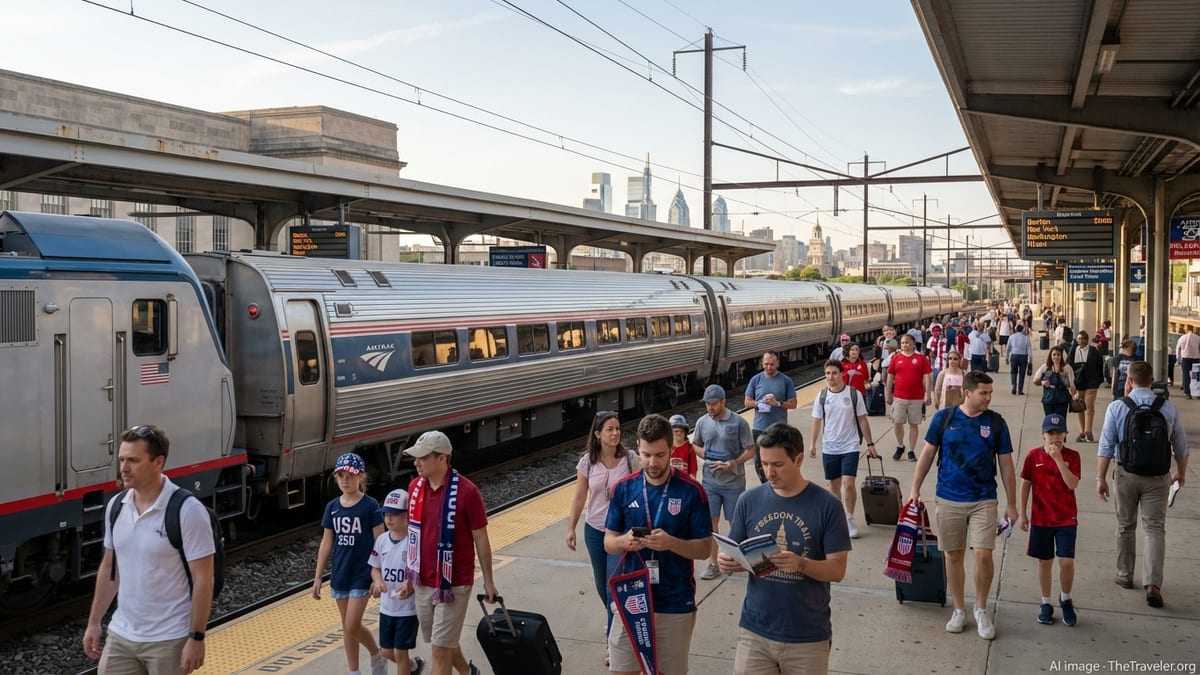
Overnight derailment at critical North Philadelphia junction
Publicly available information indicates that an outbound Manayunk/Norristown Line train came off the tracks shortly after midnight at the 16th Street interlocking in North Philadelphia, a complex convergence of tracks used by multiple Regional Rail routes. No serious injuries were immediately reported, but the incident effectively disabled one of the most important choke points in the network at the start of the morning rush.
Reports describe the derailment site near 16th and Indiana streets, where several mainline tracks cross and diverge toward Center City and the northern suburbs. Images and broadcast footage shared through local outlets showed rail cars at angles on the ballast and crews assessing the damage in the predawn hours as trains stacked up in both directions.
The incident followed a separate freight train derailment a day earlier in Bucks County that forced a suspension on the West Trenton Line, compounding stress on the Regional Rail system just as July heat and holiday-week travel patterns were adding to demand.
By midmorning Wednesday, route maps and service notices showed a patchwork of suspensions, diversions, and truncated trips rippling out from North Philadelphia to suburbs in Montgomery, Bucks, and Delaware counties.
Three lines suspended, others truncated or rerouted
According to published coverage, three SEPTA Regional Rail lines bore the brunt of the disruption, with full suspensions announced in the hours after the derailment. Riders on the Fox Chase and Chestnut Hill East lines were directed to alternative services, while portions of the Manayunk/Norristown Line were also taken out of operation near the incident site.
Other routes remained technically in service but operated with shortened termini. Several northbound lines that normally continue through Center City were turning back at Fern Rock Transportation Center, requiring passengers to transfer to the Broad Street Line subway in order to reach downtown Philadelphia.
Center City operations also shifted. Some trains that would typically serve Jefferson Station bypassed it altogether, running instead through Suburban Station or terminating before reaching the core of the business district. Riders accustomed to one-seat trips into Center City were faced with unfamiliar platforms, changed boarding locations, and last-minute announcements.
Real-time updates posted through transit trackers and regional news outlets showed delays running well beyond 30 minutes on many surviving trips, with scattered cancellations as dispatchers worked to thread limited train movements through the compromised junction.
Gradual resumption of service and continuing delays
By late morning, reports indicated that crews had stabilized the derailment scene sufficiently to allow limited traffic through sections of the interlocking, enabling SEPTA to begin restoring portions of Regional Rail service. Initial updates emphasized that while more trains were running, riders should still anticipate major residual delays and altered stopping patterns throughout the day.
Some suspended segments were replaced with shuttle arrangements or redirected trains that skipped stops closest to the derailment site. As signaling and track inspections progressed, additional lines were cleared to resume, but with reduced frequencies and longer-than-normal turnaround times at terminal stations.
Transit-focused coverage described dispatchers working with constrained track capacity, forcing priority decisions for airport-bound services, peak-period commuter trains, and routes serving hospitals and employment hubs. Even as trains reappeared on line diagrams, headways remained irregular and crowding developed on the first restored departures.
Riders were repeatedly advised through public-facing channels to maintain flexible plans, expect platform changes, and allow significantly more time than usual for Regional Rail trips, particularly during the evening rush as equipment and crews continued to cycle around the system out of their normal positions.
Impact on commuters and guidance for travelers
The derailment created acute difficulties for suburban commuters who rely on early-morning Regional Rail trips into Center City and University City. Social media posts and local reporting captured images of crowded platforms at Fern Rock, where many passengers from suspended or shortened lines transferred to the Broad Street Line in search of an alternate route into the city.
Travelers heading to Philadelphia International Airport faced particular uncertainty as airport-bound trains experienced disruptions and, in some cases, reduced schedules. Guidance across multiple outlets encouraged air travelers to depart earlier than usual, monitor transit updates closely, and consider combining Regional Rail with subway or rideshare connections if direct airport trains were delayed or crowded.
For visitors and holiday-week leisure travelers, the patchwork service proved challenging to navigate. Maps, printed schedules, and usual trip-planning habits quickly became outdated, and riders were urged to rely on same-day digital tools and broadcast updates rather than older timetables.
Despite the difficulties, Regional Rail remained partially usable for many travelers as the day progressed, particularly on lines south and west of Center City less affected by the North Philadelphia junction. Those able to adjust departure times or use subway connections often still reached their destinations, albeit with significantly longer journeys.
Safety checks and ongoing infrastructure scrutiny
As trains began rolling again through the affected area, attention turned to inspections and safety checks at the 16th Street interlocking and along adjacent stretches of track. Publicly available information highlighted the need for careful examination of the switches, rails, and signaling equipment involved, especially given the junction’s central role in the Regional Rail network.
The North Philadelphia derailment, following so closely on the heels of the Bucks County freight incident, added new urgency to long-running discussions about track conditions, extreme heat effects on rail infrastructure, and the resilience of aging junctions that support both commuter and freight movements.
Commentary in regional transportation forums pointed out that even a derailment without major injuries can cause systemwide chaos when it occurs at a node where multiple lines converge. The events of the week provided a stark illustration of how a single failure at a critical location can echo across schedules from Center City to distant suburbs.
For now, SEPTA’s focus remains on restoring predictable operations, communicating day-of changes to riders, and integrating new train sets and revised schedules coming into effect in early July. How quickly confidence returns among regular Regional Rail users may depend on the pace of those repairs, the clarity of service information, and the outcome of the detailed investigations that will follow.