


More news on this day
Travelers at Austin-Bergstrom International Airport faced another difficult travel day as a cluster of flight cancellations and more than 50 delays disrupted departures on key routes, impacting services operated by Southwest, American and several other carriers.
Get the latest news straight to your inbox!
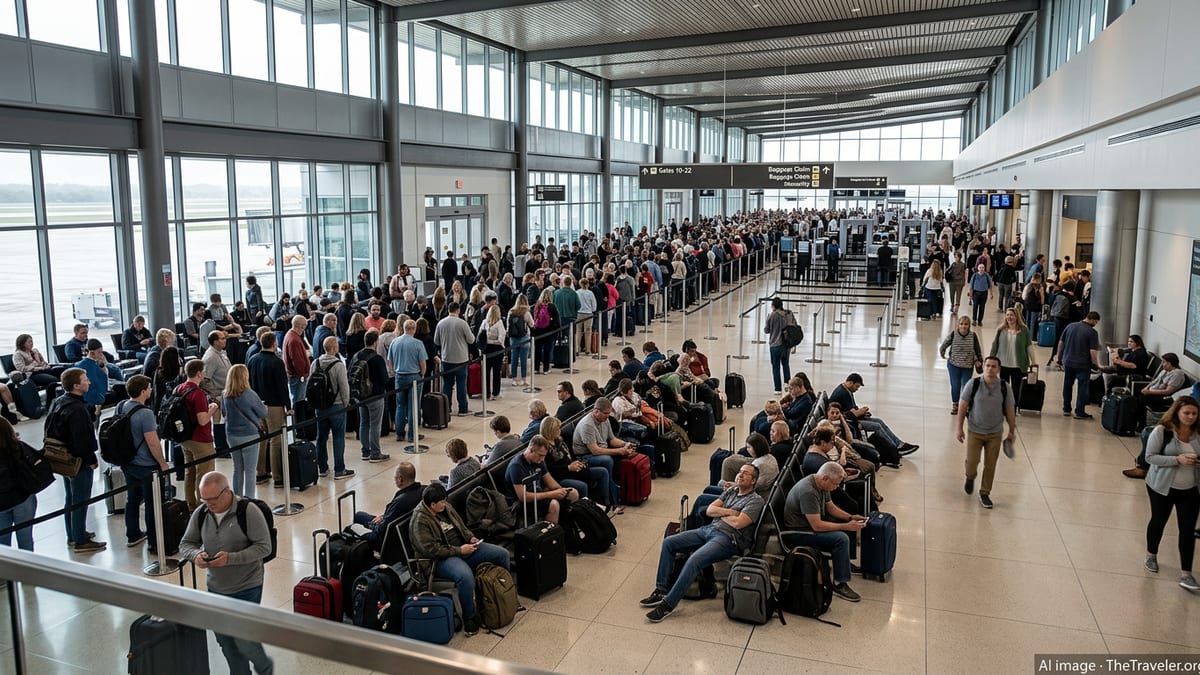
Fresh Disruptions Hit a Busy Regional Hub
Austin-Bergstrom International Airport has grown into one of the fastest-rising midcontinent hubs in North America, handling hundreds of daily flights and nonstop links across the United States and overseas. That expanding network means that even a relatively contained wave of operational problems can ripple outward quickly, affecting connections far beyond central Texas.
Publicly available tracking data for recent days shows a pattern of delays and selective cancellations at Austin involving multiple major airlines, including Southwest Airlines and American Airlines, which together account for a substantial share of the airport’s passenger traffic. While the total number of flights canceled at Austin remains modest relative to the day’s schedule, the knock-on effect on connecting itineraries has proven significant for individual travelers.
Industry dashboards indicate that, on the affected day, at least one flight was canceled outright and more than 50 services experienced departure or arrival delays at Austin. For a field that typically handles close to 400 movements per day, even a small number of cancellations can translate into hundreds of disrupted journeys once missed connections and rebookings are factored in.
Data from national air traffic monitors suggests that weather-related constraints elsewhere in the network, combined with routine congestion and equipment swaps, contributed to the patchwork of delays. Austin itself was not subject to a prolonged airport-wide ground stop, but its role as a through-point for domestic and international itineraries turned localized schedule changes into wider travel headaches.
Southwest and American Among Most Affected Carriers
Southwest and American, Austin’s two largest operators by seat capacity, featured prominently in the disruption pattern. Both airlines rely heavily on Austin for connecting traffic across the central and western United States, so delays on even a handful of departures can quickly cascade as aircraft and crews arrive late for subsequent segments.
Operational performance data compiled over recent months places Southwest and American near the middle of the pack nationally in terms of on-time arrivals and completion rates, with both carriers periodically affected by congestion and weather in their largest hub cities. On the disrupted day in Austin, publicly visible schedules showed a mix of delayed departures to major domestic markets, along with at least one cancellation recorded against the day’s manifest.
Passengers reported extended waits at gates and longer-than-usual lines at customer service desks as airline teams attempted to reassign seats on alternative routings. For travelers on point-to-point journeys into or out of Austin, the impact was often limited to a late departure. For those connecting onward, however, a delay of even 30 to 60 minutes at Austin could mean missed links in cities such as Dallas, Denver or Chicago and the need for overnight accommodation or next-day travel.
The situation highlighted how closely Austin’s reliability is tied to the broader network performance of the nation’s largest carriers. Even when the airport’s own runway operations remain largely fluid, delays upstream at other hubs can quickly erode schedule resilience for Southwest, American and their codeshare partners.
International Links to Frankfurt, Vancouver and Toronto Affected
The wave of disruptions was felt most acutely on itineraries connecting Austin with international gateways, particularly routes involving Frankfurt, Vancouver and Toronto. While Austin’s nonstop international map is still developing, many travelers rely on the airport as their first leg toward major overseas hubs, connecting through partnership networks in cities such as Dallas–Fort Worth, Houston, Chicago or on seasonal long-haul services.
Schedule information released by Austin-Bergstrom earlier this year confirms that the airport offers or supports connectivity to key global centers including Frankfurt in Germany and multiple Canadian points. When domestic feeder services out of Austin run late or are canceled, passengers bound for Europe or Canada can find their long-haul segments jeopardized, even if those flights are departing on time from their intermediate hub.
On the impacted day, delays on selected morning and midday departures from Austin created tight or unworkable connection windows for some passengers booked through to Frankfurt via major U.S. hubs, as well as for those heading to Vancouver and Toronto on itineraries combining U.S. and Canadian carriers. In several cases, rebookings involved complex reroutes through alternative cities, adding extra legs or overnight stops to what were originally same-day journeys.
Travel industry analysts note that disruption on international itineraries tends to be more acute because of limited seat availability, especially during the busy summer peak and on routes that operate only once daily. When a single feeding service from Austin misconnects with a transatlantic or transborder flight, options for same-day recovery can be scarce, prompting airlines to offer hotel accommodation or longer, circuitous routings to honor tickets.
Wider U.S. Network Strain Amplifies Austin Delays
The problems at Austin unfolded against a broader backdrop of strain in the U.S. air travel system. Recent nationwide statistics compiled by aviation tracking services point to thousands of delayed flights and dozens of cancellations on some days, particularly in states with large hub airports such as Texas, California, New York and Florida.
On the same general travel window, national reports highlighted more than 2,000 delayed flights and over 70 cancellations across major U.S. airports, affecting airlines including American, United, Southwest and several regional partners. Austin-Bergstrom featured among the facilities reporting notable, though not extreme, schedule disruptions, reinforcing its vulnerability to the ebb and flow of systemic issues playing out across the network.
Experts in aviation operations emphasize that even moderate weather disturbances or air traffic control flow programs in one part of the country can reverberate through multiple airports over the course of a day. Aircraft and crews often operate a chain of segments, so a late departure early in the schedule can persist for several rotations unless airlines are able to substitute spare capacity or adjust rosters.
For Austin travelers, that means disruptions may be rooted far from Texas. A delayed inbound aircraft from the East Coast or Midwest, or congestion at a major hub airport, can trigger knock-on delays for subsequent departures from Austin, regardless of local weather or runway conditions.
What Passengers Can Do When Schedules Unravel
The recent situation at Austin-Bergstrom offers a reminder that even well-planned itineraries are vulnerable to cascading delays and occasional cancellations. Consumer advocates stress the value of monitoring flight status closely on the day of travel, checking both the departure from Austin and any onward connections at intermediate hubs.
Travelers are often advised to build in longer connection times when linking to international flights from a domestic origin such as Austin, particularly during busy holiday and summer periods. When disruption does occur, rebooking options tend to be more straightforward for those who booked directly with the operating airline, although travel agencies and corporate booking tools can also assist with alternative routings.
Publicly available guidance also encourages passengers to familiarize themselves with airline policies on compensation, meal vouchers and overnight accommodations in the event of significant delays or cancellations. Rules can differ depending on whether disruptions are attributed to factors within an airline’s control, such as crew or maintenance, or to external influences like severe weather or air traffic control restrictions.
For Austin-Bergstrom, the latest wave of late departures and scattered cancellations is unlikely to derail its longer-term growth trajectory. However, as the airport continues adding new domestic and international links, its role in the highly interconnected North American air network means that even minor schedule shocks can have outsize effects on passengers bound for far-flung destinations such as Frankfurt, Vancouver and Toronto.