


More news on this day
SEPTA is preparing to restore large parts of its Regional Rail network after an overnight derailment on the Manayunk–Norristown Line at a critical North Philadelphia junction brought morning service across the system to a near standstill.
Get the latest news straight to your inbox!
Derailment at key junction ripples across the network
Published reports indicate that an outbound Manayunk–Norristown Line train left the tracks shortly after midnight near the 16th Street interlocking and North Broad Street in North Philadelphia, a heavily used junction where multiple SEPTA Regional Rail lines converge. The derailed train came to a stop in the interlocking, blocking movements through the complex and forcing dispatchers to suspend or curtail services across the network during the morning rush.
Coverage from regional outlets shows that the incident resulted in full suspensions on the Manayunk–Norristown, Chestnut Hill East and Fox Chase lines, while other routes operated with significant delays, diversions and reduced frequencies. Real-time service boards through the morning displayed widespread cancellations, with some trains turning back short of Center City or bypassing intermediate stops to work around the disabled equipment.
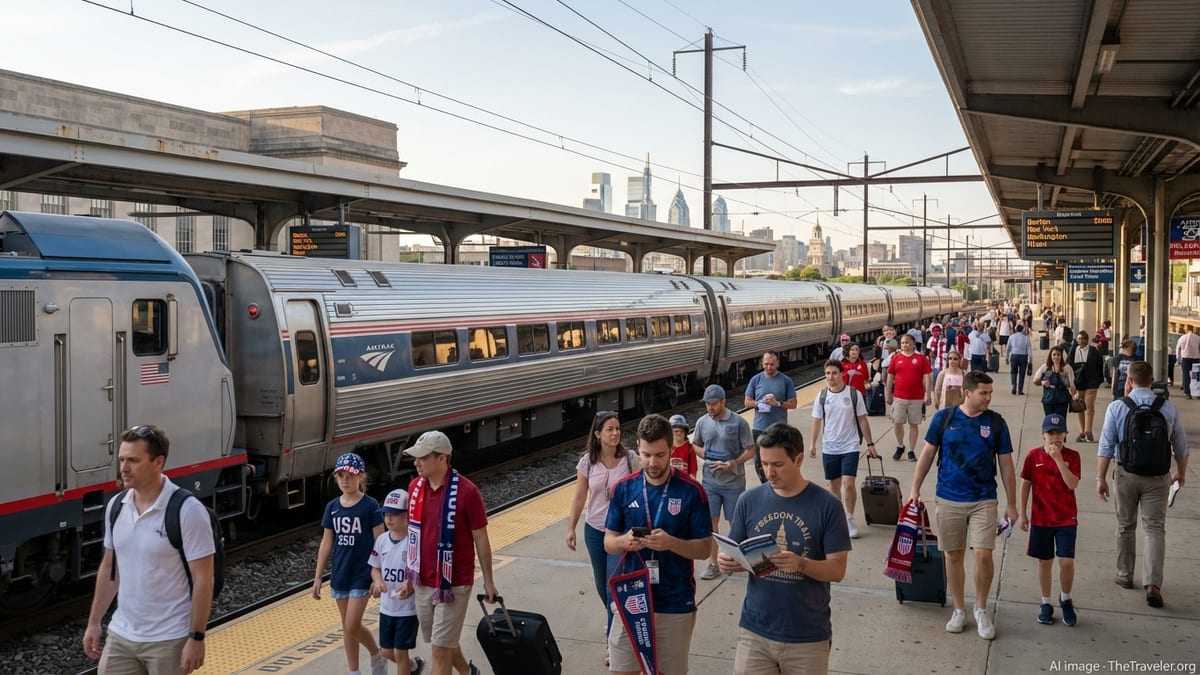
Photographs and commuter accounts circulating on social platforms describe long waits and crowded platforms at key transfer points such as Suburban Station, Jefferson Station and Fern Rock Transportation Center. With the critical junction partially out of service, dispatchers appeared to prioritize limited through trains, while advising many riders to use the Broad Street Line subway and Market–Frankford Line services as alternatives.
Preliminary information from transit-focused publications states that there were no reports of serious injuries among passengers or crew. However, the position of the derailed coaches in the interlocking required extensive inspection before heavy equipment could re-rail the cars and clear the tracks, prolonging the disruption well into the day.
Restoration plan focuses first on core Center City access
By midafternoon, SEPTA planners were outlining a staged return of Regional Rail service, with priority given to restoring reliable access to Center City while track inspections continued at the derailment site. Publicly available service notices referenced a focus on bringing back limited hourly or bi-hourly trains on key lines once at least one track through the junction could be reopened.
According to these updates, early phases of the restoration are expected to see partial service resume on the Manayunk–Norristown Line between Center City Philadelphia and Norristown Transit Center, subject to slow orders and possible single-tracking around the affected area. Other suspended lines, including Chestnut Hill East and Fox Chase, are anticipated to return in stages, with shuttle bus substitutions considered for segments where rail access remains constrained.
Travelers are being advised through official bulletins and media coverage to check real-time information before heading to stations, as train counts are likely to be lower than normal and departure times may differ from the printed timetables that went into effect earlier in the summer. New Regional Rail schedules that had been introduced to add capacity and improve reliability may see temporary adjustments while the network rebalances following the incident.
Rail operations specialists note that bringing the junction fully back online will depend on the outcome of detailed track and signal inspections. Until confidence is established in the condition of the interlocking, SEPTA is expected to operate a more conservative service pattern to minimize the risk of additional disruptions.
Impact on commuters and travel across greater Philadelphia
The derailment comes at a time when SEPTA has been working to rebuild Regional Rail ridership and position the network as a dependable backbone for commuters traveling between the suburbs and downtown Philadelphia. Morning travel on July 1 quickly became a test of patience for riders, with some reporting missed connections to Amtrak, intercity buses and flights at Philadelphia International Airport due to cascading delays.
For travelers heading to and from Norristown, Manayunk and riverfront communities along the Schuylkill, the outage intensified reliance on bus routes and ride-hailing services, adding congestion to key corridors. Visitors staying in Center City hotels and planning day trips by rail to suburban attractions also faced last-minute itinerary changes, highlighting how central the Regional Rail network has become to the region’s tourism economy.
Local travel advisories suggest that those with time-sensitive journeys, including airport transfers and business appointments, should build in additional buffer time even as trains begin returning to regular operation. With track speeds temporarily reduced through the incident area and some trains potentially operating out of their usual sequence, trip planners recommend allowing extra flexibility for the next several days.
In the short term, the disruption is likely to push more riders to core rapid transit lines and bus services, particularly during peak hours. Commuters familiar with alternative routes, such as transferring to the Norristown High Speed Line or using park-and-ride lots on unaffected corridors, may see those options grow busier until Regional Rail frequencies stabilize.
Investigation and safety review under way
An investigation into the cause of the derailment is under way, with early reports indicating that the exact sequence of events remains under review. Publicly available commentary from transit agencies and federal rail safety investigations in recent years underscores how incidents at complex junctions can stem from a combination of track conditions, equipment issues and operating factors.
The Manayunk–Norristown Line has previously been the subject of resilience and risk assessments due to its mix of older infrastructure, river-adjacent right of way and heavy commuter use. Those studies have highlighted the importance of robust maintenance regimes and modern signaling technology for reducing the likelihood of service disruptions.
Transportation analysts expect that the latest derailment will prompt a fresh review of inspection intervals, track geometry testing and fleet condition along the route and across the wider Regional Rail system. Any findings could influence future capital planning, including prioritization of junction renewals and investments aimed at making the system less vulnerable to single-point failures.
While there is no indication yet of systemic safety issues, riders are likely to watch closely for updated information in the coming days. The speed and transparency of the review process, as well as clear communication about corrective actions, may play a significant role in shaping public confidence in Regional Rail service going forward.
What riders should know as service resumes
As SEPTA works to bring trains back onto the Manayunk–Norristown Line and other affected routes, publicly available guidance is emphasizing the importance of checking service alerts close to departure time. Schedules may be modified with short notice, and trains could skip certain intermediate stops to maintain flow through the still-constrained junction.
Regular Regional Rail users are being encouraged to consider flexible travel windows and to familiarize themselves with alternate paths into Center City, such as combining outlying stations with subway or trolley services. For occasional riders and visitors, hotel concierges, convention organizers and campus travel offices are relaying updated information based on SEPTA’s published alerts and local media reporting.
Travel planners advise that once at least one track through the interlocking is fully cleared and certified, SEPTA should be able to progressively expand frequencies and reinstate more direct runs. However, the network may operate in a recovery pattern for several days, with lingering delays possible during peak periods as crews and rolling stock return to their usual rotations.
For travelers looking beyond the immediate disruption, the incident serves as a reminder to build flexibility into regional itineraries that depend on interconnected rail services. As Regional Rail service resumes after the derailment, riders across greater Philadelphia will be watching closely to see how quickly the system can return to its role as a reliable link between city and suburbs.