


More news on this day
Regional Rail trains began rolling again through North Philadelphia after crews cleared an overnight SEPTA derailment at a key junction that had suspended several lines and severely disrupted the Wednesday morning commute across the Philadelphia region.
Get the latest news straight to your inbox!
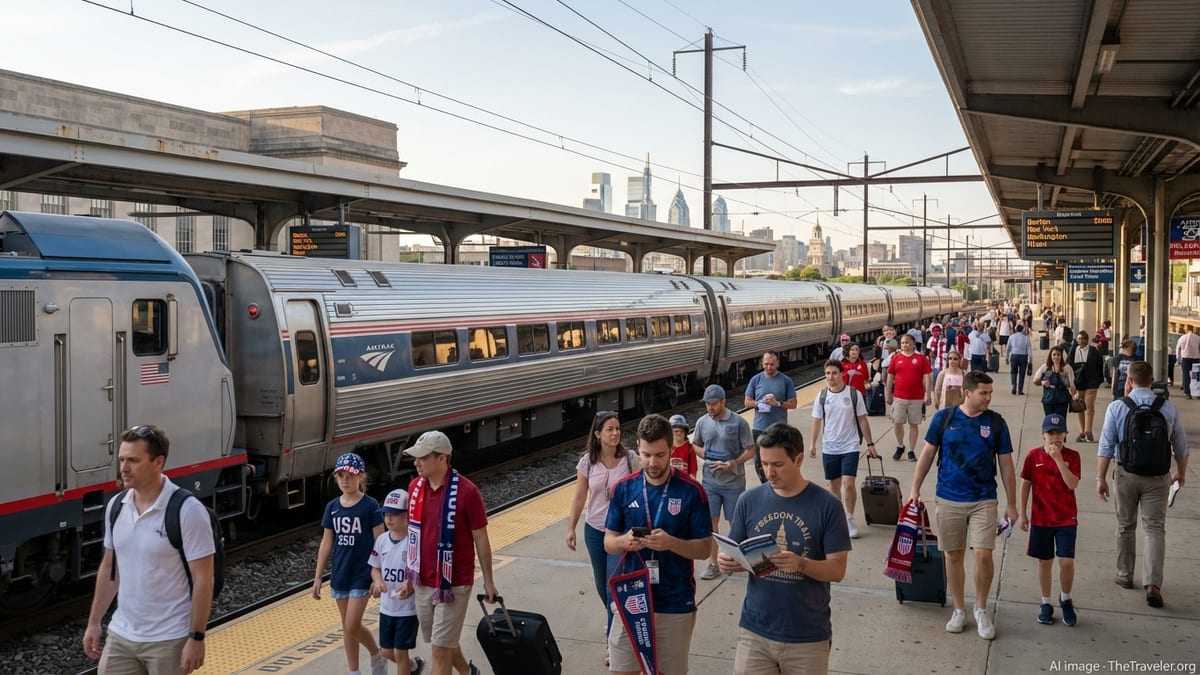
Slow Return to Normal After Morning Chaos
Service restoration followed hours of cascading disruptions triggered shortly after midnight, when a Manayunk/Norristown Line train came off the tracks near the busy 16th Street interlocking in North Philadelphia. The incident blocked one of the most heavily used rail junctions on the system, forcing the suspension of several Regional Rail lines and severe delays on others during the morning rush.
According to published coverage from local outlets, afternoon inbound and outbound service gradually resumed on affected routes once track and signal inspections were completed and the derailed cars were removed. Revised timetables remained in place into the evening, but regular through-service via the Center City tunnel had largely been restored, allowing commuters to again reach major hubs such as Suburban Station, Jefferson Station, and 30th Street Station without lengthy detours.
Publicly available information indicates that crews focused on reopening at least two of the junction’s tracks first, enabling limited operations while more detailed inspections continued on adjacent infrastructure. Riders were advised to anticipate residual delays and some crowding even after official service resumptions, as trains and crews were repositioned across the network.
By late afternoon, Regional Rail trip planners reflected a pattern closer to normal weekday service, although contingency routings and adjustments remained in place on some lines that had been most heavily affected by the overnight derailment.
Key Lines Impacted and Service Patterns Adjusted
The derailment’s location near North Broad Street and North Philadelphia stations meant ripple effects for multiple lines that depend on the junction to move trains in and out of Center City. Reports indicate that the Manayunk/Norristown, Chestnut Hill West, and West Trenton lines were among those most directly affected, with complete suspensions or significant truncations during the early morning.
Some routes were temporarily turned at outlying stations or rerouted into Center City via alternate tracks, reducing frequency and creating unfamiliar stopping patterns for regular riders. Other lines that did not traverse the derailment site still experienced delays as dispatchers juggled track availability, adjusted meets, and held trains to manage congestion around the restricted area.
As service was restored, SEPTA updates and local transit reporting pointed to a phased return, with trains initially operating on modified schedules that prioritized core rush-hour patterns. Express runs that normally bypass certain local stops were in some cases converted to all-stop patterns to accommodate displaced riders who had missed earlier trips.
Regional rail users who rely on timed connections to buses, trolleys, and the Broad Street and Market-Frankford subway lines encountered mismatches throughout the day, as late-running trains arrived outside their usual transfer windows. Even with trains back on the rails, transit planners described a short period of system-wide recovery while vehicle and crew assignments were brought back into alignment.
Infrastructure Focus at North Philadelphia Junction
The North Philadelphia area has long been recognized as a complex and sensitive point in the region’s rail network, where SEPTA Regional Rail, Amtrak, and freight operations intersect. The 16th Street interlocking, in particular, channels trains to and from multiple lines serving both suburban communities and neighborhoods within the city limits.
Following the derailment, publicly available information shows that inspection crews examined track geometry, switches, and overhead power systems before authorizing the gradual resumption of revenue service. Published coverage notes that no serious injuries were reported, but the incident underscored how a relatively localized failure at a critical junction can affect passengers across several counties.
Context from recent service updates indicates that SEPTA has been contending with broader resiliency challenges on Regional Rail, including ongoing equipment inspections, aging rolling stock, and a multi-year program of track and signal maintenance. The North Philadelphia derailment added an acute operational test for a system already balancing tight fleet availability with rider expectations for reliability.
Transit-watchers observed that the speed of Wednesday’s reopening, while not immediate, reflected both the complexity of the interlocking and the agency’s need to balance safety checks with strong pressure to restore daily commuting patterns as quickly as feasible.
Rider Impact and Communication Efforts
The derailment caught many riders off guard in the pre-dawn hours, as overnight alerts and early social media posts circulated about widespread Regional Rail suspensions. Morning commuters arriving at neighborhood stations across the suburbs and within Philadelphia encountered canceled trains, unfamiliar shuttle patterns, and crowded platforms as they scrambled for alternatives.
Local media coverage and rider accounts describe a patchwork of responses, with some passengers shifting to parallel bus routes, ride-hailing services, or carpools to reach workplaces and medical appointments. Others opted to work remotely for the day when it became apparent that their usual train would not be running for several hours.
Throughout the disruption and into the restoration phase, service alerts highlighted the importance of trip-planning tools, station announcements, and posted signage. As lines reopened, riders were urged to recheck schedules shortly before traveling, since departure times and stopping patterns often differed from regular weekday timetables while the system reset.
Advocates for transit riders noted that the incident once again demonstrated how crucial clear, timely messaging is during sudden rail outages. Even as trains returned to service, lingering confusion around which trips were operating, and on what schedule, remained a central concern for frequent Regional Rail users.
What Travelers Should Expect in the Coming Days
With trains now running again through the North Philadelphia junction, focus is shifting to how quickly Regional Rail performance will fully normalize. Experience from previous disruptions suggests that residual delays and minor schedule irregularities may persist for several service days as dispatchers continue to fine-tune train spacing and equipment rotations.
Publicly available information points to potential follow-up inspections at and around the derailment site, which could necessitate temporary speed restrictions or off-peak work windows. While such measures are less disruptive than a full closure, they can still lengthen travel times slightly on affected lines.
Regular riders are being encouraged, through published advisories and local news reporting, to build extra time into trips for the remainder of the week and to monitor any midday service adjustments before heading to the station. For visitors relying on Regional Rail to reach Center City hotels, sports venues, or the airport via connecting services, checking the latest schedule details remains advisable.
The restoration of Regional Rail service after the North Philadelphia derailment marks a return to near-normal operations for thousands of daily riders. At the same time, the episode adds to a growing record of incidents that continue to shape public conversations about investment in rail infrastructure, equipment renewal, and the long-term resilience of the Philadelphia region’s most important commuter rail network.