


More news on this day
Traffic along a busy stretch of Amarillo Boulevard has been brought to a standstill after a freight train derailed across a key crossing, leaving motorists facing extensive delays and emergency teams working to clear the line.
Get the latest news straight to your inbox!
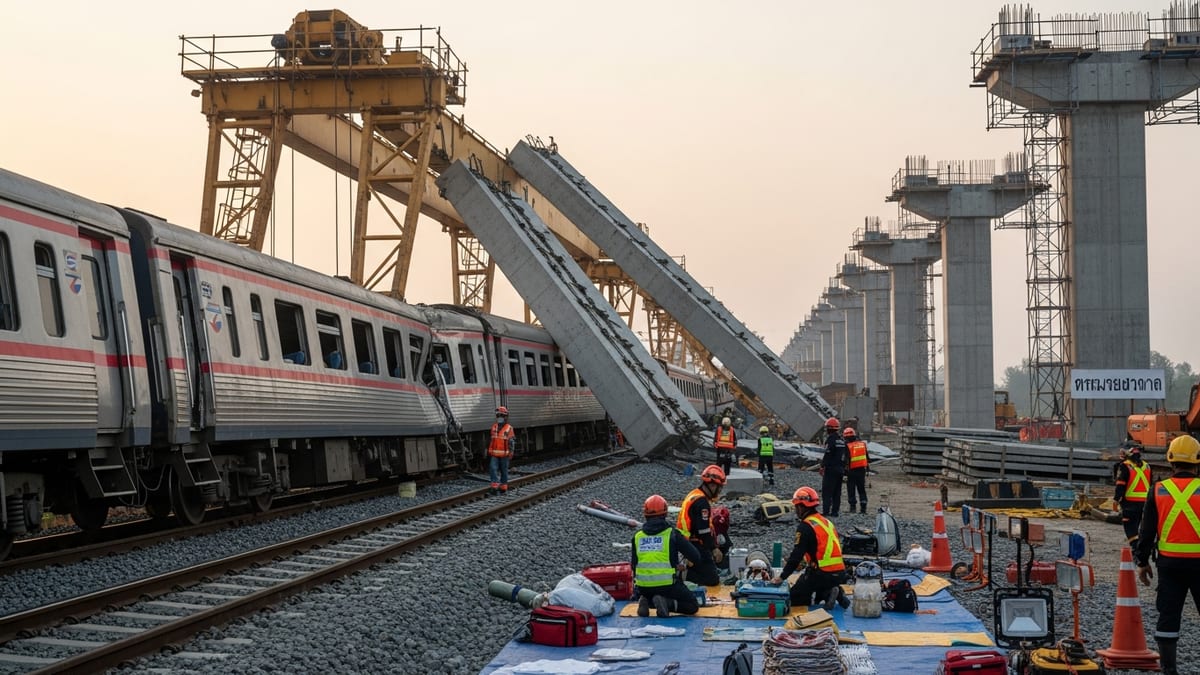
Derailment brings Amarillo Boulevard traffic to a halt
Initial reports indicate that multiple freight cars left the tracks at a grade crossing along Amarillo Boulevard, blocking all lanes of traffic in both directions. The incident occurred near a cluster of commercial businesses and residential neighborhoods, where the boulevard also functions as a major east west arterial route for local and through traffic.
Publicly available information shows that rail and road traffic in the area came to an abrupt stop as the derailed cars settled across the roadway. Drivers approaching the crossing found barricades in place and were forced to turn around, contributing to backups that stretched along the boulevard and into adjacent side streets.
As of the latest updates, there are no indications of serious injuries connected with the derailment. Early reports describe the affected train as a mixed freight consist, with no immediate evidence that hazardous materials were released. Emergency responders and railroad crews have been seen assessing the damage, stabilizing railcars and planning removal operations to reopen the boulevard.
The blocked crossing has left some nearby businesses temporarily harder to reach and has complicated access for delivery trucks and service vehicles. Residents in adjoining neighborhoods are also facing longer travel times for routine errands while the closure remains in place.
Detours and delays reshape local travel patterns
With Amarillo Boulevard closed at the derailment site, traffic has been rerouted onto parallel streets and nearby arterials. Navigation apps and local traffic alerts have been advising drivers to avoid the immediate area and instead use alternative east west corridors, where capacity allows, to pass around the incident.
Commuters traveling during peak periods are encountering longer than usual drive times as additional vehicles crowd onto routes that were not designed to handle sustained surges in volume. Intersections feeding into the detour corridors are experiencing extended queues, and some residential streets have seen an uptick in cut through traffic as motorists search for quicker paths.
According to published coverage of similar derailments in other cities, road closures caused by trains leaving the tracks can last several hours or, in more complex cases, more than a day as railcars are rerailed or removed, tracks are repaired and safety inspections are carried out. The duration of the Amarillo Boulevard disruption will largely depend on the number of cars affected and the extent of damage to the track structure and roadway surface.
Local transit users and commercial drivers are particularly sensitive to these disruptions. Bus routes that ordinarily rely on Amarillo Boulevard may require temporary adjustments, while freight and service vehicles must recalibrate schedules to account for detours and congestion.
Rail safety and blocked crossings under renewed scrutiny
The derailment on Amarillo Boulevard has intensified ongoing discussions about the interaction between heavy rail traffic and busy city streets. Amarillo sits within a regional freight network where long trains frequently intersect major roadways, and blocked crossings have periodically drawn attention from residents and transportation planners.
Studies prepared for the Texas transportation network highlight the safety and mobility challenges posed by at grade crossings in fast growing urban areas, where a single incident can disrupt both local traffic and long distance freight flows. The Amarillo Boulevard derailment underscores how quickly a normally routine crossing can become a focal point of risk and delay when something goes wrong.
According to publicly available analyses of other recent derailments near arterial roads, common risk factors include aging infrastructure, complex switching operations, and tight curves or gradients in the vicinity of busy crossings. While no formal cause has yet been identified for this incident, the pattern of road and rail disruption fits a broader national conversation about upgrading crossings, improving track conditions and deploying better monitoring to detect problems before they result in a derailment.
Local residents and travelers often experience these issues in practical terms rather than policy language: longer commutes, missed appointments and uncertainty about how long key roads will remain blocked. As information about the Amarillo Boulevard derailment circulates, those everyday impacts are likely to reinforce calls for more resilient designs at critical intersections between trains and motor vehicles.
Cleanup operations and timeline for reopening
Once the immediate scene is stabilized, standard rail industry practice involves bringing in heavy equipment to lift or drag derailed cars back onto the rails or onto specialized trucks for removal. This process typically requires full closure of the affected roadway, and sections of Amarillo Boulevard around the crossing are expected to stay off limits to general traffic until crews complete these operations.
Public information from previous freight derailments suggests that track inspections, rail replacement and ballast work may follow, particularly if ties or rails were damaged when the cars left the track. In some cases, roadway pavement at the crossing must also be repaired before cars and trucks can safely pass through again.
As cleanup progresses, transportation agencies generally issue updated advisories to refine detour routes and, when possible, reopen one direction of travel before restoring full access. Motorists in the Amarillo area are being urged through public channels to plan ahead, allow extra time for trips and remain alert to sudden stops or lane shifts where detour routes converge.
The rail corridor intersecting Amarillo Boulevard is an important conduit for freight in and out of the region, so restoring service safely and efficiently carries both local and network wide significance. The balance between swiftly clearing the line and thoroughly verifying the condition of the track and crossing will influence how long the boulevard remains disrupted.
What travelers should know while disruptions continue
For visitors and residents alike, the immediate takeaway is to avoid the affected section of Amarillo Boulevard until normal traffic patterns resume. Drivers heading across the city should consult navigation tools for real time congestion data and be prepared to follow posted detour signs that may shift as work zones change.
Travelers using intercity buses, shuttles or rideshare services in the Amarillo area may want to confirm pickup and drop off locations, as some operators could alter routes to bypass the closure. Hotels, event venues and tourism businesses located near the boulevard may temporarily direct guests to alternate approaches to reduce frustration at peak times.
Pedestrians and cyclists in neighborhoods adjacent to the derailment are also affected, particularly where sidewalks and crossings intersect the closed roadway. Allowing space for emergency vehicles, rail crews and heavy equipment to maneuver safely is essential, even if it adds a few extra minutes to a walk or bike trip.
While train derailments affecting major roads remain relatively rare events, their impact on mobility can be outsized in the hours and days that follow. The disruption on Amarillo Boulevard illustrates how closely travel reliability is tied to the safe, uninterrupted operation of the rail lines that run alongside and across the region’s streets.