


More news on this day
Regional Rail trains began rolling again across the Philadelphia region on Wednesday after an overnight SEPTA derailment at a North Philadelphia junction caused cascading delays and forced commuters to scramble for alternative routes.
Get the latest news straight to your inbox!
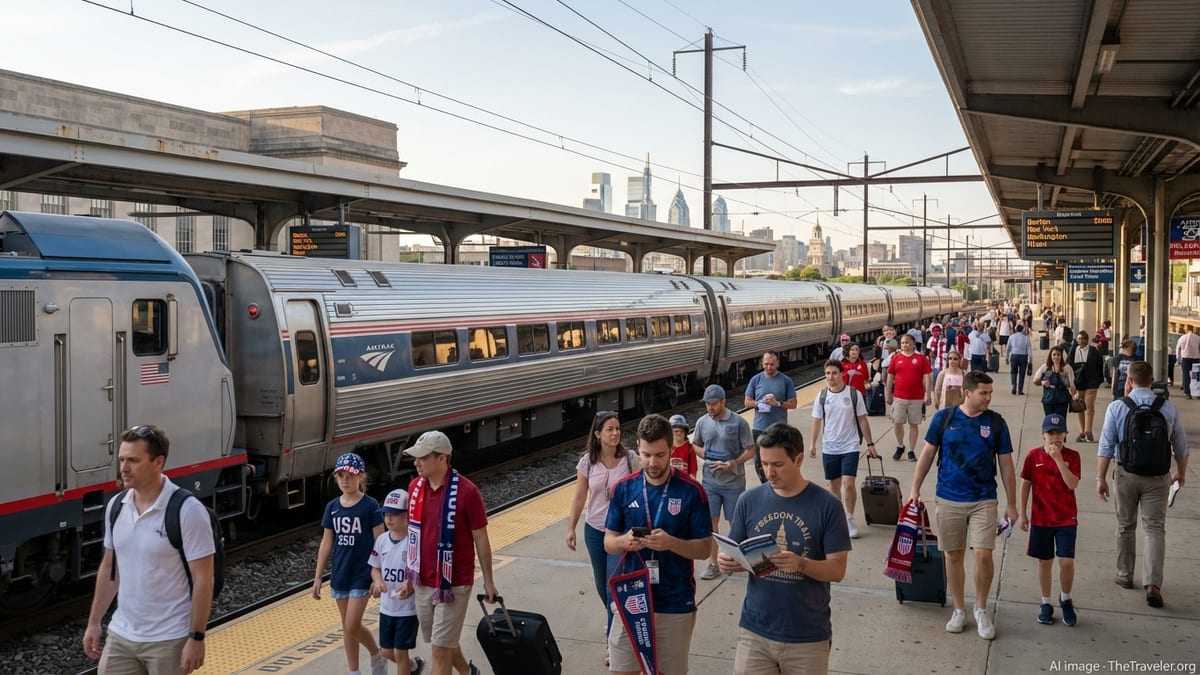
Service resumes after overnight chaos on the rails
According to publicly available information, the derailment involved an outbound Manayunk/Norristown Line train that came off the tracks shortly after midnight at the 16th Street interlocking in North Philadelphia, a critical junction where multiple Regional Rail lines converge. The disabled train effectively choked the flow of traffic into and out of Center City, triggering hours of suspensions, truncated routes and severe delays across the network.
By midmorning on July 1, reports indicated that SEPTA crews had re-railed the train and cleared the immediate obstruction, allowing limited movements through the interlocking. As the day progressed, service patterns were gradually rebuilt, with suspended lines brought back online and through trains restored between key suburban stations and Center City hubs.
Publicly posted alerts showed that several lines initially operating only as far as Fern Rock Transit Center or Suburban Station later resumed full-length trips once the junction was declared safe for regular traffic. Riders were advised to expect residual delays while dispatchers worked through a backlog of trains and adjusted schedules to reflect the evolving conditions.
Initial coverage from local outlets described crowded platforms, packed Broad Street Line trains and longer than usual travel times as Regional Rail passengers shifted to subway and bus alternatives during the morning peak. As more Regional Rail trips were restored, pressure on the rest of the network began to ease, though some peak-period trains remained standing-room-only.
How the derailment unfolded at a critical junction
Reports from transportation-focused media and local news coverage indicate that the derailment took place at or near the 16th Street interlocking, one of the most complex pieces of track in SEPTA’s Regional Rail system. The junction funnels trains from multiple northern and northwestern lines toward Center City, meaning a problem at that location can ripple across the entire network.
Published accounts describe the incident as a low-speed derailment affecting a portion of a Manayunk/Norristown Line train. There were no early reports of serious injuries, but the angle and position of the railcars at the junction made removal and inspection time-consuming. The complexity of the track work required careful re-railing operations before any normal traffic could resume.
Regional Rail riders felt the impact almost immediately. Early-morning alerts showed complete suspensions on the Chestnut Hill East, Manayunk/Norristown and Fox Chase lines, while several other routes were shortened or rerouted, with passengers directed to transfer to subway lines at Fern Rock or rely on Center City terminals as temporary endpoints.
Rail operations experts have long noted that interlockings such as 16th Street present particular vulnerabilities for systems like SEPTA, because even minor disruptions can block multiple tracks at once. Wednesday’s derailment provided a stark illustration of how quickly service can unravel when a junction of that importance is taken out of commission, even for a matter of hours.
Gradual restoration and lingering delays for commuters
SEPTA’s publicly available service alerts throughout the day traced a pattern familiar to regular riders: an initial wave of cancellations and suspensions, followed by partial restoration, and then a period of extended delays as the system attempts to return to its normal rhythm. By midday, many suspended Regional Rail lines were running again, though some trains operated with modified stopping patterns or skipped lightly used stations to make up time.
Riders posting on social media and transit discussion forums described a morning marked by confusion over rapidly changing departure boards, with some trains appearing as delayed, then canceled, and finally reappearing as different trips as dispatchers rebuilt the schedule on the fly. Even as service was restored, some passengers reported travel times that were significantly longer than on a typical weekday.
Published coverage noted that SEPTA encouraged riders to use its trip-planning tools and mobile app to track real-time changes, though many commuters still turned to local news outlets and community forums for up-to-the-minute reports from other passengers on the ground. For travelers heading to the airport or making regional connections, the advice was to allow extra time and consider backup options while the system stabilized.
By late afternoon, publicly available tracking data suggested that most Regional Rail lines were operating close to their regular patterns, albeit with scattered delays and some crowding on key rush-hour trains. Transit observers indicated that full schedule reliability may take more than one service day to reestablish as crews, equipment and trainsets are repositioned.
Safety scrutiny and infrastructure challenges in focus
While Wednesday’s derailment resulted in widespread disruption, it also renewed attention on the underlying state of Regional Rail infrastructure and rolling stock. In recent months, SEPTA has already been managing service adjustments related to federally mandated inspections and repairs on its Silverliner IV railcars, part of a broader safety review that followed a series of equipment issues.
Reports on the inspection program have highlighted how thinly stretched the agency’s fleet has become, with older railcars cycled in and out of service for repairs and testing. As more cars return to the active roster, SEPTA has been gradually restoring express trips and lengthening trains to handle demand that has continued to rebound on Regional Rail.
Infrastructure remains another point of concern. Planning documents and regional transportation reports have described aging interlockings, signal systems and bridges throughout the network, many of which date back decades and require costly upgrades. An incident at a major junction such as 16th Street underscores the potential consequences of deferred investment, particularly on a system that carries tens of thousands of passengers on a typical weekday.
Safety investigators are expected to examine track conditions, equipment performance and operational procedures associated with the derailment, though formal findings typically take months to finalize. In the short term, riders can anticipate heightened inspections and possible temporary speed restrictions in the affected area while engineers complete their assessments.
What riders should expect in the days ahead
With Regional Rail service largely restored, the focus for travelers shifts to understanding how long residual disruptions might linger and whether new timetables or operating patterns will emerge from the incident. New schedules already set to take effect in early July could give SEPTA some flexibility to adjust train times, add running time where bottlenecks are common, and better match service to current demand.
Seasoned riders often treat the day after a major disruption as a transitional period, and early indications suggest Thursday could bring a mix of on-time performance and isolated delays as the system continues to sort out equipment cycles. Commuters who rely on tight transfers or airport connections may still want to build in additional buffer time until Regional Rail’s on-time statistics clearly stabilize.
For visitors and occasional riders, publicly available trip-planning tools remain essential, especially during peak hours when crowding and limited seating can be more pronounced. Observers note that greater predictability, even if trains are scheduled a few minutes slower, may be more valuable to travelers than aggressive timetables that prove difficult to maintain after an event like Wednesday’s derailment.
Ultimately, the restoration of Regional Rail service after the North Philadelphia incident highlights both the system’s resilience and its vulnerabilities. Trains are again crossing the junction that brought service to a halt, but the day’s disruptions will likely fuel renewed discussion about investment priorities, safety oversight and how best to protect the region’s rail-dependent commuters from future shocks.