


In an era of branded residences, lifestyle hotels and algorithm-driven loyalty programs, the word “luxury” is easily stretched thin. Yet among global hotel names, St. Regis continues to stand out. Born on Fifth Avenue in 1904 and now part of Marriott’s Luxury Group, the brand still trades on a very specific promise: old-world glamour translated for modern travelers who expect technology, privacy and personalization as much as silk damask and champagne sabrage. From Midtown Manhattan to Mexico’s Riviera Maya and the Red Sea, St. Regis has spent the past decade proving that its Gilded Age DNA is not a relic, but a competitive advantage.
Get the latest updates straight to your inbox!
From Gilded Age Salon to Global Standard-Bearer
The story of St. Regis begins in 1904, when John Jacob Astor IV opened The St. Regis New York on Fifth Avenue as a kind of urban palace for America’s high society. At the time, it was one of the tallest buildings in Manhattan, with private telephones in every room and a then-radical focus on comfort and technology beneath ornate Beaux-Arts interiors. The New York Times called it the finest hotel in America, and the property quickly became shorthand for a new, quietly extravagant way to stay in the city.
That original vision still matters. Today, Marriott positions St. Regis in its uppermost luxury tier alongside brands such as The Ritz-Carlton and Bulgari Hotels, with a portfolio of more than 40 properties across the Americas, Europe, the Middle East and Asia Pacific. While other historic luxury names have largely reinvented themselves as contemporary lifestyle hotels, St. Regis leans into its heritage: afternoon tea rituals inspired by Caroline Astor’s famous “400,” midnight suppers reimagined as chef’s tasting menus, and the King Cole Bar in New York, where the Old King Cole mural by Maxfield Parrish presides over the bar that popularized the Bloody Mary.
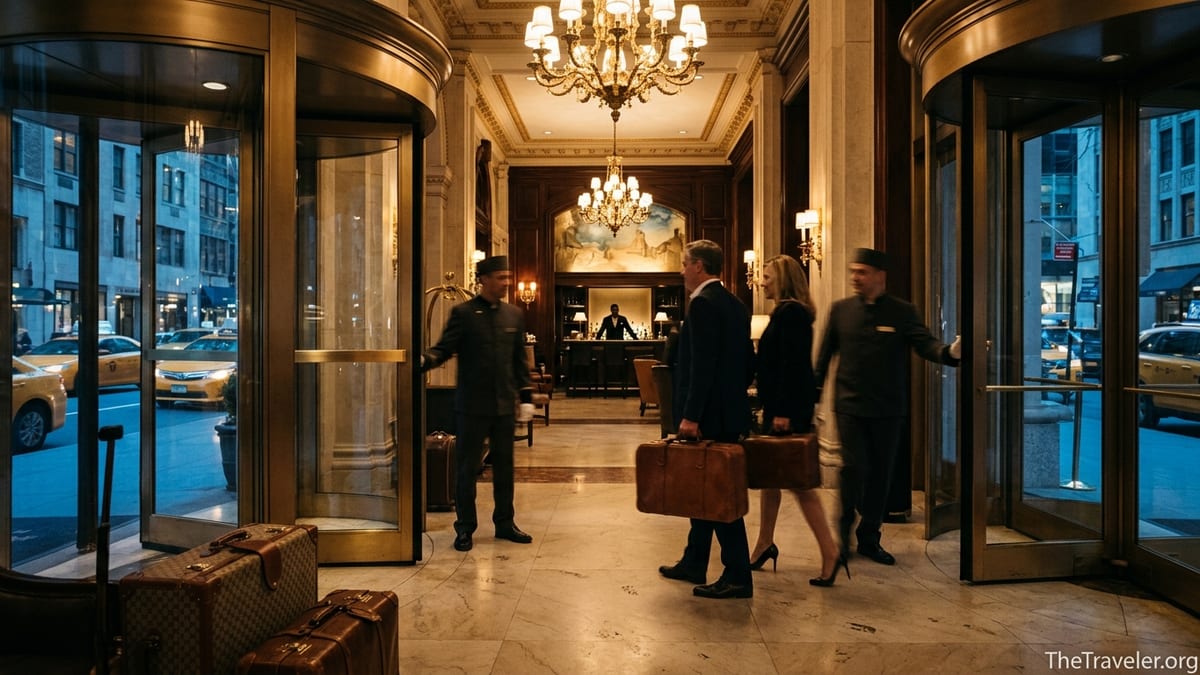
For travelers, that continuity translates into a specific expectation. Whether you are checking into The St. Regis New York for a winter week of shopping on Fifth Avenue, or flying into The St. Regis Langkawi for a tropical break in Malaysia, you are buying into a brand that still treats hotel life as theater. Bellmen in tailored uniforms, hushed marble lobbies, library-like bars and butler pantries built into guestroom corridors are not nostalgic gimmicks. They are signals that you have entered a hotel that sees service as a craft rather than a checklist.
The fact that St. Regis is now embedded in a large global system is part of its modern relevance. Members of Marriott Bonvoy can redeem points for stays that, a generation ago, would have been accessible only through a travel agent or corporate account. Yet despite being part of a vast portfolio, St. Regis remains a comparatively small, curated collection. That scarcity helps the brand preserve its aura of special-occasion luxury rather than feel like another logo on a crowded booking site.
Butler Service as a Modern Luxury Tool
The most distinctive element of the St. Regis experience is its butler service, a brand hallmark that dates back to the personal valets and ladies’ maids of the Astor era. Today, every St. Regis guestroom is nominally assigned a butler, and many hotels provide a direct chat number once you check in. The service is intentionally wide-ranging: complimentary pressing of a few items on arrival, morning coffee or tea delivered to your room, shoe shines, packing and unpacking, and help sourcing hard-to-find items in the city.
In practice, this can feel surprisingly contemporary. At The St. Regis New York, frequent guests talk about texting their butler from the airport to arrange a specific pillow type and to have a favorite non-alcoholic beverage waiting on ice. At beachfront resorts such as The St. Regis Punta Mita or The St. Regis Bora Bora, butlers might organize sunscreen, chilled water and a favorite novel at a particular cabana, then quietly disappear until needed. In newer city hotels like The St. Regis Dubai, The Palm, the butler team often helps with restaurant reservations in hard-to-book dining rooms and airport transfers that sync with late-night arrivals.
What makes this timeless rather than old-fashioned is how the service flexes with guest expectations. Travelers who are not comfortable with the idea of someone unpacking their suitcase can simply ask the butler to focus on practical tasks, such as arranging laundry, printing boarding passes or securing a table at a new cocktail bar nearby. Others lean into the classic experience, asking for evening garment pressing before a gala or having a favorite pair of shoes polished and returned in time for a business meeting. The common thread is that the service is anticipatory and personal, not scripted.
There are, of course, variations between properties. Some St. Regis hotels are owned and managed directly by Marriott, which generally means tighter control of standards, while others are owned by local investors with Marriott providing management and brand oversight. Guests occasionally report less consistent butler engagement at busier resorts or newly converted properties. Yet even then, the expectation of butler service shapes the culture of the hotel. Staff are trained to step in where the butler team leaves off, and guest feedback tends to be taken seriously because the butler promise is so central to the brand identity.
Heritage Rituals Reimagined for Today’s Traveler
St. Regis has always leaned on ritual as a way of making hotel life feel special. At the turn of the 20th century, Caroline Astor’s carefully curated tea gatherings and midnight suppers defined New York society. In the 21st century, the brand has codified a set of daily and seasonal rituals that link its hotels together while leaving room for local flavor. These include afternoon tea, evening champagne sabrage and a twist on the Bloody Mary at each property.
In New York, afternoon tea in the Astor Court still channels Gilded Age opulence with silver stands of finger sandwiches and petits fours, but the tea list now includes Japanese sencha, Chinese oolong and caffeine-free herbal blends aimed at health-conscious guests. In Mexico, The St. Regis Kanai offers a more relaxed version, where guests might enjoy tea with views over mangroves and the Caribbean, accompanied by pastries that incorporate tropical fruits and local chocolate. In the Middle East, properties such as The St. Regis Doha and The St. Regis Abu Dhabi have woven regional sweets and dates into their tea experiences.
The champagne sabrage ritual is perhaps the most theatrical link to the brand’s heritage. Many St. Regis hotels host a brief ceremony at sunset, often on a terrace or in a courtyard, where a sommelier or butler opens a bottle with a saber and offers tastes to gathered guests. At The St. Regis Venice, this might happen overlooking the Grand Canal, with gondolas drifting by; at The St. Regis Aspen, it may unfold on a snowy patio before guests head to dinner. For honeymooners or groups celebrating a milestone birthday, arranging a private sabrage lesson has become a popular and highly Instagrammable add-on.
Then there is the Bloody Mary. The cocktail was popularized at the King Cole Bar at The St. Regis New York in the 1930s, and each St. Regis property now serves its own localized version. In New York, the drink remains close to the classic, served in a tall glass beneath Parrish’s mural. In Osaka, the hotel bar might spice theirs with local ingredients, while in tropical resorts the drink can take on lighter, almost brunch-like profiles. This small ritual matters because it anchors the brand’s global expansion in a shared story. Guests who know the lore can order the house Bloody Mary wherever they go and feel a subtle continuity from city to city.
Designing Timelessness: From Fifth Avenue to Kanai
If St. Regis were simply freezing its hotels in time, it would risk feeling like a museum piece. Instead, the brand has spent the last decade commissioning bold new builds and renovations that preserve a sense of grandeur while embracing contemporary architecture and interior design. The goal is not to replicate the Beaux-Arts look of the original New York property, but to reinterpret its spirit of refined comfort and local storytelling.
The St. Regis Kanai Resort, Riviera Maya, which opened in early 2023 on a vast protected mangrove reserve north of Playa del Carmen, shows this approach clearly. The resort’s elevated walkways and semi-circular buildings draw inspiration from Mayan cosmology, with guest rooms seemingly floating above the landscape and every suite oriented towards the Caribbean Sea. Public spaces feel open and airy, with polished stone, pale woods and woven textures instead of heavy draperies and dark paneling. Yet the service style, butler model and evening rituals feel entirely in line with St. Regis tradition.
In Europe, The St. Regis Venice offers another template. Rather than build anew, the brand took over a historic palazzo complex near the Grand Canal and carried out a multi-year renovation that preserved original stucco work, terrazzo floors and canal-facing terraces while introducing modern lighting, climate control and contemporary Italian furnishings. The result is a hotel where you can step out onto a balcony and watch Venetian life unfold as it has for centuries, then retreat to a room equipped with discreetly integrated technology and large, comfortable beds that meet modern expectations of luxury.
In the United States, properties like The St. Regis Aspen Resort and The St. Regis San Francisco illustrate how the brand adapts to different urban and alpine contexts. Aspen leans into mountain lodge warmth with fireplaces and timber accents, but still offers a polished spa, ski valets and a refined lobby bar. San Francisco, by contrast, is anchored in a sleek tower near the city’s cultural institutions, with clean-lined interiors, a significant art collection and tech-forward meeting spaces. Across all of these, the design vocabulary changes, but certain cues remain: generous proportions, upholstered seating that invites lingering, restrained color palettes and, increasingly, subtle integration of local art and artisan-made pieces.
Service, Privacy and Price in the Modern Luxury Landscape
In practical terms, St. Regis competes directly with brands such as Four Seasons, Rosewood and Mandarin Oriental in many cities and resort destinations. Base room rates at flagship properties commonly start in the mid- to high-hundreds of dollars per night and can climb into four figures during peak seasons. For example, a standard room at The St. Regis New York might fluctuate between the high 700s and well over 1,000 dollars depending on the time of year, with suites priced substantially higher. Beach resorts in Bora Bora or the Maldives frequently command similar or higher rates for overwater villas.
What keeps guests returning at these price points is an expectation that intangible elements will justify the spend. Travelers booking a long weekend in Kanai or a ski break in Aspen are not simply buying a bed and breakfast. They are buying a degree of insulation from the stress of logistics: airport transfers that appear on time without repeated confirmations, restaurant bookings handled by someone who knows the chef, ski gear delivered to a private locker, or a family’s daily schedule quietly adjusted so that children’s activities and adults’ spa appointments do not clash.
Privacy is a key part of that equation. St. Regis hotels often feature discreet secondary entrances, elevators that link residential-style suites directly to spas or meeting rooms, and butler teams trained to manage in-room dining and housekeeping around guest routines. High-profile guests, from actors to business leaders, have long favored the New York flagship precisely because staff understand the importance of minimizing unwanted attention. In newer resorts, room layouts emphasize private plunge pools, outdoor showers screened by landscaping and shaded terraces where guests can work or relax without feeling in view of the main pool.
Yet the brand is not immune to criticism. Frequent travelers sometimes note that older St. Regis properties show signs of wear before scheduled renovations, or that staffing levels can feel thinner in off-season periods. As in much of the luxury hotel industry, inflation in labor and energy costs has also pushed prices higher. For travelers, this makes it even more important to be strategic: looking for shoulder-season dates, using loyalty points for high-value redemptions, and reading recent guest feedback before choosing between St. Regis and a competitor in the same destination.
The New Frontier: Resorts, Residences and Emerging Destinations
St. Regis’s recent growth has leaned heavily towards resorts and branded residences, reflecting a broader shift in luxury travel. Instead of adding only classic city-center hotels, the brand has opened or announced properties in coastal regions and emerging leisure destinations. Examples include Kanai on Mexico’s Caribbean coast, an expanding presence in the Middle East, and resorts in destinations such as the Maldives, Mauritius and the Red Sea region.
Many of these properties incorporate private residences or long-stay suites designed for guests who want the familiarity of a branded home with hotel-level service. In urban markets, St. Regis-branded residences in cities like Chicago or Dubai offer owners access to the hotel’s amenities, from housekeeping and room service to use of the spa and pool. For high-net-worth travelers, this model provides a bridge between a private home and a serviced apartment, anchored by a brand with a long history of catering to sophisticated tastes.
From a traveler’s perspective, the expansion offers new ways to experience the St. Regis promise. A family might first encounter the brand at a beachfront resort with a kids’ club, then later choose a city St. Regis for a business trip or cultural weekend. Honeymooners who start in Bora Bora may find themselves booking an anniversary trip in Venice or Rome, using loyalty points accrued through everyday spending. That cross-pollination reinforces the brand’s image as a dependable, high-touch option across travel styles.
At the same time, the move into emerging destinations raises expectations. Guests walking into a new St. Regis in a place like the Red Sea or an up-and-coming Asian metropolis will expect the same polished butler service and thoughtfully executed rituals they experienced in New York or Venice. The brand’s long-term success will depend on how consistently it can deliver that level of service while navigating different ownership structures, talent pools and cultural contexts.
Sustainability and Social Expectations in a Luxury Context
Contemporary luxury travelers are increasingly attentive to how their stays impact the environment and local communities, and St. Regis has had to adapt. As part of Marriott, the brand participates in group-wide initiatives around energy efficiency, waste reduction and community engagement. In real terms, this can mean LED lighting retrofits in historic buildings, discreet water-saving technologies in showers and taps, and back-of-house recycling or composting programs that guests rarely see but benefit from indirectly.
Newer resorts offer clearer examples. The St. Regis Kanai’s elevated boardwalks minimize disruption to sensitive mangrove ecosystems, and the resort’s footprint is carefully planned to concentrate development in specific zones while leaving large swaths of land untouched. Similar design choices are visible in island properties where overwater villas are oriented to preserve views and natural flow of water rather than simply maximizing density. In city hotels, partnerships with local artisans and food suppliers help keep more economic value in the surrounding community, whether through sourcing regional cheeses and wines or commissioning local artists to create bespoke works for guest rooms and public spaces.
Social expectations have evolved as well. Where early St. Regis marketing centered on a narrow vision of high society, today’s guests come from a far wider array of backgrounds and cultures. Staff training emphasizes inclusive service, and properties increasingly design spaces that feel welcoming to families, solo travelers and same-sex couples. In some hotels, this means providing gender-neutral spa treatments, offering children’s programming that goes beyond babysitting, or ensuring that dining venues cater to varied dietary preferences without making guests feel like outliers.
These shifts make the brand’s commitment to timelessness more credible. True luxury, for many modern travelers, lies not in rigid formality but in the ability to make each guest feel seen and at ease. St. Regis’s heritage of personalized service gives it the tools to meet these expectations, provided hotels continue to invest in staff training, infrastructure and thoughtful programming rather than relying solely on name recognition.
The Takeaway
More than a century after John Jacob Astor IV opened his Fifth Avenue flagship, St. Regis still occupies a distinctive place in the global hotel landscape. Its combination of butler service, daily rituals, design that balances grandeur with modern comfort, and a growing portfolio of resorts and residences allows the brand to serve both nostalgia seekers and travelers who care about contemporary aesthetics and conveniences.
For guests choosing where to spend their travel budgets today, St. Regis represents a particular kind of timeless luxury: one rooted in stories and ceremony, but willing to embrace new architecture, technologies and social norms. It is not the only path to high-end hospitality, and discerning travelers will rightly compare it with other leading brands in each destination. Yet when the execution is at its best, a stay at St. Regis still feels like stepping into a world apart, where the details are quietly managed and the experience lingers long after check-out.
FAQ
Q1. What makes St. Regis different from other luxury hotel brands?
St. Regis differentiates itself through its butler service, heritage-inspired rituals like champagne sabrage and localized Bloody Mary cocktails, and a design approach that balances classic elegance with modern comfort. While it competes with brands such as Four Seasons and Rosewood on price and amenities, St. Regis leans more explicitly into Gilded Age glamour and personalized, theatrical service.
Q2. Is St. Regis part of Marriott, and does it participate in Marriott Bonvoy?
Yes. St. Regis is one of the flagship luxury brands in the Marriott portfolio and participates fully in the Marriott Bonvoy program. Guests can earn and redeem points at St. Regis properties, which makes ultra-luxury stays more accessible to frequent travelers who accumulate points through credit cards or business travel.
Q3. How much does a typical night at a St. Regis hotel cost?
Rates vary widely by location and season, but many city-center St. Regis hotels start in the mid- to high-hundreds of dollars per night for entry-level rooms, with peak dates and suites reaching or exceeding four figures. Beach and island resorts, particularly in destinations like Bora Bora or the Maldives, often price higher due to their remote locations and villa-style accommodations.
Q4. What exactly does St. Regis butler service include?
St. Regis butlers commonly offer complimentary pressing of a few garments on arrival, morning coffee or tea service, shoe shines, assistance with packing and unpacking, and help with everyday tasks like restaurant reservations and printing documents. Many hotels allow guests to communicate with their butler by phone or messaging apps, so requests can be handled discreetly and efficiently.
Q5. Are all St. Regis properties historic hotels like the New York flagship?
No. While The St. Regis New York and a few others occupy historic buildings, many newer St. Regis properties are contemporary resorts or modern towers. Recent openings such as The St. Regis Kanai in Mexico and coastal or island resorts in Asia and the Middle East feature architecture and interiors that are distinctly modern, even as they retain traditional elements like evening rituals and butler service.
Q6. Is St. Regis suitable for families with children?
Yes. Many St. Regis resorts offer kids’ clubs, family pools and connecting rooms or suites designed for multigenerational travel. Butler teams can help coordinate babysitting, arrange child-friendly dining times and organize activities such as beach outings or cultural excursions. In urban hotels, families often appreciate larger suite layouts and the ability to have in-room dining tailored to children’s preferences.
Q7. How does St. Regis address sustainability and environmental concerns?
As part of Marriott, St. Regis engages in broader initiatives around energy efficiency, water conservation and waste reduction, and many individual hotels pursue their own sustainability projects. Newer resorts often incorporate eco-sensitive design, such as elevated walkways over protected landscapes, efficient building systems and thoughtful sourcing of materials and food. Guests interested in these aspects can inquire directly with each hotel about its specific practices.
Q8. Can I live in a St. Regis residence, and how is that different from a hotel stay?
In some markets, St. Regis operates branded residences that are sold or leased as private homes connected to a hotel. Owners typically enjoy access to many hotel services and facilities, such as housekeeping, room service, spa and pool areas, while living in a more residential environment. Compared to a hotel stay, a residence usually offers more space, full kitchens and a greater sense of permanence, though services may be arranged differently from short-term guest stays.
Q9. Is St. Regis a good choice for business travelers, or is it mainly for leisure stays?
St. Regis serves both segments. City properties often feature well-equipped meeting rooms, reliable connectivity and central locations close to financial districts and cultural institutions. Business travelers who value privacy and personalized service may find the butler model helpful for managing logistics and small tasks. At the same time, resorts remain popular for incentive trips, board meetings and conferences that blend work with leisure.
Q10. How can I get the best value from a stay at St. Regis?
Travelers looking for value can target shoulder-season dates, when rates are often lower than peak holiday periods, and consider midweek stays in business-heavy cities. Using Marriott Bonvoy points for high-cash-rate nights, watching for promotional packages that include breakfast or resort credits, and booking room categories that balance space with price can all improve overall value. Reading recent guest feedback can also help you select properties where service and facilities are currently strongest.