


More news on this day
A severe fire on a passenger train in southern India has left multiple people dead and several others injured, focusing new attention on rail safety, the use of flammable materials on board and the challenges of emergency response on some of the country’s busiest routes.
Get the latest news straight to your inbox!
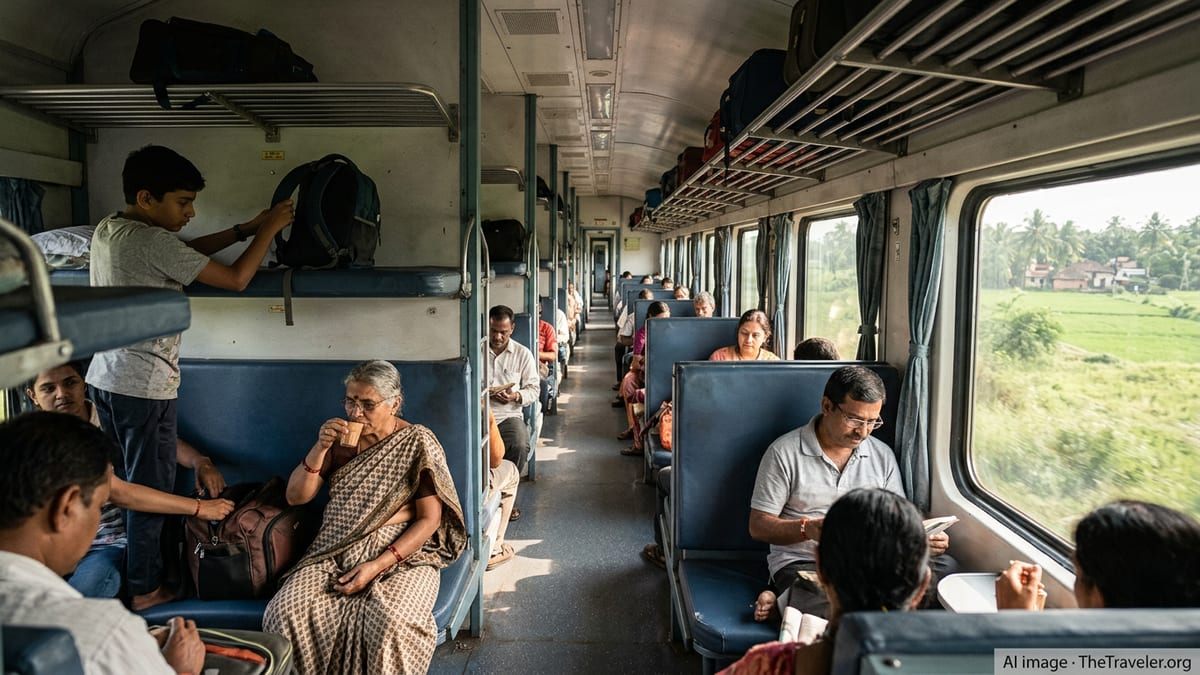
Deadly blaze on long-distance service
According to published coverage in Indian and international media, the incident occurred on a long-distance passenger service in the southern state of Tamil Nadu, when a coach caught fire in the early hours of the morning. Early reports indicate that the coach was being used by a group of travelers who had boarded with cooking equipment, and that the ignition of an unauthorized gas cylinder is suspected to have triggered the blaze.
Local news reports describe flames spreading rapidly through the compartment, with thick smoke filling the coach as passengers tried to escape into adjoining cars or onto the trackside in the pre-dawn darkness. Several people were unable to get out in time and died at the scene, while others sustained burns and smoke inhalation injuries before nearby passengers and railway staff managed to isolate the affected coach.
The fire was eventually brought under control after emergency services reached the train, but images shared by news outlets show a charred shell where the tourist coach once stood. The severity of the damage has made forensic work challenging, and public information suggests that a detailed technical investigation is now under way to reconstruct the exact sequence of events.
Initial tallies from local hospitals and district authorities suggest that alongside the fatalities, dozens of people required treatment for burns, fractures and respiratory problems after escaping through windows or jumping down onto the ballast in panic.
Tourist coach and night-time travel under scrutiny
Publicly available information indicates that the coach involved was part of a special tourist arrangement hitched to a regular passenger train, a configuration that has become more common as India promotes themed journeys and religious circuits to domestic travelers. Such coaches are often privately booked by groups, sometimes with arrangements to prepare food on board during overnight stops.
Travel industry observers note that this model, while popular and often marketed as a convenient way for pilgrim and leisure groups to move together, introduces additional risk if safety rules on cooking, fuel storage and electrical use are not rigorously enforced. Night-time operations increase the danger further, as many passengers are asleep and visibility along platforms and trackside areas is reduced.
For international visitors, the incident is a reminder that not all rolling stock on India’s vast rail network is configured to the same standard, particularly when it comes to older non air-conditioned coaches and special tourist attachments. Travel planners often highlight the importance of understanding carriage types, emergency exits and the locations of extinguishers when choosing routes and accommodations on board.
Tour operators working with foreign travelers are expected to watch the findings of the official inquiry closely, since any recommendations about how tourist coaches are fitted out or supervised during overnight halts could affect future itineraries that rely heavily on rail segments.
Pattern of recent train fires and safety concerns
The latest tragedy follows a series of recent fire and fire-scare incidents involving Indian passenger trains, several of which have attracted international attention due to viral video and eyewitness posts on social platforms. In some cases, small electrical faults in air-conditioned coaches have produced smoke and localized flames that were contained before causing casualties, while in others, passengers panicked at the mere perception of fire and attempted to jump from moving or stationary trains.
Past reporting on rail safety in India has highlighted recurring issues such as the carriage of inflammable goods in luggage, the illegal use of gas stoves and cylinders for cooking inside coaches, and aging electrical systems in certain classes of rolling stock. These practices can turn a minor technical fault or a moment of carelessness into a fast-spreading blaze in a confined, crowded space.
Safety analysts often point out that while headline-making collisions and derailments receive the most global coverage, smaller fires and smoke incidents are more frequent and can be just as deadly when they occur at night, in remote areas or in coaches where doors and windows are difficult to access. The new incident strengthens calls for a more transparent, data-driven approach to cataloguing on-board fires and near-misses, making it easier to identify systemic risks.
In the context of India’s broader transport modernization push, the episode underlines the gap between high-profile new projects, such as semi-high-speed corridors, and the day-to-day realities of safety enforcement on conventional routes heavily used by budget-conscious domestic travelers and inbound tourists alike.
Implications for domestic and international travelers
For travelers already in India or planning upcoming trips, the fire serves as a prompt to review basic safety practices on long-distance trains. Travel advisories and independent trip-planning resources commonly recommend avoiding the carriage of gas cylinders, fuel containers or any open-flame devices, even when such items may appear to be tolerated in some informal settings.
Passengers are also encouraged to familiarize themselves with the layout of their coach upon boarding, noting manual door mechanisms, emergency window exits and the location of fire extinguishers or alarm chains. In crowded overnight compartments, keeping footwear and essential items close at hand can save crucial seconds in an evacuation.
Tour groups and operators that charter whole coaches or blocks of berths may look to tighten their own internal guidelines, for example by designating a responsible safety lead within the group, agreeing clear rules on cooking and heating appliances, and arranging pre-departure briefings that cover evacuation routes and muster points on platforms during unscheduled stops.
For independent foreign visitors, one emerging theme in travel commentary is the benefit of selecting trains and classes of travel that offer clearer safety information, better-maintained interiors and more predictable staffing levels, even when this entails a modest increase in ticket cost or a slightly slower schedule.
Policy debate and the path ahead for rail safety
Following the fire, public discussion in India has again turned to the question of how far rail operators and government agencies should go in enforcing safety rules on board, particularly in relation to baggage checks, surprise inspections and penalties for carrying prohibited items. Commentators sympathetic to budget travelers argue that many passengers resort to carrying their own cooking fuel because affordable catering options are not consistently available at stations and on trains.
Others counter that the cost of a warm meal is far lower than the human and economic toll of a major on-board fire, suggesting that the rail system needs a combination of stricter enforcement and more accessible, hygienic food services to remove any perceived need for open-flame cooking in coaches. Some specialists have also drawn attention to the potential for upgraded electrical systems, smoke detectors and fire-retardant interior materials to limit the spread of future blazes.
As investigations proceed, the incident is expected to influence ongoing debates over coach design, refurbishment priorities and the rollout of modern safety technologies on India’s busiest corridors. For the global travel community that increasingly relies on rail to explore the country, the outcome will shape perceptions of risk and resilience on one of the world’s most extensive passenger networks.
In the meantime, the severe fire on the passenger train underscores both the enduring importance of India’s railways to domestic mobility and tourism, and the urgent need to align everyday safety practices with the rising expectations of travelers from around the world.