


More news on this day
Flight disruption across Dubai and the wider Middle East is extending into the peak summer travel period, as international airlines keep route suspensions in place even after a halt in US strikes on Iran, according to recent travel advisories and industry updates.
Get the latest news straight to your inbox!
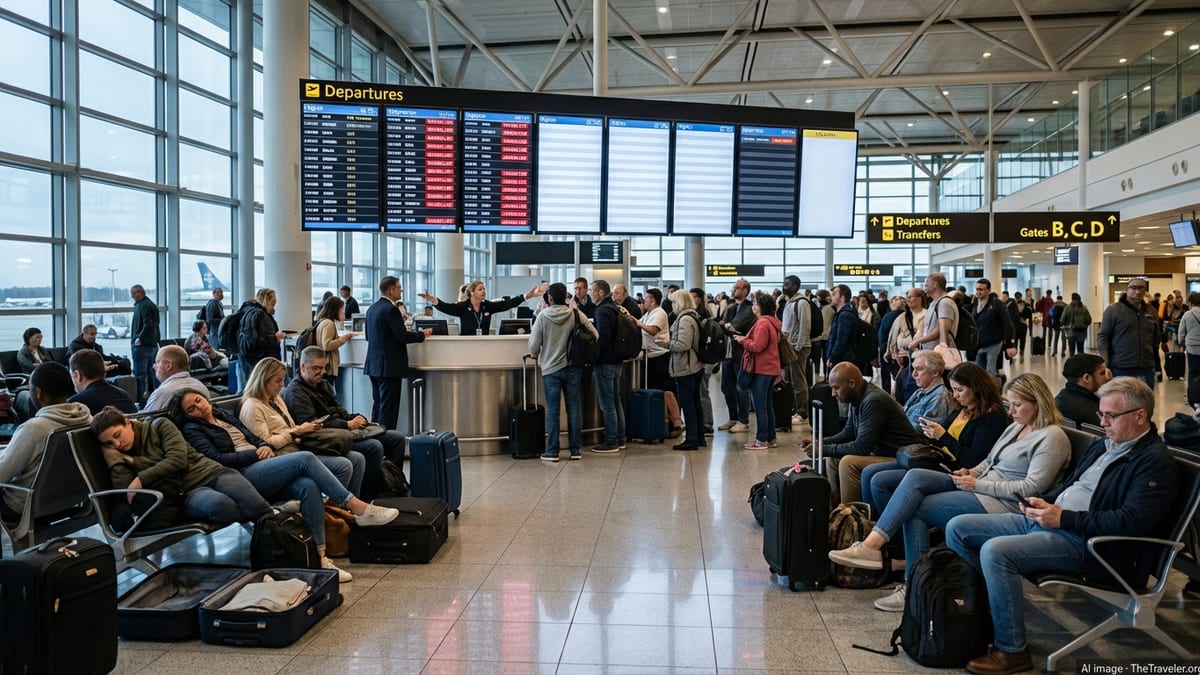
From airspace shutdown to partial recovery at Gulf hubs
Air travel in the region was thrown into disarray in late February and early March 2026, when the conflict involving Iran, the United States and Israel triggered rapid airspace closures across the Gulf. Publicly available information shows that Bahrain, Iraq, Israel, Kuwait, Qatar, Syria and the United Arab Emirates all restricted their skies, prompting thousands of flight cancellations and the temporary shutdown of key hubs in Dubai and Abu Dhabi.
Dubai International Airport, one of the world’s busiest long-haul transit points, halted operations more than once during the initial escalation as Iranian missile and drone strikes targeted infrastructure around the Gulf. Industry digests indicate that at the peak of the crisis, between 3,000 and 4,000 flights a day were being cancelled across the Middle East as airlines scrambled to reroute aircraft or ground fleets.
By early May, official notices and consultancy reports signalled that the UAE had formally reopened its airspace and restarted commercial services. However, capacity at Dubai International remained well below pre-crisis levels, with some analyses estimating operations at around half of normal throughput as airlines rebuilt schedules cautiously and airport authorities prioritized limited slots.
The immediate risk to flights from direct military action has eased since Washington paused strikes on Iran, but the earlier shutdowns have left a lasting operational hangover. Airline networks remain out of position, crews are scattered, and bottlenecks at alternative hubs from Istanbul to Muscat continue to complicate route planning.
International carriers extend suspensions into late summer
Despite this gradual reopening of Gulf airspace, many non-regional airlines are keeping their suspensions on services into Dubai and other Middle Eastern cities. Airline notices and ticketing updates compiled by travel analysts show several European and North American carriers pushing back their planned return dates multiple times as they reassess security and insurance requirements.
Recent summaries circulating among frequent-flyer communities indicate that some major European groups have paused Dubai operations into August, with certain routes not expected back before September. A number of Asia Pacific airlines have likewise extended cancellations on Dubai and Riyadh services through at least the end of the summer timetable, citing the complexity of rerouting around Iranian airspace and the knock-on impact on long-haul schedules.
Travel industry briefings suggest that airlines are particularly cautious about flights that would normally cross or closely skirt Iranian territory, preferring to wait for a longer period of stability before committing aircraft and crew. Detours via the Caucasus, Central Asia or the Arabian Sea add significant flying time and fuel burn, undermining the economics of marginal routes at a moment when jet fuel costs and insurance premiums remain elevated.
As a result, even as some regional carriers restore truncated networks, many foreign airlines have chosen to keep their Middle East suspensions in place well beyond the point when US military activity visibly scaled back. For travellers, that means a thinner menu of non-stop options into Dubai and key Gulf gateways well into the late summer holiday season.
Regional airlines navigate capacity limits and selective routes
Gulf-based airlines have played a central role in sustaining connectivity, but their recovery has been uneven and selective. Carriers such as Emirates, Etihad and Qatar Airways initially grounded large parts of their fleets when airspace closures made core corridors unviable. In the months since, publicly available operational bulletins show them rebuilding schedules with reduced frequencies and targeted destinations rather than a full return to normality.
In the United Arab Emirates, Dubai Airports and aviation authorities have at times limited the number of daily services permitted for non-UAE carriers, in order to preserve room in the skies for military traffic and repositioning flights. Travellers report that some foreign airlines have been allowed as little as one daily flight, forcing carriers to prioritise the most commercially important city pairs and cut back secondary services.
Regional updates from logistics and consulting firms describe ports such as Muscat and Doha acting as alternative corridors while parts of the Gulf airspace remained constrained. Airlines have added temporary links via Oman or rerouted over Pakistan and the Arabian Sea, creating new one-stop options but also lengthening travel times between Europe, Asia and Africa.
At the same time, some carriers based in the region are still avoiding specific destinations viewed as higher risk or operationally challenging. Selective suspensions to cities in Iran, Iraq and Lebanon remain in force, while more politically stable markets such as Saudi Arabia and Egypt have seen capacity return more quickly.
Knock-on effects for passengers booking through Dubai
The persistence of route suspensions has practical consequences for travellers who rely on Dubai as a primary transit hub. With fewer international airlines serving the city and Gulf-based operators running reduced schedules, peak-period seats are tight and fares on remaining services have risen on many routes, according to online fare trackers and booking platforms.
Passengers with existing tickets are facing a patchwork of options, including free date changes, rebooking via alternative hubs, or full refunds where flights are cancelled outright. Aviation forums and airline advisories stress the importance of checking flight status repeatedly in the days before departure, as late schedule changes remain common while carriers adjust to shifting airspace restrictions.
The disruption is especially acute for itineraries that traditionally depend on smooth connections through Dubai between Europe and South or Southeast Asia, as well as between North America and Africa. With some non-stop links removed and connection windows tightened or lengthened unpredictably, missed connections and overnight layovers are more likely, adding uncertainty and cost for travellers.
Travel agents and corporate travel managers are increasingly steering passengers toward routings that avoid the most affected corridors, even if this means longer journeys via cities such as Istanbul, Doha or European hubs. For individual travellers, the advice from consumer advocates is to monitor airline apps closely, understand refund and rebooking rules, and consider more generous connection times than usual.
Outlook: stability needed before full schedules return
Industry analysts generally agree that a sustained period without significant military escalation will be necessary before airlines fully restore Middle East networks. Even with US strikes on Iran currently halted, carriers must weigh the risk of renewed hostilities against the financial cost of operating long detours or parking aircraft.
Reports from aviation consultancies underline that rebuilding long-haul schedules is a complex, multi-week process involving aircraft rotations, crew planning and airport slot allocations. Airlines are reluctant to reverse suspensions for only a short window of calm, given how disruptive it can be to cancel services again if tensions flare.
For Dubai and its Gulf neighbours, the ongoing disruption underscores both the strategic importance and vulnerability of their role as global transit hubs. While the region’s airports and airlines have begun to recover from the immediate shock of airspace closures and strikes, the cautious stance of many foreign carriers means travellers can expect a thinner network and lingering uncertainty through at least the end of the current summer season.
Until there is greater clarity on the security environment and regional airspace restrictions, passengers planning to route through Dubai or nearby hubs are likely to face a travel landscape defined by selective suspensions, longer flight paths and a premium on flexibility.