


More news on this day
Japan’s normally resilient air network has been thrown into disarray as publicly available tracking data shows 247 flight delays and 18 cancellations, disrupting operations at major hubs from Tokyo to Osaka and leaving thousands of travelers facing unexpected overnight stays, missed connections and rapidly changing itineraries.
Get the latest news straight to your inbox!
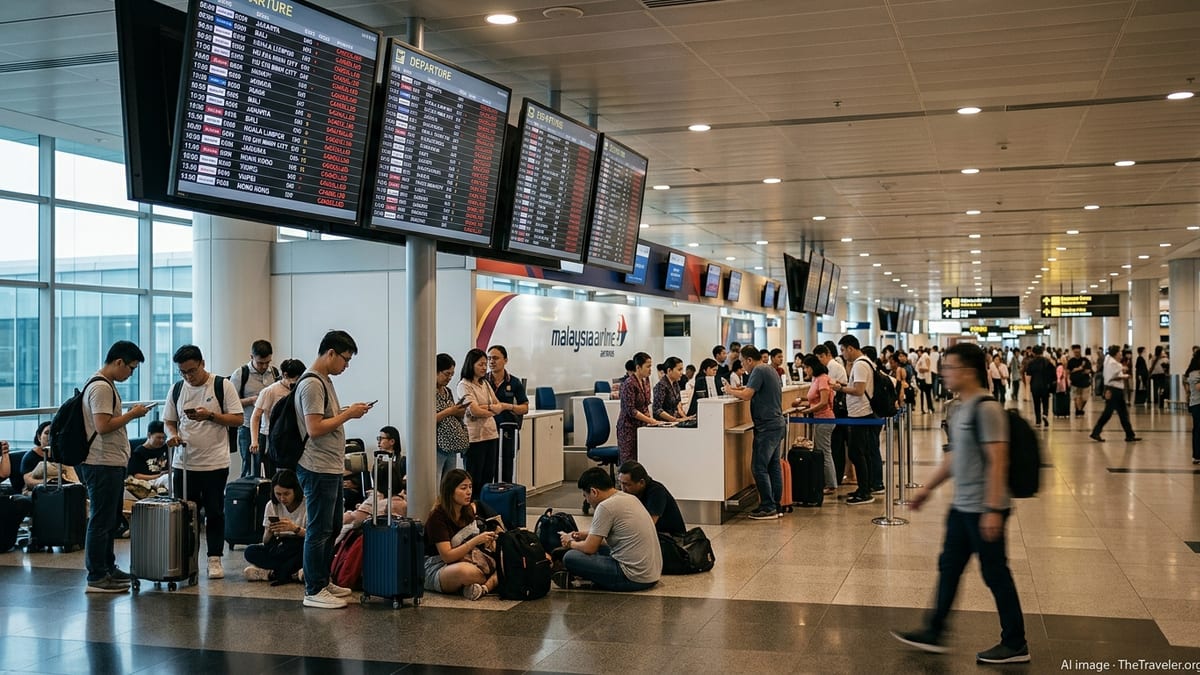
Major Hubs From Tokyo to Osaka Struggle to Keep Schedules Intact
The latest figures indicate that disruption is concentrated around the country’s busiest airports, including Tokyo’s Haneda and Narita, Osaka’s Kansai International and Itami, and key regional gateways such as Sapporo’s New Chitose and Fukuoka. Delays are affecting both domestic shuttles on Japan’s golden routes and international services linking Japan with the rest of Asia, Europe and North America.
Reports from flight tracking platforms and operational updates from carriers show departure boards dominated by late departures and rolling knock-on effects. When early morning sectors depart behind schedule, aircraft and crews are pushed out of position for the rest of the day, amplifying the impact of what begins as a relatively modest disturbance into a network wide problem by afternoon and evening.
Airlines are attempting to prioritize core trunk routes, often protecting frequencies between Tokyo, Osaka and Sapporo while trimming thinner regional services. That approach helps keep the overall network moving but can leave customers in smaller cities with fewer alternatives when a cancellation removes the only flight of the day or forces lengthy detours via multiple hubs.
At the same time, airports are contending with crowded security lanes, pressure on check in counters and longer waits for baggage as delayed flights bunch together. Published coverage notes that terminal congestion at peak times has added an extra layer of stress for travelers already dealing with uncertain departure times.
Weather, Technical Issues and Tight Scheduling Combine
Recent disruption patterns across Japan suggest that no single factor is responsible for the latest wave of delays and cancellations. Weather remains a perennial challenge, with seasonal storms, low cloud and strong crosswinds complicating operations at coastal airports and mountain rimmed cities. Earlier coverage of a weakening tropical system moving across the archipelago highlighted how quickly adverse conditions at a handful of airports can send delays rippling through the national network.
Technical vulnerabilities are also in focus. A system glitch at Kansai and Osaka Itami in recent weeks illustrated how disruptions in airport technology and ground handling systems can affect dozens of departures within hours, as check in, boarding and aircraft turnaround processes slow down. Although today’s disruption appears more diffuse, aviation analysts point out that many Japanese hubs run at high utilization, leaving little slack when problems arise.
Structural pressures within airline scheduling add to the strain. Domestic carriers in Japan typically operate intense rotations, turning aircraft multiple times per day on short haul sectors. While efficient in normal conditions, this model means that a delay of 30 to 60 minutes on a morning service can cascade across a full day of flying, particularly if crews reach duty time limits or aircraft require additional inspections.
Industry data on global flight disruptions underscores this vulnerability, showing that highly banked hub operations are especially sensitive to even small perturbations. Once disruptions crest above a certain threshold, airlines often revert to strategic cancellations to reset the operation, which may help restore punctuality the following day but deepens short term pain for affected passengers.
Impact on Domestic and International Travelers
The immediate consequences for travelers are being felt across both domestic and international markets. On internal routes, those commuting between regional cities and the major hubs are facing missed meetings, curtailed day trips and rebookings onto late night or next day services. In Japan’s tourism hot spots, such as Hokkaido and Kyushu, visitors risk losing prepaid hotel nights and activities when flights fail to depart on schedule.
International passengers connecting through Japanese hubs are experiencing broken itineraries, extended layovers and, in some cases, forced overnight stays when onward services depart before delayed inbound flights land. Long haul journeys that rely on carefully timed connections at Tokyo or Osaka are particularly exposed, as alternative routings may be fully booked during busy travel periods.
Travel insurance and compensation rules vary by carrier and jurisdiction, but consumer advocates note that documentation is crucial. Many airlines now provide digital delay and cancellation certificates via their apps or websites, which can help travelers substantiate claims for additional expenses such as accommodation, meals and ground transport incurred as a result of disruption.
The disruptions are also affecting business logistics and cargo flows. Japan’s major hubs handle significant freight volumes, including time sensitive shipments of automotive parts, electronics and pharmaceuticals. Even modest delays in these sectors can reverberate through supply chains, and logistics operators are closely watching whether today’s disruption remains a short term spike or evolves into a prolonged pattern.
How Airlines and Airports Are Responding
Publicly available information shows that carriers are leaning heavily on digital channels to manage the situation. Airline apps and websites are being used to push real time departure updates, gate changes and rebooking options, reducing the need for passengers to queue at service desks in already busy terminals. Some carriers have relaxed change fees or fare differences for affected flights, allowing customers to shift travel to later days where capacity allows.
Airports, for their part, are adjusting staffing and resource allocation as disruption unfolds. Ground handling teams, security contractors and concessions are being asked to cope with irregular passenger flows, as waves of delayed departures create short but intense peaks in demand for screening, boarding and customer service. Terminal operators are also seeking to keep passengers informed via display boards and public announcements while encouraging the use of self service kiosks and automated bag drops where available.
Operationally, airline control centers are working to reposition aircraft and crews so that the following day’s schedule can start as close to normal as possible. This often involves tactical swaps of aircraft between routes, consolidating lightly booked services and using spare overnight capacity to rebuild resilience. The ultimate goal is to halt the rolling effect of delays and restore on time performance to the levels that travelers in Japan typically expect.
Analysts observing the situation note that Japan’s carriers and airports have historically recovered quickly from short term shocks, including severe weather events and isolated technical failures. The speed and effectiveness of the current recovery will be an important indicator of how well the system can cope with growing demand during upcoming peak travel seasons.
What Travelers Should Do If They Are Affected
Passenger advocates and travel industry guidance converge on a few key steps for those caught up in the latest disruption. Travelers are encouraged to monitor flight status frequently, using airline apps and airport departure boards rather than relying solely on original booking confirmations, which can quickly become outdated when schedules are in flux.
Where airlines permit, same day changes through digital channels can often be faster than waiting in line at the airport. Rebooking online or in an app allows passengers to compare alternative departures, nearby airports and next day options while seats are still available. Those with onward connections or separate tickets may benefit from proactively contacting other carriers to adjust later segments once a significant delay becomes apparent.
Keeping receipts for out of pocket expenses is another important step, as these documents support potential reimbursement claims under airline policies or travel insurance. Travelers are also advised to retain boarding passes and any disruption notices issued by carriers, whether in paper or electronic form, in case evidence is required at a later stage.
For upcoming trips within Japan, observers suggest building additional buffer time into itineraries, particularly when scheduling tight same day connections, important events or last train connections at the end of a long journey. While the current wave of disruption may ease as schedules stabilize, recent events highlight how quickly even a sophisticated air transport system can encounter strain when multiple risk factors converge.