


More news on this day
Strong storms sweeping across Mallorca in recent days have disrupted operations at Palma de Mallorca Airport, triggering widespread delays and cancellations as heavy rain, lightning and powerful wind gusts swept over the island’s main gateway.
Get the latest news straight to your inbox!
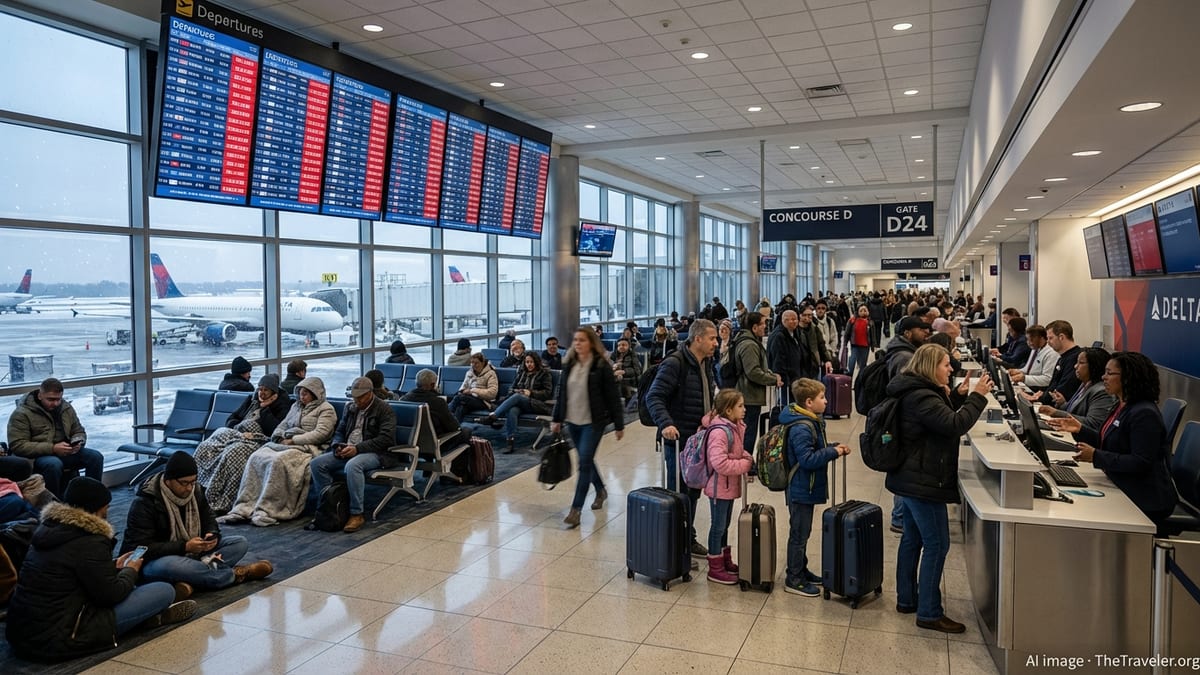
Storms Bring Hours of Disruption to Palma Operations
According to publicly available weather data, a sequence of intense showers and thunderstorms moved across Mallorca during the afternoon and evening of 9 September 2026, coinciding with peak movements at Palma de Mallorca Airport. The conditions were marked by heavy downpours, frequent lightning and periods of strong, shifting winds in the vicinity of the airfield.
Local news coverage describes scenes of disruption at the terminal, with aircraft unable to depart or land during the most active phases of the storm. Ground operations faced particular challenges when lightning activity intensified, as standard safety procedures require the temporary suspension of ramp work such as baggage handling and refuelling during nearby strikes.
Tracking services and aviation disruption monitors indicate that the impact was sharpest on 9 September, when the worst of the storms coincided with the busiest hours of the day. The combination of weather-related holding patterns, diversions and reduced ground handling capacity contributed to a growing backlog of flights waiting for departure slots and arrivals being rescheduled.
Regional meteorological summaries suggest that the storms were part of a broader episode of unsettled weather across the Balearic Islands, where a moist, unstable air mass interacted with local sea breezes to generate slow-moving thunderstorm cells. While such events are not unprecedented in early autumn, the timing and intensity of this particular outbreak led to notable disruption at one of Spain’s busiest holiday airports.
Delays, Cancellations and Knock-on Effects for Travelers
Disruption data compiled by specialist air travel rights platforms shows that Palma Airport recorded a spike in irregular operations on 9 September, with dozens of cancellations and a large number of delayed services attributed to storms over the island. Some summaries point to more than 40 flight cancellations and several hundred delays across the day, affecting both inbound and outbound traffic.
Live flight status archives and cancellation trackers for the days that followed indicate that operations gradually stabilised, but that Palma continued to see isolated cancellations and delays on 10 and 11 September as airlines worked through aircraft and crew rotations affected by the initial weather shock. These secondary disruptions are typical when aircraft and crews are left out of position after a sudden shutdown of operations.
Travel rights information portals highlight that, where services were cancelled or significantly delayed due to the severe weather, passengers were generally entitled to assistance such as meals, refreshments and accommodation while they waited for rerouting. In contrast, direct financial compensation is usually not available in cases where the primary cause of disruption is classified as adverse weather, which is generally considered to be outside an airline’s direct control.
Publicly available guidance also notes that passengers whose trips were disrupted are advised to keep boarding passes, booking confirmations and receipts for any out-of-pocket expenses, and to contact their airline or travel provider to confirm individual options for rebooking or refunds. Many carriers serving Palma offer online tools or apps that allow customers to manage disrupted itineraries without joining physical queues at the airport during busy periods.
Operational Constraints at Palma Amid Adverse Weather
Palma de Mallorca Airport serves as a major hub for holiday traffic from across Europe, particularly during late summer and early autumn when visitor numbers remain high. Historical air traffic analyses show that even modest disruptions can quickly ripple through the timetable at such a busy seasonal gateway, especially when many flights are tightly scheduled turnarounds between popular leisure destinations.
In recent weeks, technical notices published for airspace users have also highlighted temporary limitations on certain approach procedures at Palma, including restrictions affecting some satellite-guided instrument approaches. While these notices are part of planned operational changes and maintenance, they may reduce the range of options available to air traffic controllers and pilots when managing arrivals during periods of poor visibility or rapidly changing weather.
Data from European network and delay monitoring reports for previous years underline that thunderstorms and strong winds have periodically affected Palma and other Mediterranean airports during late summer and early autumn. When convective storms pass close to an airport, standard safety practices typically require wider spacing between aircraft, restrictions on certain runway configurations and, at times, temporary closures of arrival or departure flows until conditions improve.
At ground level, operators must balance the need to protect staff and passengers from lightning and high wind with the pressure to move aircraft, baggage and catering equipment efficiently. Publicly available operational guidance shows that ramp activities are often halted whenever lightning is detected within a defined radius of the airfield, which can quickly lead to aircraft waiting for stands to be serviced even after the heaviest rainfall has passed.
Impact Across Mallorca and Advice for Upcoming Trips
Regional emergency service summaries from the Balearic Islands report that the same storm system that affected Palma Airport also generated a high volume of weather-related incidents across Mallorca. These included downed trees, localized flooding and blocked roadways in several municipalities, highlighting the broader impact of the severe conditions beyond aviation alone.
For travelers planning imminent journeys through Palma, aviation data aggregators currently portray a largely normal pattern of operations in the days after the main storm episode, with only a handful of recent cancellations and delays compared with the peak disruption on 9 September. However, late-summer weather in the western Mediterranean can remain changeable, and forecasts indicate the possibility of further unsettled spells.
Travel industry advisories recommend that passengers check their flight status regularly with airlines and consult airport departure and arrival boards close to the time of travel, particularly during periods of active weather. Leaving additional time for check-in, security and potential queues at customer service desks can be helpful when disruption is ongoing or appears likely.
Holidaymakers already on the island are also encouraged, according to public guidance from local authorities and emergency services, to monitor local weather updates and heed any warnings about heavy rain, thunderstorms or strong wind, which can affect both transport and outdoor activities. As the busy summer season tapers into autumn, Palma de Mallorca Airport and the island’s tourism sector will be watching conditions closely in the hope of avoiding a repeat of the most severe disruption seen during the latest storms.