


South Jersey is often shorthand for casino lights in Atlantic City or family boardwalks in Ocean City and Wildwood. But if you drift a few miles off the main highways, a very different coastline appears: quiet fishing towns facing the Delaware Bay, tiny Victorian communities tucked behind dunes, and millions of acres of Pine Barrens where rivers move the color of strong tea. This guide shows you how to explore that side of South Jersey, focusing on real beaches, small towns and nature spots where you can still hear the wind in the reeds and the crunch of gravel under your tires.
Get the latest updates straight to your inbox!
Understanding South Jersey’s Quieter Side
On the map, South Jersey’s Southern Shore region covers Cape May and Cumberland counties, with a coast that faces both the Atlantic Ocean and the Delaware Bay and an interior that merges into the New Jersey Pine Barrens. It is a landscape of salt marshes, back-bay channels, young pine and oak forests, and low-key fishing villages that feel a world away from the more commercialized stretches of the Jersey Shore.
Instead of neon and packed parking lots, you will find places like Fortescue or Mauricetown, where a single bar or bait shop may be the liveliest building in town, and birders outnumber beach umbrellas. Inland, the Pinelands National Reserve stretches across more than a million acres of protected land, with sand roads, cedar swamps and tea-colored rivers that kayakers quietly slip along in summer. These are the areas where South Jersey’s hidden charm really reveals itself.
Travel here is less about ticking off big-name attractions and more about spending slow days on scenic byways such as the Bayshore Heritage Scenic Byway, which runs from Salem County down to Cape May Point, or the Pine Barrens Byway that snakes past company towns, bogs and forgotten sidings. You move between tiny grid-planned towns, wildlife refuges and trailheads known mostly to locals, learning to read tide charts and sunset times instead of casino show schedules.
For most travelers, the best approach is to base in one or two hubs – for example, a guesthouse in Cape May or a rental in a Bayshore village – and then day-trip along the back roads. Summer weekends are busiest, but late spring and early fall often bring the clearest views, coolest hiking weather and spectacular bird migrations with far smaller crowds.
Atlantic Beaches Without the Boardwalk Crowds
If you want ocean surf but less spectacle, focus on the southern end of Cape May County where low-key beaches sit between or just beyond more famous resort towns. Cape May Point, at the southernmost tip of New Jersey, has calm, family-friendly beaches framed by dunes and historic cottages, with the added bonus of Cape May Point State Park and its lighthouse just behind the sand. The atmosphere is residential and hushed; street parking rules change seasonally, so check local signage or your rental host’s guidance.
Just east, the boroughs of Stone Harbor and Avalon share a stretch sometimes called Seven Mile Island. Here the streets are lined with upscale beach houses and low-rise motels rather than high-rise condos, and the oceanfront is mostly unbroken sand. On a typical July day you can still find open space near the 120th Street beach in Stone Harbor or along southern Avalon, especially early in the morning or around dinner time. Beach tags are required in season, but day passes are usually under twenty dollars per person, with discounts for weekly or seasonal badges.
For those who prefer to see the back bays rather than just the oceanfront, several local outfitters in Stone Harbor, Avalon and Cape May offer guided kayak and stand-up paddleboard tours. These trips usually run from late May through early October and cost roughly fifty to eighty dollars per person for two to three hours on the water, including basic instruction and gear. Guides take you through winding channels behind the barrier islands, where herons, ospreys and occasionally dolphins become part of the scenery.
To keep these beaches feeling uncrowded, many towns strictly limit boardwalk-style development. Nightlife is modest, so evenings tend to be about slow dinners, ice cream walks and watching the light fade over the ocean. For travelers who still want to sample a classic boardwalk, Ocean City and the Wildwoods are less than an hour’s drive away, making it easy to pair one noisy afternoon with a week of quieter mornings.
Hidden Delaware Bay Beaches and Bayshore Villages
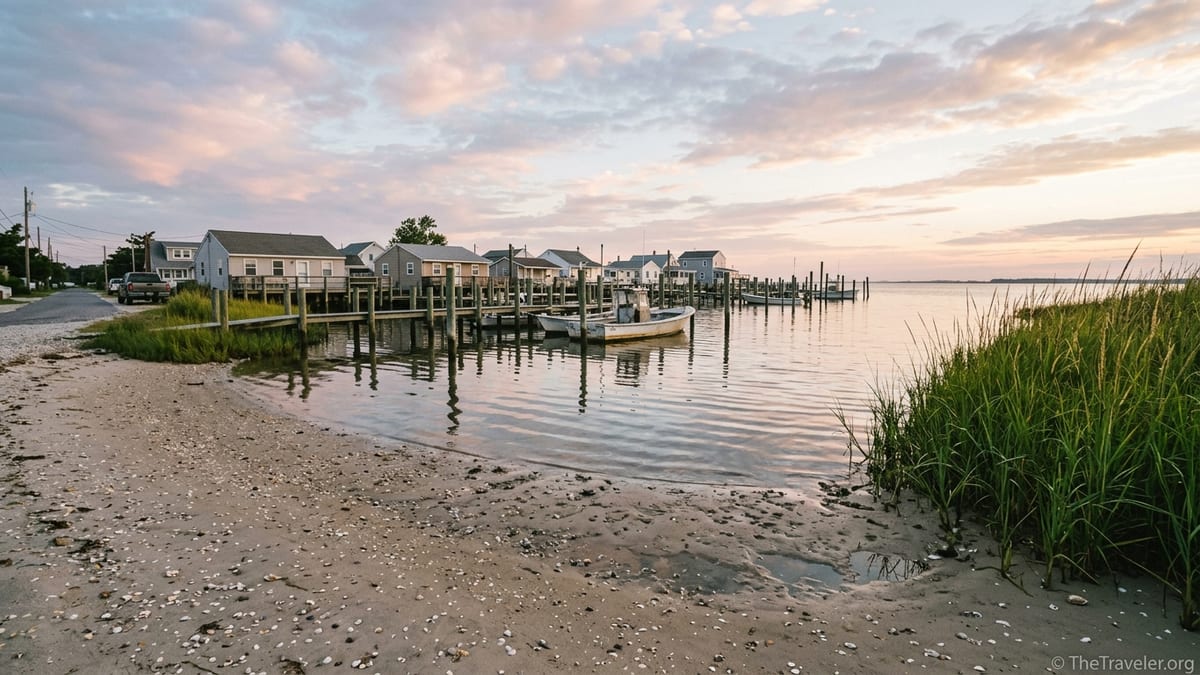
Turn your back on the Atlantic and follow county roads west, and you hit a different shoreline along the Delaware Bay. Here the water is calmer, the sand is often mixed with marsh grass and shells, and the towns feel like the East Coast version of a bayou village. Places like Fortescue, Money Island, Heislerville and Thompson Beach sit at the edge of wide tidal flats and salt marshes that are crucial feeding grounds for migrating shorebirds each spring.
The Bayshore Heritage Scenic Byway is the best organizing thread for exploring this area. It winds from Mannington Township in Salem County down through Cumberland County hamlets and into Cape May County, linking working waterfronts, historic districts and small nature preserves. For instance, Fortescue in Downe Township has a narrow beach, a public pier popular with anglers, and a couple of simple motels and taverns that serve fried seafood and local stories in equal measure. A few miles south, the road to East Point Lighthouse passes through the Heislerville Wildlife Management Area, where unpaved pull-offs overlook acres of marsh crisscrossed by tidal creeks.
Because facilities are minimal, you should arrive prepared. Many of these bayfront spots have gravel parking lots, portable toilets or none at all, and no lifeguards. Summer water temperatures can be warm, but currents and drop-offs vary, so most visitors come for walking, birdwatching or sitting on folding chairs rather than full-on swimming. On holiday weekends, local volunteer groups sometimes host events such as horseshoe crab walks or lighthouse open houses where you can climb to the lantern room for broad views of the marshes.
For an atmospheric overnight, consider renting a small cottage in one of the Bayshore villages, particularly in shoulder seasons like late May or September. Prices are often lower than along the Atlantic, and you wake up to the sound of gulls and the smell of marsh mud instead of car alarms. Bring your own groceries from larger towns like Millville or Bridgeton, since local shops may keep limited hours and restaurant options can be sparse outside of peak fishing season.
Small Towns With Character, Not Crowds
South Jersey’s inland and bayside towns are where you feel the region’s history most clearly. In Cape May County, the city of Cape May gets most of the attention for its dense concentration of Victorian houses, but nearby communities such as West Cape May and Cape May Point have their own quiet charm. West Cape May’s residential streets hold old farmhouses, small inns and backyard gardens; in late summer, roadside stands sell tomatoes and peaches from local farms. Cape May Point, originally established in the nineteenth century, remains a tiny borough wrapped around its lake and dunes, more likely to echo with bicycle bells than car horns.
Heading north and west, the towns along the Bayshore Heritage Scenic Byway feel even more off the radar. Places like Mauricetown in Cumberland County show off rows of nineteenth-century ship captains’ houses along the Maurice River, while Greenwich offers tree-lined streets and colonial-era buildings that hint at its role as a trading port centuries ago. Many of these communities have local history museums or seasonal house tours run by volunteers; admissions are usually modest, often under ten dollars, and go directly toward maintaining historic structures.
Practical travel in these towns looks different from a resort stay. Accommodations may mean a bed-and-breakfast in a restored home, a simple motel catering to anglers, or a short-term rental on a quiet side street. Expect to drive to reach restaurants or grocery stores, since walkability is limited outside a few compact historic centers. It is wise to check opening days in advance, especially in winter and early spring, when some cafes and antique shops only open on weekends.
Many visitors combine these town stops with drives into the Pine Barrens or out to nearby wildlife refuges. A morning coffee in Bridgeton can turn into an afternoon hike in Belleplain State Forest, or a stroll through Salem’s historic district might be followed by a sunset drive along the marshes of Supawna Meadows National Wildlife Refuge in Pennsville. The joy lies in stringing together small, unhurried experiences rather than racing between marquee sights.
Into the Pine Barrens: Rivers, Forests and Dark Skies
South Jersey’s interior is dominated by the New Jersey Pine Barrens, part of a national reserve spanning several counties and protecting a mix of sandy uplands, cedar swamps and rare dwarf forests. Although the most famous sections sit in Burlington and Ocean counties, the southern fringe reaches into Atlantic, Cape May, Cumberland and Salem counties, making it easy to blend a beach trip with a pine woods detour.
Belleplain State Forest, straddling northern Cape May and eastern Cumberland counties, is one of the most accessible gateways. Its network of sandy trails and paved park roads leads to Lake Nummy, a small lake with a designated swimming area in summer, picnic groves and family-friendly campgrounds. Campsites here are typically basic but affordable compared with coastal lodging, and a night under the pitch pines can be a welcome contrast to a week in a beach rental. Firewood rules and seasonal amenities change periodically, so always confirm details with the park office before you arrive.
Farther west, Cumberland and Salem counties offer a mix of Pine Barrens edges and vast marshlands that are surprisingly dark at night. Locals often recommend Belleplain, Heislerville, Fortescue and the Glades Wildlife Refuge area near the Maurice River for stargazing because of low light pollution and big sky views over the marsh. On clear summer nights you can often see the Milky Way with the naked eye, especially if you walk a short distance away from any parking area lights.
Exploring the Pine Barrens requires a slightly different mindset. Cell service can be inconsistent on sand roads, and GPS apps sometimes misjudge unpaved tracks, so printed maps or offline downloads are useful backups. Sand roads can flood or develop deep ruts after storms; if you do not drive a high-clearance vehicle, stick to established paved roads and official parking lots at parks and preserves. Even short trails feel wild once you leave the car, with birdsong and the smell of sun-warmed pine needles replacing traffic noise.
Where to Hike, Paddle and Watch Wildlife
For such a compact region, South Jersey offers a wide range of outdoor experiences that require little technical skill. Along the Cape May Peninsula, the Cape May National Wildlife Refuge and nearby state and local preserves protect thousands of acres of beach, forest and marsh. Units of the refuge near the ocean, such as the Two Mile Beach area in Lower Township, feature short boardwalks and trails that bring you through dunes, maritime forest and tidal ponds frequented by egrets, herons and migrating songbirds. These walks are typically flat and family-friendly, making them ideal for a first taste of coastal habitat.
To the west, Supawna Meadows National Wildlife Refuge in Salem County offers another perspective on the Delaware River estuary, with trails and observation areas facing wide marshes and distant ship traffic. Around the Maurice River, the Glades Wildlife Refuge and other protected lands host seasonal events like guided eagle walks in winter and horseshoe crab-focused outings in late spring, led by local conservation groups. These experiences often cost a modest registration fee, and spots can fill quickly during peak migration weekends.
Paddlers have an almost overwhelming number of options. Tea-colored Pine Barrens rivers such as the Wading, Mullica and Maurice are classic day trips, with local outfitters providing kayak or canoe rentals and shuttle services. Prices for a self-guided half-day paddle usually land in the range of sixty to ninety dollars per boat, depending on distance and equipment. For coastal paddling, rental shops and tour companies in Stone Harbor, Sea Isle City, Avalon, the Wildwoods, Beach Haven and Cape May run back-bay tours that focus on osprey nests, spartina grass marshes and narrow creeks only accessible at mid to high tide.
Even casual walkers will find plenty of low-key trails. Lizard Tail Swamp Preserve, near the center of Cape May County, loops through diverse forest and wetland habitats along well-marked paths, giving a quieter alternative to busier state park trails. Short nature walks at Cape May Point State Park, the Cape May Migratory Bird Refuge, and various county parks introduce you to the region’s birdlife without requiring long hikes. Binoculars and bug spray are often more important than specialized gear; with those in hand, a two-hour walk on almost any of these trails can feel like a full immersion in South Jersey’s coastal ecosystems.
Planning Your Trip: Seasons, Logistics and Local Etiquette
Choosing when to visit South Jersey’s quieter corners depends on your priorities. High summer, from late June through August, brings the warmest swimming conditions and the most consistent kayak and tour operations, but also the highest prices and traffic on weekends. Spring and fall shoulder seasons, particularly May and late September into October, offer cooler air, active bird migrations and less crowded beach towns, though some seasonal businesses may reduce hours after Labor Day.
Transportation typically centers on having a car. Public transit options exist between major towns, but small bayside villages, trailheads and wildlife refuges are difficult to reach without your own vehicle. Rental cars from Philadelphia or Atlantic City airports are the most practical option if you are flying in. Driving times within the region are modest: you can usually travel from the Delaware Bay villages to Cape May or from Cape May to Belleplain State Forest in under an hour, assuming normal traffic.
Daily costs vary, but South Jersey’s quieter areas can be more budget-friendly than the main resort strips. Simple motels or vintage motor courts in inland towns may run at lower nightly rates than oceanfront hotels, particularly outside peak holiday weeks. Restaurant prices reflect the distance from big cities; in many small towns you can still find solid diner breakfasts or fresh seafood platters at locally owned places for less than you would pay in a boardwalk setting. Groceries in regional supermarket chains are comparable to national averages, while farm stands often sell in-season produce at competitive prices.
Local etiquette is largely about respect for working communities and fragile ecosystems. Many bayside and marshfront roads pass fishing docks, oyster facilities or small marinas; give commercial vehicles plenty of room and avoid blocking access even for a quick photo stop. In wildlife areas, stick to marked trails, observe seasonal closures, and give nesting birds or resting seals space. Most Pine Barrens rivers operate on a simple leave-no-trace system: pack out all trash, use established launch sites, and avoid loud music that carries for long distances over the water.
The Takeaway
Exploring South Jersey for beaches, small towns and hidden nature is less about finding a single famous viewpoint and more about embracing a network of subtle experiences. It is the feel of cool bay wind on an empty beach in Fortescue, the rustle of pine needles underfoot on a Belleplain trail, and the sight of a line of ospreys hovering over back-bay channels behind Stone Harbor at dusk. None of it requires technical skills or luxury budgets, only a willingness to slow down and look closely.
With a bit of planning, you can build an itinerary that shifts easily between Atlantic surf and Delaware Bay marsh, between historic streets and sandy forest roads. Stay flexible, follow local advice on tides and trail conditions, and treat the region’s villages as living communities rather than postcard sets. In return, South Jersey will reward you with a quieter, more grounded version of the Jersey Shore that feels both deeply local and surprisingly wild.
FAQ
Q1. What is the best time of year to explore South Jersey’s quieter beaches and nature areas?
Late May through June and September into early October are often ideal. You get warm enough weather for walking beaches and paddling, active bird migrations, and fewer crowds and traffic than peak July and August.
Q2. Do I need a car to visit South Jersey’s small towns and wildlife areas?
Yes, in most cases a car is very helpful. Many bayside villages, Pine Barrens trailheads and wildlife refuges sit far from regular bus routes, and having your own vehicle makes it easier to link multiple stops in a single day.
Q3. Are South Jersey’s bay beaches good for swimming, or are they mainly for walking and birdwatching?
Many Delaware Bay beaches are shallow and calm but lack lifeguards and can have uneven bottoms or strong currents in channels. Most visitors focus on walking, shelling and birdwatching there, and choose Atlantic-facing beaches for traditional guarded swimming.
Q4. How challenging are the hikes in places like Belleplain State Forest and Cape May National Wildlife Refuge?
Most established trails in these areas are relatively flat and short, often under a few miles, making them suitable for casual walkers. The main considerations are sandy or muddy footing, summer heat and insects, so comfortable shoes, water and bug spray are important.
Q5. Can I explore the Pine Barrens on my own, or should I book a guided tour?
You can explore many sections on your own using marked trails in state forests and parks, provided you stay on official routes and carry a map or offline navigation. Guided kayak trips or naturalist-led walks are useful if you want ecology insight or are unfamiliar with sand roads and local conditions.
Q6. What kind of wildlife might I see in South Jersey’s coastal and forest areas?
Common sightings include ospreys, herons, egrets, migrating shorebirds and songbirds along the coasts and refuges, plus turtles, frogs and small snakes in wetlands. In forested Pine Barrens sections you may encounter deer, foxes and a wide variety of birds, especially near rivers and cedar swamps.
Q7. Are there family-friendly activities beyond the well-known boardwalks?
Yes. Options include easy nature trails at Cape May Point State Park, visiting lighthouses, short back-bay kayak trips suitable for beginners, swimming and picnicking at lakes such as Lake Nummy, and exploring historic districts in towns like Cape May or Greenwich.
Q8. How should I prepare for mosquitoes and ticks in marshes and forests?
Wear light-colored long sleeves and pants when hiking or birding, use insect repellent according to label directions, and do tick checks after time in tall grass or woods. On hot days, visiting early or near breezier coastal spots can reduce insect pressure.
Q9. Is it possible to visit both Atlantic and Delaware Bay coasts in one day?
Yes, distances are short. For example, driving from Cape May or Stone Harbor to bayfront villages in Cumberland County often takes around an hour or less, making it realistic to watch sunrise over the Atlantic and sunset over the bay on the same day.
Q10. Are there any permits or passes I should know about before visiting?
Many oceanfront towns require beach tags in summer, available as daily or seasonal passes. Some state parks and forests may charge modest entrance or parking fees during peak season, while wildlife refuges are typically free but may request voluntary donations for visitor centers or special programs.