


New York is far more than Manhattan skyscrapers and Times Square lights. From the six million acres of Adirondack wilderness to the craft breweries of Buffalo and the quiet farm roads of the Hudson Valley, the state rewards travelers who look beyond the obvious. Whether you are chasing big-city culture, mountain air, memorable meals or open highways, New York offers a surprisingly diverse set of trips that can fit into a long weekend or anchor a longer journey.
Get the latest updates straight to your inbox!
New York City: Urban Energy and Neighborhood Flavor
Most trips to New York State begin in New York City, and there is good reason to spend at least a couple of days here before heading farther afield. Classic first-time stops like Central Park, the Metropolitan Museum of Art, the Statue of Liberty and the Brooklyn Bridge still define the skyline and the city’s global image. Observation decks such as Top of the Rock at Rockefeller Center, Edge at Hudson Yards and newer immersive experiences like Summit One Vanderbilt give sweeping views over Manhattan that help you understand the city’s scale in a single glance.
To get a feel for everyday life, build time into your trip for neighborhoods beyond Midtown. In Lower Manhattan, SoHo’s cast-iron buildings hide independent boutiques and loft galleries, while the narrow streets of the West Village are packed with tiny wine bars and corner bistros. Across the East River, Williamsburg and Greenpoint in Brooklyn mix converted warehouses with third-wave coffee shops and rooftop bars. A simple breakfast bagel and coffee from a neighborhood deli will usually run around 8 to 12 dollars, while a sit-down casual dinner in a popular area tends to land closer to 30 to 50 dollars per person before drinks.
Food is one of the city’s deepest pleasures and easy to tailor to your budget. You might grab a 4 dollar slice of New York-style pizza from a corner shop, then splurge the next day on a chef’s tasting menu in a Michelin-starred restaurant. Chinatown in Manhattan and Flushing in Queens offer dumpling houses, noodle shops and hot pot spots that draw local families as much as visitors. In Queens neighborhoods like Jackson Heights, you can walk a few blocks and move from Colombian bakeries to Tibetan momos and Indian chaat stands, all at prices that rarely break the 15 to 20 dollar mark for a filling meal.
New York City also makes a smart hub for day trips. From Grand Central Terminal or Penn Station you can ride commuter rails up the Hudson River or onto Long Island without a car, adding a taste of nature to an otherwise urban itinerary. Many travelers will spend four or five nights in the city, then pick up a rental car and continue north toward the Hudson Valley, Catskills or Adirondacks to experience the rural side of New York State.
Hudson Valley & Catskills: Easy Nature Escapes from the City
The Hudson Valley and Catskills are the closest true nature escapes for travelers starting in New York City. Within two hours’ drive north of Manhattan you can be hiking to a fire tower, tasting wine in a converted barn or sitting by a campfire under clear stars. Towns such as Beacon, Cold Spring, Hudson and Kingston have become popular weekend bases, pairing historic main streets with art galleries, farm-to-table restaurants and boutique hotels carved from old warehouses or brick factories.
On the river itself, places like Cold Spring and Beacon give instant access to classic day hikes. Breakneck Ridge, just north of Cold Spring, is a steep scramble that rewards fit hikers with wide views over the Hudson River and the Storm King range. A gentler option is the riverside promenade and Dia Beacon, a contemporary art museum housed in a former factory with large-scale installations that can easily fill a half day. Parking at trailheads and small town meters is often a few dollars per hour, while daily parking at popular state parks typically stays around 10 dollars per car.
Drive west from the river into the Catskills and the landscape shifts to rounded mountains, dense forests and clear swimming holes. The Route 28 corridor between Kingston, Phoenicia and Margaretville passes tubing outfitters on the Esopus Creek, trailheads into the Slide Mountain Wilderness and cozy roadside diners that have been serving pancakes and eggs for decades. Many visitors book a simple cabin or renovated motel for 150 to 300 dollars per night in summer and fall, then spend their days hiking, visiting farm stands or relaxing at breweries and cider houses that source ingredients from nearby orchards.
Food in the Hudson Valley leans heavily on local produce, especially in summer and early autumn. It is common to find tasting menus in converted barns where nearly every ingredient, from cheese and maple syrup to heirloom tomatoes, comes from within a short drive. For a more casual feel, many farms operate seasonal stands with sweet corn, berries and fresh pies, and several host weekend food truck gatherings where you can try wood-fired pizza, tacos and ice cream made from local dairy for roughly 15 to 25 dollars per person.
Adirondacks & Finger Lakes: Big Landscapes and Lakeside Towns
For travelers who want larger mountain landscapes and cooler summer air, the Adirondacks and Finger Lakes regions reward the extra driving time. The Adirondack Park covers around one-fifth of New York State and includes thousands of lakes, countless miles of rivers and dozens of small towns scattered across forested valleys. Base towns such as Lake Placid, Saranac Lake, Lake George and Old Forge offer a mix of rustic lodges, historic grand hotels and simple cabins that fill up quickly in July, August and during fall foliage season.
Lake Placid, a two-time Winter Olympics host, blends outdoor adventure with sports history. You can tour Olympic sites, ride a gondola at Whiteface Mountain for sweeping views of the High Peaks, or simply rent a kayak on Mirror Lake for a quiet paddle framed by mountains. Nearby, the Olympic Trail scenic route connects small communities, lakes and trailheads, making it easy to combine short hikes and scenic overlooks into a single day’s drive. Travelers often budget roughly 200 to 350 dollars per night for midrange lodgings in peak season, though simpler motels and campgrounds remain more affordable.
Farther west, the Finger Lakes region is defined by long, narrow lakes such as Seneca, Cayuga and Keuka, with vineyards clinging to their slopes. Towns like Ithaca, Watkins Glen, Geneva and Hammondsport function as gateways to state parks and wine trails. Watkins Glen State Park is one of the most visited sites in the region, known for a walking trail that winds past stone bridges and multiple waterfalls in a narrow gorge. Daily entrance to many state parks is modest, often centered around one low per-vehicle fee that covers everyone in the car.
Wineries and craft breweries line the shores of Seneca and Cayuga Lakes. Tasting flights usually cost in the 10 to 20 dollar range, while many vineyards operate casual kitchens serving cheese plates, flatbreads and seasonal salads. Ithaca combines lake views with a college-town energy, multiple farmers markets and access to gorges such as Robert H. Treman and Taughannock Falls. This mix of accessible hiking, small-town dining and lakeside drives makes the Finger Lakes a softer, more rolling counterpart to the sharper peaks of the Adirondacks.
Western New York & Buffalo: Classic Comfort Food and Lake Views
Western New York, anchored by Buffalo and Rochester, often surprises travelers who only associate the state with New York City. Buffalo sits along the eastern shore of Lake Erie and within an easy drive of Niagara Falls, making it an appealing stop on a broader Great Lakes road trip. The city has invested heavily in its waterfront in recent years, with the Canalside district hosting outdoor concerts, ice skating in winter and kayak rentals in summer. Architecture fans will also find notable works by Frank Lloyd Wright and grand early 20th-century civic buildings downtown.
Buffalo’s most famous culinary export, the Buffalo wing, is still a local staple. Anchor Bar and Duff’s are two of the best-known spots, but the city’s food scene now ranges far beyond wings. Neighborhoods like Elmwood Village and Hertel Avenue combine independent coffee shops, pizzerias known for thick “cup and char” pepperoni and newer restaurants that highlight seasonal produce from farms in the wider region. A plate of wings or a hearty sandwich usually costs between 15 and 25 dollars in sit-down spots, while brewery taprooms often pair their beers with simple but generous pub menus.
Each summer, Buffalo hosts the Taste of Buffalo, one of the largest food festivals in the United States, bringing in dozens of local restaurants and food trucks. Visitors buy small tickets and exchange them for sample-size portions, which makes it possible to try everything from Polish pierogi and Ethiopian stews to barbecue and vegan street food in a single afternoon. Rochester, about an hour east, has its own specialties, such as the “Garbage Plate,” a hearty combination of meat, potatoes and macaroni salad that locals and curious visitors seek out in classic diners.
Nature is never far from the cities in this part of the state. Niagara Falls remains the headline attraction, but smaller parks along Lake Erie and Lake Ontario offer beaches, birdwatching and stretches of quiet shoreline. Travelers who combine Buffalo with the Finger Lakes can drive through wine country on back roads, stopping at farm stands and lakeside villages, before looping back toward the city for a final night of music or a hockey game when the season is on.
Best Food-Focused Destinations Across New York
While every region of New York State has good food, a few places stand out for travelers who like to build itineraries around what they eat. In New York City, whole days can be devoted to tasting your way through distinct neighborhoods: dim sum and roast duck in Chinatown, hand-pulled noodles and bubble tea in Flushing, or smoked fish and bagels on the Upper West Side. Reservations for popular restaurants often open 30 days in advance, and walk-in waits in busy areas may stretch to an hour or more on weekends, so planning ahead pays off if there is a particular spot you want to try.
Upstate, the Hudson Valley has become an informal laboratory for farm-to-table cooking. Towns like Hudson, Tivoli and Rhinebeck support restaurants that change menus daily based on nearby farms, with many offering multi-course dinners in the 75 to 150 dollar range before beverages. For a more relaxed experience, apple orchards and cider houses near New Paltz and Warwick serve tasting flights accompanied by soft pretzels, cheese boards or apple cider doughnuts, all at much lower cost. Autumn weekends are usually the busiest time, especially around peak foliage and harvest festivals.
In the Finger Lakes, food and wine go hand in hand. Seneca and Cayuga Lakes in particular have long-established wine trails where travelers can drive from one tasting room to the next, stopping at roadside barbecue stands, creameries and farm markets along the way. Rochester and Syracuse act as urban anchors for this region, with ever-growing lists of craft breweries, cocktail bars and coffee roasters that make pleasant evening stops after a day of hiking or wine tasting. Many tasting rooms are family-friendly in daytime hours and offer outdoor seating with lake views.
Western New York wraps its food identity in comfort. Beyond wings and plates, Buffalo and its neighbors are known for beef on weck sandwiches, sponge candy and dense pizza slices with generous cheese and pepperoni that curls into crisp little cups. Travelers exploring the Upstate Eats Trail, a themed route connecting cities like Buffalo, Rochester, Syracuse and Binghamton, can follow a loose itinerary of diners, bakeries and local specialties. This kind of trip works well for road trippers who are as interested in everyday neighborhood favorites as they are in headline attractions.
Iconic New York Road Trips and Scenic Drives
Driving in New York State turns your journey into part of the experience, especially if you choose routes that trade a bit of speed for scenery. One of the most celebrated drives is the Central Adirondack Trail, a roughly 150-mile scenic byway that runs from Glens Falls to Rome. Along the way it threads past Lake George, forested ridges and classic Adirondack towns where you can stop for short hikes, ice cream stands or a swim in a clear lake. In autumn, hillsides along the route glow with red and gold foliage, and many travelers plan their timing around the peak color window in late September or early October.
Another standout Adirondack drive is the Olympic Trail, which links the Lake Champlain region with Lake Ontario while passing through Lake Placid, Saranac Lake and other small communities. This 180-mile journey mixes mountain views, historic Olympic venues and chances to pull off at lakeside picnic areas or trailheads. For a shorter but dramatic drive, the toll road to the top of Whiteface Mountain or the Veterans Memorial Highway up Prospect Mountain near Lake George offer sweeping vistas without a full-day hike, although weather can change quickly at higher elevations so packing layers is essential.
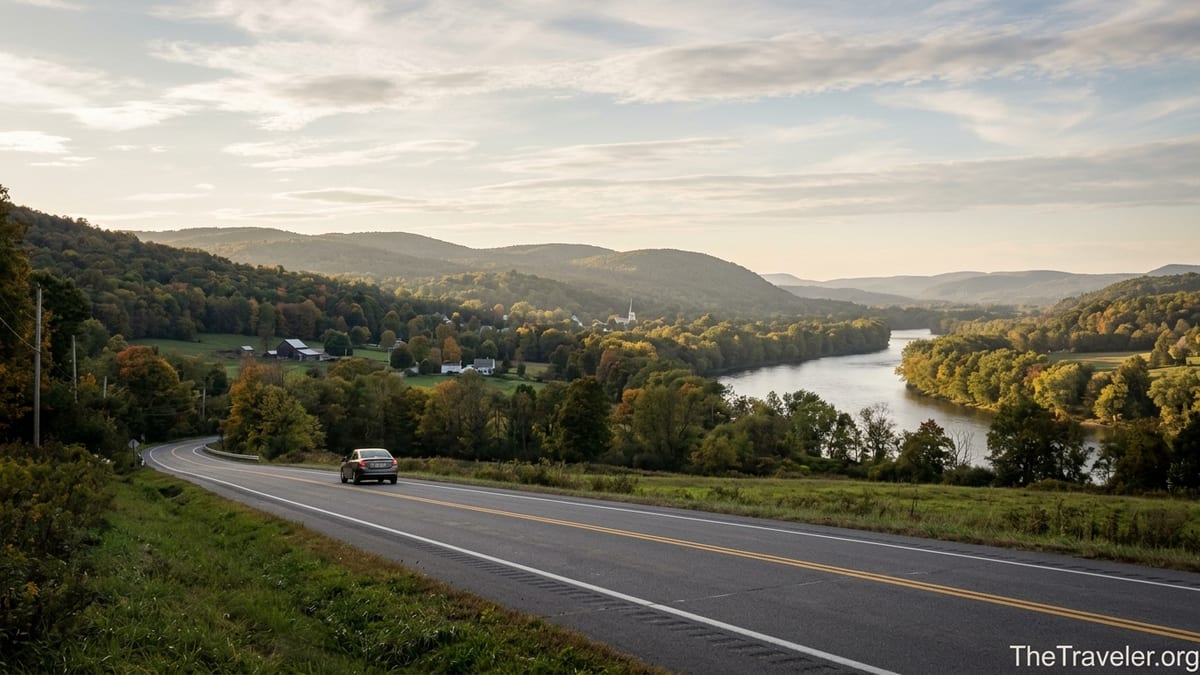
Closer to New York City, the Taconic State Parkway offers a graceful alternative to the main interstate routes. Running along the east side of the Hudson Valley, it passes rolling farmland, wooded hills and occasional viewpoints that look out toward the Catskills and Berkshire Mountains. Many drivers choose the Taconic for its curves and scenery rather than pure speed, especially in early summer when fields are bright green or in mid-October when roadside trees turn color. Farther south, the Palisades Scenic Byway along the Hudson River delivers cliff-top views and access to overlooks where you can look back toward the Manhattan skyline.
For travelers with more time, it is possible to design a loop that leaves New York City, follows the Hudson north, cuts west across the Catskills into the Central Adirondack or Olympic Trail, then drops down through the Finger Lakes and Western New York before returning east. Even a shorter three or four-day road trip could link New York City to the Hudson Valley, Catskills and a quick taste of the Adirondacks, balancing driving days of three to five hours with ample time for hikes, meals and unplanned photo stops at whichever roadside view catches your eye.
The Takeaway
New York State is at its best when you treat it not as a single destination but as a collection of complementary trips. New York City delivers unmatched urban energy, museums and restaurant depth, while the Hudson Valley and Catskills offer easy-to-reach nature, farm visits and quiet small towns. The Adirondacks and Finger Lakes scale up the wildness and lake views, and Western New York wraps Great Lakes scenery around a surprisingly rich comfort food culture.
Because distances between major regions are manageable, especially by North American standards, it is realistic to combine two or three of these experiences into a single visit. You might spend a long weekend in New York City, rent a car and head up the Hudson for hikes and farm dinners, then continue into the Adirondacks or Finger Lakes for lakeside cabins and scenic drives before looping back. With careful timing around seasons, lodging availability and major festivals, New York can feel like several different vacations stitched into one.
Whether your priority is tasting your way through neighborhoods, waking up to mountain air, standing at the edge of a waterfall or watching the sun set over a lake at the end of a long drive, New York offers a version of that story. The key is to look beyond the skyline, leave space in your itinerary for both planned highlights and spontaneous stops, and let the state’s mix of city, nature, food and road trip routes shape the journey.
FAQ
Q1. How many days do I need to see both New York City and Upstate highlights? For a combined trip, budget at least seven to ten days so you can spend three to five days in New York City and four to five days exploring one or two upstate regions without feeling rushed.
Q2. Do I need a car to explore beyond New York City? You can reach the Hudson Valley and some Long Island and Catskills towns by train or bus, but a rental car makes it much easier to explore the Catskills, Adirondacks, Finger Lakes and Western New York at your own pace.
Q3. What is the best season to visit New York for nature and road trips? Late spring, summer and early autumn are ideal. June through September brings warm weather and lake activities, while late September and early October offer colorful foliage and crisp hiking conditions.
Q4. How expensive is it to eat out in New York City compared to upstate? In New York City, casual meals typically cost 15 to 30 dollars per person and more formal dinners can easily exceed 60 dollars. Upstate, many good restaurants land closer to 15 to 40 dollars per person for dinner, with plenty of budget-friendly diners and food trucks.
Q5. Is it realistic to visit Niagara Falls and New York City on the same trip? Yes, if you have at least a week. You can fly between New York City and Buffalo in about an hour or drive in roughly seven to eight hours, then treat Niagara Falls and Western New York as a two or three-day side trip.
Q6. Are scenic drives in New York suitable for families with kids? Most scenic routes, such as the Central Adirondack Trail or drives along the Hudson Valley, are family-friendly, with frequent small towns, picnic areas and short hikes where kids can stretch their legs.
Q7. Do I need to worry about tolls on New York’s highways? Many major routes, including parts of the New York State Thruway, use cashless tolls that bill by license plate or electronic pass. Scenic byways like sections of the Taconic State Parkway and many rural roads are toll-free, though a few mountain roads charge separate tolls for summit access.
Q8. Can I experience good New York food without big restaurant splurges? Absolutely. In both the city and upstate regions you can eat very well at food trucks, delis, bakeries, diners, pizzerias and casual spots where a filling meal often costs under 20 dollars.
Q9. How far are the Adirondacks and Finger Lakes from New York City by car? Reaching popular Adirondack towns like Lake George or Lake Placid typically takes four to six hours by car from New York City, while the main Finger Lakes region around Ithaca and Watkins Glen is usually about a four to five-hour drive.
Q10. Is it safe to drive in New York in winter? Winter driving is common across the state, but snow and ice can make conditions challenging, especially in mountain areas. If you plan a winter road trip, choose a vehicle with good tires, watch forecasts closely and be prepared to adjust plans if storms move in.