


Ask someone why they are heading to Princeton and the answer usually involves the university: a campus woven into American history and elite education. Yet when travelers head home, what they remember most often is not a lecture hall or a Gothic archway, but a scoop of ice cream on Nassau Street, a slow wander through Palmer Square, or a sunset walk along Lake Carnegie. Princeton may be anchored by its campus, but it is the town that quietly steals the show.
Get the latest updates straight to your inbox!
From Campus Gates to a Surprisingly Lively Main Street
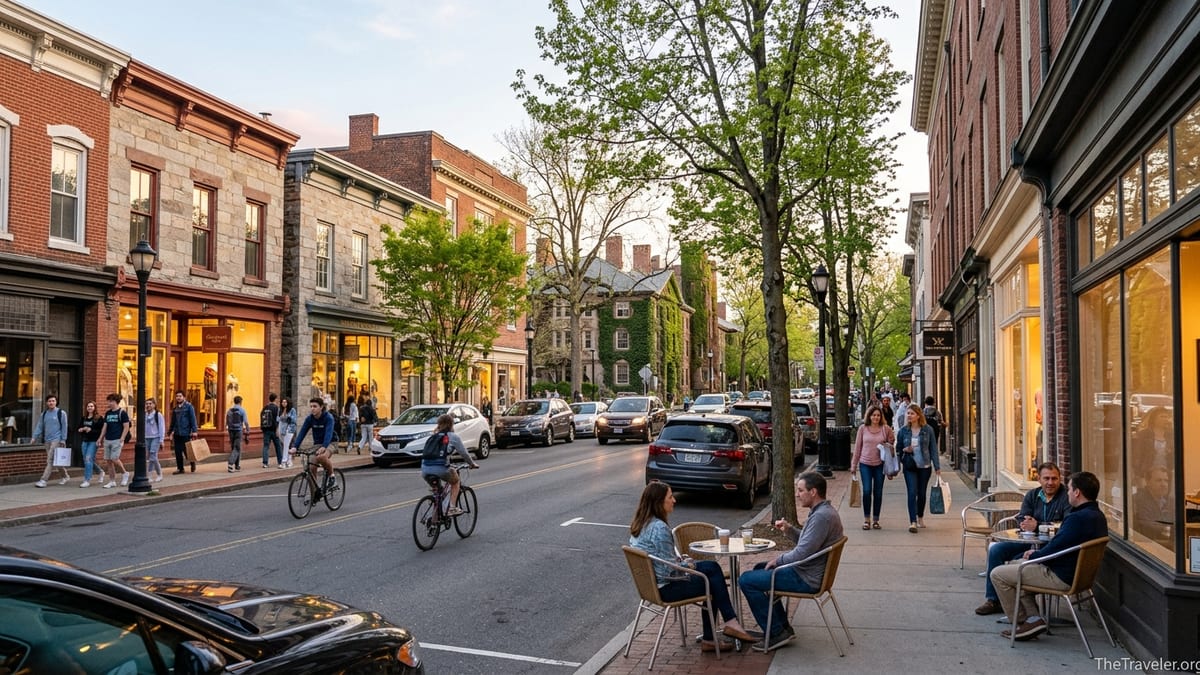
Most visitors first encounter Princeton at the edge of campus, walking beneath the stone arch of FitzRandolph Gate and crossing directly into town. On the other side lies Nassau Street, a classic East Coast main street lined with independent bookstores, toy shops, bakeries, and restaurants that feel a world away from a traditional college strip. Instead of chains clustered around student bars, travelers find long-established local businesses, from camera shops and health food markets to tiny boutiques that look much the same as they did decades ago.
Within a few steps, the shift in atmosphere is striking. Campus quads give way to narrow sidewalks framed by historic brick buildings and shade trees, with traffic humming past yellow pedestrian crossings. On a Saturday afternoon, visitors might see a line stretching from a beloved ice cream counter, tourists pausing to photograph Nassau Hall from across the street, and local families juggling shopping bags and strollers as they zigzag between errands and coffee stops. The town feels like a small city compressed into a few walkable blocks, and that density is part of its charm.
The compact layout means travelers do not need a car once they arrive. Hotels and inns near Palmer Square place guests within a five to ten minute walk of almost everything they might want to see or eat in central Princeton. Even those staying farther out often leave their cars parked and explore on foot, discovering that the distance between a morning cappuccino, an afternoon museum visit, and an evening performance is measured in minutes rather than miles.
This easy blend of campus and town is what surprises many first-time visitors. They may have expected a university bubble or a quiet suburb. Instead they encounter a place where ivy-covered lecture halls back up almost directly onto shopfronts, and where a casual stroll after a campus tour can turn into a full day of exploring independent stores, sidewalk cafes, and leafy side streets.
Palmer Square: Princeton’s Outdoor Living Room
If Nassau Street is Princeton’s spine, Palmer Square is its living room. Just a few steps off the main road, this planned square unfolds around a brick-paved central green, ringed by Colonial Revival townhouses and storefronts. It feels deliberately human in scale: buildings rise only a few stories, trees soften the edges, and shop windows glow warmly in late afternoon light. Visitors who come for the campus often find themselves lingering here far longer than planned.
The mix of businesses in Palmer Square reflects Princeton’s dual identity as both a college town and an affluent regional hub. Brand-name clothing retailers sit alongside one-of-a-kind local shops and long-running restaurants. Travelers might browse a high-end menswear boutique, step next door into a locally owned cheese shop offering more than 200 varieties, then cross the brick walk to an ice cream counter known for seasonal flavors like roasted pumpkin or lavender honey. On warm days, small groups drift toward the benches scattered around the green, balancing cones and coffee cups while children run in gentle circles on the grass.
Dining in Palmer Square gives another taste of how Princeton exceeds expectations. Visitors can choose from relaxed American taverns serving burgers and craft beer, Mediterranean-inspired spots with candlelit patios, or farm-to-table restaurants that lean heavily on produce from nearby New Jersey farms. Weekend reservations for popular dinner hours are often essential, particularly on days when the university hosts major events or home games, so travelers who are used to quieter college towns are sometimes caught off guard by how busy the square becomes.
Seasonal events turn Palmer Square into a focal point for both locals and guests. Around late November, for instance, a towering Christmas tree rises at the center of the green, with a lighting ceremony that draws crowds bundled in coats and scarves. In other months, outdoor concerts, sidewalk sales, and occasional food-focused festivals animate the space. Many visitors who thought they were in town for an afternoon campus tour end up staying through the evening simply because Palmer Square makes it easy and pleasant to do so.
Nassau Street: Independent Stores and Everyday Rituals
Running parallel to campus, Nassau Street rewards slow exploration. Travelers who only glance at it from a passing car see traffic and storefronts. Those who walk it block by block start to notice the texture that gives Princeton much of its everyday appeal. There is an independent toy store where shelves are crowded with board games and picture books, a natural foods grocery that has been championing organic produce since long before it was fashionable, and a long-standing ice cream shop where summer evenings bring lines that wrap around the corner.
A typical afternoon here might involve ducking into a used bookshop to browse hardcover biographies and out-of-print poetry, stepping next door to a coffee bar where students crouch over laptops, and then wandering into a gourmet food shop stacked with imported oils, crusty baguettes, and local cheeses. Prices are not always low, but they are often comparable to what travelers might pay in Manhattan or Philadelphia for similar quality. A handcrafted espresso drink might cost around six dollars, a generous ice cream cone a bit less, and a casual lunch at a cafe somewhere between fifteen and twenty-five dollars per person, depending on choices.
This stretch of town also functions as a practical hub for visitors staying more than a day. Small pharmacies, a health food store with a prepared foods counter, and corner markets make it easy to pick up forgotten travel essentials or assemble picnic supplies for an afternoon at the university’s arboretum or by the lake. Because so many businesses here are independently owned, conversations with shopkeepers often reveal local tips: a quieter walking route to the Delaware and Raritan Canal towpath, a favorite bench for people-watching, or a lesser-known bakery on a side street.
Even simple rituals on Nassau Street can become trip highlights. Families share sticky-fingered ice cream moments beneath shade trees, couples split a pastry outside a bakery window, and solo travelers nurse a latte while watching the gentle choreography of bikes, buses, and pedestrians. Many leave with a sense that they have experienced a real town rather than a commercial strip built purely around the university.
Food, Coffee, and Sweet Treats That Define the Visit
Ask returning visitors what surprised them most about Princeton and many will mention the food. For a town of modest size, the dining options are unusually varied. Upscale spots near Palmer Square lean into seasonal American menus featuring local vegetables, regional seafood, and carefully sourced meats. At dinner, it is common to see prix fixe menus or entrees in the mid-twenty to mid-forty dollar range, comparable to restaurants in larger nearby cities. Reservations are strongly recommended on Friday and Saturday nights, as well as on university reunion and graduation weekends when demand surges.
More casual choices line both Nassau Street and the side streets that run between the university and the residential neighborhoods. Travelers can find thin-crust pizza by the slice, informal noodle houses, Indian restaurants with extensive vegetarian menus, and cozy pubs ideal for a post-museum pint. Lunchtime crowds often include a mix of undergraduates still in lanyards from campus tours, local office workers, and families from neighboring suburbs who have driven in for the day.
Coffee culture has deep roots here too. Several cafes close to campus operate from early morning through late evening, serving as unofficial living rooms for both students and visitors. Travelers looking for a quiet corner to plan the rest of the day can usually find one, though seating fills quickly during the academic year. Prices are what many North American travelers would expect: a basic brewed coffee roughly three to four dollars, specialty lattes closer to six or seven, and pastries in the four to six dollar range.
For many, Princeton is also inseparable from its ice cream. Small-batch scoop shops on and near Palmer Square draw loyal lines year-round, even in winter. Typical prices run around five to seven dollars for a cup or cone, a bit more for elaborate sundaes piled with locally baked mix-ins. On summer nights, the sidewalks fill with families and students balancing cones, and the combined glow of streetlights and shop windows lends the town a festival-like atmosphere that lingers in memory long after visitors have forgotten which building housed a particular department on campus.
Culture, Nature, and Neighborhood Strolls Beyond the Gates
Beyond the core of Nassau Street and Palmer Square, Princeton’s quieter charms emerge. Visitors who stray a few blocks into the surrounding neighborhoods find tree-lined streets of early twentieth-century homes, front porches draped in ivy, and small pocket parks with benches perfect for an impromptu rest. These streets are safe and walkable, inviting leisurely exploration rather than checklist sightseeing.
Many travelers are also surprised by the amount of green space immediately accessible from downtown. The Delaware and Raritan Canal towpath, reachable by a short walk or bike ride, offers miles of flat, shaded trail suitable for casual walking, jogging, or cycling. In warmer months, it is common to see locals walking dogs or pushing strollers along the water, while visiting families pause on wooden footbridges to watch turtles bask on half-submerged logs.
Closer to campus, Lake Carnegie provides another unexpected landscape. While the shoreline is largely devoted to rowing and university facilities, certain viewpoints open up long, glassy vistas of water backed by trees that flare into reds and golds each October. Visitors can walk sections of the lakeside paths at no cost, and in the right season may catch a regatta of narrow racing shells slicing silently across the surface.
When the weather turns, indoor cultural options keep the town busy. McCarter Theatre, located near the small Princeton rail station, hosts a steady schedule of plays, concerts, and dance performances that draw audiences from across New Jersey and Pennsylvania. On a typical evening show, visitors might spot local couples dressed for date night, students with discounted tickets, and out-of-town guests who planned a short getaway around a particular performance, pairing it with dinner in town and a morning walk through the art museum galleries.
Getting To and Around Princeton Without a Car
For a town that feels pleasantly insulated from big-city noise, Princeton is surprisingly well-connected. Many visitors arrive by train, using New Jersey Transit’s Northeast Corridor line to reach Princeton Junction and then transferring to the short shuttle train known locally as the Dinky. The ride between Princeton Junction and the small station near campus takes around five minutes and delivers passengers within an easy walk of both the university and downtown. From New York Penn Station, total travel time, including the transfer, is usually around ninety minutes under typical conditions. From Philadelphia, travelers can ride regional rail to Trenton and change to New Jersey Transit or Amtrak before transferring at Princeton Junction.
Ticket prices vary, but visitors can generally expect a one-way New Jersey Transit fare from New York City to Princeton Junction in the mid-teens, with a small extra charge for the Dinky connection. From Newark Liberty International Airport, the journey follows the same route along the Northeast Corridor, with travelers changing at Newark Airport station rather than Penn Station. Those arriving late at night or traveling with significant luggage sometimes choose rideshare or taxi services for the final leg from Princeton Junction to town, particularly if they are staying in hotels beyond walking distance.
Once in Princeton, getting around without a car is straightforward. The downtown grid is small and walkable, and local shuttle services such as the freeB bus and university-operated routes help connect campus, downtown, and nearby shopping centers. Timetables shift periodically, but service typically runs from morning into evening on weekdays, with more limited schedules on weekends. Cyclists benefit from bike racks near major destinations, including the Dinky station and Palmer Square, and visitors can often find short-term bike rental options through local outfits or university-affiliated programs.
Driving is possible but sometimes less convenient in the heart of town. Street parking near Nassau Street and Palmer Square can be limited at peak hours, especially on weekends and during major university events. Multi-level garages and metered lots offer more predictable options, with hourly rates that align with other small cities in the region. Many visitors who arrive by car choose to park once and explore primarily on foot, discovering that the town’s modest scale is one of its greatest assets.
Planning a Stay: When to Visit and What It Really Feels Like
The best time to appreciate both campus and town is often the shoulder seasons of spring and fall. In April and May, flowering trees along the streets and campus paths are in bloom, while daytime temperatures are comfortable for long walks and outdoor dining. October and early November bring dramatic foliage around Lake Carnegie and along residential streets, along with a string of cultural events and packed football weekends. These are also some of the busiest times for hotel bookings, so travelers hoping for central accommodations at moderate prices should plan well in advance.
Summer offers a different experience. While some students remain for research and programs, the overall campus population thins, and the town’s pace subtly slows. Restaurants and shops stay open, but securing a dinner table is often easier, and sidewalk cafes linger later into the evening. Families traveling with school-age children may find this a particularly comfortable season to visit, as sidewalks are a bit less crowded and local parks feel more spacious.
Winter can be both quiet and magical, depending on timing. In December, holiday decorations on Palmer Square and along Nassau Street create a postcard atmosphere, especially after light snowfalls. January and February are typically calmer overall, with fewer tourists and shorter lines at popular spots, though cold temperatures and early sunsets mean visitors should plan for more indoor activities. Hotel rates in these deep winter months can be more forgiving, appealing to budget-conscious travelers who do not mind the chill.
Regardless of season, what sets Princeton apart is the blend of intellectual energy and small-town intimacy. A visitor might spend a morning touring the university, an afternoon wandering independent shops, and an evening nursing a glass of wine at a bistro table while overhearing conversations that jump from start-up plans to philosophy seminars. People come for the famous name on the gates, but the lived texture of the town is what often convinces them to return.
The Takeaway
Princeton’s reputation begins with its university, but its staying power rests with the town that has grown around it. From Palmer Square’s brick-paved green and Nassau Street’s independent storefronts to the shaded towpaths and lakeside views just beyond, the experience is richer and more layered than many visitors expect. It is as easy to linger over cheese samples in a tiny gourmet shop as it is to hurry between lectures, and every campus tour has the potential to spill into an unplanned afternoon of wandering, eating, and people-watching.
In the end, travelers often remember how Princeton feels more than any individual attraction. They recall the sound of musicians rehearsing in a nearby hall drifting through open windows, the sight of bicycles leaned against lampposts around Palmer Square, and the taste of an ice cream cone eaten too fast on a warm night. These small, grounded moments tie the campus to the community in a way few college towns can match. Visitors may arrive chasing the prestige of the university, but more often than not, they leave having quietly fallen in love with the town.
FAQ
Q1. Is it possible to visit Princeton without a car?
Yes. Many visitors arrive by train via Princeton Junction and the Dinky shuttle, then explore on foot around Nassau Street, Palmer Square, and campus.
Q2. How much time should I plan to spend in Princeton?
A full day allows for a campus tour, a leisurely meal, and a walk through downtown, but many travelers enjoy staying one or two nights to explore more deeply.
Q3. What are typical meal prices in downtown Princeton?
Casual lunches usually range from about fifteen to twenty-five dollars per person before tax and tip, while dinner at a sit-down restaurant often runs higher.
Q4. When is Princeton most crowded with visitors?
Spring and fall weekends, especially during graduation, reunions, and major sports events, are the busiest, with heavier crowds and higher demand for hotel rooms.
Q5. Are there activities in Princeton suitable for children?
Yes. Families often enjoy the toy stores, ice cream shops, short walks along the canal towpath, and open lawns on campus for running and picnicking.
Q6. Can I easily walk between campus, Nassau Street, and Palmer Square?
Yes. These areas sit directly next to one another, and most visitors find the distances between major points to be five to ten minutes on foot.
Q7. What should I wear when visiting Princeton?
Comfortable walking shoes are essential, as most exploring is done on foot. Otherwise, casual attire is appropriate nearly everywhere in town.
Q8. Are there budget-friendly options in an upscale town like Princeton?
While some spots are pricey, visitors can find affordable cafes, pizza slices, and casual eateries, as well as free activities like campus walks and towpath strolls.
Q9. Is Princeton safe to walk around at night?
Central Princeton is generally considered safe, and many people walk between restaurants, campus, and hotels in the evening, though standard urban precautions still apply.
Q10. How far is Princeton from New York City and Philadelphia?
Travel time by train is typically around ninety minutes from New York and roughly similar from central Philadelphia, including necessary transfers.