


More news on this day
Severe thunderstorms moving across the Caribbean, combined with tight summer airline schedules, are producing clusters of delays and cancellations at Puerto Rico’s Luis Muñoz Marín International Airport, complicating travel plans at one of the region’s busiest hubs at the start of the July holiday period.
Get the latest news straight to your inbox!
Storm Systems Collide With Peak Summer Demand
Publicly available weather data for the first days of July show bands of tropical moisture and thunderstorms flaring across the northeastern Caribbean, with San Juan repeatedly experiencing periods of heavy rain, low cloud ceilings and gusty winds. These conditions can temporarily reduce arrival and departure rates, forcing air traffic managers to slow the flow of flights into Luis Muñoz Marín International Airport.
Tracking platforms following operations at San Juan indicate that when storm cells sit near approach or departure paths, arrivals are spaced farther apart and departures are held at the gate or on the ramp, building queues that can take hours to unwind once conditions improve. Even modest delays of 20 to 40 minutes on individual flights can ripple across a tightly packed schedule, especially during peak mid-morning and late-afternoon banks of departures to the U.S. mainland and other Caribbean islands.
The timing of the latest weather issues coincides with one of the busiest travel stretches of the summer. Airlines have added capacity into Puerto Rico for the season, and aircraft utilization is running high, leaving limited slack in the system when thunderstorms disrupt normal operations.
Flight-status data also show that some services to Florida and the U.S. East Coast have been departing behind schedule after earlier weather-related congestion at airports such as Miami and other regional hubs. That knock-on effect has left some aircraft and crews reaching San Juan late, further compressing turnaround times and contributing to rolling disruption.
Scheduling Conflicts Limit Room to Recover
Beyond immediate weather challenges, the current pattern of delays at Luis Muñoz Marín appears closely tied to structural scheduling constraints in the wider U.S. network. Federal filings for the summer 2026 scheduling season describe crowded peak periods at major mainland airports, where airlines have concentrated flights into a limited number of arrival and departure banks. When those banks are hit by storms, recovery windows are tight and subsequent rotations can be pushed off schedule.
San Juan’s role as a connecting point between U.S. cities and Caribbean destinations makes it particularly sensitive to such timing conflicts. If an inbound aircraft leaves a mainland hub late due to a ground delay program, its late arrival in Puerto Rico can collide with outbound slots, forcing airlines to juggle gates, crews and aircraft assignments. Published industry analysis of recent disruptions at Luis Muñoz Marín highlights that high aircraft utilization and back-to-back rotations leave little buffer to absorb unexpected delays.
Public notices from airport and infrastructure planners in Puerto Rico also point to the operational pressures that come with sustained traffic growth in a coastal environment. Frequent exposure to salt air and severe weather can accelerate wear on airfield infrastructure and ground equipment, occasionally requiring more frequent maintenance windows that further constrain available capacity during busy travel periods.
Traveler accounts shared on aviation and travel forums over recent months describe a pattern of cascading delays at San Juan when weather and scheduling problems intersect, with some flights retimed multiple times in a single day as airlines adjust operations around crew duty limits, aircraft availability and slot constraints at destination airports.
Impact on Airlines and Passengers
Carriers with large schedules at Luis Muñoz Marín, including major U.S. airlines and their regional partners, have faced difficult trade-offs during the latest episodes of disruption. Tracking data from prior storm-related events this year show certain operators accumulating dozens of delayed departures from San Juan on a single day when thunderstorms and network congestion align, with selected flights ultimately canceled to restore schedules.
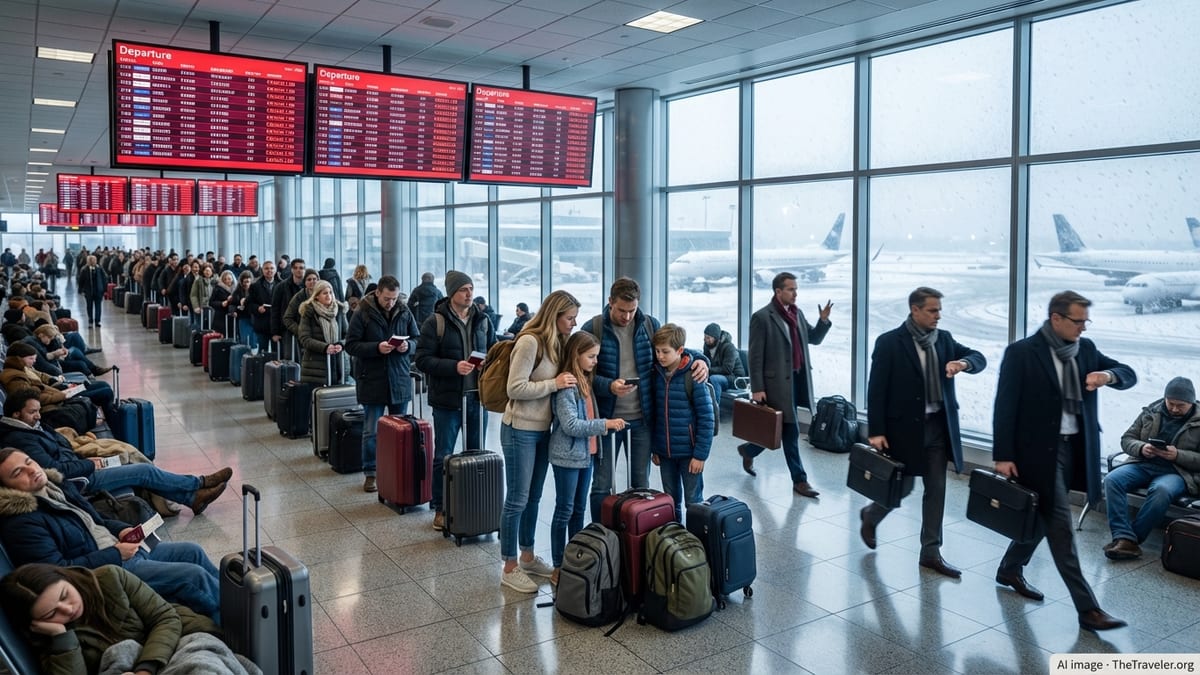
Passengers, meanwhile, are encountering crowded terminals, extended waits at security and boarding gates, and frequent schedule changes communicated through airline apps and departure boards. Reports from recent disruption days at the airport describe travelers queueing at service counters as they rebook missed connections or seek alternate routings through other Caribbean and mainland hubs.
In many cases, delays are being classified as weather-related under airline policies, limiting eligibility for meal vouchers or hotel coverage. Consumer discussions on U.S. and Puerto Rico travel forums indicate that some travelers have turned to trip-interruption insurance and flexible booking options to protect against the financial impact of overnight disruptions when severe storms affect operations.
The strain on staff is also evident. Accounts from earlier in the year describe airport employees managing large volumes of rebooking requests while coordinating with operations teams during ground stops and flow-control measures. Even when most flights ultimately depart, the rolling nature of delays can leave workers and passengers dealing with uncertainty throughout the day.
Knock-on Effects Across the Caribbean Network
San Juan’s flight disruptions are not occurring in isolation. Summer storm patterns have triggered similar operational challenges at other U.S. and Caribbean airports, with Miami, New York and other major gateways recently reporting large numbers of delayed and canceled flights linked to severe weather. When hub airports slow down, spokes like Puerto Rico feel the impact through delayed arrivals, missed connections and aircraft out of position.
Analysts note that Luis Muñoz Marín functions both as an origin-and-destination market for Puerto Rico residents and visitors, and as a connecting hub for routes deeper into the Caribbean. When inbound aircraft arrive late or crews reach duty-time limits, airlines may prioritize certain trunk routes to large U.S. cities, leaving thinner intra-Caribbean services more vulnerable to cancellation or significant retiming.
This dynamic can create regional knock-on effects, as smaller islands depending on links through San Juan experience their own disruptions. Tourism operators across the region report that itinerary changes and missed same-day connections can force last-minute hotel and transport adjustments, adding cost and complexity for travelers on multi-stop Caribbean trips.
Published commentary from aviation observers suggests that as long as convective weather remains active along key corridors between the southeastern United States and the northeastern Caribbean, Luis Muñoz Marín is likely to see intermittent waves of disruption, particularly during afternoon and evening hours when thunderstorm activity typically peaks.
What Travelers Can Do Right Now
Given the combined influence of severe weather and scheduling constraints, travel experts advise that passengers using San Juan build additional buffer time into their itineraries over the coming days. Public guidance from airports and airlines across the United States consistently recommends checking flight status frequently on the day of travel and enrolling in mobile alerts to receive real-time updates on gate changes and departure times.
For those with onward connections, especially to smaller Caribbean destinations, scheduling longer layovers in San Juan can reduce the risk of misconnecting when storms slow operations. Travel planners also note that early-morning departures are sometimes less exposed to afternoon thunderstorm patterns and accumulated delays, though this can vary by day and route.
Flexible tickets, same-day confirmed changes and stand-by options can provide additional resilience when schedules begin to shift. In the event of significant weather disruption, passengers are generally encouraged by consumer advocates to explore rebooking options through airline apps before queuing at airport counters, where wait times can grow quickly during ground delays.
With the Atlantic hurricane season entering a more active phase, observers expect that Luis Muñoz Marín International Airport will continue to face periodic operational challenges linked to storms and network congestion. How effectively airlines and travelers adapt their plans around these constraints will shape the experience of flying to and from Puerto Rico through the rest of the summer.