


More news on this day
Malaysia’s long-awaited Shah Alam Line light rail has officially opened in the Klang Valley, creating a new east–west spine that links Bandar Utama, Shah Alam and Klang after years of construction delays and cost revisions.
Get the latest news straight to your inbox!
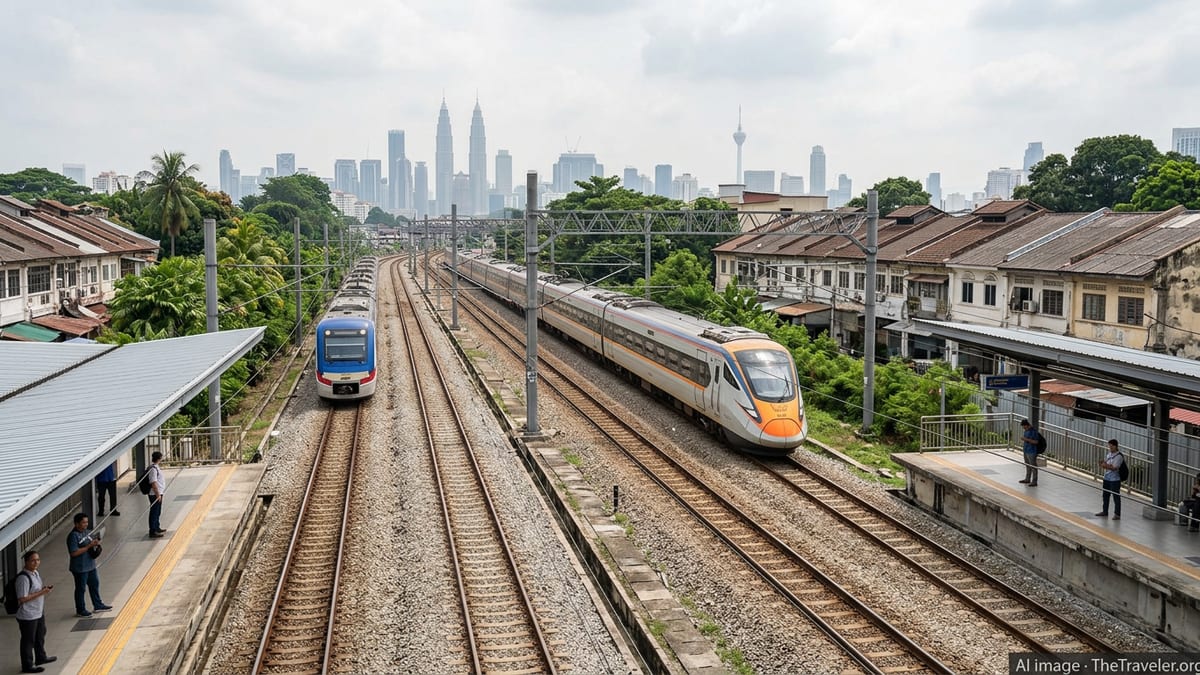
A New Rail Corridor for Petaling Jaya, Shah Alam and Klang
The Shah Alam Line, also known as LRT3, is the latest addition to the Klang Valley’s integrated rail network and is designed to serve some of the most congested corridors on the western side of the metropolis. The line runs between Bandar Utama and Johan Setia, stitching together mature suburbs, state administration districts and fast-growing residential townships that have traditionally depended on private cars and buses.
Publicly available information shows that the line spans close to 38 kilometers and is being introduced as a medium-capacity, fully automated light rail system. It connects with the MRT Kajang Line at Bandar Utama and with the Kelana Jaya LRT at Glenmarie, offering new transfer options for commuters who previously faced lengthy detours through central Kuala Lumpur to complete cross-valley journeys.
Reports indicate that around 20 stations are opening in this first phase of operations, after earlier design changes reduced the number from the original plan. The corridor is expected to benefit an estimated two million residents living along or near the alignment, many of whom commute daily to employment clusters in Petaling Jaya, Subang and Shah Alam or toward port-linked industries in Klang.
The inauguration marks a symbolic milestone for Selangor’s capital, Shah Alam, which is now directly connected to the wider rail network for the first time. Urban planners have long described the western Klang Valley as underserved by rapid transit compared with central Kuala Lumpur and the eastern suburbs, and the new line is seen as a corrective step in that imbalance.
From Cost Cuts and Delays to Full Passenger Service
The journey to today’s launch has been lengthy. The Shah Alam Line was first announced in the mid-2010s as part of a broader plan to expand mass transit across Greater Kuala Lumpur. Subsequent years brought funding reviews, redesigns and revised opening dates, including a major cost rationalisation exercise that shortened the line and reduced train lengths compared with the original proposal.
According to published coverage of the project timeline, the opening date slipped multiple times due to construction challenges and signalling integration work. A requirement for extended fault-free test runs, as well as pandemic-era disruptions, pushed projected completion into 2026. The full inauguration in late June 2026 therefore closes a chapter marked by public scrutiny and debate over the pace and cost of infrastructure delivery.
Recent reports on the launch state that the line has been built at an estimated cost of about RM16.6 billion. The investment is framed by policymakers as both a mobility upgrade and a catalyst for economic activity along the corridor, from retail and office developments near key interchanges to transit-oriented housing projects in Klang and Shah Alam.
Early operational data is expected to focus on ridership trends in the coming months. Comparable openings in the Klang Valley, such as the MRT Putrajaya Line, saw initial passenger numbers build gradually as commuters adjusted travel habits, discovered new station access routes and feeder bus services bedded in. A similar ramp-up is anticipated for the Shah Alam Line, particularly given the area’s high car ownership and established driving culture.
Network Integration and New Options for Commuters
The Shah Alam Line’s strategic value lies in how it plugs gaps within the existing Klang Valley Integrated Transit System. By running on an east–west axis entirely within Selangor, the line allows passengers from Klang and Shah Alam to reach key job hubs without routing through central Kuala Lumpur’s already busy rail interchanges.
At Bandar Utama, passengers can transfer to the MRT Kajang Line, gaining direct rail access to destinations such as TTDI, Cheras and Kajang. Further south, the Glenmarie interchange with the Kelana Jaya Line offers a new pathway toward Subang Jaya, KLCC and the northern suburbs. Published route maps show additional connections to KTM Komuter and bus rapid transit services, broadening the number of cross-corridor journeys that can now be made entirely on public transport.
For daily commuters, the most immediate change is expected in travel times and predictability. Peak-hour journeys that once depended on congested highways like the Federal Highway and New Klang Valley Expressway can now be partially or fully shifted onto rail. Travel behaviour research in the region suggests that reliable headways and seamless interchange facilities are key to persuading drivers to leave their cars at home, areas in which the new line will be closely watched.
Feeder bus services are being adjusted to match the rail launch, with new routes announced to connect residential neighbourhoods and key local destinations to nearby stations. While some transit enthusiasts have highlighted gaps in last-mile connections to certain landmarks, operators are expected to refine bus networks and schedules as demand patterns become clearer over the first year of service.
Economic and Urban Development Along the Alignment
The opening of the Shah Alam Line is also a land-use story. Transit-oriented development has become a central plank of urban planning in the Klang Valley, and planners view new rail stations as anchors for denser, mixed-use districts that can support more sustainable travel patterns.
Property analysts cited in recent local coverage describe interest around several Shah Alam and Klang stations, where a mix of residential towers, offices and retail spaces are either under construction or in the planning pipeline. Improved transit access tends to lift land values and attract new investment, but it also raises questions about affordability for lower- and middle-income households who stand to benefit most from better public transport.
Municipal authorities and state-level agencies are expected to monitor development pressures around key stations to balance economic gains with inclusive growth. The Shah Alam Line traverses areas that range from established industrial zones to emerging suburban communities, and how these districts evolve in response to the rail opening will help shape the broader urban form of western Greater Kuala Lumpur over the next decade.
For local businesses, especially in town centres near new stations, opening day brings an opportunity to capture additional foot traffic from commuters and visitors exploring the line. Early promotional campaigns and community events around certain stations reflect efforts to introduce residents to the new system and encourage leisure as well as work trips on the LRT.
What the Shah Alam Line Means for Travelers
For domestic and international travelers, the Shah Alam Line changes how the western Klang Valley can be explored without a car. Visitors staying in Bandar Utama or Petaling Jaya gain a direct rail route toward Shah Alam’s civic landmarks and Klang’s historic core, with the option to connect onward to ports and coastal attractions by bus or taxi.
The line’s integration with the broader network also simplifies multi-day itineraries that combine Kuala Lumpur, Petaling Jaya and coastal Selangor in a single trip. A traveler arriving via the city’s central rail hubs can now reach Shah Alam and Klang by transferring to either the Kelana Jaya or Kajang lines and then onto the Shah Alam Line, avoiding highway traffic that can be unpredictable during peak hours and holiday periods.
As with other recent rail openings in the Klang Valley, public information suggests that initial headways, operating hours and passenger facilities will be gradually refined in response to feedback and demand. Observers will be watching how quickly ridership grows, how well the line integrates with complementary services such as park-and-ride facilities, and whether the new capacity materially eases congestion on parallel road corridors.
The inauguration of the Shah Alam Line signals an ongoing shift in how Greater Kuala Lumpur moves. While cars will remain central to mobility for many residents, the presence of a modern, automated LRT spine across the western corridor gives both commuters and visitors a new alternative, reshaping travel patterns and expectations in one of Malaysia’s busiest urban regions.