


If you are planning a trip to Barcelona, chances are your must-see list is already crowded with Gaudí landmarks, the Gothic Quarter and beach time. In the middle of all this, it can be hard to decide whether the Fundació Joan Miró on Montjuïc deserves half a day of your limited schedule. This modern art museum dedicated to one of Catalonia’s most influential artists is not just another gallery. It combines Miró’s bold work, an iconic building and some of the best city views into a single, concentrated experience. Whether you should add it to your itinerary depends on your interests, budget and how you plan your time on the Montjuïc hill.
Get the latest updates straight to your inbox!
What Is the Fundació Joan Miró and Why It Matters
The Fundació Joan Miró is a modern art museum in Parc de Montjuïc that holds one of the most important collections of the Catalan artist Joan Miró, whose colorful, dreamlike works have become a visual shorthand for Barcelona’s creative spirit. The foundation grew out of Miró’s own wish to create a space in his home city where the public could encounter modern art and where young artists could be supported. It opened to the public in 1975 in a striking white building designed in collaboration with architect Josep Lluís Sert, a friend of Miró and a leading figure in Mediterranean modernism.
Today the museum holds thousands of pieces by Miró, from early figurative paintings to late, almost calligraphic canvases, along with sculptures, prints, tapestries and sketches. Even if you are not deeply familiar with Miró before you visit, the way the collection is presented makes it easy to follow his evolution from a young Catalan painter influenced by rural life to an international figure associated with surrealism and abstraction. Many visitors come away feeling that they finally “understand” Miró in a way that a single painting in a general museum could never offer.
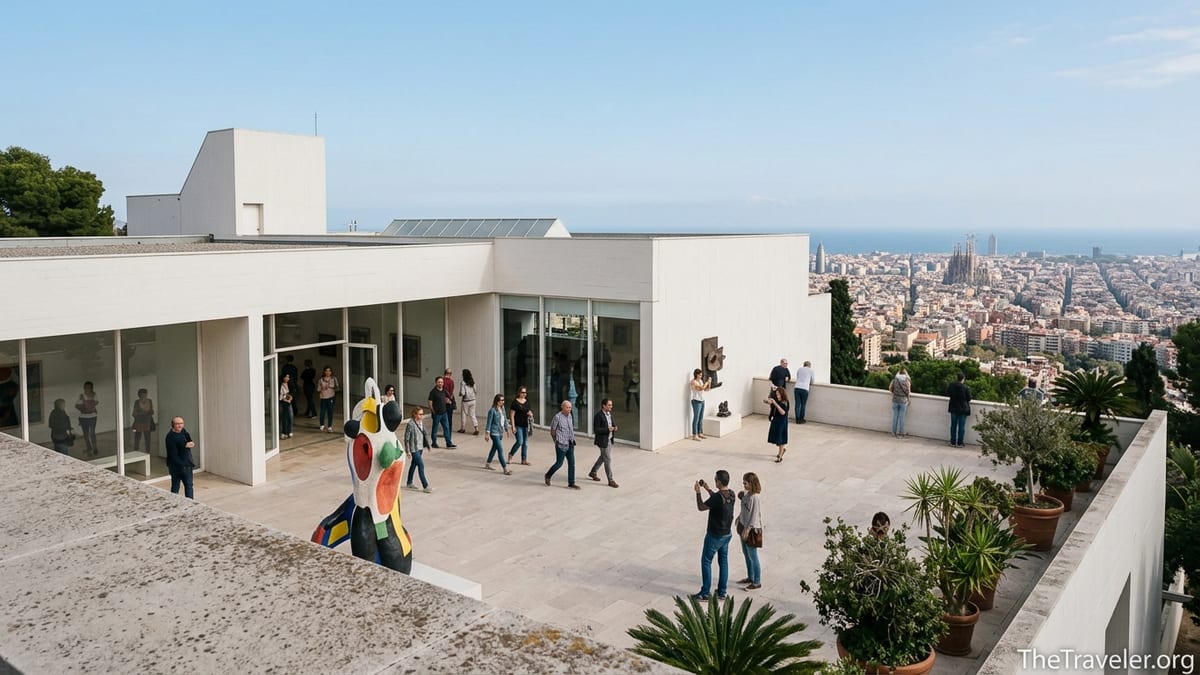
Beyond the art itself, the building and setting are a major part of the experience. Large windows, rooftop terraces and open courtyards flood the galleries with Mediterranean light and frame views of the city and sea below. Compared with the busier streets of the Gothic Quarter or Eixample, the atmosphere is calm and spacious, which can be a welcome change of pace in a packed Barcelona trip. For many travelers, this combination of architecture, art and landscape is what makes the Fundació Joan Miró feel like a destination rather than a quick stop.
Who Will Appreciate It Most (and Who Might Skip It)
Fundació Joan Miró will be a clear highlight if you are already interested in modern art, design or architecture. Travelers who make time for places like MACBA, the Picasso Museum or contemporary galleries elsewhere in Europe often rank Miró’s foundation alongside their favorite art experiences. If you have ever lingered over Miró posters in museum shops or noticed his bold primary colors in public art, spending two or three hours with the full range of his work can be deeply satisfying.
It also suits visitors who want to go beyond the classic “Gaudí and Gothic” narrative of Barcelona. Miró offers a different angle on Catalan creativity: less about architectural fantasy and more about playful symbols, stars, birds and women rendered in a personal visual language. For example, a traveler who has already toured Casa Batlló and La Pedrera might appreciate coming up to Montjuïc the next day to see how another Catalan artist responded to the same light and landscape.
On the other hand, if you already know that art museums are not your thing and you are squeezing Barcelona into one or two days, the Fundació Joan Miró may not justify the time. Visitors who prefer food markets, neighborhood walks and nightlife sometimes find that they get more from wandering El Raval or Gràcia than from structured gallery visits. In that case, you might still visit Montjuïc for the castle, Olympic sites or Magic Fountain and simply admire the Miró building from the outside as you pass.
Families with children can find the museum surprisingly accessible. The colors and shapes in Miró’s work often appeal to kids more than classical paintings do, and the foundation offers family-friendly materials and occasional workshops. That said, very young children may tire before you have seen everything, so combining a shorter museum visit with time in nearby gardens or playgrounds on Montjuïc can help keep everyone engaged.
Practical Details: Costs, Opening Times and How to Get There
As of mid 2026, a standard adult ticket to the Fundació Joan Miró typically costs in the mid-teens in euros, with reduced prices for students, people under 25, and seniors, plus free or discounted entry for some local library card holders and other groups. There are also combination options such as multi-museum passes sold by tourism agencies in Barcelona that include skip-the-line access to several major institutions, often making sense if you plan to visit other museums like MNAC or MACBA during the same trip.
The museum is usually open every day except Mondays, with slightly longer hours in spring and summer and shorter ones in the quieter winter months. In practice, this means you can often arrive mid-morning and stay through early afternoon without feeling rushed. Because special events or public holidays can affect opening times, it is wise to check the foundation’s official schedule a few days before your visit rather than relying on information from older guidebooks.
Reaching the Fundació Joan Miró is straightforward if you factor in the hill. Many visitors take the metro to Paral·lel station and then connect with the Montjuïc funicular, which brings you partway up. From there, you can either walk uphill through the park for around 10 to 15 minutes or catch a local bus that stops close to the museum. Others prefer to take a bus directly from Plaça d’Espanya up toward Montjuïc’s main cultural area, combining the trip with visits to the National Art Museum of Catalonia or Poble Espanyol. Taxis and ride-hailing services are widely available in central Barcelona and can drop you at the entrance, though costs are typically higher than public transport and can rise during busy evenings when events are held on the hill.
Because Montjuïc is a substantial green area rather than a single compact attraction, comfortable shoes are important. Even if your main goal is the museum, you will likely walk between viewpoints, gardens and nearby sites. Elevators and ramps inside the building help make the galleries accessible to visitors with limited mobility, and wheelchairs can usually be requested on-site, but the outdoor terrain around the museum can still involve gradual slopes and some uneven paths.
How Much Time to Allow and When to Go
Most visitors report spending between two and three hours inside the Fundació Joan Miró, not counting the journey up and down the hill. If you enjoy reading wall texts and audio guide commentary, or if there is a temporary exhibition that interests you, you may want to set aside closer to half a day. Travelers who move quickly through museums, focusing on a handful of key rooms and the rooftop terrace, might be comfortable with about ninety minutes.
The best time to visit is usually mid-morning on weekdays, when the building is bright but crowds are still moderate. Arriving soon after opening can give you a quieter experience in the main galleries, especially compared with afternoons when tour groups and school visits sometimes overlap. On very hot summer days, spending the warmest hours inside the air-conditioned museum and then exploring the shaded gardens and viewpoints later can make the climb up Montjuïc more pleasant.
Evenings often bring separate events, concerts or special openings across Montjuïc, especially in high season, so planning your museum stop earlier in the day leaves you free to return down the hill for dinner or to stay in the area for sunset. For example, you could plan a late-afternoon stroll from the foundation to the Magic Fountain area, timing it so that you reach the base of Montjuïc as the city lights begin to glow. Because many visitors try to pair too many Montjuïc attractions in a single afternoon, it helps to be realistic about your pace and prioritize quality of experience over ticking off everything.
If rain is in the forecast, the museum remains a solid option, but you may lose some enjoyment of the terraces and views. Cloudy days, on the other hand, can produce softer light inside the galleries and make walking around the hill less tiring, so the experience does not depend entirely on perfect weather.
What You Will Actually See Inside
The heart of the Fundació Joan Miró is its permanent collection, which traces Miró’s career from early landscapes and portraits to his mature abstract style. You might start with paintings from the 1910s and 1920s that depict Catalan farmhouses, peasants and still lifes in a more recognizable manner, then move into the 1930s and 1940s where familiar shapes dissolve into constellations of stars, eyes and playful creatures. Along the way, explanatory texts describe how Miró interacted with surrealism, political upheavals and his own desire to “assassinate painting” and start anew.
Beyond paintings, you will see sculptures, ceramics, prints and large textile works that show how Miró’s ideas moved across different materials. Outdoor courtyards and the rooftop sometimes host sculptures that interact directly with the sky and city below. One moment you might be standing in front of a massive tapestry made in collaboration with weavers, and the next you are looking at a small bronze figure that feels like a doodle turned into three-dimensional form. For travelers who mostly know Miró from posters or a few iconic images, these shifts in scale and material can be surprising.
The museum also devotes space to temporary exhibitions, often featuring contemporary artists from around the world or focusing on lesser-known aspects of Miró’s own work. In 2025 and 2026, for example, the foundation’s program has included collaborations with prize-winning international artists and thematic shows that connect Miró’s legacy to current questions about identity and environment. If you are visiting while a major temporary show is on, it can add an extra layer of interest to your visit and sometimes influence how busy the museum feels.
Interactive elements inside the building are generally modest but thoughtful rather than theme-park style. You might find short films, models of the building, or quiet corners where you can sketch or sit and look out at the landscape. The bookshop and café are integrated into the flow of the visit: you can pause for a coffee on a shaded terrace overlooking the city or browse a wide selection of art books, prints and design objects before heading back down the hill.
Fitting Fundació Joan Miró into a Wider Montjuïc Itinerary
One of the strongest reasons to include the Fundació Joan Miró in your Barcelona plan is that it turns a trip to Montjuïc into a rich half-day itinerary. The museum sits within walking distance of several major sights, including the National Art Museum of Catalonia housed in the Palau Nacional, the Olympic Ring built for the 1992 Games and various gardens such as the Joan Maragall Gardens or the cactus-rich spaces near the Joan Brossa area. This clustering of attractions means you can get substantial value from the effort of riding the funicular or bus up the hill.
A practical example: many travelers start at Plaça d’Espanya, ride the escalators up toward the Palau Nacional, enjoy the view, then continue by bus or on foot to the Fundació Joan Miró. After two or three hours at the museum and a simple lunch in the café, they stroll through nearby gardens and either continue up to Montjuïc Castle via the cable car or head back down in time for an early evening walk in Poble Sec, a neighborhood with a growing reputation for tapas bars and relaxed dining. This kind of loop uses your time efficiently without feeling rushed.
If you are short on time, you can still make the museum the centerpiece of a shorter Montjuïc circuit. For example, someone with a late flight out of Barcelona might leave luggage at the hotel, ride the metro to Paral·lel, visit the foundation for a focused two-hour session and then descend back to the city for a final lunch. Because the museum is usually less crowded than the Sagrada Família or Park Güell, it can feel more manageable as a final-day activity when your energy is starting to dip.
Travelers who are particularly interested in modern and contemporary art might pair the Fundació Joan Miró with MACBA in El Raval or CaixaForum at the base of Montjuïc. In that case, spacing the visits over one or two days and planning for breaks between them helps avoid “museum fatigue.” The goal is to let the art and architecture breathe rather than rushing from one collection to the next without time for reflection.
Is It Worth It for First-Time vs Repeat Visitors?
For first-time visitors with three or more full days in Barcelona, the Fundació Joan Miró is often worth including, especially if you value culture and want a more rounded view of the city beyond the most photographed spots. In a three-day trip, you might devote one day largely to the Sagrada Família and central city, one to Gaudí’s houses and the beachfront and one to Montjuïc, with the Miró foundation as a key anchor on that third day. The experience can balance your itinerary, giving you a mix of religious architecture, secular modernism and pure artistic experimentation.
If your first visit is very short, such as a one-night stopover or cruise day, you may need to prioritize. In that scenario, many travelers choose the Sagrada Família and one or two Gaudí sites ahead of Miró, simply because those buildings are so strongly associated with Barcelona and are difficult to see anywhere else. The foundation then becomes an excellent reason to return, offering a quieter, more reflective experience that rewards a slower second or third trip.
Repeat visitors and those who have already seen other major European art museums often find that the Fundació Joan Miró feels distinctive and personal. The fact that it grew from the artist’s own vision and occupies a building tailored to his work gives it a coherence that some larger institutions lack. Returning visitors also benefit from seeing new temporary exhibitions and from changes in the presentation of the permanent collection, which the museum periodically updates to mark milestones such as its 50th anniversary.
In practical terms, if you are already planning to spend an afternoon on Montjuïc during a repeat visit, skipping the foundation would mean missing one of the hill’s defining cultural spaces. Even if you do not plan to explore every gallery in detail, walking through the building and spending time on the terraces can deepen your sense of how Barcelona’s art, architecture and landscape fit together.
The Takeaway
Whether you should add the Fundació Joan Miró to your Barcelona travel itinerary comes down to a few key questions. Do you have at least half a day to devote to Montjuïc without feeling rushed? Are you curious about modern art and open to spending time in galleries and architectural spaces? And do you value quieter, more reflective experiences alongside the city’s headline attractions? If your answers lean toward yes, the foundation is likely to reward your time and ticket cost with a memorable blend of art, views and atmosphere.
For many travelers, the museum becomes one of the most personal and unexpectedly moving parts of their trip, offering insight into a Catalan artist who helped shape the visual language of the 20th century and whose influence can still be felt in Barcelona’s design culture today. Combined with nearby sites on Montjuïc, a visit here can provide a welcome change of pace from crowded streets and long queues elsewhere in the city.
If you are on a very tight schedule, not especially interested in art, or focused mainly on outdoor activities and nightlife, you may decide that your limited hours are better spent elsewhere. In that case, keeping the Fundació Joan Miró on your list for a future visit is still worthwhile. Barcelona is a city that rewards return trips, and the museum’s evolving exhibitions and hillside setting ensure that it will be waiting with something new when you are ready.
FAQ
Q1. How long should I plan to spend at the Fundació Joan Miró?
Most visitors are comfortable with two to three hours inside the museum, plus extra time to reach Montjuïc and explore the surroundings.
Q2. Is the Fundació Joan Miró suitable for visitors who are not art experts?
Yes. Clear explanations, a logical layout and Miró’s colorful, playful style make the museum accessible even if you have limited experience with modern art.
Q3. Can I combine the Fundació Joan Miró with other attractions in one day?
Many travelers pair it with the National Art Museum of Catalonia, the Olympic Ring or a walk to Montjuïc Castle, creating a varied half-day or full-day on the hill.
Q4. Are there discounts available on tickets?
Reduced rates are typically offered for students, younger visitors and seniors, and some multi-museum passes include the foundation at a better combined price.
Q5. What is the best way to get there by public transport?
A common route is to take the metro to Paral·lel, connect with the Montjuïc funicular and then either walk or catch a local bus up to the museum area.
Q6. Is the museum accessible for visitors with limited mobility?
Inside the building there are ramps, lifts and wheelchairs available, though the outdoor paths around Montjuïc can involve slopes and some uneven ground.
Q7. Is there a café or restaurant on-site?
Yes. The foundation has a café where you can get coffee, light meals and snacks, often with access to a terrace overlooking the city.
Q8. Are children welcome at the Fundació Joan Miró?
Children are welcome, and families often find Miró’s bold colors engaging, especially when they combine the visit with time in nearby gardens on Montjuïc.
Q9. Do I need to buy tickets in advance?
Advance tickets can help you avoid queuing at busier times, though outside peak dates it is often possible to buy tickets on arrival without long waits.
Q10. Is it worth visiting if I’m already seeing Gaudí’s main sites?
Yes, if you have time. The foundation offers a different side of Catalan creativity and rounds out a Gaudí-focused itinerary with a dedicated look at Miró’s world.