


In a city overflowing with world class culture, two names dominate the art conversation in Barcelona: Joan Miró and Pablo Picasso. Their museums sit on opposite sides of the city, offer very different atmospheres, and often compete for the same half day in a visitor’s itinerary. If you only have time, budget, or energy for one major art stop, should you head up to the white modernist sanctuary of the Fundació Joan Miró on Montjuïc, or queue in the medieval streets of El Born for the Picasso Museum? This guide breaks down both experiences in practical detail so you can choose the visit that fits your interests, schedule, and travel style.
Get the latest updates straight to your inbox!
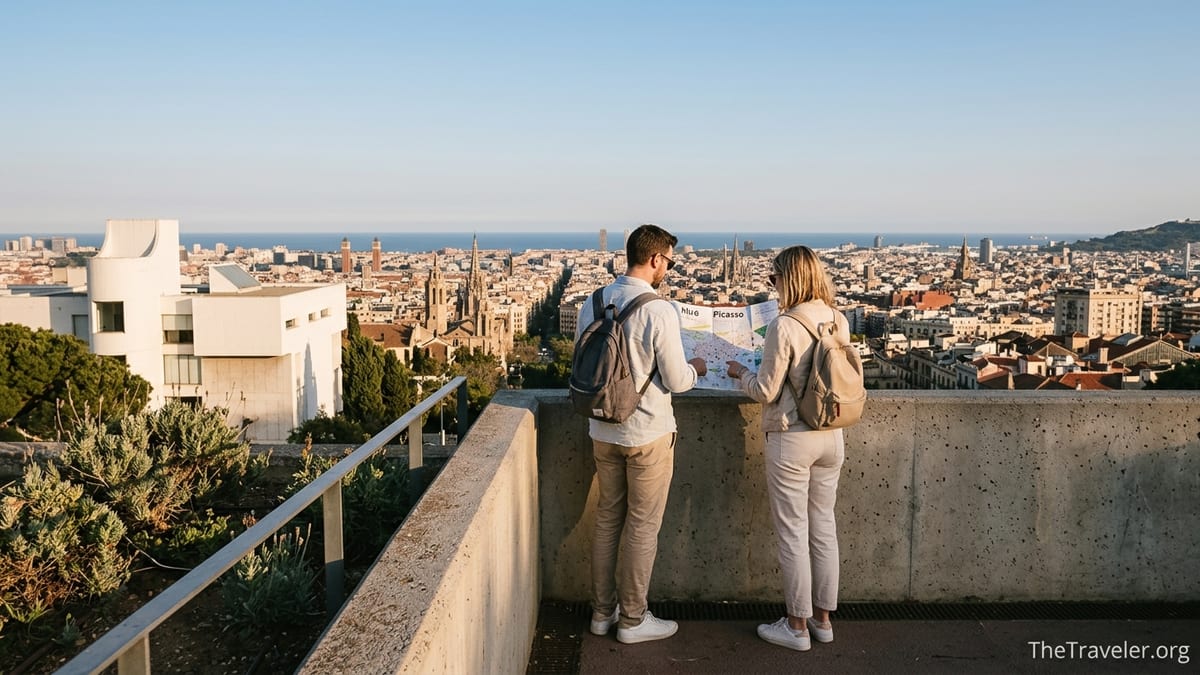
The Big Picture: Two Very Different Art Experiences
Fundació Joan Miró and the Picasso Museum both showcase giants of 20th century art, but the feel of each visit could not be more different. The Miró foundation is a light filled modernist building by architect Josep Lluís Sert, perched on Montjuïc hill above the city. Inside, Miró’s bold colors, playful symbols, and sculptures are given space to breathe, with patios, courtyards, and rooftop terraces opening to views over Barcelona and the sea. It feels like a calm, airy retreat where architecture, landscape, and art work together.
The Picasso Museum, by contrast, is packed into several linked medieval palaces in the dense streets of El Born. Vaulted stone ceilings, Gothic courtyards, and narrow staircases create a wonderfully atmospheric setting, but also one that can feel crowded and intense at busy times. Here the focus is on Picasso’s early years and his deep relationship with Barcelona, with more than 4,000 works tracing his evolution from prodigy to innovator and culminating in his famous Las Meninas series of 58 paintings.
In practice this means that Miró often feels like an open, contemplative experience, especially on weekday mornings, while the Picasso Museum can feel more urban and high energy, with timed entries, queues, and heavier foot traffic. Neither is better in absolute terms, but they suit different kinds of travelers and different moments in your trip.
If you imagine lingering in front of paintings, stepping outside for fresh air, and combining art with a walk through parks and viewpoints, Miró usually wins. If you want a dense hit of art history in the heart of the old city, with cafes and wine bars right outside the door, Picasso is hard to beat.
Location, Atmosphere, and Crowd Levels
Fundació Joan Miró sits in Parc de Montjuïc, above the Olympic complex and not far from the MNAC museum. From Plaça de Catalunya, most visitors either take the metro to Paral·lel and then the Montjuïc funicular, or the bus that climbs directly into the park. The ride itself quickly pulls you out of the bustle and into greenery, with pine trees, cypress alleys, and broad views over the port. By the time you walk up the final slope to the white, low lying museum building, you already feel like you are in a different Barcelona altogether.
Inside, tall windows, skylights, and open courtyards flood the galleries with Mediterranean light. The architecture deliberately creates pauses: a quiet bench in a small patio, a window framing palm trees, a terrace that leads your eye out over the city. Recent changes to the route through the collection have made even more of these connections between inside and outside, and the opening of the historic Cypress Garden has added another green space to wander, complete with Miró sculpture in situ.
The Picasso Museum could hardly be more different in setting. It occupies a row of stone mansions in the narrow Carrer de Montcada, in the heart of the Born district. The neighborhood is wonderful for wandering before or after your visit, with wine bars, tapas spots, and small designer shops, but the streets are tight and often very busy. When you arrive at a popular time, you will typically see clusters of people waiting in the small courtyard, and entry is tightly controlled by timed tickets. Inside, staircases and corridors link the palaces together, which can create bottlenecks around star works.
If you are sensitive to crowds or traveling with young children who tire easily, this difference matters. Even in high season, Miró’s airy layout and Montjuïc setting usually disperse visitors enough that you can find quiet corners. The Picasso Museum is more likely to feel packed, especially mid morning and late afternoon, and it pays to book the earliest or latest slots to experience the galleries in relative calm.
Collections and Highlights: What You Actually See
At Fundació Joan Miró, the permanent collection walks you through the artist’s evolution, but the overall impression is one of coherence and playful experimentation rather than a strict chronological march. You will encounter early figurative works, surrealist paintings with stars, moons, and ladders, monumental canvases dominated by primary colors, and whimsical sculptures made from found objects. Many visitors remember the large, almost abstract canvases with their floating symbols, the bold textiles, and the iconic sculpture of a woman and bird on the terrace.
One of the strengths of Miró’s museum is how it includes works in many media. Alongside oil paintings, you will see works on paper, ceramics, tapestry, and large scale sculpture. This variety helps engage visitors who might feel intimidated by painting heavy collections. Temporary exhibitions often pair Miró with other modern and contemporary artists, or explore specific themes, so repeat visitors frequently find something new.
The Picasso Museum’s collection is particularly strong on Picasso’s formative years. You begin with academic studies he completed as a teenager, move through his Blue and Rose periods, and see how his style fractured and reformed as he absorbed influences in Barcelona and Paris. The museum does not hold many of the marquee later cubist masterpieces that you might know from Paris or New York, but it offers a deep dive into how Picasso became Picasso.
The showstopper for many is the suite of Las Meninas interpretations, where Picasso obsessively reworks Velázquez’s 17th century masterpiece in 58 different paintings. The museum also holds an important series of ceramics and prints, plus works like “Science and Charity” that reveal his remarkable technical control as a youth. If you are fascinated by artistic process, drafts, and experiments, these rooms can be intensely rewarding.
Practicalities: Tickets, Prices, and Free Entry Options
Both museums strongly encourage advance booking, and in busy periods it is essential. At the Picasso Museum, same day slots for prime times often sell out, especially on free entry days and during school holidays. Standard adult tickets for the permanent collection plus temporary exhibition typically sit in the mid teens in euros when bought directly at the official site, with slightly lower prices if purchased online in advance. Third party platforms sometimes bundle Picasso with guided walks through the Gothic Quarter or Born, often starting around a few dozen euros for a small group tour with priority entry.
The Picasso Museum operates a popular free entry scheme: the first Sunday of every month is free, and there are additional free time slots on certain afternoons depending on the season. Those tickets must be reserved in advance, usually several days ahead when they are released, and they are snapped up quickly. Budget travelers who plan early can take advantage, but you will be visiting at the most crowded times, and the experience can feel rushed as staff keep the flow moving.
Fundació Joan Miró is usually a little easier to access on your preferred day, though advance booking is still a good idea in high season and on weekends. Standard adult tickets for the Miró collection and temporary exhibitions are generally in a similar price band to the Picasso Museum when purchased at the museum, with small discounts for online purchase or certain visitor cards. Some Barcelona city passes include Miró as part of a multi attraction package, which can offer value if you are also planning to see nearby sights like the MNAC or the Olympic facilities.
Miró does not have as many headline grabbing free entry slots as Picasso, but the foundation participates in some citywide open museum days and occasional anniversary events, and there are reduced rates for students, seniors, and local library card holders. For most short term visitors, the choice is not driven by a few euros difference in price, but by where you want to spend your limited time and how much you value a calmer environment over a more intense, high demand museum.
Which Museum Suits Which Traveler?
If you are an art history fan or already have posters of Guernica on your wall, the Picasso Museum is likely non negotiable. It provides a concentrated, scholarly look at Picasso’s early production and his ties to Barcelona. You will appreciate the context the museum provides through sketches, student works, and series that show him pushing toward the radical innovations that changed 20th century art. A guided tour can add further depth, walking you through the evolution room by room and pointing out details in the Las Meninas series or Blue period portraits that you might otherwise miss.
On the other hand, if your relationship with modern art is more tentative, Miró can be the more welcoming choice. His shapes are simplified, his colors bright, and his symbolism has a dreamlike, childlike quality that many casual visitors find immediately engaging. Children often respond to spotting recurring motifs like stars, birds, or ladders, and the playful sculptures and tapestries make it easier to keep younger travelers interested. The setting in Montjuïc park also means you can combine the visit with a cable car ride, a picnic, or an evening at the Magic Fountain when it is operating.
Travelers who are short on energy or visiting in the heat of summer might also tilt toward Miró. The journey to Montjuïc can be broken up with shaded walks and viewpoints, the building is spacious, and you can step outside between galleries without feeling that you have left the museum. The Picasso Museum, while centrally located, often demands more patience with queues and crowds, and its stone interiors can feel stuffy in peak hours despite climate control.
If you are traveling as a couple interested in mixing art with food and nightlife, the Picasso Museum’s Born location is a strong draw. You can schedule a late afternoon slot, then stroll straight to tapas or wine bars in the surrounding streets, or walk a few minutes to the Santa Maria del Mar basilica. Miró’s surrounding offerings are more about views and green space than dining, so you will likely descend back to Poble Sec or Plaça d’Espanya when you are ready to eat.
Combining Each Museum with the Rest of Your Day
One way to decide is to look at your wider itinerary. A morning at Fundació Joan Miró pairs naturally with a Montjuïc day. For example, you might take the funicular up from Paral·lel, walk five to ten minutes through the park to the museum, spend two to three hours exploring the collection and terraces, then continue on foot to the nearby MNAC for its panoramic steps and Catalan art galleries. From there, you can descend via escalators to Plaça d’Espanya, where you connect easily to the metro, airport bus, or shopping centers.
This kind of day suits visitors who enjoy walking and being outdoors. You might grab coffee and a pastry at a kiosk near the Olympic Stadium, stop for photos above the city, and return to your hotel with the sense you have seen a greener, wider Barcelona beyond the old town alleys. In cooler months, the hilltop is particularly pleasant compared with the denser lower neighborhoods.
A Picasso Museum visit fits neatly into a Gothic Quarter and Born day. Many travelers start with a stroll through the cathedral area, weave through medieval lanes to Santa Maria del Mar, then arrive at Carrer de Montcada for a timed entry slot around late morning. After one and a half to two and a half hours in the museum, depending on your pace, you emerge into a neighborhood full of lunch options, from casual pintxos counters to sit down restaurants serving seafood rice or modern Catalan dishes.
From there, you can continue on foot to the Ciutadella Park, the waterfront, or into the Eixample for shopping. Because the Picasso Museum is so central, it is easy to keep the day flexible. The tradeoff is that you will likely share the experience with many other visitors, especially in peak months and on weekends.
Accessibility, Logistics, and Visitor Comfort
Both museums have made efforts to be accessible, but the physical realities of their buildings play a role. Fundació Joan Miró was designed in the 1970s with ramps, broad corridors, and elevators that make most spaces reachable for visitors with reduced mobility. The terraced layout and patios involve gentle slopes, but staff can advise on the easiest routes, and there are plenty of benches and rest stops built into the architecture. The new Cypress Garden, integrated into the visit route, adds another outdoor space, and the museum offers accessible guides and information in several languages.
The Picasso Museum does have lifts and adapted routes, but the complex of medieval palaces with narrow passages and uneven floors can be more challenging to navigate, especially at busy times when tour groups block corridors. Visitors using wheelchairs or traveling with strollers may find that progress through the galleries feels slower, and staff will sometimes direct you to alternative lifts between levels. If accessibility is a key concern, Miró generally offers a smoother experience.
In terms of services, both museums provide cloakrooms, restrooms, and small shops. Miró’s café, with its views over Montjuïc greenery, is particularly pleasant for a drink or light snack, and its outdoor seating extends the relaxed mood of the galleries. The Picasso Museum’s cafe options are more limited inside, but the density of cafes and bars within a few minutes’ walk largely makes up for that. For families, the calmer Montjuïc setting can make it easier to handle naps, snacks, and meltdowns without the pressure of a tight, crowded space.
Ticket control is strict at both sites, with time slots enforced to keep numbers in check. At Picasso this is especially important: arriving more than a little late for your booked time can mean being moved to the next available slot, which might not be immediate in high season. At Miró, entry tends to be more fluid, but it is still wise to arrive within your window to avoid delays.
The Takeaway
If you picture your Barcelona trip as a sequence of views, walks, and relaxed discoveries, Fundació Joan Miró is often the better fit. The journey up to Montjuïc, the daylight filled galleries, and the integration of art, architecture, and landscape create a complete experience that feels as much about Barcelona as it does about Miró himself. You will come away with strong visual memories of color, sky, and the city spread below.
If, instead, your focus is on understanding how one of the 20th century’s most famous artists grew into his genius, the Picasso Museum is more compelling. Its tight, intense route through early works, student exercises, and daring experiments rewards close looking and gives rare insight into Picasso’s craft at each stage of his development. You trade space and calm for density and historical depth.
For travelers with enough time, the ideal answer is not Miró or Picasso, but Miró and Picasso on different days: one day immersed in the green slopes of Montjuïc, another folded into the stone alleys of El Born. If you do need to choose, think about your tolerance for crowds, your interest in specific artists, and what else you want to see nearby that day. In a city where great art appears around almost every corner, picking the museum that matches your mood can make the difference between a box ticked and an experience you remember long after you leave.
FAQ
Q1. If I only have time for one museum, should I choose Fundació Joan Miró or the Picasso Museum?
Choose Fundació Joan Miró if you value space, light, and a calmer atmosphere in a park setting. Choose the Picasso Museum if you are especially interested in Picasso’s early development and want a dense, city center art experience, even if it is busier.
Q2. How much time should I plan for each museum visit?
Most visitors spend about two to three hours at Fundació Joan Miró, including time on the terraces and in the gardens, and around one and a half to two and a half hours at the Picasso Museum, depending on how closely they study the galleries.
Q3. Do I really need to book tickets in advance?
For the Picasso Museum, advance booking is strongly recommended and often essential, especially for free entry days and high season. For Fundació Joan Miró, you can sometimes buy tickets on the day, but booking ahead is still wise on weekends and holidays.
Q4. Which museum is better for families with children?
Fundació Joan Miró usually works better for families. The colorful, playful works, open spaces, and Montjuïc park setting make it easier for children to move, take breaks, and stay engaged. The Picasso Museum can be rewarding for older children and teens interested in art history, but the crowds and tighter rooms sometimes frustrate younger kids.
Q5. Are there good free or reduced ticket options?
The Picasso Museum offers free entry on the first Sunday of the month and some additional free afternoon slots, all requiring advance reservation and often booking out quickly. Fundació Joan Miró participates in occasional open days and offers reduced prices for students, seniors, and some card holders, so discounts are available but full free entry is less frequent.
Q6. Which museum is more accessible for visitors with reduced mobility?
Fundació Joan Miró, built in the 1970s with ramps and wider spaces, tends to be more straightforward for visitors using wheelchairs or strollers. The Picasso Museum has lifts and adapted routes, but the medieval palace layout with narrow corridors and heavier crowds can make navigation slower and more tiring.
Q7. Can I combine either museum with other nearby sights in one day?
Yes. Fundació Joan Miró combines well with Montjuïc attractions such as MNAC, the Olympic Stadium area, gardens, or the cable car. The Picasso Museum pairs naturally with exploring the Gothic Quarter, El Born, Santa Maria del Mar, Ciutadella Park, or the waterfront, all reachable on foot.
Q8. Which museum is better if I am not usually a fan of modern art?
Travelers who are unsure about modern art often find Miró’s work easier to connect with because of its bold colors, simple shapes, and playful symbolism, especially in the relaxed Montjuïc setting. The Picasso Museum is more focused on process and development, which appeals strongly to art enthusiasts but can feel academic to casual visitors.
Q9. What is the best time of day to visit to avoid crowds?
For both museums, early morning opening slots or the last entry of the day are typically quieter. At the Picasso Museum you should avoid free entry afternoons if you dislike crowds, while at Miró midweek mornings outside peak holiday periods usually feel particularly peaceful.
Q10. Is it realistic to visit both museums in one day?
It is possible, but it makes for a long and potentially tiring day. You would need to manage travel between Montjuïc and El Born and maintain concentration through many hours of modern art. Most visitors enjoy each museum more when they are visited on separate days and combined with surrounding neighborhoods or parks.