


Perched on the green slopes of Montjuïc, the Fundació Joan Miró is one of Barcelona’s most rewarding art stops, but many visitors struggle with a simple question: how much time do you actually need to see the highlights without rushing through room after room of Miró’s bold colors and surreal forms? The answer depends on your interests, your pace, and what else you want to fit into your Montjuïc day, but with smart planning you can enjoy the best of the collection in as little as 60 to 90 minutes, or linger for half a day if you are an art lover.
Get the latest updates straight to your inbox!
How Much Time Do You Really Need?
Most visitors spend around two hours inside the Fundació Joan Miró, which is enough for a relaxed circuit through the permanent collection and a quick look at any temporary shows. Ticketing platforms and recent visitor guides commonly quote an average visit length of about 2 hours, and that matches the experience of many travelers who combine the museum with Montjuïc Castle or the nearby MNAC later in the day.
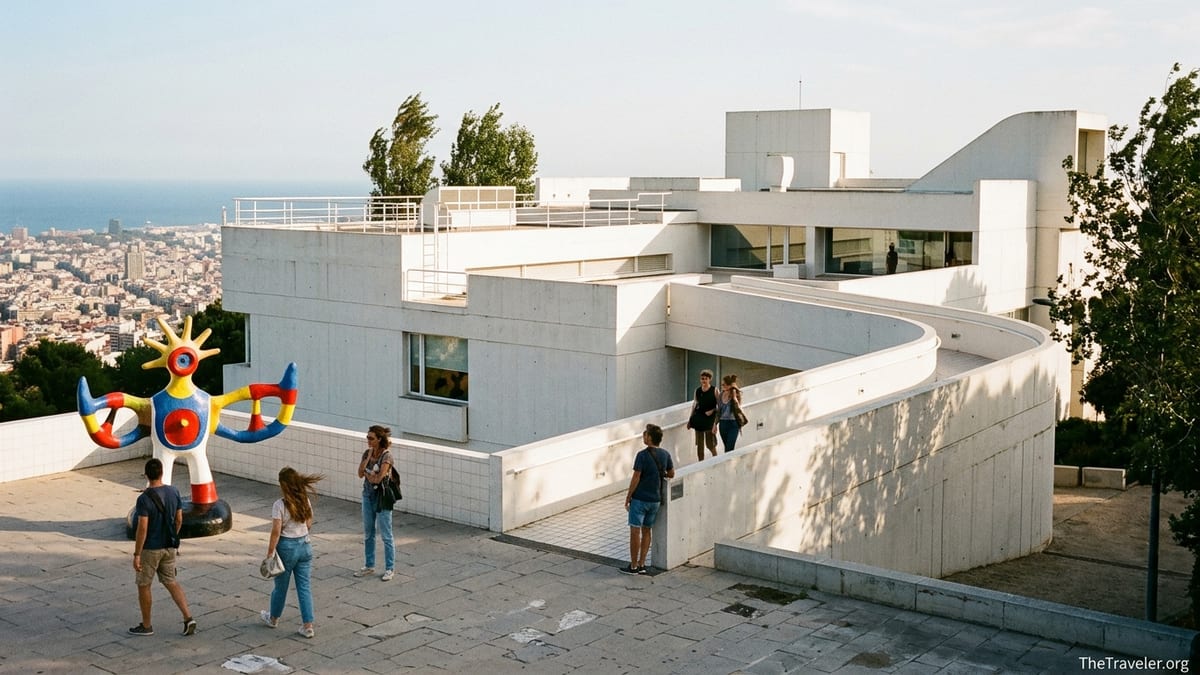
If your schedule is tight, you can still see the essential highlights in about 60 to 90 minutes. That gives you time to walk the main permanent-collection route, pause in a few key rooms, and step out on the terraces to appreciate the views of Barcelona and the building designed by architect Josep Lluís Sert. It will feel brisk, but not frantic, if you resist the urge to read every panel.
Art enthusiasts, Miró fans, or anyone traveling in a slower style will be happier with 2.5 to 3 hours. This allows time to double back to favorite works, watch parts of audiovisual material, explore Espai 13 if there is a contemporary exhibition on, and take a proper coffee or light lunch break at the café without clock-watching.
Think of it this way: if you simply want to check Miró off a Barcelona list between Sagrada Família and Park Güell, 90 minutes is workable. If you want to understand why locals speak so warmly about Miró as a defining Catalan artist, plan at least two hours and treat the visit as a central part of your Montjuïc day rather than a quick detour.
Opening Hours, Last Entry and Crowd Patterns
Before deciding how long to stay, it helps to understand when the museum is busiest and how the timetable works. As of 2026, the Fundació Joan Miró operates with a winter and summer schedule. From 1 April to 31 October, it opens Tuesday to Saturday from 10:00 to 20:00 and on Sundays from 10:00 to 19:00. In the quieter months from 1 November to 31 March, it closes earlier, typically at 19:00 every open day. On Mondays it is closed, except for a few specified public holidays.
Last entry is allowed up to 30 minutes before closing, but arriving so late will not give you enough time for a comfortable visit. A traveler who walks in at 18:30 in winter technically gets in, but will have to rush through miraculously inventive works such as “Woman and Bird” sculptures or Miró’s late large-scale canvases, barely glancing at the didactic panels. For anyone who cares even a little about the art, it is sensible to arrive at least 1.5 to 2 hours before closing.
Crowds vary during the week. Recent on-the-ground advice indicates that weekday mornings, especially Tuesday to Thursday in the first hour after opening, are usually the quietest. Weekends, rainy days and public holidays see more families, tour groups and Articket BCN pass holders arriving in waves. On a busy Saturday afternoon in May, you may find short lines to enter specific rooms, or clusters of people around star works, which can slow down your progress by 20 to 30 minutes compared with a quiet midweek morning.
If you are combining your visit with the Montjuïc cable car or a concert at the nearby Greek Theatre, build in a time buffer. Transportation delays, lingering over panoramic photos on the way up, or a long lunch at a Montjuïc terrace restaurant can easily eat into your museum window more than you expect.
Seeing the Highlights in 60–90 Minutes
Travelers on a tight schedule often wonder if it is worth going up to Montjuïc just for a short visit. The answer is yes, as long as you approach the Fundació Joan Miró with a highlight-focused plan. In about 60 to 90 minutes you can build a rewarding route that includes Miró’s major themes, a sense of the building and at least one outdoor viewpoint.
A practical 60-minute circuit might start with the early works to understand Miró’s roots in Catalan landscapes and farm scenes, then move quickly to the central galleries where his colorful, biomorphic forms dominate. Instead of reading every panel, choose one or two emblematic pieces in each section to study closely. For example, you might spend three or four minutes in front of a large blue canvas punctuated by playful symbols, noticing the texture of the paint and the balance of emptiness and gesture, rather than trying to decode every motif in every room.
Include time to see one or two of the foundation’s signature pieces that are often cited in guidebooks and visitor brochures, such as the monumental tapestry created with Josep Royo, known for its raw textures and bold abstract forms, or the large sculptures on the rooftop terrace. Even a brief pause here connects the art with Barcelona’s skyline, the harbor and Montjuïc’s greenery stretching around the building.
To keep within 90 minutes, move with purpose. If you find yourself lingered too long in the first half, remind yourself that the building is designed for discovery, with long vistas and open courtyards that reward even a glance. You can always skim a few later rooms more quickly, focusing on absorbing Miró’s universe in broad strokes instead of trying to cover every corner in depth.
A Relaxed 2–3 Hour Visit for Art Lovers
If Miró interests you or you generally enjoy modern art, a 2 to 3 hour visit is ideal. This timeframe lets you move at a human pace, loop back to pieces that speak to you and appreciate Sert’s architecture almost as a second artwork. It also fits neatly between a late breakfast in the city center and a late lunch or early dinner back down in Poble-sec or the Raval.
With three hours, you can take the time to read key interpretation panels, which are carefully curated to explain how Miró moved from more figurative, earthy works to the radical abstraction he is famous for. You can pause to watch video material or archival footage in one of the small screening areas without feeling that your schedule is slipping away, and you will have space to look at temporary exhibitions or the experimental projects in Espai 13 if they are open.
Many visitors find that the building itself reshapes their sense of time. Sert designed the museum with courtyards and skylights that invite you to slow down. Stepping into a quiet patio framed by white concrete and pines, looking back at the city below, often becomes a highlight of the visit. With more than two hours, you can sit for a few minutes on a bench here, letting the artworks you have seen settle in your mind instead of rushing straight to the exit.
This slower pace also leaves room for a coffee or snack at the café, which is accessible without leaving the museum complex. For example, you might spend the first 90 minutes in the main collection, then take a 20-minute break with a cortado and a slice of coca before returning inside for the final hour to revisit your favorite gallery or discover the rooftop sculptures with fresh eyes.
Pairing Fundació Joan Miró with Other Montjuïc Sights
How much time you allocate to the Fundació also depends on what else you want to do on Montjuïc. Many travelers pair a 2-hour Miró visit with the Museu Nacional d’Art de Catalunya, a stroll in the gardens, or a trip to Montjuïc Castle by cable car or bus. Trying to squeeze all of these into a single half day usually results in the museum feeling rushed; turning it into a full Montjuïc day makes for a richer experience.
One realistic option is a morning at the Fundació followed by lunch and a second attraction. For instance, you could arrive around 10:15, spend two hours exploring the collection, and leave around 12:30. From there, it is about a 15 to 20 minute walk downhill to MNAC, where you might spend another couple of hours with Romanesque frescoes and Catalan modernism before descending to Plaça d’Espanya for tapas. In this scenario, Miró gets the fresh energy of early in the day, but you still have time to enjoy another major museum.
If the castle and the cable car are your priority, you might reverse the order. Head up to Montjuïc Castle for opening time to enjoy views before the midday heat, then come back down and enter the Fundació mid-morning or right after lunch. In this case, allow at least 2 hours inside; visitors who attempt a 60-minute dash after a long castle visit often emerge wishing they had left more time to do the art justice.
Families traveling with children or older relatives should factor in breaks and walking distances. Although the museum is not enormous, it can be tiring after climbing up from Poble-sec or crossing the park from the Magic Fountain area. Building in a bench break in the sculpture garden or an ice cream stop near the museum entrance will help everyone enjoy the two to three hours you set aside.
Ticket Types, Guided Visits and How They Affect Timing
The way you structure your ticket can subtly change how much time you want to spend inside. A standard general admission ticket for the Fundació Joan Miró is currently advertised at around 18 euros onsite, with a small discount for buying online. Reduced tickets for students, seniors and some local cardholders are a few euros cheaper, and children under 12 accompanied by an adult enter free. These prices can evolve, but they give a sense of the budget you might plan for a couple or family visit.
Buying a timed ticket online, or accessing the museum via the Articket BCN museum pass, tends to streamline arrival, reducing the chance that you stand in a long line and lose 20 or 30 minutes of your planned visit window. On busy spring weekends or during major exhibitions, that time savings might mean the difference between a comfortable 2-hour visit and a slightly hurried one.
Guided visits, whether offered by the foundation or third-party tour companies, usually run 60 to 90 minutes, focusing on a curated selection of works and architectural highlights. If you join one of these tours, consider adding at least another 30 to 60 minutes afterward to wander independently. The guided part will help you understand Miró’s language and story, but the most memorable moments often come when you unexpectedly connect with a particular canvas or sculpture on your own.
Combination tickets and packages that include the Fundació and another attraction, such as Casa Batlló plus Miró, are more about saving money than time. They do not shorten the visit itself, but the need to fit two reserved time slots in one day can force you into a stricter schedule. If, for example, you have a mid-afternoon entry time on Passeig de Gràcia, avoid starting at Miró so late that you have to rush down the hill halfway through your visit to catch the second reservation.
Practical Time-Saving Tips for Your Visit
Once you know roughly how long you want to spend, a few simple choices can help you stick to that plan. First, choose your arrival time strategically. A 10:00 or 10:30 entry on a weekday lets you explore before groups build up and before the midday heat makes moving around Montjuïc more tiring. Finishing by early afternoon also leaves space in your day for a relaxed lunch and a siesta or beach visit later on.
Second, think about transport. Reaching the Fundació by bus 55 or 150, or via the red line of the hop-on hop-off sightseeing bus, usually deposits you quite close to the entrance, saving energy and time compared with a long uphill walk. If the Montjuïc funicular is temporarily out of service, as has occasionally been the case, shuttle bus replacements will add a few minutes of waiting and riding; consider that when planning a tightly timed 90-minute slot.
Third, be selective with your reading. The museum’s wall texts and labels are thoughtful and available in multiple languages, but trying to read them all can swell a 90-minute highlight visit into a three-hour deep dive. A good compromise is to fully read the introductory panel in each major section and then skim only the labels of works that especially catch your attention.
Finally, leave some time at the end for the shop rather than ducking in midway. The bookshop, filled with design objects and quality catalogues, can easily absorb 20 minutes of browsing. If you know you have to catch a train back to Girona or a time-specific Sagrada Família entry later in the day, set an alarm for when you want to start moving towards the exit so you do not lose track of time over art books and posters.
The Takeaway
There is no single right amount of time to spend at the Fundació Joan Miró, but there are clear patterns that can guide your planning. Most visitors will be satisfied with 2 hours inside, enough to follow the chronological story of Miró’s work, appreciate Sert’s luminous building and step outside to enjoy the terraces and views. Those with a deeper interest in modern art, or anyone who wants to combine the permanent collection with a major temporary exhibition and a café break, should budget 2.5 to 3 hours.
If you are squeezing Miró into a packed Barcelona itinerary, a focused 60 to 90 minute visit can still be rewarding, especially if you arrive close to opening time, buy tickets in advance and commit to a highlight-based route. And if you have more time, do not hesitate to slow down, sit in the sun-dappled courtyards and let the colors and symbols of Miró’s universe sink in. On Montjuïc, time tends to stretch, and a well-paced visit to the Fundació often becomes one of the most memorable experiences of a Barcelona trip.
FAQ
Q1. What is the minimum time I should plan for Fundació Joan Miró?
For a very quick visit that still feels worthwhile, plan at least 60 to 90 minutes. This allows you to see the main permanent-collection highlights and step out to the terraces without sprinting through the galleries.
Q2. How long do most visitors actually spend inside the museum?
Most visitors spend around 2 hours inside, which matches the average visit time mentioned by several recent museum guides and ticketing sites and feels comfortable for a broad overview.
Q3. Is 30 minutes enough if I am short on time?
Thirty minutes is only enough for a very superficial look at one or two rooms and a quick glance at the views. If your schedule is that tight, it is usually better to return another day or extend your visit rather than rush.
Q4. How much time do I need if I love modern art and Joan Miró?
If you are an art lover or particularly interested in Miró, plan 2.5 to 3 hours. That way you can read more panels, revisit favorite works, see any temporary exhibitions and enjoy a café break without feeling rushed.
Q5. Does visiting with kids or older relatives change how much time I should allow?
Yes. Families usually benefit from a slightly longer window, about 2 to 3 hours, so there is room for rest stops, bathroom breaks and time in the outdoor areas. Moving at a gentler pace keeps the visit enjoyable for everyone.
Q6. How early before closing should I arrive?
You can technically enter until 30 minutes before closing, but that is not enough for a satisfying visit. Aim to arrive at least 1.5 to 2 hours before closing so you can enjoy the collection without watching the clock.
Q7. Do I need extra time if I join a guided tour?
Guided tours typically last about 60 to 90 minutes. It is wise to add at least another 30 to 60 minutes afterward for independent exploration so you can revisit pieces that interested you during the tour.
Q8. How much time should I allow if I am also visiting MNAC or Montjuïc Castle?
If you are pairing the Fundació with MNAC or Montjuïc Castle on the same day, give Miró at least 2 hours and treat the full hill visit as a half or full day experience rather than trying to squeeze everything into a short morning.
Q9. Will buying tickets in advance save me time inside?
Buying tickets online or using a museum pass often shortens entry lines, especially on busy weekends. That means more of your planned 90 minutes or 2 hours is spent with the art rather than waiting at the ticket desk.
Q10. When is the best time of day to visit if I want a calm, unhurried experience?
Weekday mornings, particularly Tuesday to Thursday in the first hour after opening, tend to be the quietest. Starting early helps you move at your own pace, finish by early afternoon and enjoy a calm, unhurried visit.