


Perched on Barcelona’s Montjuïc hill, the Fundació Joan Miró is one of the city’s great art museums, yet it can feel surprisingly intimate if you time your visit well. Choosing the right season, day of the week, and even hour of the day can mean the difference between drifting quietly through Miró’s luminous galleries and shuffling from room to room behind tour groups. This guide focuses on when to go for a more relaxed experience, with practical examples that help you plan a calm, art-filled visit.
Get the latest updates straight to your inbox!
Understanding the Rhythm of the Fundació Joan Miró
Although the Fundació Joan Miró does not publish real-time crowd data, patterns from local tourism reports and visitor surveys show a clear rhythm. Overall, Barcelona receives its highest museum visitor numbers between late spring and early autumn, but the steepest peaks tend to fall between June and August. During these months, general museum visitation in the city can be roughly a third higher than quieter winter periods, and that increase is easy to feel in the Miró galleries and on Montjuïc’s paths.
Within a typical week, weekdays are noticeably calmer than weekends. Museum guides and local blogs consistently point out that Tuesday to Thursday mornings see the lowest concentration of tour groups and school visits, particularly before 11:00. By contrast, Saturday late morning and early afternoon are prime times for families, cruise ship excursions, and short-stay visitors, which can make the airy Sert-designed building feel much busier than at other times.
The museum also participates in major citywide cultural events such as International Museum Day activities and La Nit dels Museus in mid May, when hundreds of thousands of people move through Barcelona’s cultural institutions in a single evening. On those special nights the atmosphere is festive and lively, but it is not ideal if you are seeking quiet contemplation. Planning around these spikes is key if your goal is a more meditative visit.
Inside the building, crowding tends to concentrate in a few focal points: the introductory rooms of the permanent collection, the sculpture terrace with city views, and any popular temporary exhibition. Even on busier days, less obvious spaces such as side galleries, the library entrance area, or the newly integrated garden routes can remain pleasantly calm if you move against the main flow of visitors.
The Best Seasons: When Barcelona Slows Down
For a relaxed visit to the Fundació Joan Miró, the most forgiving seasons are late autumn, winter, and very early spring. From roughly mid November to early March, Barcelona’s overall tourist numbers drop noticeably compared with the summer surge. Hotel rates around Plaça d’Espanya and Poble-sec often fall, and you are more likely to find last-minute tables in nearby restaurants like small tapas bars on Carrer de Blai after your museum visit.
January and February are particularly good months for visitors who care more about art than beach time. Daytime highs around 12 to 15 degrees Celsius are cool but manageable if you wear a light coat for the walk from the funicular or bus stop. The reward is quieter galleries, shorter lines at the security check, and the ability to linger in front of works such as the large canvases of Miró’s “Woman, Bird, Star” series without feeling pressured to move on.
March and early April can still be pleasantly calm, especially in the first half of March before Easter travel peaks. This is a sweet spot for travelers: enough daylight to enjoy the sculpture terrace and the Cypress Garden route, but generally fewer large groups than in late spring. If you are combining the museum with other Montjuïc attractions such as the Olympic facilities or the botanical gardens, these shoulder weeks make it easier to move between sites without battling crowds.
By contrast, late June through August is the least relaxed time to visit. Mediterranean heat often pushes afternoon temperatures above 28 degrees Celsius, cruise ship calls are frequent, and Montjuïc’s viewpoints and cable car can get backed up. Fundació Joan Miró remains manageable compared with blockbuster sites like the Sagrada Família, but if you must visit in high summer and still want a calm experience, careful timing within the day becomes essential.
Calm Days and Ideal Hours: Planning Your Visit by the Clock
Across most of the year, the single best window for a relaxed experience at the Fundació Joan Miró is the first hour after opening on a weekday, typically between about 10:00 and 11:00. Local guides note that morning periods before 11:00 often see significantly fewer visitors than midday, and you feel that in the atmosphere: security checks are smooth, ticket staff have time to answer questions, and you may find yourself almost alone in some of the early galleries.
If you are staying in central Barcelona, a practical itinerary is to take a mid-morning metro to Paral·lel or Plaça d’Espanya, arrive at the museum right after opening, and spend a quiet two hours with the permanent collection. You can then exit around 12:30, while crowds at the entrance are beginning to build, and walk through the surrounding gardens before having a late Catalan-style lunch at a nearby restaurant downhill in Poble-sec.
Late afternoons on weekdays, roughly from 16:00 until closing, form the second-best window. School groups will usually have left by this time, and many tour groups focus their structured activities earlier in the day. Light entering through the museum’s characteristic skylights and courtyards softens in the late afternoon, which also creates a calmer atmosphere in spaces such as the main atrium and rooftop terrace.
Weekends and public holidays are possible but require compromises. If you must go on a Saturday or Sunday, aim for the first time slot of the day and avoid the middle of the afternoon between about 12:00 and 16:00, when families and day-trippers are most likely to arrive. Combine your visit with an early breakfast near your hotel so you can be at the museum doors just before opening, then leave Montjuïc by early afternoon when queues for the cable car and other attractions are peaking.
Avoiding Peak Crowds: Events, Cruise Days and Public Holidays
Even outside summer, certain dates can dramatically change the feel of a visit. Barcelona’s long weekends linked to national or regional holidays, such as early December or around Easter, often bring a surge in domestic tourism. On these days, Montjuïc’s major sights, including the Fundació Joan Miró, the Museu Nacional d’Art de Catalunya, and Montjuïc Castle, all share higher visitor volumes. If your travel dates are fixed to a holiday weekend, treat the museum as a morning activity and secure timed tickets in advance.
La Nit dels Museus in mid May is a striking example of how special events shape crowd levels. On this night, Barcelona opens many museums free of charge from early evening until after midnight, attracting well over one hundred thousand visitors citywide. The Fundació Joan Miró participates, which transforms its atmosphere into something more like a cultural festival, with lines at the entrance and a continuous flow of people through the collection. It is memorable and worth experiencing if you enjoy a lively scene, but it is not the moment for a quiet study of Miró’s brushwork.
Cruise schedules also have a subtle impact on crowd levels. Large ships docking at Barcelona’s port bring organized groups who often include Montjuïc highlights on half-day excursions. While detailed daily data is not public in a simple calendar, local tour operators mention that Tuesdays and Fridays in high season often see more cruise passengers on standard city circuits. If you notice multiple large ships in port while walking along the waterfront the day before your visit, consider adjusting your museum time earlier in the day or shifting to a different weekday.
Local festivals such as La Mercè in late September or major football match days can crowd public transport and popular viewpoints in the evenings. Although these do not always translate into extremely busy galleries at the Fundació itself, they can make moving around the city more hectic. For a relaxed experience, align your museum visit with calmer traffic windows and leave the festive crowds for separate evenings in the city center.
Weather, Light and the Experience of Miró’s Architecture
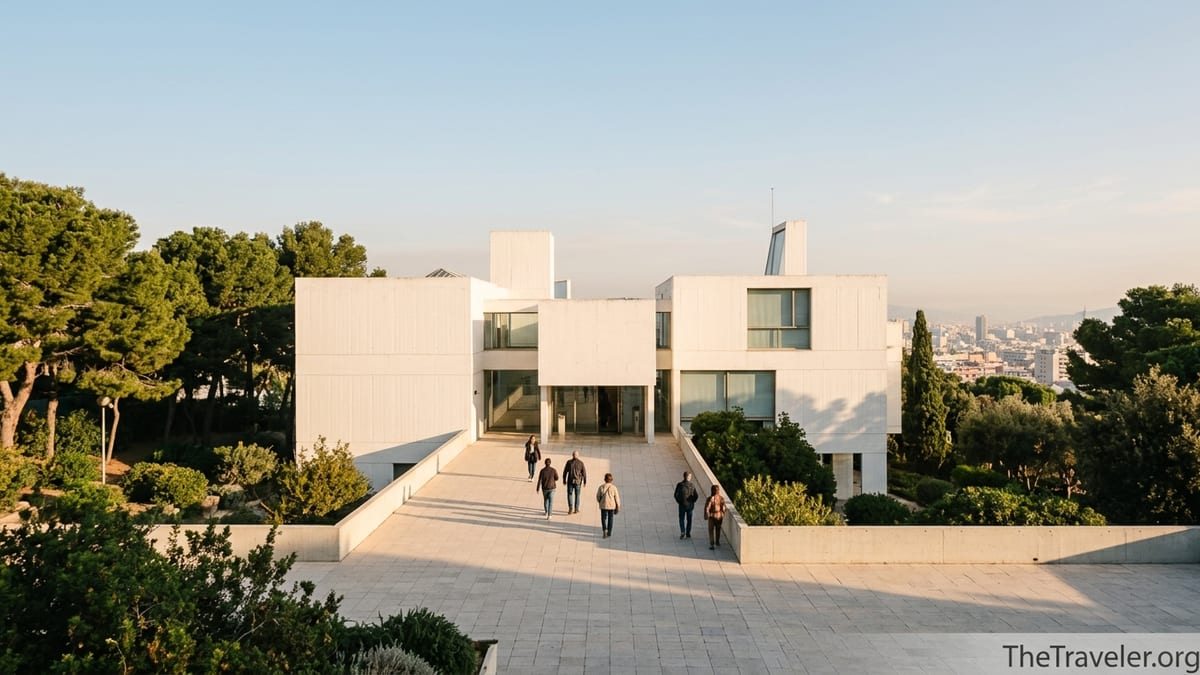
The Fundació Joan Miró is as much about its building and setting as it is about the artwork. Designed by architect Josep Lluís Sert, the museum uses courtyards, roof terraces, and controlled skylights that respond dramatically to seasonal light. This means your choice of time and weather shapes the mood of your visit in tangible ways.
In winter and on bright days in early spring, the low sun creates long shadows on the white façades and highlights the texture of concrete and tile. Visiting on a clear January afternoon, for example, you may find the outdoor sculpture terraces almost empty, with a crisp view across the city as planes approach El Prat Airport in the distance. Inside, light falls gently on Miró’s canvases, avoiding the harsh glare sometimes seen in midsummer.
On warm days in late spring and early summer, visiting soon after opening helps you enjoy the gardens and rooftop area before the sun is high. By 13:00 in June, the terraces can feel exposed, and short bursts of sun followed by air-conditioned galleries may become tiring. Planning a mid-morning slot lets you combine an unhurried indoor visit with a comfortable stroll through the museum’s outdoor spaces, including areas newly integrated into the visitor route, such as the Cypress Garden with its 1970 sculpture “Woman.”
Rainy days, especially in autumn, have their own advantages. Because Montjuïc’s open-air attractions such as the castle ramparts and botanical gardens become less appealing in wet weather, many visitors delay their hill visit altogether. If you are already prepared with a light rain jacket and non-slip shoes, a grey October weekday can be one of the softest moments to experience the Fundació, with quiet corridors, glistening courtyards, and views of the city under cloud rather than harsh sun.
Practical Tips: Tickets, Transport and Nearby Breaks
For a relaxed visit, securing a timed-entry ticket online in advance is highly recommended, especially in high season or during school holidays. Online booking systems for the Fundació Joan Miró usually ask you to select both date and hour, which helps smooth out visitor flow. Choosing one of the earliest slots on a Tuesday, Wednesday, or Thursday is one of the simplest ways to stack the odds in favor of a calm experience.
Reaching the museum comfortably also matters. One common route is to take the metro to Paral·lel and then the Montjuïc funicular, which connects directly up the hill. From the upper funicular station it is a short but uphill walk of roughly ten minutes along shaded paths. Alternatively, several city buses, including lines that stop at the nearby Avinguda de Miramar or the Olympic facilities, offer a lower-effort approach and drop you closer to the entrance. If steep streets are a concern, consider the bus option or a short taxi ride from Plaça d’Espanya, especially if you are visiting with older relatives.
Allow at least two hours inside the museum if you want to move at an unhurried pace, longer if there is a major temporary exhibition on. Many visitors plan three hours from arrival at the entrance to exiting the building, which leaves time for short pauses on benches in the sculpture terraces and a coffee in the museum cafe. Choosing a quieter time of day means those breaks actually feel restful instead of crowded or noisy.
After your visit, consider walking downhill through the landscaped gardens toward Poble-sec or the lower sections of Montjuïc rather than rushing straight back into the city center. Stopping for a late lunch at a simple tapas bar away from the busiest tourist strips, for example along Carrer de Blai, can extend the relaxed mood of your museum experience before you dive back into the energy of La Rambla or the Gothic Quarter.
Crafting Sample Itineraries for a Relaxed Visit
To see how timing changes the experience, imagine a winter weekday itinerary. You leave a hotel near Plaça Catalunya around 9:15, take the L3 metro to Paral·lel, and ride the funicular up Montjuïc. By 10:00 you are at the museum entrance, joining a small group of early visitors. Inside, you explore the permanent collection without feeling rushed, pausing to sit in front of the large triptychs and enjoying the natural light that filters in from above. Around 12:15, you step out onto the terrace, where just a few others are scattered along the balustrade taking quiet city photos.
Contrast that with a high-summer Saturday. You arrive at noon after a late breakfast, joining a line of visitors under strong sun. The entrance area feels busy, the cloakroom has a short queue, and groups led by guides in multiple languages move through the first galleries. You can still appreciate Miró’s work, but you are more likely to feel pushed along by the flow of people and might skip the cafe because every table is occupied.
A third, more balanced option is a shoulder-season afternoon in late April or early October. You book a 16:00 ticket on a Wednesday, spend your morning elsewhere in the city, then arrive on Montjuïc as the light softens and daytime temperatures dip. School groups are gone, families with small children are heading back to hotels, and you can comfortably move back and forth between indoor galleries and outdoor sculpture areas, knowing that closing time is still an hour or two away.
Thinking in terms of such concrete scenarios makes it easier to choose dates and times that match your priorities. If deep, quiet engagement with Miró’s paintings and sculptures is your main goal, model your visit on the winter weekday or late-afternoon shoulder-season pattern rather than the high-summer midday one.
The Takeaway
If your priority is a more relaxed experience at the Fundació Joan Miró, aim for the quieter arcs of Barcelona’s year and the softer hours of the day. Late autumn, winter, and early spring bring lighter crowds and cooler temperatures, while shoulder-season weekdays in April or October offer a good balance of pleasant weather and manageable visitor numbers.
Within any season, the most peaceful times are typically the first hour after opening and the last hours before closing on Tuesday through Thursday. Avoid midday on weekends, major public holidays, and special events such as La Nit dels Museus if you want space to contemplate the art and architecture rather than weave through lines.
Combine advance timed tickets with thoughtful transport choices, allow at least two hours inside, and leave room for spontaneous pauses in the sculpture terraces or garden routes. With a bit of planning, the Fundació Joan Miró can feel like a calm hilltop refuge above the city, where you can engage deeply with Miró’s playful, poetic universe at your own pace.
FAQ
Q1. What is the single best time of day to visit the Fundació Joan Miró for fewer crowds?
Early weekday mornings, roughly from opening until around 11:00, are usually the quietest, with fewer tour groups and more breathing room in the galleries.
Q2. Which months are best for a calm visit to the Fundació Joan Miró?
For a relaxed experience, target January, February, early March, or late November, when overall tourism in Barcelona is lower and museum crowds thin out.
Q3. Are weekends really much busier than weekdays at the Fundació Joan Miró?
Yes, Saturdays and Sundays tend to draw more families, local visitors, and tour groups, especially late morning to mid-afternoon, so weekdays are preferable if you value quiet.
Q4. How much time should I plan inside the museum for an unhurried visit?
Plan on at least two hours inside the museum, and up to three if you want to explore temporary exhibitions, enjoy the sculpture terraces, and take a cafe break.
Q5. Is it worth visiting the Fundació Joan Miró on a rainy day?
Absolutely. Rainy days, especially in autumn and winter, often mean fewer visitors, softer light through the skylights, and a cozy, contemplative atmosphere.
Q6. Should I avoid visiting during La Nit dels Museus if I want a peaceful experience?
If your main goal is calm, yes. La Nit dels Museus offers free evening entry and a festive mood but also long lines and continuous crowds throughout the night.
Q7. Do I really need to book timed tickets in advance?
While you can sometimes buy tickets on the spot in low season, reserving a timed ticket online is wise in spring, summer, and on weekends to avoid queuing.
Q8. What is a good relaxed itinerary that includes the Fundació Joan Miró and Montjuïc?
A popular calm plan is to visit the Fundació right after opening, stroll through nearby gardens, then descend on foot or by bus to Poble-sec for a late tapas lunch.
Q9. Is the museum still enjoyable in peak summer if that is my only option?
Yes, but go at opening time or late afternoon, stay hydrated, and expect more people on the terraces and in the first galleries compared with other seasons.
Q10. Are there quieter spots inside the Fundació Joan Miró to take a break?
Yes. Smaller side galleries, some corners of the sculpture terraces, and seating near interior courtyards often remain relatively peaceful even on busier days.