


Standing at a rental counter in Rome or Reykjavik, many travelers face the same dilemma: pay a steep daily fee for the rental company’s insurance, or decline and hope your credit card or travel policy will truly have your back. RentalCover, an online insurer that sells stand-alone protection for rental vehicles, positions itself as a cheaper and often broader alternative. But should you trust RentalCover for rental car insurance abroad, and in which situations does it actually make sense?
Get the latest updates straight to your inbox!
What RentalCover Actually Is (And Is Not)
RentalCover is not a rental car company and it is not the primary insurer of the vehicles you drive. Instead, it usually sells what is effectively “excess” or deductible protection. In most destinations outside the United States, rental cars already include basic collision damage waiver and theft protection, but with a high excess. If you scratch a compact car in Portugal and the rental company charges you 1,500 euros, RentalCover’s policy is designed to reimburse that out-of-pocket cost after the fact, up to the limit shown on your certificate.
In the United States, where collision damage waiver is not automatically included with rentals, RentalCover offers products that are meant to sit alongside the loss damage waiver you buy at the counter. Their Extra Protection for USA, for example, is marketed as covering fees that rental companies often charge on top of physical damage, such as towing, key replacement, or loss-of-use days while the vehicle is out of service. The rental company’s own policy still remains the primary coverage on the car; RentalCover steps in to reimburse you for the amounts the rental firm bills to your card that fall within the scope of the policy.
From a traveler’s perspective, this means RentalCover is best understood as a financial safety net that refunds what the rental company charges you, rather than an insurer that steps in to manage repairs directly. You still deal with the rental desk, pay the bill, and then submit documents to RentalCover. That structure is very different from buying loss damage waiver directly from a company like Hertz or Europcar, where you typically walk away from most damage bills altogether.
It is also important to note what RentalCover generally does not provide: third-party liability coverage. If you cause an accident in France that injures someone else, the liability coverage is usually baked into your rental contract or provided by local compulsory insurance, not by RentalCover. Similarly, if you rely on a US credit card’s collision coverage, that card may cover damage to the rental car itself but not medical or liability costs. Understanding these boundaries is crucial before deciding whether a stand-alone product like RentalCover is enough for your trip.
Typical Coverage, Limits, and Exclusions Abroad
When you buy RentalCover for an overseas rental, you will typically see a coverage limit presented in local currency or in US dollars, often in the range of the excess charged by rental companies in that region. For example, a traveler renting a compact car in Spain might see a RentalCover policy limit of 3,000 to 4,000 euros, which roughly matches the maximum deductible the rental firm could charge after a serious scrape or collision. In Iceland or New Zealand, where gravel and wind damage are common, policies may highlight coverage for windshield chips, tire damage, and sand or ash risks that are notoriously expensive through the rental company’s own packages.
Real-world examples show that claims often involve relatively ordinary incidents. Reviews from customers mention shattered windshields from highway rocks in the United States, damaged alloy wheels on city streets in Italy, or slashed tires from roadside debris in Australia. In many of these cases, the rental company charges several hundred to over a thousand units of local currency immediately to the renter’s card. Travelers then upload the rental agreement, damage report, photos, and receipts to RentalCover’s online portal and, when all goes well, receive reimbursement directly to a bank account or digital wallet within a few days.
However, exclusions matter. Policies often require that you purchase basic collision or loss damage waiver from the rental company, or that it is included in your rate, before RentalCover will respond. There can also be conditions around off-road driving, unsealed roads, and use in certain restricted areas. For instance, driving a two-wheel-drive vehicle on prohibited gravel tracks in Iceland or taking a sedan onto rough desert roads in the United Arab Emirates might void coverage with both the rental company and any excess insurer. Some policies also stipulate that you must comply with all terms of the rental agreement, including authorized drivers and intoxication rules.
Another common exclusion relates to timelines and documentation. Travelers who purchase RentalCover only after picking up the car sometimes discover that incidents which occurred before the policy start time are not covered. Others run into problems when they cannot obtain a formal damage invoice, police report, or proof of payment from the rental provider. These are not unique to RentalCover; they are typical in the insurance industry. But for a traveler on a two-week road trip in Argentina or South Africa, failing to chase down that paperwork before leaving the country can become an expensive oversight.
How RentalCover Compares on Price and Convenience
One of RentalCover’s main selling points is price. At many European airports, the rental desk may quote 20 to 30 euros per day for full damage waiver that reduces your excess to zero. Over a 10-day rental in Lisbon or Barcelona, that can add 200 to 300 euros to your bill. By contrast, travelers often report paying around 5 to 10 dollars or euros per day for RentalCover’s excess protection when purchased via major booking platforms. On a two-week road trip in Scotland costing 500 pounds in base rental fees, it is common to save more than 100 pounds by choosing a stand-alone policy instead of the rental company’s premium package.
Convenience is more nuanced. With rental company coverage, the advantage is that if damage occurs, the process is usually contained at the counter: you drop off the car, complete a form, and either pay nothing or a relatively small deductible. The rental company handles repairs internally. With RentalCover, convenience is front-loaded. Purchasing is quick and digital, and many travelers like that it is not tied to any specific rental chain. You can book a car through a consolidator in Germany, pick it up from a local franchise, and still rely on the same RentalCover policy for similar trips in the future if dates and vehicles match.
The trade-off becomes apparent if something goes wrong. You must first pay the rental company, which could mean a sudden charge of 1,200 euros to your card after a bumper scrape in Sardinia, then go through RentalCover’s claims process. For some travelers with strong cash flow and a high credit limit, this is acceptable. For others, especially those on tight budgets or using debit cards, this outlay is a significant stressor, even if they are eventually reimbursed.
For US-based travelers, it is also worth comparing RentalCover to premium credit card options. Several major cards, including some issued by American Express and Visa, offer either complimentary or optional rental collision coverage when you pay for the car with the card and decline the rental company’s loss damage waiver. A traveler renting an SUV in Canada for a week might find that the card’s coverage, possibly with a one-time fee of around 20 to 25 dollars, already protects against collision and theft up to a high limit, making additional excess coverage unnecessary. The key difference is that card coverage may exclude certain countries, longer rental periods, luxury vehicles, or campervans, areas where a dedicated excess policy like RentalCover sometimes fills a gap.
Claims Experience: The Good, the Bad, and the Frustrating
Customer reviews are sharply divided, which is crucial when deciding whether to trust any insurer. On one side are thousands of positive reports. On major review platforms, many travelers praise RentalCover for fast and straightforward payouts. A driver who cracked a windshield on a US highway describes submitting photos and invoices through the app and receiving approval within hours, with money hitting their account within a couple of days. Another customer recounts losing a car key and scuffing an alloy wheel during a trip in Italy; after the rental company charged more than 1,000 euros, they say RentalCover reimbursed the full amount within a week.
These strong experiences often share common traits. The renters had clear documentation, including a detailed final invoice from the rental company, photos of the damage, and proof of payment. They submitted claims promptly, responded quickly to follow-up questions, and their situations fell squarely within the policy wording. For these travelers, RentalCover worked exactly as advertised: a low-cost way to neutralize a high excess and avoid financial shock after an accident or minor mishap abroad.
On the other side are complaints about delayed communication, denials, or long waits for reimbursement. Formal complaints filed with a major North American consumer watchdog describe travelers waiting many weeks or even months for decisions, struggling to reach a human representative, and feeling left in limbo while hundreds or thousands of dollars remained unreimbursed. Postings on travel and insurance forums echo similar themes: emails that receive only automated responses, chat functions that appear unstaffed, and difficulty understanding why a claim was refused when marketing language seemed generous.
Common pain points in negative reviews include technicalities such as buying the policy after picking up the car, failing to file a police report for vandalism or suspected theft, or driving on unapproved roads. In one reported case, a traveler who had a window smashed by thieves did not obtain a police report before crossing a border and later saw their claim denied on procedural grounds. In another, a customer renting through a third-party website assumed that all vehicles offered were covered, only to discover after a collision that their specific truck or campervan type fell outside the policy’s definitions. These stories underline the importance of reading the conditions carefully and treating RentalCover like any other insurance product rather than a blanket guarantee.
Is RentalCover Safe and Legitimate, or a Scam Risk?
The question many readers ask, especially when confronted with polarized reviews, is whether RentalCover is fundamentally trustworthy. On one hand, there is clear evidence of widespread use. The service advertises partnerships with prominent booking platforms, and major airlines and online travel agencies offer its products during the car reservation process. Public review sites list tens of thousands of recent, verified customer reviews, the majority of which are positive and describe successful claims and repeat usage over multiple trips.
On the other hand, some watchdog sites and forum threads raise fair concerns. In North America, RentalCover has attracted a cluster of low-star reviews with complaints about slow claims handling and poor customer service. Some commenters point out a striking contrast between glowing feedback on certain platforms and the negative experiences reported elsewhere, questioning whether satisfied customers are simply more likely to post reviews when prompted or incentivized. While there is no clear evidence that RentalCover is a fraudulent operation, there are enough stories of frustration that travelers should approach it with the same caution they would apply to any niche insurance brand.
In practical terms, “trust” here should not mean blind faith. It means deciding whether the company’s track record, the price of its policies, and the real protection it offers are acceptable in your risk calculus. A couple on a two-week self-drive holiday in New Zealand, renting a standard compact car on paved roads, might reasonably decide that RentalCover is a good value layer on top of the rental company’s coverage, especially if they have a robust credit card and savings buffer. A solo traveler planning a complex road trip across borders in Eastern Europe, with one-way rentals and night driving on rural roads, might instead prefer to pay extra for full coverage directly at the desk or via a major international insurer with 24-hour phone support.
Travelers should also distinguish between the concept of excess insurance and the specific brand. Stand-alone excess policies are common in markets like the United Kingdom and Australia, where specialist insurers sell annual rental car excess coverage that works similarly to RentalCover. Those products are widely accepted and used by experienced travelers. If you decide RentalCover’s service model or reputation is not right for you, you can still use the underlying strategy by shopping for alternative excess insurers or by checking whether your existing travel insurance already includes rental car excess coverage for trips abroad.
When RentalCover Makes Sense, and When It Probably Doesn’t
RentalCover tends to make the most sense for travelers who prioritize saving money on excess coverage, are comfortable fronting charges temporarily, and are diligent about paperwork. For example, a family from the United States flying to Spain for a 10-day coastal road trip might be quoted 25 euros per day for full zero-excess coverage at the desk, or around 250 euros total. If they instead purchase a RentalCover policy for roughly 6 euros per day, they could save about 190 euros. If they understand that a bumper scrape will be charged to their card and later reimbursed, and they are ready to photograph the car thoroughly at pickup and return, this can be a rational trade-off.
It can also be appealing in destinations where rental companies aggressively monetize minor damage. Travelers report being billed several hundred euros for small scratches, wheel scuffs, or windshield chips in parts of Italy, Greece, and Croatia. In those markets, knowing that even a minor parking mishap will be reimbursed can substantially reduce stress, especially if you are planning to spend a lot of time in tight old-town streets or on rural roads with loose gravel.
RentalCover may be a weaker fit for travelers who want immediate, no-hassle resolution at drop-off. Business travelers on tight schedules, those uncomfortable handling large temporary credit card holds, or renters with complex itineraries involving ferries, border crossings, or off-road segments might prefer to pay extra for coverage integrated directly with the rental company. Similarly, if your premium credit card or an existing travel insurance policy already provides solid collision coverage and a reasonable excess, doubling up with RentalCover may offer limited additional benefit.
There are also categories of vehicles and trips that often fall into gray areas. Campervans in Iceland, pickup trucks in remote parts of Australia, and high-end SUVs in alpine regions frequently have strict insurance limitations. Before relying on RentalCover or any third-party provider, you should confirm that your specific vehicle type, rental country, and intended routes are fully covered. If the policy wording is ambiguous, or you receive noncommittal answers from support, consider that a sign to choose a more straightforward option, even if it costs more.
How to Use RentalCover Abroad Without Nasty Surprises
If you decide RentalCover is worth considering, you can reduce the risk of unpleasant surprises with a few practical steps. First, check what insurance you already have. Many US drivers carry personal auto policies that extend to rentals within the country and sometimes into Canada, though not usually overseas. Some high-end credit cards provide primary rental collision coverage when you pay for the rental with the card and decline the rental company’s loss damage waiver. Travel insurance policies from established brands sometimes include rental car excess protection up to a set limit. If one of these options already covers your main risks, RentalCover might be redundant.
Next, read the policy wording before purchasing, not after an accident. Pay particular attention to start and end times, geographic limits, vehicle categories, and exclusions for off-road use or high-risk areas. If you are renting a compact car in Ireland for a week, confirm that Ireland is explicitly covered and that common add-ons like driving into Northern Ireland are permitted. Be wary of assuming that every vehicle shown on a booking site is automatically eligible; double-check if you are renting anything larger than a standard passenger car.
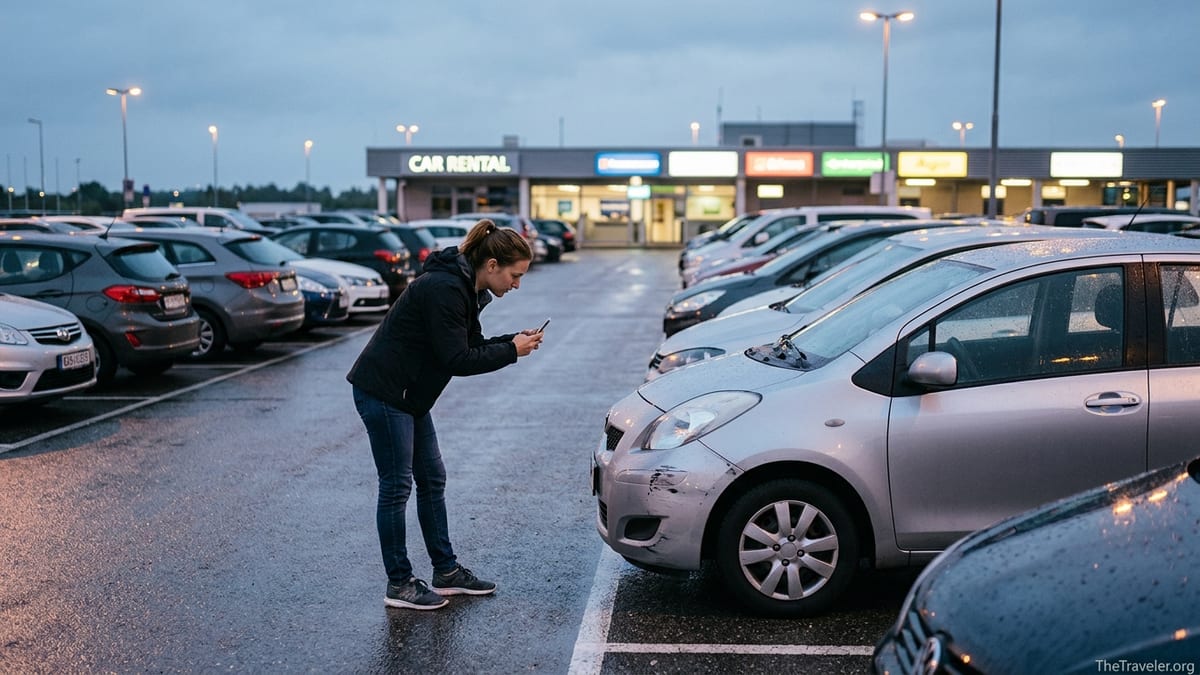
At pickup, document the vehicle thoroughly. Use your phone to record slow video and close-up photos of every panel, wheel, and interior surface, including existing scratches and chips. Note any damage on the rental company’s form and insist on staff signatures where possible. If you have to park on narrow streets in cities like Naples or Athens, consider buying inexpensive side-mirror covers or folding mirrors when parked; scraped mirrors are a frequent source of disputes. In case of an incident, collect as much documentation as you safely can: photos of the scene, contact details of other drivers, and, where recommended or legally required, a police report.
Finally, build in time for the claims process. If you are charged 1,000 euros for damage at drop-off in Lisbon, try to obtain a detailed invoice before leaving the airport, not weeks later from another country. Submit your claim as soon as possible while details are fresh and documents are within easy reach. If communication with RentalCover becomes slow, be persistent but polite, and keep clear records of emails and submission confirmations. While many travelers report quick reimbursement, others have waited longer than expected; being organized makes it easier to escalate if necessary.
The Takeaway
RentalCover is a real, widely used provider of stand-alone rental car excess and damage protection, not a fly-by-night operation. For many travelers, particularly those driving standard cars on straightforward itineraries in Europe, Oceania, and North America, it can offer substantial savings compared with buying full protection directly from rental companies. Countless positive claim stories suggest that when the policy terms are followed and documentation is complete, reimbursement can be fast and efficient.
At the same time, RentalCover is not a magic shield. It rarely provides third-party liability coverage, it requires you to pay the rental company first, and its claims process depends heavily on your ability to secure the right paperwork. Mixed reviews, especially from markets like the United States, also indicate that communication and response times are not consistently strong. Treat it as one tool among several: a cost-saving option that works well for organized travelers who understand how excess insurance operates, rather than a guarantee that anything that happens abroad will be effortlessly covered.
Before your next trip, compare RentalCover’s prices and terms against those of the rental company, your credit cards, your travel insurance, and any national auto policies you hold. If you decide the trade-offs are acceptable and you are willing to manage the paperwork, RentalCover can be a sensible part of your risk-management plan for driving abroad. If not, paying more for simpler, integrated coverage may buy you valuable peace of mind.
FAQ
Q1. Is RentalCover a legitimate company for rental car insurance abroad?
RentalCover is a legitimate provider used by many major booking platforms and thousands of travelers worldwide, primarily offering excess and damage protection rather than full vehicle or liability insurance.
Q2. Does RentalCover replace the rental company’s own insurance?
No. RentalCover usually sits on top of the rental company’s coverage. The rental company’s policy or waiver handles the car first, and RentalCover reimburses your excess and certain fees within its policy limits.
Q3. Will RentalCover cover third-party liability if I cause an accident abroad?
In most cases, no. Third-party liability is typically provided by the rental company or mandated local insurance, so you should confirm liability protection separately before relying on any excess policy.
Q4. How does RentalCover compare with using a credit card’s rental insurance?
Credit card coverage, when available, can be very cost-effective but often has country, vehicle, and duration restrictions. RentalCover may fill gaps, especially for higher excesses or certain vehicle types, but you should compare both sets of terms carefully.
Q5. What documentation do I need to make a claim with RentalCover?
You generally need the rental agreement, final damage invoice, proof of payment, photos, and sometimes a police report, especially for theft, vandalism, or hit-and-run incidents.
Q6. How long does RentalCover take to pay claims?
Many travelers report payouts within a few days of submitting complete documents, but others have experienced delays of weeks or longer, particularly when information is missing or disputed.
Q7. Is RentalCover worth it if the rental desk offers full zero-excess cover?
It can be, because RentalCover is often significantly cheaper per day. However, the rental desk’s zero-excess cover is usually simpler at drop-off, so you are trading cost savings for a more involved claims process later.
Q8. Does RentalCover work for campervans, motorhomes, or luxury cars abroad?
Not always. Coverage can exclude certain vehicle classes such as large motorhomes, exotic cars, or commercial vehicles, so you must check the eligibility section of the policy before booking.
Q9. What happens if I buy RentalCover after I pick up the rental car?
Policies often require that coverage starts before you collect the vehicle. Buying after pickup may leave earlier incidents uncovered, and some claims have been denied on this timing issue.
Q10. Should I rely on RentalCover as my only protection when driving overseas?
Generally no. Treat RentalCover as one layer of protection focused on excess and specific fees. You should also ensure you have adequate liability coverage and understand what your rental contract and any existing insurance already provide.