


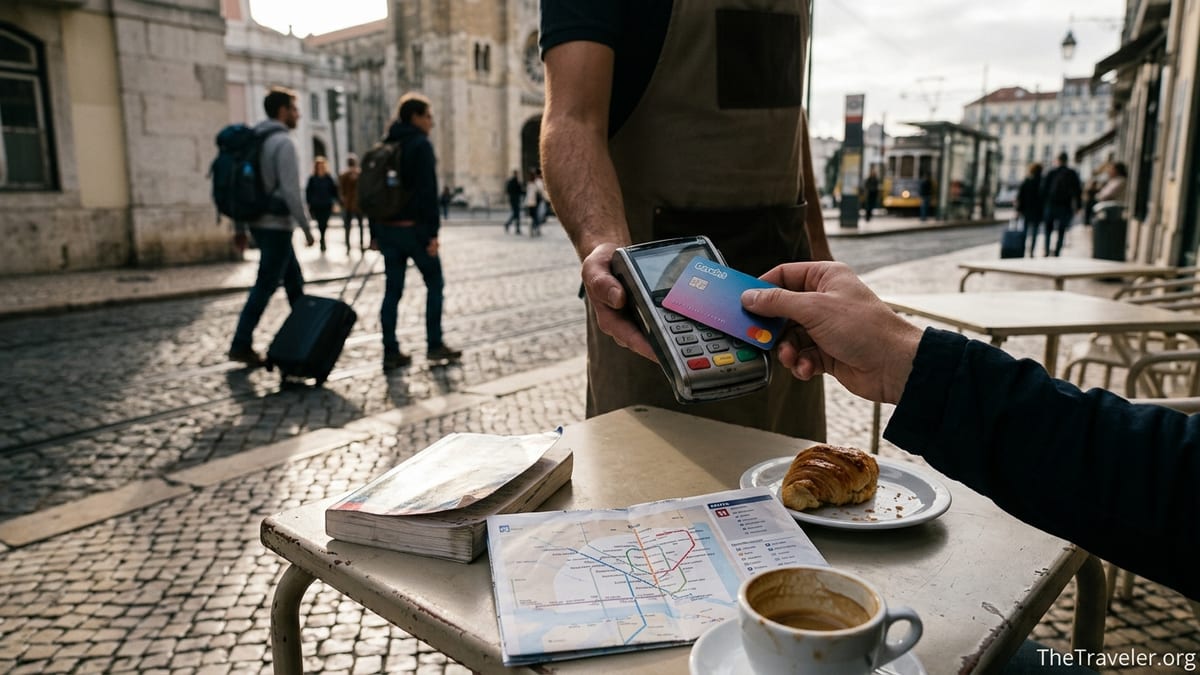
You are standing at a cafe counter in Lisbon or a night market in Bangkok, waving your phone at the payment terminal. Instead of rifling through wads of unfamiliar notes, you tap your Revolut card or smartphone, see the instant exchange rate on screen, and walk away with a flat white or a bag of street food. For millions of travelers, this has become the new normal. But as more people move their travel money to fintech platforms instead of traditional banks, a crucial question lingers: should you really trust Revolut with your travel funds?
Get the latest updates straight to your inbox!
What Revolut Actually Is (And Why Travelers Love It)
Revolut is a financial technology company that offers app-based accounts, debit cards, and multi-currency wallets. Unlike a traditional high-street bank, Revolut in most markets issues e-money accounts rather than classic checking accounts, although in some European countries it now operates with a banking license. In practical terms, that means you can hold balances in multiple currencies, convert between them, and spend abroad using a physical or virtual card.
For travelers, the appeal is obvious. A US-based traveler planning a month between Spain and Croatia can open the app, buy euros at a live interbank-style rate on a Wednesday afternoon, and then spend on their Revolut card in Barcelona tapas bars and Dubrovnik ferries without the 3 percent foreign transaction fee many legacy credit cards still charge. Similar behavior is popular with Europeans heading to the United States, who often preload dollars in the app before a shopping trip to New York.
Revolut also supports more than 30 currencies in its wallets, which means a backpacker hopping from Poland to Hungary to Romania can keep zloty, forint, and lei in one place without juggling multiple bank accounts. The app shows in real time how much you are spending per day, category, and country, which helps you keep a tighter grip on a long-term travel budget.
On top of this, Revolut layers features that feel purpose-built for travel: in-app card controls so you can freeze or unfreeze your card after a late-night taxi ride, disposable virtual cards to pay on unfamiliar hotel booking sites, and instant peer-to-peer transfers when you need to split an Airbnb with friends in another currency.
How Safe Is Your Money With Revolut?
Safety with Revolut starts with how your money is held. In most European markets, daily-use Revolut balances are issued as electronic money and safeguarded at partner banks rather than being covered by the same deposit insurance schemes that protect traditional bank deposits. In some countries where Revolut has obtained a banking license, certain products are covered by national deposit guarantee schemes, but travelers should check the exact status in their country of residence before treating a Revolut account like a full replacement for a home bank.
The company emphasizes physical and digital security. Revolut requires identity verification when you sign up and uses machine-learning-based monitoring to flag unusual behavior, such as attempts to log in from a new device or card payments in countries you have not visited recently. Biometric checks, such as fingerprint or face ID on your phone, are standard for accessing the app. Physical cards must be activated in the app and the PIN is stored only there, which significantly reduces the risk of someone stealing a new card out of your mailbox and using it immediately.
Card-level security is also relatively strong. You can freeze your plastic card instantly if you lose your wallet on a night train, then unfreeze it once you find it wedged between the seats. You can toggle contactless, magnetic stripe, and online payments on or off in seconds. Revolut’s virtual and disposable cards are designed to reduce online fraud: a frequent flyer might keep one permanent virtual card for trusted merchants such as a well-known hotel chain, then rely on disposable cards that refresh their numbers for single-use on smaller, unknown booking websites.
That said, Revolut has not been entirely untouched by security issues. In 2022 it experienced a cyber incident where personal data of some customers was exposed, and in 2023 reports emerged of criminals exploiting a flaw in the way some US and European payment systems interacted, allowing them to steal a significant amount through erroneous refunds. These incidents were not about tourists losing card data in a bar, but they are reminders that fintech platforms are attractive targets and that no system is immune from failure. For travelers, the practical implication is that it is wise to treat Revolut as a powerful tool, not as a risk-free vault for all of your savings.
Fees, Exchange Rates, and the “Weekend Trap” Abroad
One of Revolut’s biggest selling points is its foreign exchange pricing. During the working week, most plans allow you to exchange currencies at or close to interbank or wholesale market rates, which are generally better than the rates offered by airport kiosks or many traditional banks. For example, a traveler exchanging 1,000 US dollars into euros on a Tuesday morning in the app may see a rate only a fraction of a cent away from the live market, saving potentially tens of dollars compared with a walk-up desk at JFK or Heathrow.
However, there are important limits and caveats that matter when you are on the road. Free or low-cost exchange usually applies only up to a plan-specific allowance. Standard-plan customers, for instance, typically have a monthly allowance of fee-free foreign exchange above which a small percentage markup applies. Higher-tier plans such as Premium or Metal increase or remove these caps, which can be relevant if you are paying for a multi-thousand-dollar safari or a family resort stay.
Then there is the weekend markup. Because foreign exchange markets are largely closed from late Friday to late Sunday, Revolut and many competitors add a buffer to protect themselves from Monday-morning rate jumps. Practically, that can look like an additional 1 percent markup on common currency pairs if you are exchanging money or your card is auto-converting during this window. A traveler landing in Tokyo on a Saturday and using a Standard Revolut card to pay in yen at a restaurant might notice that the effective rate is slightly worse than the mid-market rate shown on a currency app. Some premium tiers have removed weekend fees for direct in-app exchanges in many currencies, but not always for every product, so exact costs depend on your plan.
ATM withdrawals follow a similar pattern. Revolut generally allows a certain amount of cash withdrawals per month with no extra fee from its side, then charges a percentage after that threshold. Imagine a couple in Bali withdrawing the equivalent of 250 US dollars per week for cash-only warungs and scooter rentals: on a Standard plan they might hit a cap and start paying a modest percentage fee for extra withdrawals, whereas a traveler with a higher-tier plan may remain within a more generous allowance. Local ATM operators can also add their own fees and unfavorable conversion options, often labeled as “dynamic currency conversion,” which you should decline in favor of being charged in the local currency.
Reliability on the Road: Outages, Declines, and Acceptance Issues
In day-to-day use, most travelers report that Revolut works as advertised: tap to pay at a contactless terminal in Berlin, insert chip and PIN at a Paris metro machine, or use the card details to book a guesthouse on a well-known platform. Yet reliability is not perfect, and occasional glitches can matter a great deal when you are far from home.
There have been documented periods where some Revolut users were unable to pay in shops or online due to technical issues affecting card processing. In one such incident covered by Irish media in 2023, customers found their cards declined at tills for part of the day before service recovered. On traveler forums, you can find more recent individual accounts of cards being inexplicably declined at US merchants or European ticket machines even when the account had enough balance, often traced back to security settings such as location-based checks or contactless limits.
Location-based security is a good example of how a protective feature can trip up real-world travel. If you keep this setting enabled, Revolut sometimes compares the location of your phone with the location of the card terminal and may decline transactions that appear inconsistent. That can help stop fraud if your card details are cloned in another country while your phone is with you at home. But if you land in Mexico City, leave your phone data off to avoid roaming charges, and try to pay with your physical card before opening the app, you might hit an unexpected decline until the system catches up or you adjust settings.
There have also been cases where Revolut cards were not accepted for specific types of transactions, such as in-flight purchases on certain airlines or at a handful of unattended fuel pumps and toll roads, because the terminals expect a traditional credit card rather than a debit-style product. A traveler driving a hire car through rural France or Spain may find that a motorway toll gate or petrol station rejects their Revolut card, even while it works flawlessly at supermarkets and hotels. For this reason, experienced travelers still carry a backup card from a traditional bank or a major credit card network alongside Revolut.
Fraud, Scams, and Disputes: What Happens When Things Go Wrong?
No matter how advanced security systems become, travelers remain prime targets for fraud and scams. Lost wallets on crowded trams, cloned cards at compromised ATMs in tourist hot spots, and fake accommodation listings on small websites are all realities. The question is not whether Revolut can prevent every bad event, but what happens once something goes wrong.
Revolut’s app makes it easy to react quickly. If your card disappears after a late night in Prague, you can open the app and freeze the card in seconds, then order a replacement to your next reliable address. Disposable virtual cards reduce the damage if a shady online merchant leaks card details, since each number is used once and then discarded. For many users, this instant control feels safer than waiting on hold with a traditional bank’s fraud line from a roaming SIM.
The experience becomes more mixed once you enter the world of formal disputes and chargebacks. Because Revolut operates across multiple jurisdictions and uses a mix of e-money and banking structures, resolution times and protections can feel less straightforward than with a domestic bank backed by very clear local consumer rules. Travelers have shared stories of accounts frozen for extended checks at awkward moments, such as when they needed funds to pay rent abroad, or of long chat-based back-and-forth conversations while trying to reverse a suspicious transaction.
On the other hand, traditional banks also freeze accounts and can be slow to resolve cross-border disputes. What is different with Revolut is the sense of distance: there is no local branch in Rome or Bangkok where you can walk in with your passport and speak to a human at a desk. Everything is managed through the app and digital support channels. That works smoothly for simple issues like changing a PIN or querying a small card refund, but it can feel impersonal and stressful when you are dealing with a large unknown charge while checking out of a hotel abroad.
Practical Ways to Use Revolut Safely While Traveling
Used thoughtfully, Revolut can be a powerful part of your travel money toolkit rather than the sole pillar. One common strategy among frequent travelers is to treat Revolut as the primary spending card but not as the main place where long-term savings live. For example, you might keep one or two weeks’ worth of typical expenses on Revolut and top up periodically, while holding your larger emergency fund at a home bank that you access only if needed.
Before departure, it helps to “pre-flight” your settings. That could include ordering your physical card well in advance so you can test it at local merchants and ATMs, enabling international or magstripe payments if you know you will use older terminals in places like parts of Southeast Asia, and deciding whether to keep location-based security switched on. If you anticipate arriving in a new country over the weekend, consider exchanging at least some currency in the app on a weekday to avoid potential weekend markups.
On the ground, Revolut is especially well suited for card-friendly urban environments. In cities like Stockholm, London, or Singapore, where even small cafes and metro systems accept contactless payments, you can largely live on your Revolut card, using cash only as a backup. In more cash-intensive destinations, such as smaller towns in Morocco or rural areas of Vietnam, you may want to use Revolut primarily as a low-fee source of ATM withdrawals within your allowance, while still carrying some physical local currency obtained from reputable ATMs linked to major banks.
Security-wise, take advantage of the tools available. Freeze your card between uses if you are worried about theft in hostels, use virtual or disposable cards for unfamiliar online businesses such as lesser-known ferry-booking sites, and set modest per-transaction limits to reduce exposure. At the same time, carry at least one backup card from another issuer stored separately from your main wallet. If a system outage or security rule blocks all Revolut payments for a few hours while you are trying to check in for a flight, that second card can make the difference between a minor hiccup and a serious travel disruption.
The Takeaway
Revolut sits in a middle ground between a pure travel card and a full-service bank. It offers excellent exchange rates during the week, granular control over your cards, and a user-friendly app that suits the unpredictable, cross-border reality of modern travel. Features like instant card freezing, virtual and disposable cards, and multi-currency wallets make it particularly attractive to digital nomads, backpackers, and frequent city-break travelers.
At the same time, Revolut is not a magic shield. Weekend markups, exchange and ATM allowances, and occasional technical or security-related declines mean it is unwise to rely on it as your only way to pay abroad. Its regulatory structure, especially where accounts are issued as e-money rather than fully insured bank deposits, is another reason to avoid parking your entire life savings in the app while you are on the road.
So, should you trust Revolut with your travel money? For most people, the answer is yes, with conditions. Trust it with your everyday spending budget, use it to dodge many of the worst foreign exchange fees and to keep a tight grip on your travel costs, and take advantage of its modern security tools. But pair it with at least one traditional card and a backup source of funds, stay aware of its limitations, and never travel assuming that a single app can replace all of your financial resilience.
FAQ
Q1. Is Revolut safe to use as my main card when traveling?
Revolut is generally safe in terms of technical security and fraud protection, and many travelers successfully use it as their primary spending card abroad. However, because it is a fintech platform without a widespread branch network, and in many markets operates e-money accounts rather than fully insured bank deposits, it is wise to carry at least one backup card and not rely on Revolut as your only source of funds.
Q2. Are Revolut exchange rates really better than my bank’s?
During weekday trading hours, Revolut’s rates are usually close to the mid-market rate and often more competitive than those offered by many traditional banks or airport exchange counters. The advantage can shrink if you exceed your monthly fee-free exchange allowance or convert currencies at weekends, when markups are more likely to apply, so you should still compare indicative rates before making very large conversions.
Q3. What happens if my Revolut card is declined abroad?
If your card is declined, first check the app to confirm you have enough balance and that your card is not frozen or limited by settings such as location-based security, contactless limits, or magstripe restrictions. If the decline is not explained by these controls, try another terminal or merchant, then contact Revolut via in-app chat. This is also where having a backup card from a different provider can prevent your trip from being disrupted.
Q4. Are my funds protected if Revolut goes out of business?
Revolut is required to safeguard customer funds in line with local regulations, typically by holding them in segregated accounts at partner banks rather than mixing them with its own funds. This is different from classic deposit insurance and varies by country and product type. Travelers should check the exact protections that apply in their country of residence and avoid storing large, long-term savings solely in Revolut.
Q5. Can I withdraw cash abroad with Revolut without extra fees?
Revolut usually includes a monthly allowance of cash withdrawals without additional Revolut fees, after which a small percentage charge is applied. The exact limits depend on your plan tier, and local ATM operators may still levy their own fees or unfavorable conversion offers. To save money, withdraw within your plan’s allowance where possible and always choose to be charged in the local currency at the ATM.
Q6. Is Revolut accepted everywhere that Visa or Mastercard are?
Revolut cards run on major networks such as Visa and Mastercard and are accepted in most places that take those brands, especially in cities and tourist areas. However, some specific terminals, such as certain in-flight card readers, motorway toll booths, or older fuel pumps, may expect a traditional credit card and reject Revolut. For car rentals, remote toll roads, or niche services, carrying an additional credit card is still advisable.
Q7. How can I minimize currency conversion costs when traveling with Revolut?
To reduce costs, try to exchange money in the app on weekdays rather than weekends, stay within your monthly fee-free exchange allowance where possible, and avoid dynamic currency conversion at card terminals and ATMs by choosing to pay in the local currency. If you know you will arrive in a new country on a Saturday, consider pre-buying a reasonable amount of the local currency in the app a day or two earlier.
Q8. What should I do if my phone with the Revolut app is stolen abroad?
If your phone is stolen, use another device as soon as possible to log in and freeze your cards, or contact Revolut support from a trusted computer. Because the app relies on biometric and device-based security, a thief cannot easily access your funds just by holding your phone, but you should still act quickly. It can also help to have your Revolut login details and recovery options stored securely in a separate place before you travel.
Q9. Is Revolut a good option for long-term digital nomads?
Revolut is popular with digital nomads thanks to its multi-currency accounts, budgeting tools, and competitive exchange rates. It works well as a day-to-day spending and income hub for people who are frequently moving between countries. Still, nomads are usually better off combining it with at least one traditional bank account for receiving larger payments, holding savings, and meeting visa or tax documentation requirements that may not be fully met by a purely app-based fintech account.
Q10. Should I close my regular bank account if I start using Revolut for travel?
For most people, it is not advisable to close their regular bank account just because they start using Revolut. A traditional bank account can still be important for salary deposits, mortgages, local direct debits, and providing a stable financial base in your home country. Revolut works best as a powerful complement for travel and international spending, rather than as a complete replacement for all traditional banking relationships.