


More news on this day
The U.S. State Department has issued a fresh worldwide security alert warning that Americans overseas could be singled out in connection with rising geopolitical tensions, urging travelers to “exercise increased caution,” keep a low profile and be ready to adjust plans at short notice.
Get the latest news straight to your inbox!
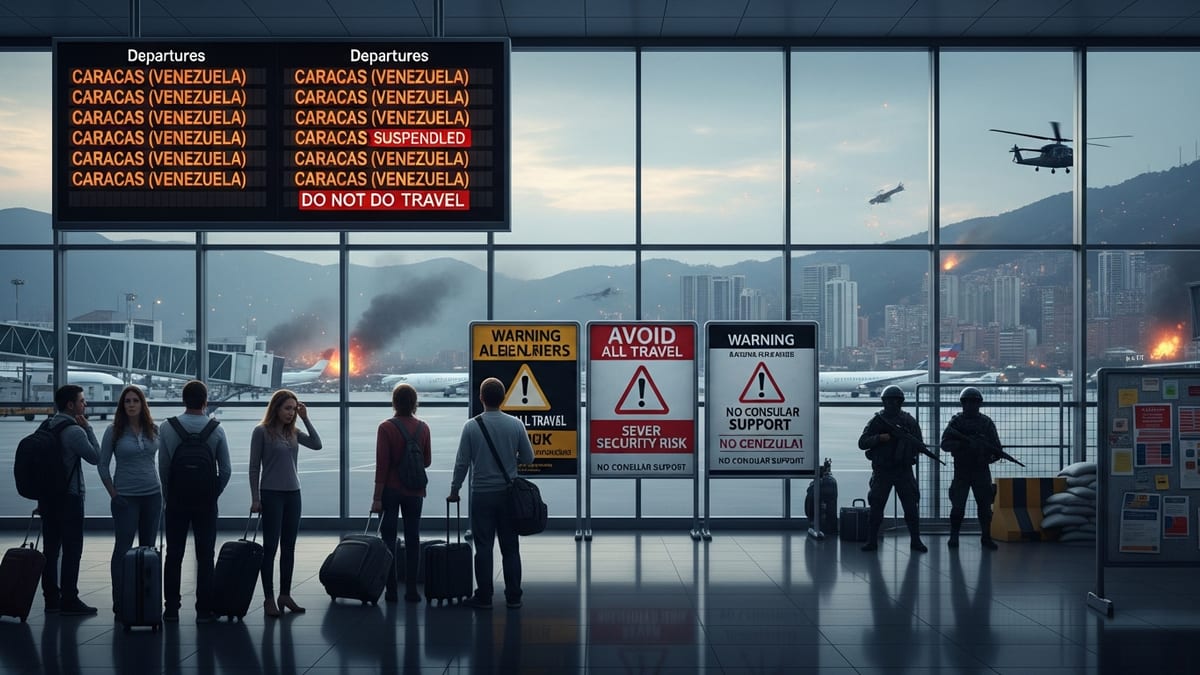
Worldwide caution highlights risk of Americans being singled out
The latest worldwide caution notice advises U.S. citizens traveling or residing abroad that they may face an elevated risk of being targeted because of their nationality, particularly near locations associated with the United States. The alert points to the potential for attacks, harassment or other hostile acts against individuals perceived as American, even in countries that are not directly involved in current conflicts.
According to publicly available State Department material, worldwide cautions are used sparingly when officials judge that a combination of regional crises, terrorism concerns and anti‑U.S. sentiment could affect travelers across multiple regions. The current alert reiterates that U.S. diplomatic missions may themselves be targets and that incidents can unfold with little or no warning, making personal preparedness a central part of risk management.
The notice does not tie the threat to a single plot, but to a fluid global security picture shaped by conflicts in the Middle East, tensions involving Iran and its partners, and sporadic extremist attacks elsewhere. The language stresses that even peaceful demonstrations can quickly turn confrontational, and that gatherings near embassies, military facilities or symbolic sites are of particular concern.
Americans are advised to reconsider nonessential movements during periods of unrest, maintain heightened awareness in crowded public spaces and monitor local news and official messaging for changes in the threat environment.
“Keep a low profile” becomes central travel guidance
One of the clearest pieces of advice in recent security messages is for Americans overseas to keep a low profile in their day‑to‑day movements. That phrase appears repeatedly in country‑specific travel advisories, especially for higher‑risk destinations where crime, terrorism or political volatility are persistent concerns.
In practice, the guidance is intended to discourage behavior that could draw unnecessary attention, such as overtly displaying U.S. symbols, discussing sensitive political topics in public or frequenting venues strongly identified with Western visitors. Analysts who study consular alerts note that similar wording has been used in both regional and global warnings during past periods of heightened anti‑U.S. sentiment.
Recent public advisories for parts of the Middle East, for example, emphasize that Americans should avoid predictable routines, stay away from demonstrations and limit time near government buildings and popular expatriate gathering spots. For some higher‑risk neighborhoods, U.S. government personnel themselves are restricted from nonessential travel, underscoring that private citizens may face similar exposure.
Risk management specialists quoted in prior media coverage of worldwide cautions have described “keeping a low profile” as a basic but effective mitigation measure when threats are broad and non‑specific. Instead of attempting to avoid every potential target, travelers are encouraged to focus on being less conspicuous, more mobile and quicker to react if a situation deteriorates.
Advisories, alert levels and what they mean for travelers
The worldwide caution sits alongside the State Department’s four‑tier system of country travel advisories, which ranges from Level 1, exercise normal precautions, to Level 4, do not travel. Each advisory reflects a mix of risks, including crime, terrorism, civil unrest, health threats and wrongful detention, and may be updated as conditions change.
Public guidance notes that even destinations with relatively low overall risk can experience sudden disruptions, from protests and transportation strikes to isolated attacks. For that reason, the worldwide caution urges travelers to review not only the headline advisory level for their destination, but also any recent alerts and security messages issued by local U.S. embassies or consulates.
High‑risk areas listed on State Department resources often include regions where local authorities have limited control, where armed groups operate or where the United States is viewed as a direct party to conflict. In some such locations, U.S. government personnel require special approval to travel, and emergency assistance for private citizens may be constrained by security conditions on the ground.
Travel experts point out that advisory language is designed to help individuals make informed decisions rather than to ban travel outright. However, a worldwide caution that explicitly references the possibility of Americans being targeted signals that the perceived risk is not confined to one border, and that even routine leisure trips warrant additional planning.
Practical steps for Americans planning trips abroad
In response to the latest warning, security professionals and long‑term expatriates highlight several practical measures for Americans who intend to travel despite the elevated risk. The first is to register itineraries and contact details with the Smart Traveler Enrollment Program, commonly known as STEP, which allows embassies to push security updates and makes it easier to reach citizens in a crisis.
Travelers are also encouraged to map out alternate routes and meeting points in each city they visit, identify local hospitals and understand how to contact emergency services. Publicly available crisis response guidance notes that during major incidents, U.S. authorities may have limited ability to move around a country to assist, making local resources and personal contingency plans more important.
Insurance coverage for medical evacuation, trip interruption and security incidents is increasingly seen as a core part of international travel planning. Advisory material stresses that in some destinations, medical facilities may not meet U.S. standards and that evacuations can be extremely costly if arranged privately at short notice.
Basic situational awareness techniques, such as avoiding headphones in crowded environments, keeping valuables out of sight and identifying exits on arrival at a venue, are presented as low‑cost ways to reduce exposure to both opportunistic crime and targeted violence. While no set of precautions can eliminate risk, the worldwide caution frames informed, prepared travelers as better positioned to navigate unforeseen events.
Impact on tourism, study abroad and business travel
The renewed emphasis on potential targeting of Americans comes as international tourism continues to rebound and study‑abroad programs expand after earlier pandemic disruptions. Universities, nonprofit organizations and corporations that send U.S. citizens overseas are closely tracking the latest alerts as they update risk assessments and duty‑of‑care policies.
Some organizations have begun revisiting destination lists, particularly for short‑term programs in regions where local unrest or anti‑U.S. sentiment is rising. Others are focusing on enhanced pre‑departure briefings, scenario‑based security training and clearer protocols for sheltering in place or evacuating if conditions deteriorate.
Travel industry observers note that while prior worldwide cautions have not halted tourism, they often lead to shifts in booking patterns, with some travelers choosing destinations perceived as politically neutral or better equipped with emergency infrastructure. At the same time, adventure and business travelers with experience in complex environments may continue with planned trips, but with greater attention to route planning and personal security habits.
The overarching message threaded through the latest State Department communication is that Americans overseas should assume they could draw unwanted attention in certain contexts, even when simply commuting, sightseeing or attending events. Keeping a low profile, staying informed and planning for contingencies are being framed as essential tools for navigating an increasingly unpredictable global landscape.