


When you are planning a trip in Latin America or departing from the region, Despegar often appears with seemingly irresistible prices on flights, hotels, and packages. At the same time, airlines and hotel chains increasingly urge you to book direct for “best price” guarantees and better support. The choice is not always obvious. Understanding how Despegar works, what you gain by booking direct, and where the real risks and savings lie can help you make smarter decisions for each trip rather than relying on a one-size-fits-all rule.
Get the latest updates straight to your inbox!
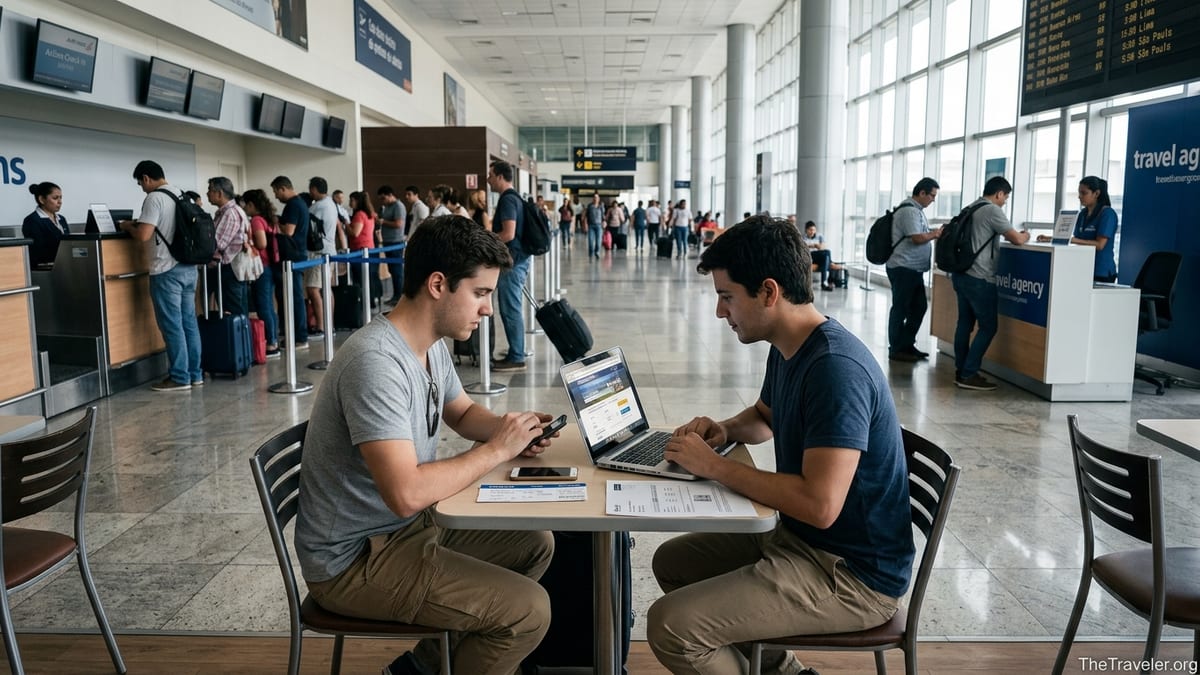
What Despegar Is and How It Makes Money
Despegar is a major Latin American online travel agency that sells flights, hotels, vacation rentals, packages, car rentals, and activities across the region and beyond. Founded in 1999, it has grown into one of the dominant players in Spanish and Portuguese speaking markets, working with airlines like Aerolíneas Argentinas, LATAM, Avianca and global carriers, as well as thousands of independent hotels and international chains. Like other large OTAs, it negotiates access to inventory and fares from providers and then resells those services to travelers.
Despegar earns its revenue primarily from commissions and margins built into the prices you see. For a flight, Despegar may collect a commission from the airline or charge a service fee layered onto the ticket price. For hotels, the platform often buys rooms at a wholesale net rate and adds a markup before listing them. That is why sometimes you may find a four-night stay in a mid-range hotel in Cancún cheaper on Despegar than on the hotel’s own site, while a similar hotel in Bogotá might be a few dollars cheaper when booked direct on the brand’s website.
Beyond the margin on the core booking, Despegar also promotes extras such as travel insurance, seat selection assistance, baggage bundles, and flexible-change options. These add-ons can be helpful, but they also represent another revenue stream. When you compare Despegar versus booking direct, you need to look carefully at what is included in each price: whether checked bags are covered, if changes are allowed, and whether Despegar itself is adding a service or management fee at checkout.
Another subtle revenue angle is that Despegar, like many large OTAs, may reduce or waive its margin in specific cases to win market share. That can produce temporary bargains on popular routes, such as São Paulo to Miami or Buenos Aires to Madrid, that beat the airline’s own website by double-digit amounts. On the other hand, in markets with less competition or fewer negotiated deals, the same OTA can be slightly more expensive than booking directly.
Price: When Despegar Is Cheaper, Equal, or More Expensive
For many travelers the first filter is price. Various analyses of hotel and flight booking patterns in recent years show a mixed picture. Broadly, booking direct wins a significant portion of the time, but large OTAs collectively capture another substantial chunk because of negotiated or discounted rates. One hotel pricing study in 2025 found that direct booking was the cheapest option in a little over a third of cases, while large international OTAs combined were cheaper in a similar share of scenarios, with average differences of around 10 to 15 percent per night on the same room type.
On the flight side, independent fare comparisons often find that OTAs sometimes undercut airline sites, especially on complex or promotional itineraries. A fare from Los Angeles to Paris or São Paulo to Lisbon, for example, may show up on an OTA at roughly 100 to 150 US dollars less than the official airline websites because the intermediary is discounting its margin or using a special fare code. In Latin America specifically, travelers often report seeing Despegar priced a bit below the carrier for itineraries like Mexico City to Lima or Santiago to Rio, particularly when bundled with a hotel.
Concrete examples illustrate how variable this is in practice. A traveler searching a mid-range hotel in Cartagena for four nights in high season might see 120 US dollars per night on the hotel’s site, but 108 dollars per night on Despegar for the same room and cancellation policy, because Despegar is offering a “member price” discount and using a wholesale rate. In another case, a boutique hotel in Oaxaca may list at 90 dollars direct with a breakfast-included promotion, while Despegar shows 95 dollars without breakfast. In purely numeric terms, Despegar looks slightly more expensive, but once you account for breakfast value the direct rate is clearly better.
The key for travelers is to treat prices as dynamic rather than assuming one channel is always cheaper. For any booking that matters to your budget, it is worth running the exact same dates and occupancy through Despegar and then checking at least the airline or hotel’s own website. Over the course of a two-week multi-city trip through Argentina and Chile with five or six hotel stays, seeing just a 10-dollar per night difference on several bookings can add up to hundreds of dollars saved or lost depending on which option you favor.
Protections, Changes, and Customer Service
Price is only part of the story. When things go wrong, the channel you booked through greatly affects your experience. Despegar acts as an intermediary: your contract is with Despegar for the booking, and with the airline or hotel for the actual service. If you need to change or cancel, the rules are usually set by the provider, but you often must process the request through Despegar’s platform. Its help pages emphasize that changes and cancellations are subject to provider policies and that additional charges may apply depending on the fare flexibility and dates.
On flights, Despegar’s support articles explain that you can request date or time changes for many tickets as long as the fare rules allow it. However, any change can trigger fare differences plus airline penalties, and Despegar may add its own administration fee. A traveler who books a restrictive promotional fare from Buenos Aires to Madrid might discover that changing the return date requires not only paying a 200-dollar airline penalty but also covering a sizable fare increase and any service fee the OTA charges for managing the change. Had the same traveler booked a slightly more flexible fare directly with the airline, they might still pay a penalty, but they would deal with the airline’s call center or app without a third party in the middle.
Flight disruptions illustrate another crucial distinction. If an airline cancels or significantly reschedules your flight, Despegar’s guidance notes that the airline may automatically rebook the itinerary, and Despegar will relay notifications. In minor schedule tweaks, your reservation is updated automatically. The challenge is that some airlines will not handle changes directly if the ticket was issued through an intermediary. They may redirect you back to Despegar for rebooking or refunds, which can mean waiting in an additional support queue at precisely the worst moment, such as during a storm or large-scale schedule disruption.
With hotels, policy complexity revolves around cancellation deadlines and no-show rules. Despegar clearly states that cancellations depend on the provider and some reservations do not permit refunds at all. In practice, if you book a nonrefundable rate for a Lima hotel through Despegar and then fall ill, any goodwill adjustment is at the hotel’s discretion but must be processed via the OTA. A hotelier might be more inclined to bend rules for a guest who booked directly and can be handled personally by the property, whereas when the booking is through an intermediary, front-desk staff sometimes point to the need for changes to pass through that channel.
Loyalty Programs, Perks, and Hidden Tradeoffs
One increasingly important consideration is how your booking affects loyalty benefits. Major hotel chains often award full points and elite-qualifying nights only for direct bookings, not for stays booked via OTAs. A traveler with mid-tier status at a global chain might receive room upgrades, late checkout, breakfast, or bonus points when booking directly through the chain’s website, but none of these benefits when booking the same property via an intermediary. Over multiple stays, this can equate to hundreds of dollars in value, especially in cities like São Paulo, Bogotá, or Mexico City where chain hotels and lounges can be a significant upgrade in comfort.
Airlines follow similar patterns. While many carriers will credit frequent flyer miles for tickets booked via large OTAs if you enter your loyalty number, some promotional fares or basic economy options sold through third parties may be ineligible for upgrades, same-day changes, or special guarantees like free same-day standby. Low-cost carriers operating regional routes in Latin America may also restrict customer service options when tickets are bought through intermediaries, requiring all changes to go back through the agent even for simple add-ons like paid seats.
Hidden tradeoffs appear in fee structures as well. Price comparisons of travel platforms frequently note that OTAs sometimes advertise appealing base fares and then add service or processing fees late in the checkout flow. For instance, a 312 dollar flight surfaced by a meta-search engine and sold via a third-party agency can balloon after adding a 39.99 ticketing fee and a nonrefundable small-print extra if you want a brief price hold. Direct airline sites typically have fewer surprise charges that are not clearly identified as optional extras. A similar pattern can emerge with hotels when resort fees, cleaning fees for apartments, or city taxes are labeled differently across platforms.
On the other hand, Despegar sometimes folds meaningful extras into its rates. A “flexible change” hotel rate with free cancellation until the day before arrival might cost 10 percent more than a strict, prepaid rate on the hotel’s own site, but could save you a full night’s charge if your plans shift. Some of Despegar’s package offers, especially combinations of flights and hotels to beach destinations such as Punta Cana or Cartagena, can also include transportation and breakfast at a discount relative to assembling those pieces yourself. Understanding whether you value loyalty benefits and predictable fees, or prefer bundle convenience at the lowest visible headline price, is central to choosing your channel.
Real-World Booking Scenarios
To make the tradeoffs less abstract, imagine a week-long August trip from New York to Buenos Aires. You find a round-trip economy ticket on a major US carrier for around 980 dollars on the airline’s site. Despegar shows the same flights for 930 dollars, but the fare class is more restrictive on changes and does not include free seat selection. If you are confident your dates will not change and you care mostly about upfront savings, booking with Despegar could reasonably save 50 dollars per person. However, if your plans might change or you want the airline’s more flexible change policy and better upgrade options, that modest saving may not be worth the reduced flexibility.
Consider lodging on the same trip. A four-star chain hotel in Recoleta might quote 160 dollars per night on its own site, with breakfast included and full loyalty points. Despegar lists the same room category at 150 dollars with a continental breakfast chargeable separately and clearly notes a stricter cancellation deadline three days before arrival. For a seven-night stay, the OTA saves about 70 dollars in room cost but sacrifices breakfast and points. If you value the chain’s loyalty benefits and typically eat breakfast at the hotel, booking direct likely delivers more overall value.
Now switch to a regional getaway, such as a long weekend from Santiago to San Pedro de Atacama. Despegar may advertise a bundle of round-trip flights on a Chilean carrier plus three nights in a local boutique lodge and airport transfers for the equivalent of about 650 dollars per person. Attempting to replicate this manually, you may find separate airline tickets at around 260 dollars and three nights at the same lodge for 340 dollars, plus transfers costing another 40 dollars when booked direct. In this case, the package saves you a modest amount while also simplifying logistics; booking through Despegar is defensible if you accept their role as the central contact for any changes.
A final example: a one-night airport hotel before an early morning departure from Bogotá. Here, the risk of disruption is low and the stay is short. If Despegar lists a reputable hotel for 85 dollars prepaid and the hotel’s own site lists 95 dollars with free cancellation until the previous day, your decision may hinge on how firm your plans are. If your incoming flight is already confirmed and you simply need a place to sleep, the cheaper nonrefundable OTA rate is a rational pick. If you are on a flexible itinerary that might change, spending a bit more to book direct with easier cancellation could be wise.
When Booking Direct Clearly Wins
There are several situations where booking directly with the airline or hotel is usually the safer or more valuable choice. Complex, high-value itineraries are one. If you are flying multiple legs on one airline alliance, using many thousands of miles, or relying on tight connections, booking with the airline or a trusted human travel advisor rather than a mass-market OTA reduces friction if any part of the trip changes. Direct bookings often give you easier access to same-day flight changes, waitlists, and automated reaccommodation tools that may not fully work with third-party tickets.
Another clear case is when you are maximizing loyalty programs. If you hold mid or top-tier status with a hotel chain such as Marriott, IHG, or Accor, the benefits of free breakfast, upgrades, late checkout, lounge access, and bonus points often far outweigh a modest nightly savings from an OTA. Over a ten-night stay in a major city, those perks can amount to several hundred dollars in tangible value. Booking direct also strengthens your relationship with the brand, which can matter if you encounter issues like overbooking or maintenance problems where the hotel must decide whom to walk or upgrade.
Smaller, independently run properties are another category where direct often wins, particularly in parts of Latin America where commissions to OTAs can be steep. A family-owned lodge in the Sacred Valley of Peru or a guesthouse in Colombia might already be operating on thin margins. Booking direct through email or the property’s booking engine sometimes produces better rates or at least more flexible terms, and it ensures more of your money reaches the local business rather than being carved away by commissions.
Finally, if you are concerned about consumer protections and legal rights, direct booking has advantages. When you book with an airline or hotel, your contract is straightforward. When you insert an intermediary, you add another set of terms and conditions and another potential point of failure. If something goes wrong, the airline might insist you speak to the OTA, while the OTA refers you back to the airline. Booking direct does not guarantee perfection, but it narrows the number of parties involved and can make it easier to seek refunds or chargebacks if absolutely necessary.
When Using Despegar Makes Sense
There are also scenarios where Despegar and similar OTAs are genuinely useful. One is the discovery phase. For many routes in Latin America, Despegar offers a clear snapshot of competing airlines, connection options, and rough price ranges. Even if you ultimately book direct, starting with Despegar can help you identify which carriers operate a route like Lima to Quito or São Paulo to Montevideo and what usual prices look like across different dates.
Another is bundling. Package deals that combine flights and hotels can produce real savings, especially for resort and city-break destinations where partners offer wholesale pricing to fill capacity. If you are planning a last-minute five-night beach break in Punta Cana with flexible dates and you see a Despegar package that is a few hundred dollars cheaper than separately booked flights and hotel, the tradeoff of having a single point of contact for the bundle may be acceptable. This is particularly true for simpler trips where you are not chasing elite benefits or intricate fare rules.
Despegar can also be attractive for travelers who do not participate in loyalty programs or who value upfront savings over long-term benefits. For someone taking a once-a-year vacation, shaving 50 dollars off a round-trip ticket or 10 dollars per night off a hotel might matter more than collecting points for a future trip that may or may not materialize. In those cases, it is reasonable to occasionally choose the lower OTA rate as long as you read the conditions carefully.
Finally, Despegar’s localized payment options and language support can be a big plus. Many Latin American travelers prefer paying in local currency with familiar installment plans or local cards. Despegar commonly supports these methods more seamlessly than some foreign airline or hotel sites, which may quote all prices in US dollars or euros and reject certain local cards. If booking direct would require navigating a foreign-language site or dealing with cross-border transaction fees, the convenience of a local OTA can be worth a small premium, provided the underlying fare rules meet your needs.
The Takeaway
The choice between Despegar and booking direct is not a question of always picking one or the other. Instead, it is about matching the channel to the trip. For short, simple journeys where Despegar is clearly cheaper and you are comfortable with more restrictive conditions, the OTA can be an efficient way to save money and handle everything in one place. For complex itineraries, loyalty-driven stays, or trips where flexibility and robust customer service matter most, direct booking with airlines and hotels usually provides better protection and more value.
In practice, the best strategy for frequent travelers is to treat Despegar as both a research tool and an occasional booking channel. For each major purchase, compare the OTA price with the provider’s own site, including all taxes, fees, and perks. Weigh the risk of disruption, your need for loyalty benefits, and how comfortable you are dealing with an intermediary if anything changes. By consciously deciding on a case-by-case basis rather than following a blanket rule, you can capture the best of both worlds: the sharpest prices when they appear, and the strongest protections when they matter.
FAQ
Q1. Is Despegar usually cheaper than booking directly with airlines or hotels?
Not consistently. Sometimes Despegar is cheaper due to negotiated or discounted rates, and other times direct booking wins, especially when loyalty benefits or promotions are factored in.
Q2. If my airline changes or cancels my flight, who helps me if I booked through Despegar?
In most cases you must work with Despegar, because they issued the ticket. The airline may rebook you, but many carriers will refer you back to the OTA to finalize changes or refunds.
Q3. Do I earn hotel loyalty points and elite-night credits when I book through Despegar?
Often no. Many major hotel chains restrict points and elite benefits to direct bookings. Independent hotels vary, but chain properties commonly treat OTA bookings as ineligible for full loyalty credit.
Q4. Can Despegar add extra fees on top of airline or hotel prices?
Yes. Despegar may charge service or management fees for ticketing, changes, or cancellations. Always review the final price breakdown at checkout, not just the initial fare you see.
Q5. When is it clearly better to book flights directly with the airline?
Booking direct is generally better for complex itineraries, long-haul trips with connections, tickets tied to elite status benefits, and any travel where flexibility and easy rebooking are priorities.
Q6. Are Despegar’s package deals on flights and hotels really good value?
They can be. Packages to popular destinations sometimes combine wholesale hotel rates and discounted airfares, making the total cheaper than booking each element separately, though you should still compare.
Q7. What are the main risks of booking a hotel through Despegar instead of direct?
The main risks are stricter cancellation rules, potential difficulty changing dates, and limited access to hotel loyalty perks or special treatment when something goes wrong at the property.
Q8. Does Despegar offer better payment options than booking direct?
Often it does for Latin American travelers, such as local currency pricing and installment plans. These can be more convenient than paying in foreign currency on an overseas airline or hotel site.
Q9. How should I decide whether to use Despegar or book direct for a specific trip?
Compare total prices for the same dates and room or fare type, check all fees and conditions, consider loyalty benefits and flexibility, and then choose the option that offers better overall value, not just the lowest headline price.
Q10. Is it safer from a consumer-protection standpoint to avoid OTAs like Despegar?
It can be simpler to resolve problems when you book direct since you deal with one party instead of two. However, large OTAs are widely used, and many travelers use them without issues when they understand the tradeoffs.