


More news on this day
Passengers traveling through New York’s LaGuardia Airport on Wednesday faced mounting disruptions after a sinkhole discovered beside a main runway forced its closure and triggered extensive delays and cancellations.
Get the latest news straight to your inbox!
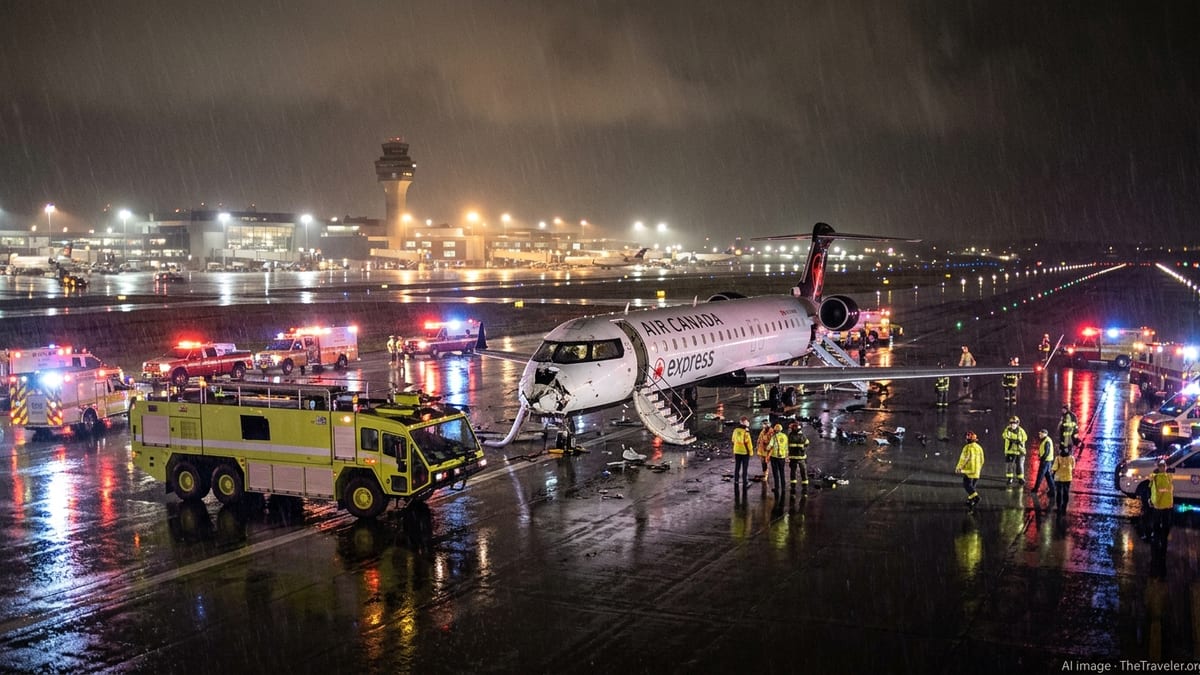
Runway 4/22 Closed After Routine Inspection Finds Sinkhole
Publicly available information indicates that the incident unfolded late Wednesday morning, when airfield crews conducting a standard inspection identified a section of pavement that had given way near Runway 4/22, one of LaGuardia’s two primary runways. The affected area was located along the edge of the runway and adjacent taxiway, prompting an immediate halt to operations on the strip while teams assessed the integrity of the surrounding surface.
According to published coverage, emergency construction and engineering crews were moved into place shortly after the discovery to stabilize the site, investigate the cause and begin repairs. Images shared through local media showed heavy machinery and work lights around the damaged section of pavement as crews worked to secure the ground and prevent the hole from spreading.
The closure left LaGuardia operating on a single remaining runway, 13/31, sharply reducing the airport’s ability to handle normal traffic during one of the busier travel periods of the day. With no clear timeline for reopening provided in early reports, airlines began reshuffling schedules and trimming frequencies to cope with the sudden capacity squeeze.
Reports from aviation outlets and live flight tracking platforms described the runway shutdown as an unplanned infrastructure emergency layered on top of routine maintenance and construction that already make LaGuardia one of the more operationally constrained major airports in the United States.
Ground Delays Near 100 Minutes as Disruptions Ripple Out
Data compiled by flight tracking services showed the impact almost immediately. According to those figures, approaching flights to LaGuardia were held under a formal ground delay program, with average arrival delays hovering around one hour and 30 minutes by midafternoon. Departures bound for New York from across the country also began stacking up as crews waited for departure slots to clear.
By early evening, the same data indicated roughly 200 cancellations and more than 150 additional delays for flights into and out of LaGuardia, a significant share of the day’s schedule at the compact Queens hub. Some flights were diverted to nearby John F. Kennedy and Newark Liberty as carriers sought to keep aircraft moving and crews within duty limits.
Publicly available Federal Aviation Administration updates linked the slowdown to both the sinkhole and unsettled weather in the region, including forecast thunderstorms that threatened to further constrain operations. The combination of a reduced runway count and weather related spacing requirements meant fewer movements per hour and growing queues on the ground and in the air.
Travelers reported prolonged waits on inbound aircraft, creeping departure times and rolling schedule changes as airlines adjusted routing and crew plans in real time. For many passengers, the sinkhole became another unpredictable variable in a region already notorious for congestion related setbacks.
Why a Single Runway Closure Hits LaGuardia So Hard
LaGuardia’s vulnerability to this kind of disruption stems from its compact footprint and limited runway configuration. Unlike some large hubs that have three or four parallel strips, LaGuardia typically relies on two intersecting runways that share critical taxi routes and airspace. Removing one of them, even temporarily, can cut overall capacity dramatically.
Recent planning documents and historical delay analyses highlight how tightly scheduled LaGuardia already is in normal conditions, with peak hours leaving little room for unexpected events. When one runway suddenly becomes unavailable, aircraft must be resequenced for the remaining strip, taxi routes are redesigned on the fly and spacing between takeoffs and landings tends to increase, all of which compound delays.
The airport’s waterfront location and surrounding dense development further limit options for rapid infrastructure adjustments. Adding new pavement, building additional taxiways or significantly expanding the airfield requires lengthy environmental review and complex engineering, which is why any serious issue with existing surfaces, such as a sinkhole, can have an outsized effect on day to day operations.
This latest event arrives as LaGuardia continues to recover from recent incidents and construction related constraints that have periodically tightened capacity. For travelers, it underscores how sensitive the airport remains to even localized infrastructure failures and how quickly small cracks in the system can widen into regionwide schedule problems.
What Travelers Can Expect in the Coming Days
According to published coverage, repair crews were expected to work through the evening hours on Wednesday to assess subsurface conditions and determine how much material would need to be removed and rebuilt before Runway 4/22 could safely reopen. The timeline depends on factors such as the size of the void beneath the pavement, the stability of nearby structures and the availability of specialized materials and equipment.
Travel industry analysts note that if the damage remains confined to a relatively small area at the runway’s edge, repairs could potentially be completed within a short window. However, if investigations uncover a broader erosion issue under the pavement, more extensive reconstruction could be necessary, extending partial closure and stretching disruptions over several days.
For passengers with upcoming trips to or from LaGuardia, the most immediate effect is likely to be tighter schedules, longer connection times and a higher risk of last minute changes while the runway remains out of service. Airlines typically respond to such events by consolidating lightly booked flights, upgauging aircraft on remaining departures where possible and shifting some traffic to alternate airports in the New York region.
Travel advisers recommend building extra time into itineraries that involve LaGuardia, favoring morning flights that have more recovery options during the day and remaining flexible about using nearby airports if rebooking is offered. With weather still a factor as well as runway capacity, passengers may continue to see rolling delays even after the initial shock of the sinkhole has been absorbed.
Renewed Focus on Airfield Resilience and Aging Infrastructure
The sinkhole incident is already prompting renewed attention to the resilience of aging airfield infrastructure at high traffic airports. While major runway failures of this kind are relatively rare, engineers point out that pavements endure constant stress from aircraft loads, temperature swings and water intrusion, especially at coastal sites with complex underground utilities and fill material.
LaGuardia has been the focus of a multibillion dollar redevelopment campaign in recent years, centered primarily on new terminals, roadways and supporting facilities. The sinkhole near Runway 4/22 shifts at least some of the spotlight back to the less visible elements beneath the wheels of each departure and arrival, including drainage systems, soil stability and the long term performance of older pavement sections.
Publicly available planning and safety documents for the airport emphasize regular inspection and maintenance regimes designed to detect emerging issues before they affect operations. Wednesday’s discovery during a routine check suggests those systems functioned as intended, but also illustrates how even an early catch can generate cascading impacts when there is little spare capacity in the network.
As repair work continues and investigators probe the root cause, the LaGuardia sinkhole is likely to feed into broader discussions about infrastructure investment at congested hubs nationwide. For now, though, the most immediate consequence is on travelers, who are being advised through standard public channels to anticipate continued delays while one of New York’s busiest runways remains partially sidelined.