


More news on this day
A sinkhole discovered near a primary runway at New York’s LaGuardia Airport has forced the strip’s closure, triggering widespread flight cancellations and lengthy delays at one of the region’s busiest aviation hubs.
Get the latest news straight to your inbox!
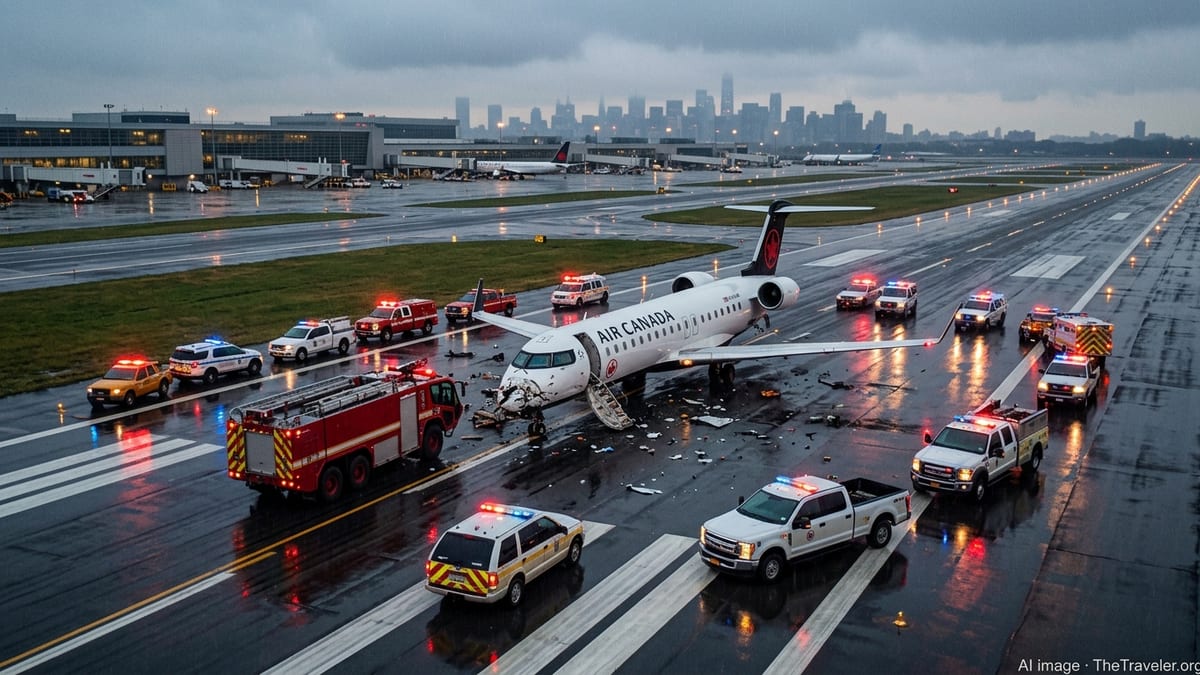
Runway Closure Hits One of New York’s Key Airports
Publicly available information indicates that the sinkhole was detected late Wednesday morning during a routine inspection of LaGuardia’s airfield in Queens. The affected area is near Runway 4/22, one of only two runways at the compact, high-traffic airport, magnifying the operational impact as peak travel hours approached.
Reports describe the runway as having been taken out of service immediately after the discovery, with aviation agencies implementing a ground delay program to manage the reduced capacity. With fewer arrival and departure slots available, airlines began canceling and rescheduling flights while passengers already at the airport faced mounting waits at gates and on the tarmac.
According to published coverage, LaGuardia has remained open, but all traffic is now funneled through a single runway. That limitation, combined with unsettled weather in the New York area, has sharply reduced the number of flights that can safely land or take off each hour.
Flight-tracking data cited in multiple outlets shows roughly 200 flights into and out of LaGuardia canceled and around a similar number delayed, representing a significant share of the day’s schedule at the airport.
Ground Delays, Missed Connections and Ripple Effects
The immediate effect for travelers has been long waits and abruptly altered plans. Data compiled by aviation tracking services and referenced in national and local coverage shows average departure delays approaching or exceeding an hour and a half as airlines attempt to sequence traffic through the remaining runway.
For many passengers, the disruption has meant missed connections at other hubs, overnight rebookings and extended holds with airline call centers. Some flights that had already boarded were held on the ground awaiting updated departure slots, while others were proactively canceled as carriers sought to stabilize their operations.
New York’s three major airports are closely intertwined within the national air traffic system, and strain at one often has knock-on effects elsewhere. With LaGuardia constrained, some flights have been shifted to John F. Kennedy International Airport or Newark Liberty International Airport, potentially tightening capacity at those fields and contributing to broader regional congestion.
Publicly available information shows that a ground delay program remains in effect, meaning inbound flights may be held at their origin airports until a landing slot is available in New York. Travelers are being urged through airline channels and airport alerts to monitor their flight status frequently and consider flexible routing options when possible.
What Is Known About the Sinkhole and Airfield Repairs
Initial reports describe the sinkhole as forming in pavement adjacent to the runway surface rather than directly beneath an active takeoff or landing path. Even so, the proximity to active operations has triggered a conservative response, with authorities prioritizing inspection and stabilization before allowing aircraft back onto the affected strip.
According to published statements reviewed by multiple news outlets, emergency construction and engineering teams were dispatched to the site to assess the size of the void and determine the underlying cause. Heavy equipment and materials have been brought in to fill and reinforce the area, with work continuing into the evening hours.
Sinkholes on airfields are relatively rare but can result from a combination of aging infrastructure, subsurface erosion, utility work or heavy rain that weakens soil layers beneath paved surfaces. Aviation experts note that even small depressions can pose an unacceptable risk to high-speed aircraft operations, prompting swift closures until detailed inspections are complete.
Reports indicate that the length of the closure will depend on both structural assessments and the time required for fresh fill and pavement to cure. While initial efforts focus on making the area safe, more extensive follow-up work could be scheduled during off-peak periods to further reinforce the runway environment.
Weather Compounds an Already Strained Flight Schedule
The sinkhole disruption has coincided with forecasts of thunderstorms moving through the New York metropolitan area, a combination that significantly complicates air traffic planning. Aviation data cited in national coverage notes that the Federal Aviation Administration has been slowing arrivals to LaGuardia due to both convective weather and the runway issue.
Thunderstorms around the region restrict available flight paths and altitudes, forcing controllers to increase the spacing between aircraft. When layered on top of a runway closure, these conditions reduce the overall number of operations the airport can handle and can prompt additional reroutes or holding patterns for inbound flights.
Historical analyses of New York’s airspace have shown that even modest capacity reductions can quickly propagate through the national network, particularly during busy afternoon and evening bank periods. With LaGuardia already known for tight scheduling and limited physical room to expand, any infrastructure outage accelerates the buildup of delays.
Travel industry observers say the timing near the summer travel season heightens the impact, as planes are flying fuller and spare seats for rebooking are harder to find. Some passengers may face multi-day disruptions if their original itineraries involved popular leisure routes or smaller regional airports with limited service.
Guidance for Travelers Using LaGuardia in the Coming Days
While repair work is ongoing, publicly available information suggests that LaGuardia will continue to operate at reduced capacity. Travelers booked into or out of the airport over the next several days may see schedule changes as airlines trim frequencies, consolidate flights or temporarily swap to larger aircraft on select routes to move more passengers per slot.
Airlines are directing customers to digital channels and mobile apps for real-time updates, same-day rebooking options and alerts about gate changes. Many carriers have issued limited travel waivers that allow affected passengers to modify their plans without standard change fees, although fare differences may still apply depending on the route and date.
Consumer advocates recommend allowing extra time to reach the airport, particularly during peak hours, and considering alternate New York–area airports when feasible. For travelers whose plans are flexible, shifting trips by a day or two could significantly reduce the risk of disruption while LaGuardia’s runway repairs progress.
As engineers continue to evaluate the affected section of Runway 4/22, additional updates on reopening timelines are expected through aviation authorities and airline communications. Until then, the sinkhole serves as a reminder of the fragility of heavily used airport infrastructure and the outsized impact that even localized damage can have on a tightly wound air travel system.