


More news on this day
Europe’s new biometric Entry Exit System is reshaping how non European travelers cross Schengen borders, and its first weeks of full operation are already prompting reports of longer queues and concerns about disruption ahead of the busy summer season.
Get the latest news straight to your inbox!
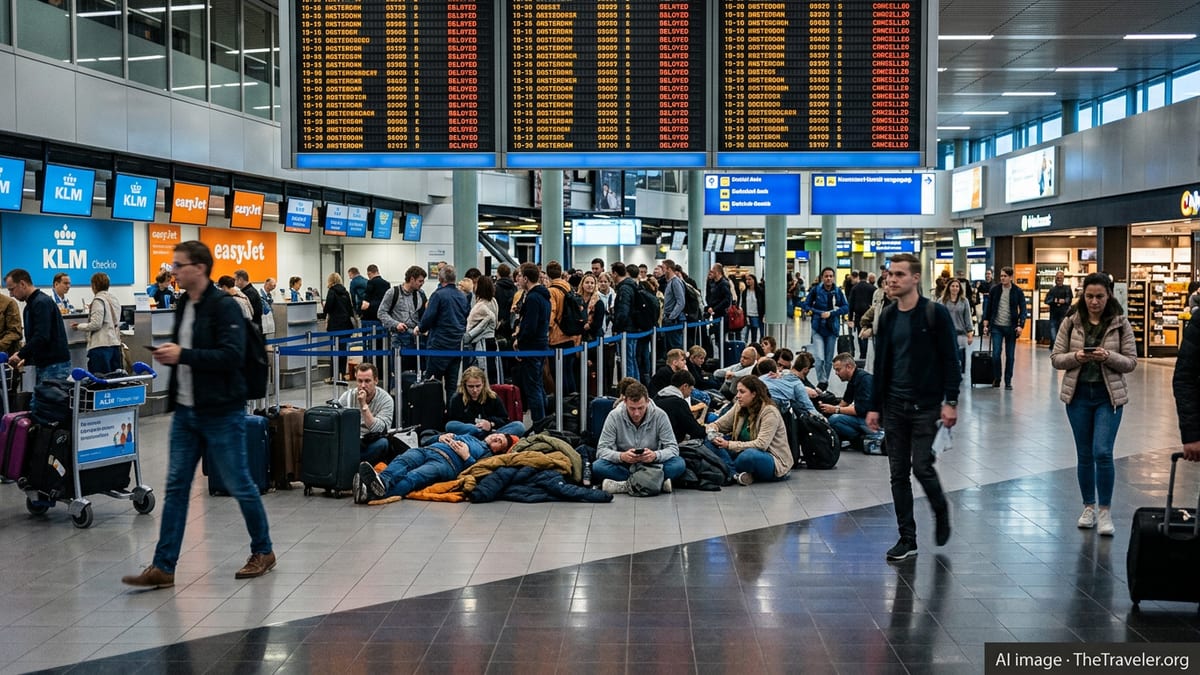
What the Entry Exit System Changes for Travelers
The Entry Exit System, or EES, is a large scale EU border database designed to replace manual passport stamping for most non EU citizens entering and leaving the Schengen Area. Instead of ink stamps, border authorities now record travelers’ personal details and each crossing in a shared digital system. The database also stores biometric identifiers such as fingerprints and facial images for short stay visitors.
According to information published by the European Commission and the EU’s border IT agency, the system became fully deployed across all Schengen external border points on April 10, 2026, following a progressive rollout that began in late 2025. From that date, air, sea and international coach operators were required to perform pre departure checks for many non EU passengers using EES connected services.
Publicly available guidance explains that EES applies to most non EU travelers who either do not need a short stay visa or hold a single or double entry visa for the Schengen Area. Each time covered travelers arrive at an external Schengen border, their biometric data must be captured during the first registration and then verified on future trips. The system automatically tracks days spent in the area to support enforcement of the 90 days in any 180 day period rule.
Officials have presented EES as a security and efficiency upgrade that will eventually streamline border crossings, particularly for frequent visitors whose biometric data is already stored. In practice, however, the change represents a major adjustment to airport and land border operations, with a period of trial and error as travelers and frontline staff adapt.
Early Rollout Brings Queues, Workarounds and Local Variations
Reports from European airports and border crossings since the spring indicate that the new procedures are adding time at busy checkpoints, especially for travelers who are being enrolled in EES for the first time. Travel industry associations representing airlines and airports have publicly warned of longer processing times, citing cases where biometric kiosks or manual capture stations have created bottlenecks at peak hours.
In Greece, publicly available coverage describes the system as fully operational at airports and seaports, while also noting that some frontline locations have been allowed temporary flexibility. Airport managers can, in certain circumstances, switch off biometric capture and revert to manual stamping to keep queues under control during the busiest travel waves, as permitted under the progressive launch rules. Similar limited opt outs are expected at other Schengen border points during exceptional surges.
Not all border crossings are experiencing the same level of disruption. Industry briefings and traveler reports suggest that some larger hubs with extensive self service kiosks, such as major hubs in France, the Netherlands and Germany, have managed a relatively stable rollout so far by dedicating more space and staff to EES enrollment. Smaller regional airports and certain land crossings, however, appear more prone to congestion when several long haul flights or tour coaches arrive simultaneously.
The uneven picture reflects the EU’s phased implementation model. A recent agreement between the Council of the EU and the European Parliament on the progressive launch framework allows member states to use transitional measures, including periods where biometric capture may be partial and passports can still be stamped, while infrastructure and staffing are scaled up.
Summer 2026: Why Delays Are a Concern
The full deployment of EES comes just weeks before Europe’s peak holiday season, raising the stakes for airports, airlines and passengers. A February 2026 joint statement from airport and airline associations, widely covered in European media, highlighted fears that mandatory biometrics for all eligible travelers could create sustained queues at departure and arrival halls during July and August if no mitigating steps were taken.
Travel analysts note that the timing is particularly sensitive because international arrivals to Europe have largely recovered to or exceeded pre pandemic levels. Pent up demand from North America, the United Kingdom and other long haul markets is expected to continue through summer 2026, which will push more first time EES registrations through the system at once. Each new enrollment requires travelers to pause while fingerprints and facial images are captured and verified, which is inherently more time consuming than a simple passport stamp.
Policy documents published earlier this year acknowledge the risk of congestion and explicitly allow member states to request temporary partial suspensions of EES use in exceptional circumstances until later in 2026. Immigration and travel law advisories describe scenarios in which border authorities could reduce biometric checks at peak times, within the limits of EU rules, to avoid chronic delays.
Despite these safeguards, industry bodies continue to urge travelers to prepare for longer processing times. Travel advisories and airline guidance commonly recommend arriving at airports earlier than usual, particularly for morning and late afternoon departures that coincide with long haul arrival banks and busy intra European connections.
Interaction With ETIAS and Long Term Travel Patterns
The launch of EES is also being closely watched because it is a technical prerequisite for the European Travel Information and Authorisation System, known as ETIAS. ETIAS will function as a pre travel clearance for visa exempt visitors, including many travelers from North America and other partner countries who currently enter the Schengen Area without prior authorization.
According to official EU migration and home affairs updates, ETIAS is now scheduled to begin operations in the last quarter of 2026, several months after EES became fully operational. For at least the rest of this summer, visitors who do not need a visa will not be required to hold ETIAS approval, but their entries and exits are already recorded through EES.
Travel experts point out that the combination of EES and ETIAS will eventually give European authorities a fuller picture of short stay travel flows and overstays. EES tracks time actually spent inside the Schengen Area, while ETIAS will pre screen travelers before they board transport to Europe. The result is likely to be more accurate enforcement of stay limits, which may affect how some long term tourists and digital nomads plan multi country itineraries.
For now, the more immediate impact is tangible at the border itself. Public guidance advises travelers to keep passports ready, follow separate lanes for EES registration when indicated, and be prepared to remove hats or masks for facial images and place fingers on scanners. Those practical steps can help shorten individual processing times, even if overall queues remain longer during busy periods.
How Travelers Can Adapt Ahead of Peak Season
With the system still bedding in, practical planning is emerging as the main tool for mitigating disruption. Travel agencies, airlines and consumer groups are encouraging passengers to build extra time into journeys that involve crossing the Schengen external border, whether departing from or arriving in Europe. That advice is especially relevant at mixed use hubs where both Schengen and non Schengen flights share border control infrastructure.
Publicly available resources also highlight new digital tools designed to ease the transition. A European Commission supported mobile application allows non EU nationals to pre register certain information, including passport details and travel plans, within 72 hours before reaching an EES enabled border crossing. While biometrics must still be captured in person, advance data entry is intended to reduce time spent at counters or kiosks.
Travel information providers recommend that passengers verify which parts of their journey involve Schengen external borders and check airport specific guidance about EES facilities. Some hubs provide dedicated family lanes or assistance for travelers who may be unfamiliar with self service kiosks. Others suggest choosing flight times that avoid the heaviest morning and evening waves if flexibility permits.
As the first full summer under EES approaches, European institutions, industry groups and travelers are all watching how the system performs under real stress. The coming months are expected to serve as a critical test of whether the technology and staffing plans are robust enough to handle record volumes, or whether further temporary adjustments will be needed to keep holiday traffic moving.