


More news on this day
A sinkhole discovered beside a primary runway at New York’s LaGuardia Airport on Wednesday has forced the closure of the airstrip, disrupting hundreds of flights and straining one of the nation’s busiest domestic travel hubs.
Get the latest news straight to your inbox!
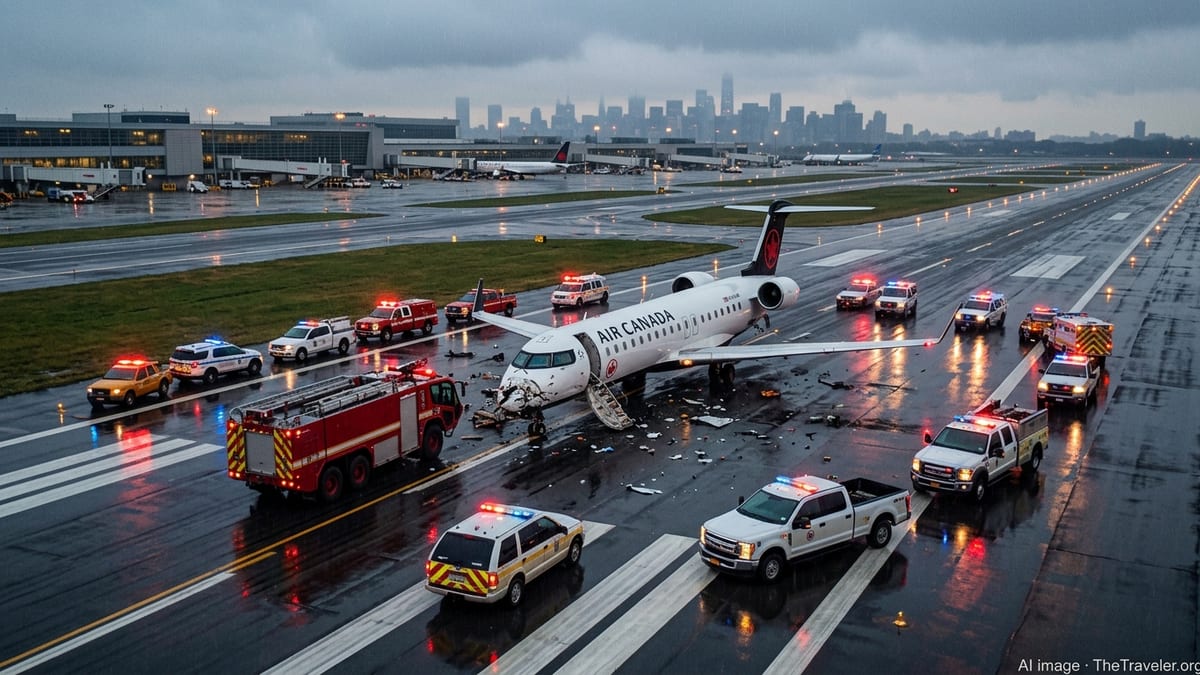
Runway 4/22 Taken Out of Service After Routine Inspection
Publicly available information indicates that airfield crews identified the depression late Wednesday morning during a standard inspection of the LaGuardia airfield. The sinkhole was found near Runway 4/22, one of the airport’s two main runways and a critical artery for both arrivals and departures.
Reports describe the hole as significant enough to require the immediate shutdown of the runway while construction and engineering teams assess the cause and extent of the damage. Images shared by local broadcasters show crews and heavy equipment clustered around a cordoned-off section of pavement adjacent to the runway, with repair materials staged nearby.
Runway 4/22’s closure effectively halves LaGuardia’s runway capacity, placing additional pressure on the remaining strip and constraining the number of aircraft that can safely land and take off each hour. Aviation observers note that even relatively minor infrastructure problems at LaGuardia can have outsized ripple effects because of the airport’s compact layout and already tight operating margins.
According to published coverage, preliminary assessments focus on stabilizing the affected area and preventing further ground movement before any longer-term repair plan is finalized. No injuries or aircraft damage have been linked to the incident, and the sinkhole was detected before any reported runway excursion.
Ground Delays, Cancellations and Weather Combine for Major Disruptions
The Federal Aviation Administration has implemented ground delay programs affecting flights headed to LaGuardia, citing both the sinkhole and unsettled weather in the New York region. Data from flight-tracking services referenced in multiple reports show inbound aircraft facing average ground delays approaching or exceeding an hour and a half at points during the afternoon and evening peak.
By late Wednesday, FlightAware data cited in outlets such as ABC News and regional news sites showed roughly 200 flight cancellations into and out of LaGuardia, along with well over 150 delays. Additional cancellations and rolling schedule changes were anticipated into the night as airlines attempted to rebalance aircraft and crew assignments.
Thunderstorms forecast for the metropolitan area have compounded the operational strain. LaGuardia’s limited runway configuration and tightly choreographed arrival and departure streams leave little room to absorb simultaneous infrastructure and weather constraints. Aviation analysts note that when one runway is unavailable, controllers have fewer options to sequence aircraft around storm cells, often resulting in more conservative spacing and extended holding patterns.
Passengers scheduled to travel through LaGuardia midweek have reported missed connections, diversions to other regional airports and multi-hour waits at departure gates. Public-facing advisories from the airport operator and airlines are urging travelers to monitor their flight status closely and prepare for extended lines at check-in and rebooking counters.
Infrastructure Challenges at a Modernized but Congested Hub
The sinkhole incident arrives after a multi-year, multi-billion-dollar overhaul that transformed LaGuardia’s terminals and passenger facilities. The airport, once widely criticized for its cramped and aging infrastructure, has recently earned industry awards for service quality and design improvements. The airfield, however, remains constrained by the site’s size, location and underlying geology.
Historical records show that LaGuardia was built on a mix of former airfields and reclaimed land along the Queens waterfront. Engineering specialists observing the event from afar suggest that complex subsurface conditions, combined with decades of heavy aircraft use and New York’s freeze-thaw cycles, can increase susceptibility to pavement failures and voids beneath runways and taxiways.
While sinkholes of this type are relatively rare at major U.S. airports, similar depressions have previously affected airfields in other regions, sometimes linked to water main issues, aging drainage infrastructure or natural soil subsidence. At LaGuardia, early reports indicate that emergency crews are examining utility lines and drainage systems in the vicinity of the hole to determine whether leaking water or erosion contributed to the collapse.
Transportation advocates point out that the episode underscores the importance of continuous investment not only in terminal upgrades but also in less visible airside systems such as stormwater management, underground piping and runway foundations. These components, they argue, are essential to maintaining reliability as traffic volumes rebound and airlines add more peak-hour flights.
Ripple Effects Across Airline Networks and Passenger Plans
LaGuardia functions as a key node in domestic networks for multiple large U.S. carriers, meaning a runway outage can quickly reverberate across the country. According to flight schedule data summarized in news reports, airlines have been consolidating departures, rerouting some flights to other New York-area airports and, in some cases, preemptively canceling later segments to limit strandings.
Travel industry analysts note that disruptions at slot-controlled airports such as LaGuardia can be particularly challenging to unwind. Tight schedules and limited gate space make it harder to simply add extra flights once the runway returns to service, leaving some passengers with fewer same-day rebooking options. Crews that exceed their duty time limits due to extended delays can further constrain capacity.
For travelers, the practical impacts are immediate. Social media posts and broadcast interviews have highlighted stories of families re-routed through distant hubs, business travelers missing key meetings and visitors forced to extend hotel stays in New York. Some passengers are opting for Amtrak or intercity buses on shorter regional routes as a hedge against further flight disruptions.
Consumer advocates are reminding passengers affected by cancellations to review airline rebooking and compensation policies, which can vary depending on whether a disruption is classified as within the carrier’s control or linked to external factors such as weather or airport infrastructure problems. Travel insurance providers are also advising policyholders to document expenses related to overnight stays and missed connections.
What Travelers Can Expect in the Coming Days
As of early Thursday, publicly available reports indicate that emergency repair work remains in progress and that Runway 4/22 is still out of service. The timeline for full restoration has not been firmly established, with updates expected as structural assessments conclude and the stability of the surrounding area is verified.
Aviation planners suggest that partial or phased reopening is possible if engineers determine that specific sections of the runway can safely support operations while repairs continue elsewhere. Until that occurs, airlines are likely to keep schedules trimmed and buffers in place to manage congestion.
Travelers booked to or from LaGuardia over the next several days may continue to face rolling delays, equipment changes and potential shifts to nearby airports such as John F. Kennedy International Airport or Newark Liberty International Airport. Industry observers recommend allowing extra time for ground transportation, security screening and potential long lines at customer service desks.
While the sinkhole itself is a localized incident, its timing at the start of the busy summer travel period has turned LaGuardia into a focal point for broader concerns about aging infrastructure and system resilience. How quickly and effectively the runway can be stabilized and returned to operation is likely to be watched closely by airlines, regulators and travelers alike.