


More news on this day
New York’s LaGuardia Airport is facing fresh travel turmoil after a sinkhole discovered near a main runway forced its closure on Wednesday, triggering cascading delays, cancellations and renewed scrutiny of the airport’s ability to withstand infrastructure shocks.
Get the latest news straight to your inbox!
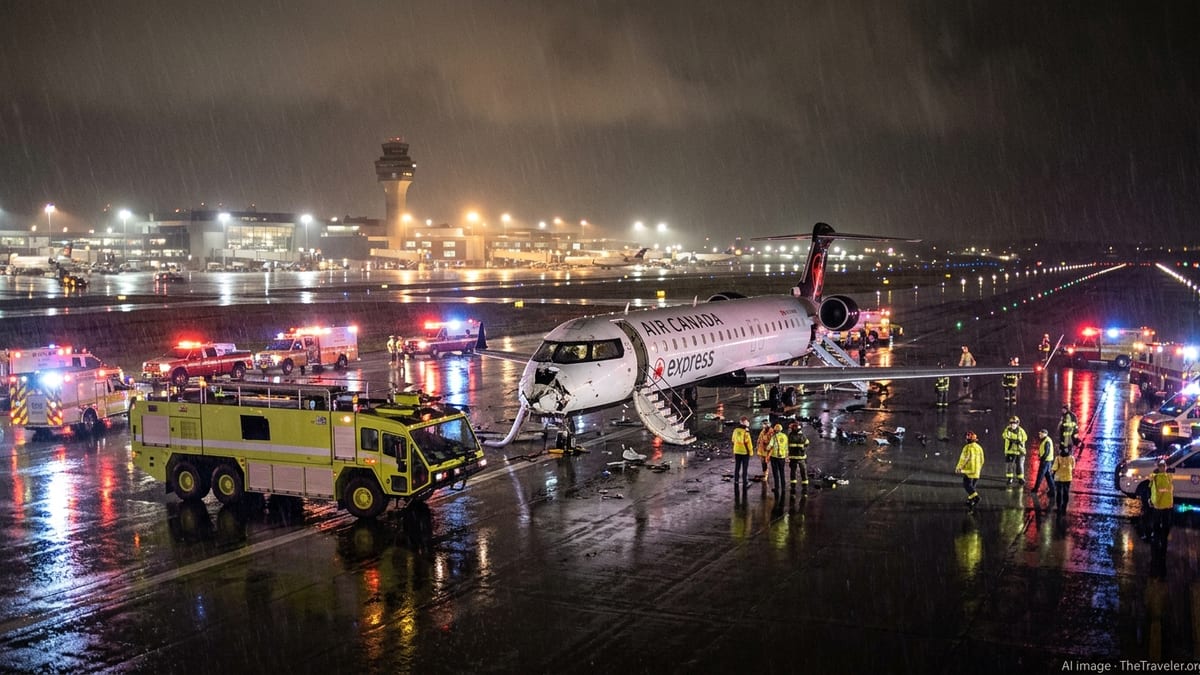
Runway Closure After Routine Inspection Uncovers Damage
Publicly available information shows that the disruption began late Wednesday morning, May 20, when airfield crews identified a sinkhole during a scheduled inspection near Runway 4/22, one of LaGuardia’s two primary runways. The depression, located close to the paved surface, prompted the immediate shutdown of the runway while emergency construction and engineering teams moved in to stabilize the area and assess the extent of the damage.
According to published coverage from multiple outlets, the airport operator ordered a full closure of Runway 4/22 shortly after the discovery, citing safety concerns for landing and departing aircraft. Photos circulating in local media show repair crews and heavy equipment clustered around the affected section of pavement, with temporary barriers and work lights in place as assessments continue.
The Federal Aviation Administration implemented traffic-management measures that slowed flights into LaGuardia, citing both the runway disruption and unstable weather in the New York area. Ground-hold programs extended departure times for inbound flights across the region, further compounding the operational strain on one of the country’s most delay-prone airports.
Reports indicate that thunderstorms forecast for the afternoon and evening heightened concerns that the single remaining runway could quickly become overloaded, creating ripple effects for airlines and passengers across the Northeast corridor.
Hundreds of Flights Delayed or Canceled
By late afternoon, data from flight-tracking services cited in national and local coverage showed that roughly 200 flights into and out of LaGuardia had been canceled, with nearly as many delayed. At times, average departure delays for flights bound for the airport exceeded an hour and a half, and rolling schedule changes made it difficult for travelers to predict when, or if, their flights would operate.
The impact was felt well beyond New York City. Airlines began issuing network-wide waivers for LaGuardia-bound passengers, allowing travelers to rebook without change fees or reroute trips through other hubs. As aircraft and crews were displaced, flights in cities as far away as Chicago, Atlanta and Miami reported knock-on delays connected to the reduced capacity in New York.
Reports indicate that Delta Air Lines, the largest carrier at LaGuardia, bore a significant share of the disruption because of its concentration of flights and connections at the airport. Other major domestic airlines with substantial LaGuardia operations, including American and United, also saw schedules compressed as they shifted flights to the remaining runway and, in some cases, consolidated services.
With the sinkhole discovered at the start of the busy evening rush, travel analysts noted that the timing worsened the effect on passengers connecting through New York or relying on last-flight-of-the-day departures. Crowded gate areas, long customer-service lines and rolling gate changes were reported across the airport’s terminals as airlines tried to reshuffle aircraft and crew assignments in real time.
Travelers Urged to Rethink Plans and Check Status Frequently
Airport statements and airline alerts cited in media reports strongly encouraged passengers to verify their flight status before leaving for the airport and to anticipate significant wait times even if their flights remained on the schedule. With a ground delay program in place and only one runway operating, departures and arrivals were subject to abrupt changes based on evolving weather and repair progress.
Travel experts quoted in recent coverage suggested that anyone with same-day connections through LaGuardia consider rebooking through alternative airports such as John F. Kennedy International or Newark Liberty where possible. Some travelers opted to switch to Amtrak and regional bus operators for short-haul trips along the Northeast Corridor rather than gamble on making tight flight connections into or out of the constrained airfield.
Publicly available guidance from airlines recommended that passengers use mobile apps and text alerts, which often reflect operational changes faster than overhead screens in terminals. For those whose flights were canceled outright, many carriers temporarily relaxed fare rules, enabling rebooking within a specific window without additional fees, though fare differences could still apply on some routes.
With the summer travel season beginning to ramp up, the incident served as a reminder of how quickly an unplanned runway outage can upend even well-laid itineraries. Travel planners suggested building in extra buffer time for critical trips involving LaGuardia over the coming days, until repairs are complete and schedules fully stabilize.
Infrastructure Strains at a Rebuilt but Vulnerable Airport
The sinkhole comes at a sensitive moment for LaGuardia, which has recently completed a sweeping multibillion-dollar terminal overhaul but still relies on aging runways and taxiways built on challenging waterfront terrain. Background data from aviation and infrastructure reports describe the airfield as compact and capacity constrained, with only two runways handling dense schedules and limited space for diversions when one is taken out of service.
In recent years, the airport’s operator has pursued a rolling program of runway and taxiway maintenance intended to minimize disruptions by scheduling most heavy work overnight or during lower-traffic periods. The sudden appearance of a sinkhole during regular inspections, rather than a preplanned construction project, underscores the difficulty of managing long-term wear and subsurface stability in a coastal environment exposed to frequent freeze-thaw cycles and heavy precipitation.
The latest incident also follows closely on a separate period of operational stress earlier in the spring, when LaGuardia contended with weather-related disruptions and a runway closure tied to a fatal collision involving an arriving regional jet and an airport vehicle. While that event involved different circumstances, analysts note that the cumulative impact of repeated shocks has heightened public attention on the airport’s resilience and safety systems.
Urban planners and transportation advocates have long argued that LaGuardia’s limited footprint and proximity to the shoreline leave little room for redundancy. When one of its two runways goes offline, the effect on schedules is almost immediate, particularly during peak travel periods or when storms restrict airspace capacity along the East Coast.
What Comes Next for Flyers and the Airport
As of Wednesday evening, emergency crews were focused on stabilizing the affected area near Runway 4/22 and determining the underlying cause of the sinkhole. Published coverage indicates that engineers are examining whether recent heavy rainfall or longer-term subsurface erosion contributed to the sudden collapse beneath the airfield surface.
Authorities have not provided a firm timeline for fully reopening the runway, and reports suggest that the duration of the repairs will dictate how long airlines must operate on reduced capacity at LaGuardia. If the closure extends, carriers may restructure schedules more aggressively, including shifting flights to other New York-area airports or trimming frequencies on short-haul routes.
For travelers, the immediate advice from aviation analysts is to treat LaGuardia as a potential choke point in the near term, especially for time-sensitive trips. Flexible ticket policies, travel insurance coverage and alternative routing options may all play a role in reducing the risk of being stranded as the airport works through repairs.
While LaGuardia’s revamped terminals have drawn praise in recent years for improving the passenger experience inside the buildings, Wednesday’s sinkhole and the resulting runway shutdown highlight that the most critical vulnerabilities may still lie beneath the pavement where aircraft take off and land. How quickly and effectively the airport responds to this latest crisis will shape both traveler confidence and airline scheduling decisions as the peak summer season approaches.