


More news on this day
American Airlines is reinforcing its position in Miami by extending its long-running partnership with the Miami HEAT, combining fan-focused perks with new operational investments that aim to shield sports travelers from the worst impacts of modern air travel chaos.
Get the latest news straight to your inbox!
A Multiyear Deal Anchored in Miami’s Sports Economy
Publicly available information from American Airlines and sports business coverage indicates that the carrier has signed a new multiyear extension to remain the Official Airline of the Miami HEAT. The agreement deepens a relationship that has stretched for more than a quarter century and positions the airline as a key conduit for fans moving in and out of South Florida for basketball and other marquee events.
The extension continues in-arena branding at the HEAT’s Kaseya Center home games and keeps American closely tied to one of the NBA’s most visible franchises. The deal also arrives at a time when Miami’s broader role as a global sports and entertainment destination is expanding, with the region courting everything from high-profile basketball matchups to international soccer, Formula 1, and major music festivals.
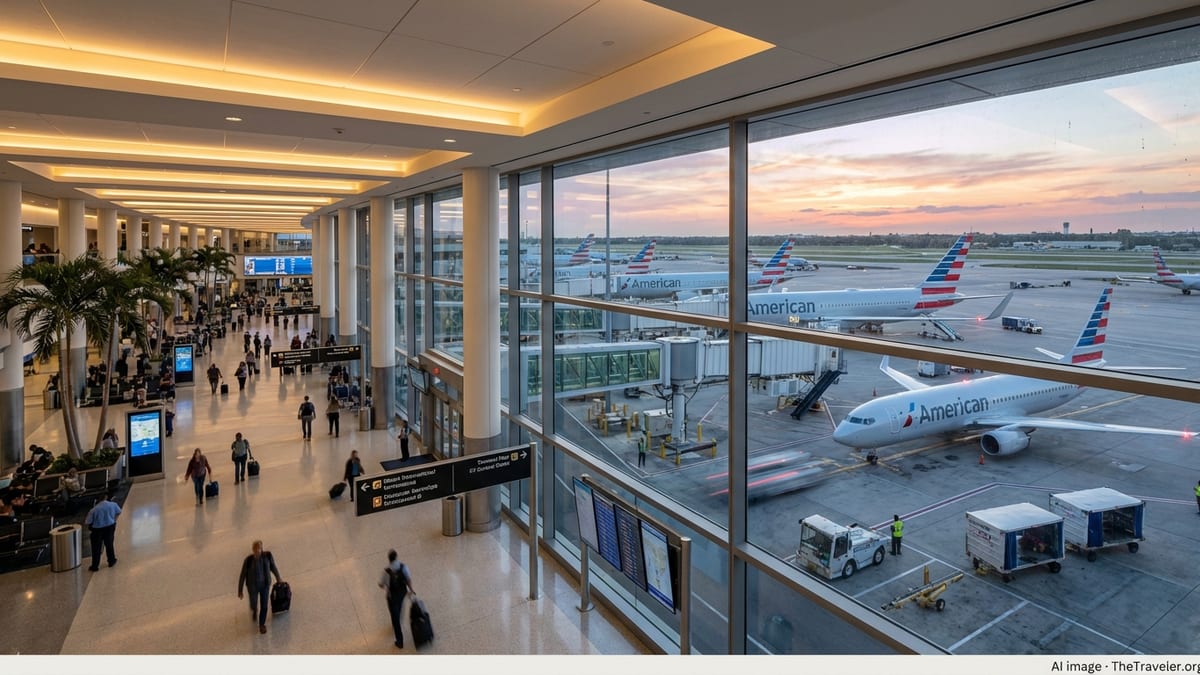
By renewing the HEAT sponsorship just as the airline marks its centennial year, American is signaling that Miami remains central to its strategy. Company communications describe Miami International Airport as its largest gateway to Latin America and the Caribbean, with hundreds of daily departures, underscoring why game-driven traffic in and out of South Florida is meaningful well beyond the NBA schedule.
For sports tourists, the renewed partnership effectively formalizes American’s status as the default carrier for many HEAT followers, visiting fan bases, and neutral travelers heading to Miami for big-ticket games or extended sports weekends.
HEAT Perks: Turning Fan Loyalty Into Travel Protection
A core feature of the refreshed partnership is the HEAT Perks program, promoted jointly by American and the franchise as a way to reward loyal fans and AAdvantage members. According to published materials, the initiative offers sweepstakes entries tied to experiences such as travel to select away games, upgraded seats, and behind-the-scenes access.
While the most visible elements of HEAT Perks focus on once-in-a-lifetime experiences, the structure of the program also reflects a broader shift in how airlines are courting sports travelers. Instead of treating game-day trips as purely discretionary leisure, American is blending its frequent flyer ecosystem with targeted sports promotions, effectively creating a micro-segment of high-intent, often time-sensitive travelers whose plans are more vulnerable to disruption.
Industry analysis suggests that by concentrating sports fans within its loyalty program, American can respond more efficiently when schedules go awry. AAdvantage members booked on HEAT-linked itineraries are already inside the airline’s digital ecosystem, with access to mobile notifications, same-day change options, and automated rebooking tools that can be critical when weather or operational issues threaten to derail a tightly planned weekend around a marquee matchup.
For fans who may have invested in premium tickets, hospitality packages, or nonrefundable accommodation, this kind of integrated approach can serve as an informal shield, improving the odds that they are re-routed or re-accommodated in time to catch tip-off even when flight operations come under strain.
Operational Upgrades Aimed at Reducing Disruption
The commercial partnership with the HEAT is unfolding alongside a series of infrastructure and technology upgrades that American is rolling out at Miami International Airport and across its network. Company announcements in 2026 highlight a reimagined Concourse D expansion at MIA, the addition of more modern gates, and new self-service technology designed to speed check-in and connections.
Separately, American has publicized a decision-support tool internally known as HEAT, developed to help its operations team manage summer storms and other severe-weather events. The system analyzes real-time conditions and allows dispatchers to make earlier, more targeted adjustments to flight schedules in impacted regions. According to the airline’s descriptions, the tool is intended to minimize rolling delays and cascading cancellations that often leave travelers stranded far from their final destination.
In practice, tools like HEAT are particularly relevant for sports tourists, who often fly on narrow time windows. If a storm hits a hub the day before a big game in Miami, proactive rerouting and schedule thinning can provide travelers a clearer picture earlier in the disruption cycle, giving them more time to switch flights, adjust connections, or even rebook to alternate airports while there are still viable options.
American’s recent actions during major weather systems, including expanded travel alerts and change-fee flexibility across key hubs, indicate that the airline is under pressure to show tangible progress on reliability. When combined with its operational technology and MIA expansion plans, the refreshed HEAT sponsorship sends a signal that the carrier intends to make Miami a showcase for more resilient game-day travel.
Managing Travel Chaos in a Volatile Air System
Air travel across the United States has been repeatedly disrupted over the past several peak seasons, with winter storms, staffing constraints, and increasingly crowded skies contributing to waves of delays and cancellations. Coverage of recent disruption cycles shows that sports fans, who often travel on fixed schedules and nonrefundable tickets, are among those hardest hit when the system comes under stress.
Sports-linked travel is especially vulnerable because itineraries are tightly anchored to event times, whether that is an NBA playoff game, a midseason rivalry matchup, or a special theme night at the arena. A single missed connection on the inbound leg can erase the entire purpose of a trip, and a cancellation on the return can strand fans in expensive hotel markets or force them into last-minute rebooking at elevated fares.
Airlines have responded with a mix of travel waivers, more flexible change policies, and more robust digital rebooking tools. Industry reporting on recent storms shows carriers, including American, issuing network-wide waivers that allow customers to shift itineraries within defined periods without standard penalties when severe weather is forecast to hit key hubs. For sports travelers, these policies can make it easier to “beat the storm” by flying in earlier or pivoting through a different connecting city.
The renewed Miami HEAT partnership gives American a high-profile platform to educate fans on how to use these tools. By weaving guidance on travel alerts, app-based rebooking, and same-day changes into fan communications and loyalty campaigns, the airline can nudge sports tourists toward behaviors that reduce the risk of being caught unprepared when disruptions escalate.
What Sports Tourists Should Expect From the New Alliance
For travelers planning trips around Miami HEAT games, the expanded partnership means a tighter integration between tickets, loyalty, and travel planning. Fans who enroll in AAdvantage and HEAT Perks can expect more targeted game-related promotions, including opportunities to redeem miles for seats or experiences and to win travel to select away fixtures.
Equally significant is the soft protection that comes from aligning with the airline most invested in Miami as a hub. With hundreds of daily departures and a growing roster of long-haul and regional connections, American typically has more options when it needs to re-accommodate disrupted passengers through MIA. For sports tourists, this translates into a higher probability of finding a workable alternative if the original flight encounters operational difficulties.
Travel experts often advise fans to book non-stop flights when possible, avoid the last flight of the day into a game city, and build in buffer time before high-value events. In the context of the American–HEAT alliance, these general best practices pair with specific tools like travel alerts, mobile rebooking, and proactive weather accommodations to create a layered defense against disruption.
As Miami’s profile as a year-round sports capital continues to grow, the combination of a deepened airline sponsorship, investment in Miami International Airport, and new operational technology suggests that American is betting that game-day travelers will reward carriers that can both deliver memorable experiences and keep chaos to a minimum when stakes are highest.