


More news on this day
Hundreds of U.S. travelers faced cascading disruption at Newark Liberty International Airport on May 20 as at least 284 flights were delayed and 22 canceled, snarling schedules on routes operated by Republic Airways, United Airlines, Jazz Aviation, American Airlines and several other carriers.
Get the latest news straight to your inbox!
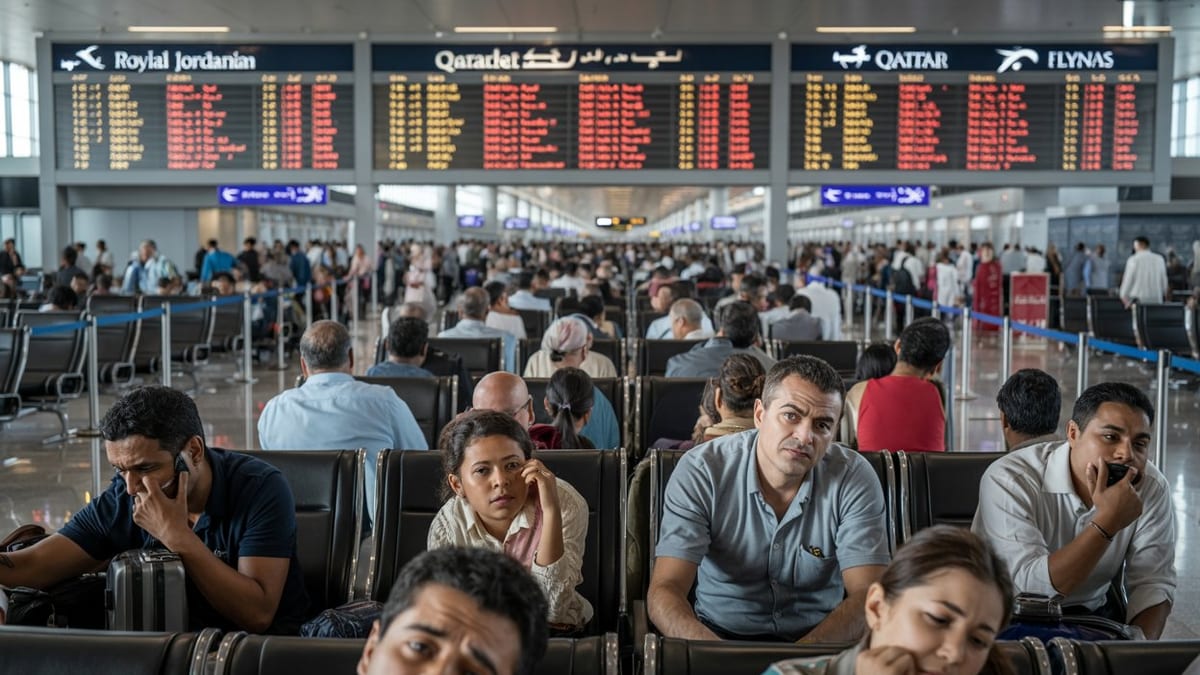
Delays Mount Across Newark Liberty’s Busy Schedules
Publicly available flight-tracking data for May 20 show a sharp buildup of delays at Newark Liberty International, one of the country’s most delay-prone hubs. The disruption affected both arrivals and departures, with late inbound aircraft quickly translating into missed departure slots and rolling pushback times throughout the day.
Tracking services indicate that by the afternoon, 284 flights touching Newark were operating behind schedule, while 22 services had been canceled outright. The tally reflects operations across multiple airlines that use the airport as a key gateway for domestic and cross-border traffic, leaving passengers facing missed connections, extended tarmac waits and unexpectedly long stays in terminal departure areas.
The timing of the problems at Newark magnified the impact, as many of the affected services were banked around peak connecting periods. With aircraft and crews out of position, even short initial delays of 30 to 60 minutes rapidly grew into multi-hour setbacks for some itineraries.
Newark Liberty’s role as a major transfer point for the New York metropolitan area meant that the operational strain rippled far beyond New Jersey. Travelers originating in or bound for smaller and mid-sized markets reported being stranded as regional links into the hub were delayed or removed from schedules.
Multiple Carriers, Shared Pain for Passengers
The disruption cut across several regional and mainline operators that funnel traffic through Newark. Public schedules show Republic Airways operating flights on behalf of major U.S. brands, alongside United’s own services, American Airlines flights and regional operations by Jazz Aviation on cross-border routes.
Many of the delayed departures involved short- and medium-haul segments that are particularly sensitive to knock-on effects, since aircraft often complete several turns in a single day. Once an early rotation is held at the gate or slowed by congestion, subsequent departures using the same aircraft can quickly fall behind plan.
United’s dominant presence at Newark meant its customers were especially exposed to cascading disruption, while American and partner-operated regional flights also saw schedule changes. Regional contractors such as Republic Airways and Jazz Aviation typically operate under fixed capacity agreements, but when hub performance deteriorates, their aircraft and crews must still absorb ground holds, extended taxi times and revised departure slots.
Passengers reported crowding around rebooking counters and self-service kiosks as they sought alternative routings, same-day standby options or overnight accommodation when onward connections became unviable. Travel waivers issued in comparable past events suggest many affected travelers were likely offered fee-free changes and re-accommodation on later services where space allowed.
Routes to St. Louis, Toronto, Kansas City and Beyond Affected
The disruption at Newark had an outsized impact on regional connectivity, particularly on routes to key secondary markets such as St. Louis, Toronto and Kansas City. These city pairs rely heavily on hub-and-spoke scheduling, so even localized problems at a single airport can cause widespread itinerary breakdowns for passengers connecting from other U.S. cities.
Flight-status boards and tracking tools indicated that departures and arrivals linking Newark with St. Louis Lambert International and Kansas City International were among those hit with extended delays. For many passengers, these services form part of longer journeys, meaning a delay on the Newark leg can sever same-day links to the West Coast, the Southeast or smaller Midwest destinations.
Cross-border traffic to Canada also felt the strain. Jazz Aviation, which operates regional flights under the Air Canada Express banner, feeds transborder passengers into Newark’s network. Delays and cancellations on these services reduced options for travelers connecting through Newark to reach U.S. interior cities, and left some Toronto-bound passengers faced with last-minute changes or overnight stays.
Because traffic on these routes is often a mix of business travelers, leisure passengers and those visiting friends and relatives, the consequences ranged from missed business meetings to disrupted family events. With many services operating at or near capacity in late May, same-day alternatives were limited.
Weather, Airspace Management and Chronic Congestion
Newark Liberty has consistently ranked among the most delay-prone airports in the United States, with recent data-driven analyses pointing to a combination of heavy traffic volumes, complex airspace and constrained runway capacity. Even moderate weather or air traffic control programs can have pronounced effects on punctuality when the schedule is already tightly packed.
On May 20, airspace management tools and national air traffic status pages indicated a mix of flow-control measures across parts of the network. When such programs are in place, arrivals and departures may be held to avoid overloading specific sectors or runways, which often leads to ground delays at departure airports and protracted arrival queues at busy hubs like Newark.
When these constraints coincide with routine operational challenges such as aircraft maintenance issues or crew scheduling limits, the result can be a chain reaction of delays. At high-volume hubs, this often manifests as mounting departure backlogs, gate shortages for arriving aircraft and difficulty reabsorbing the disrupted schedule before the end of the operating day.
Industry data for recent years suggest that Newark’s chronic congestion makes it especially vulnerable to such chain reactions compared with less-saturated airports. As carriers have rebuilt capacity following the pandemic, any buffer in the system has become more limited during peak travel periods, leaving travelers with less margin for disruption.
What Travelers Can Do When Disruptions Hit
The events at Newark highlight the importance for travelers of monitoring flight status closely and preparing contingency plans when flying through heavily trafficked hubs. Same-day disruptions on the scale seen on May 20 can leave limited room for re-routing, particularly on popular city pairs and during late-day departure banks.
Consumer advocates frequently advise passengers to use airline mobile apps and airport displays to track gate changes and rolling delays, and to seek rebooking options as early as possible if a cancellation appears likely. In many cases, securing a seat on a later flight or an alternate routing is easier when a disruption first appears, before large numbers of travelers are competing for the same limited inventory.
Travelers facing extended delays or cancellations may also have rights to refunds or alternative arrangements, depending on the ticket type and the cause of the disruption. Publicly available airline service policies outline circumstances in which customers can request a refund for a canceled flight, or obtain meal vouchers, hotel accommodation or ground transportation support when overnight stays become unavoidable.
For those planning upcoming trips through Newark, analysts suggest allowing extra connection time when possible and considering earlier departures in the day, when schedules are often more resilient. While no itinerary is entirely immune to disruption, modest adjustments in planning can sometimes provide a useful buffer when operational stress at major hubs results in the kind of widespread delays seen this week.