


More news on this day
Flights across the United States were disrupted on May 21, 2026, after a sinkhole forced the closure of LaGuardia Airport’s Runway 4/22, triggering hundreds of cancellations and extensive delays from New York to major hubs including Chicago, Atlanta and Dallas.
Get the latest news straight to your inbox!
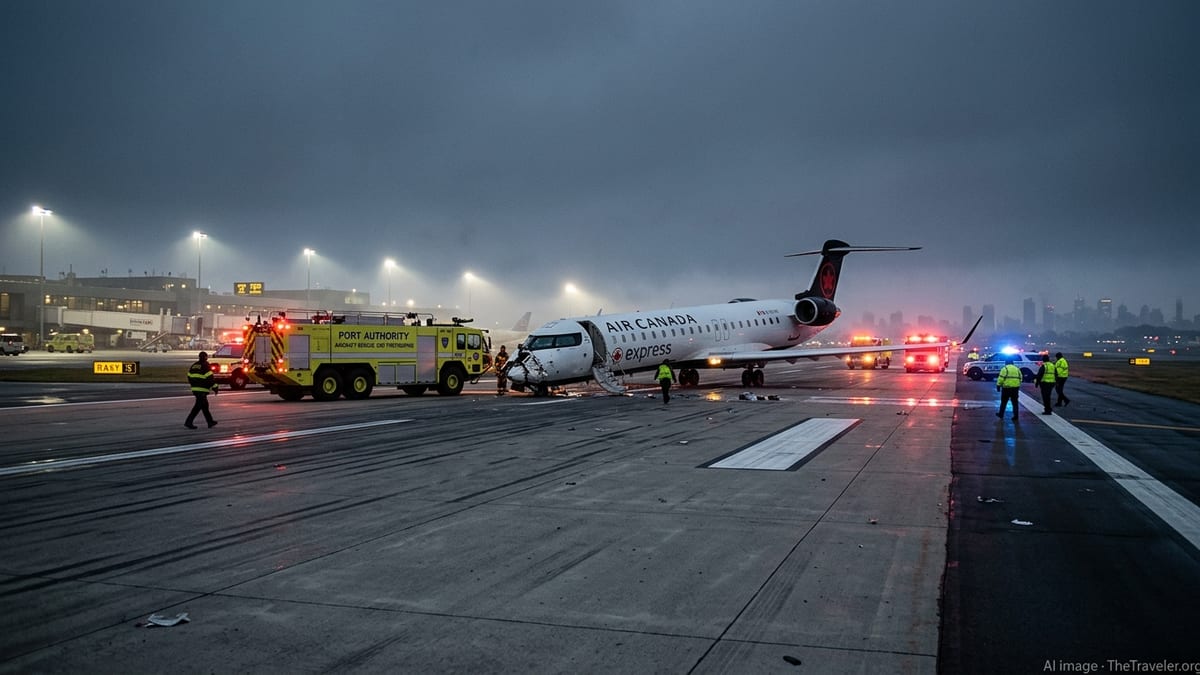
Runway 4/22 Closure Follows Discovery of Airfield Sinkhole
Publicly available information indicates that the sinkhole was first detected during a routine inspection near midday on May 20, in the infield area adjacent to Runway 4/22, one of LaGuardia’s two primary runways. The affected section is described in published coverage as a localized depression rather than a full structural collapse, but its proximity to active pavement led airport managers to take the runway out of service as a precaution.
Reports indicate that crews quickly cordoned off the damaged area and began geotechnical assessments to determine the depth and stability of the underlying soil. LaGuardia sits on a complex mix of reclaimed shoreline and urban fill, and federal planning documents have previously highlighted ongoing deck and pavement rehabilitation work along the 4/22 corridor, underscoring its sensitivity to settling and water intrusion.
While the airport’s intersecting Runway 13/31 remained open, the sudden loss of 4/22 sharply constrained LaGuardia’s arrival and departure capacity. The Federal Aviation Administration implemented flow restrictions for flights into New York, citing both the runway outage and unsettled spring weather in the region, a combination that quickly overwhelmed already busy schedules at the midweek peak.
By early May 21, flight-tracking dashboards showed waves of delays building across morning and afternoon banks, with some LaGuardia-bound services held at origin for hours or canceled outright to reduce congestion in the airspace over the New York metropolitan area.
Hundreds of Cancellations and Rolling Delays Ripple Nationwide
Operational data compiled by airline tracking services on May 21 showed LaGuardia near the top of U.S. airports for cancellations and lengthy delays. Carriers trimmed departures throughout the day as the shortened runway configuration limited the number of takeoffs and landings that could safely be accommodated each hour.
According to published coverage, more than a hundred flights into and out of LaGuardia were canceled outright, with several hundred more experiencing significant delays. Disruptions were particularly acute during morning and early evening peaks, when New York shuttle services and business-focused routes normally run at high frequencies.
The effects radiated well beyond New York. Because LaGuardia is a key node in airline networks, grounded aircraft and misaligned crews at the Queens airport quickly translated into missed connections and rolling delays at downline destinations. Passengers on later flights from unaffected cities reported lengthy waits as aircraft scheduled to arrive from LaGuardia never departed or arrived hours behind schedule.
Travelers across the system were urged through airline alerts and airport notices to check flight status frequently and to allow extra time for rebooking, as same-day alternative options on popular routes tightened rapidly once the scope of the disruption became clear.
Major Hubs Chicago, Atlanta and Dallas Hit by Cascading Impacts
The interruption at LaGuardia was particularly visible at large connecting hubs including Chicago, Atlanta and Dallas, where many New York-bound flights originate and where missed connections can disrupt hundreds of travelers at a time. Publicly available flight-status tallies showed clusters of delays on LaGuardia-linked routes from all three cities through much of May 21.
In Chicago, airlines adjusted departure banks from both O’Hare and Midway as holding patterns and ground stops tied to the New York airspace reduced available arrival slots. Passengers on New York-originating aircraft heading on to the Midwest encountered knock-on delays when incoming flights from LaGuardia arrived late or were swapped for different aircraft.
Atlanta, one of the country’s busiest hubs, experienced similar challenges. New York shuttle services that typically cycle multiple times daily saw frequencies reduced or consolidated, and some aircraft scheduled to overnight in LaGuardia were repositioned or left out of place, complicating crew and maintenance planning for subsequent legs.
In Dallas, published reports highlighted a string of delayed morning and midday departures to LaGuardia as airlines tried to match limited New York arrival slots with long-haul schedules from Texas. As the day progressed, disruptions began to affect unrelated routes when aircraft and crews that were supposed to feed in from New York remained unavailable.
Infrastructure Vulnerability and Ongoing Runway 4/22 Rehabilitation
The sinkhole appeared against a backdrop of extensive infrastructure work on LaGuardia’s runways and taxiways. Federal aviation planning documents describe a multiyear program to replace deck expansion joints and rehabilitate structural elements of both Runway 4/22 and the crossing Runway 13/31, reflecting the heavy use and aging substructure of the airfield.
Recent environmental assessments and construction schedules have pointed to the need for ongoing monitoring of subsurface conditions beneath the runway decks, which are built over a combination of piers and fill at the edge of Flushing Bay. Analysts note that any anomaly in drainage systems, utility corridors or soil compaction beneath these structures can manifest as surface depressions that may necessitate temporary closures.
While the precise cause of the May 20 sinkhole has not yet been detailed in technical summaries, early reporting suggests that ground saturation following recent rain and long-term settlement of underlying fill are among the factors engineers are examining. The incident is likely to intensify scrutiny of how aging airfields constructed on challenging terrain manage climate-related stresses and higher traffic volumes.
Industry observers point out that similar pavement issues at other U.S. airports have led to targeted rehabilitation projects rather than wholesale reconstruction, but emphasize that each unplanned closure ties directly into passenger experience, airline operating costs and the reliability of national air travel.
What Travelers Can Expect as Repairs Continue
As of the evening of May 21, publicly available information showed that repair crews were continuing to stabilize and backfill the affected area near Runway 4/22, with temporary surface restoration under way to allow engineering teams to assess whether partial reopening is feasible in the near term. Full structural remediation and detailed inspections are expected to continue beyond the initial reopening to ensure that no additional voids or compromised sections remain.
Travelers scheduled to pass through LaGuardia over the coming days are being advised through airline channels and airport messaging to monitor itineraries closely, as residual delays and schedule adjustments are likely to persist even after the immediate sinkhole repairs are completed. Reduced runway capacity, shifting aircraft assignments and ongoing weather-related constraints in the Northeast could all contribute to lingering disruptions.
Analysts note that if Runway 4/22 remains constrained for an extended period, airlines may temporarily rebalance some New York capacity toward John F. Kennedy International Airport and Newark Liberty International Airport, particularly on routes where schedule flexibility allows for airport swaps. Such moves, however, can be complex and may not fully absorb LaGuardia’s lost slots during peak travel periods.
The incident has quickly become a test of resilience for both LaGuardia’s modernized facilities and the broader U.S. air travel system at the start of the busy summer season. How rapidly the runway can be returned to full service, and how effectively airlines manage the cascading schedule impacts, will help determine whether the May 21 sinkhole disruption remains a short-lived shock or a lingering constraint on one of the nation’s most important domestic gateways.