


More news on this day
Canada’s latest expansion of travel advisories across key Middle Eastern destinations is injecting fresh uncertainty into global tourism, as major airlines, tour operators and travelers reassess summer itineraries amid an unsettled regional security landscape.
Get the latest news straight to your inbox!
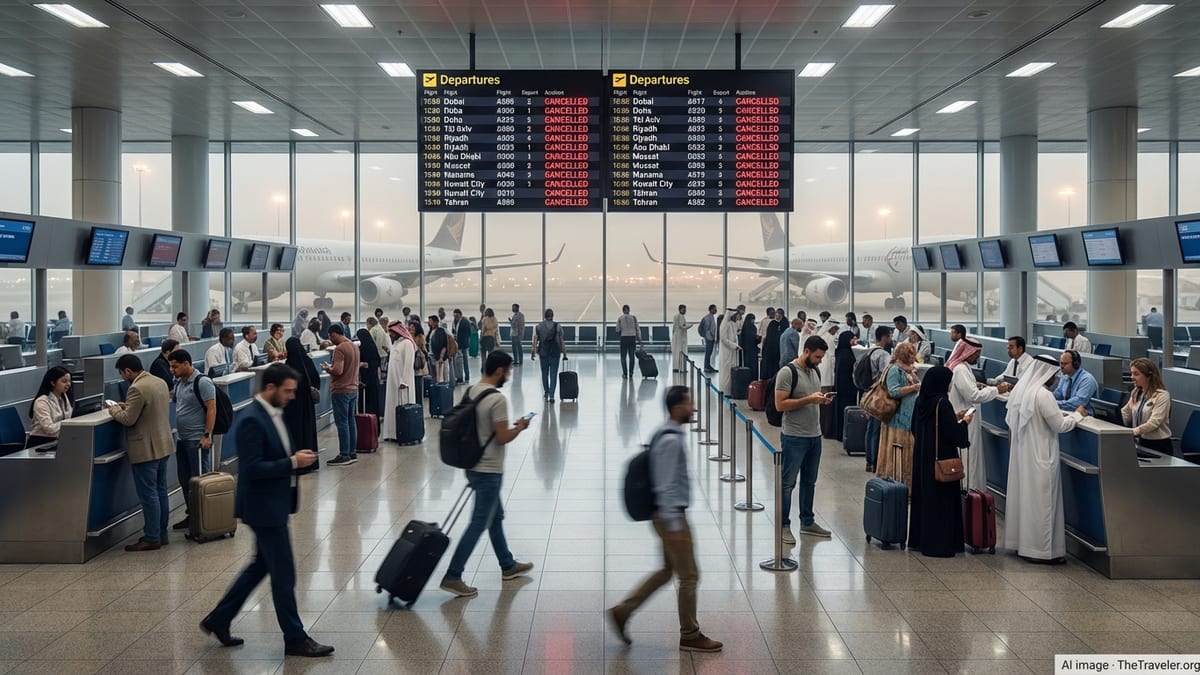
Canada Tightens Risk Ratings Across the Middle East
Publicly available information from Global Affairs Canada shows a broad tightening of travel advice for parts of the Middle East in recent weeks, as conflict involving Iran, Israel and Lebanon reverberates across neighboring states. Updated advisories now include a mix of “avoid all travel,” “avoid non-essential travel” and “exercise a high degree of caution” designations for a growing list of destinations, signalling what Canadian officials view as elevated security and operational risks for visitors.
The advisory system, which ranks destinations across four risk levels, is being recalibrated in light of rocket attacks, airspace disruptions and sporadic unrest linked to the 2026 Iran war and related clashes. Several countries, including Iran and parts of Lebanon, fall under the strictest “avoid all travel” category, reflecting concerns about military activity and limited consular reach in the event of an emergency.
In parallel, other popular transit and tourism hubs in the Gulf and wider region are seeing their risk language toughened, even where on-the-ground tourism infrastructure remains largely intact. Travel.gc.ca guidance now repeatedly stresses the potential for rapid deterioration in security conditions, urging Canadian travelers to maintain flexible plans and closely monitor local developments.
Global Affairs Canada has also refreshed a dedicated information page for Canadians in the Middle East, advising those already in affected countries to consider leaving while commercial options remain available. That messaging underscores a view that flight connectivity and access to consular services could change with little notice.
Flight Networks and Hubs Under Pressure
The expanded Canadian advisories arrive as airlines continue to navigate a patchwork of airspace restrictions and rerouted corridors across the Middle East. Industry reports describe intermittent closures and congestion over Iran, Iraq, Israel and surrounding territories, disrupting what had become some of the world’s busiest long-haul transit routes between Europe, Asia and Africa.
Travel industry alerts note that major Middle Eastern hubs are still operating, but in some cases with reduced schedules, longer flight times and higher operating costs. Carriers have adjusted routings to avoid conflict zones, while some have temporarily suspended services to specific cities viewed as higher risk. Passengers report last-minute schedule changes and extended layovers as airlines seek to keep crew and aircraft clear of volatile areas.
The knock-on effect is being felt far beyond the region. Long-haul itineraries from North America to South and Southeast Asia that once relied on efficient one-stop connections through Gulf hubs are now vulnerable to delays and cancellations. Tour operators advising Canadian clients increasingly recommend booking with carriers that offer flexible change policies, and suggest allowing more buffer time for tight international connections.
Travel consultants also flag that aviation insurers and corporate travel managers are revisiting their own risk thresholds, particularly for staff travel. For some multinational companies, the combination of government advisories and flight unpredictability is triggering internal restrictions on transit through certain airports, even for short stopovers.
Tour Operators Scale Back Middle East Offerings
The tour sector, which had been banking on a strong 2026 recovery in Middle Eastern leisure travel, is rapidly recalibrating. Statements from major adventure and cultural tour brands show widespread suspension of departures to countries such as Egypt, Jordan, Oman and Saudi Arabia at least through late March and, in many cases, into the summer, aligning with higher-level advisories from Canada and other Western governments.
Operators explain that even where tourist areas remain calm, the combination of changing advisories, uncertain insurance coverage and air connectivity challenges makes it difficult to guarantee the kind of seamless, low-risk experiences travelers expect. Itineraries that once combined several regional highlights into a single trip have become particularly difficult to sell, as border crossings and regional flights face heightened scrutiny.
Industry commentary suggests that some smaller, locally based operators are more exposed to the downturn, as forward bookings fall away and cancellations mount. Companies that invested heavily in expanding product in Saudi Arabia and other emerging destinations now face a period of retrenchment, shifting marketing back toward Europe, Latin America and domestic experiences that are perceived as more stable.
Larger global brands are trying to keep options open by retaining flexible rebooking policies and promoting future travel credits, betting that demand will rebound if security conditions improve and advisories are relaxed. However, few are willing to commit to firm restart dates for Middle Eastern tours while Canadian and allied advisories remain elevated.
Ripple Effects on Global Itineraries and Travel Demand
Canadian travel intention surveys published this spring already point to a softer appetite for long-haul trips beyond North America, and the latest Middle East advisories appear likely to reinforce that trend. Polling by major research firms indicates that a significant share of Canadians are now less likely to travel outside Canada, the United States and Mexico in 2026, citing safety, geopolitical risks and cost uncertainties.
For many would-be visitors, the Middle East served as both a destination and a connective bridge to other parts of the world. With that bridge perceived as less reliable, travelers are shifting to routings via Europe or East Asia, or postponing complex multi-country trips altogether. This redirection of flows has implications for airlines, airports and hotel markets thousands of kilometres from the conflict zone, as capacity and demand patterns are reshaped.
Global tourism bodies warn that the economic toll on the Middle East region itself is mounting. Recent analysis from the World Travel & Tourism Council estimated that the current conflict is costing regional travel and tourism hundreds of millions of euros in lost visitor spending each day, relative to pre-crisis forecasts. That loss is especially acute for destinations that had positioned tourism as a pillar of economic diversification.
At the same time, history suggests that demand can recover quickly once travelers perceive that risks have receded and government advisories ease. Industry observers point to past episodes in which bookings rebounded within months of ceasefires or political deals, especially when airlines and tour operators moved swiftly to restore capacity and offer incentives.
Travelers Navigate a New Era of Risk Management
For individual travelers, Canada’s expanded advisory map signals a new era in which geopolitical volatility plays a more central role in trip planning. Travel insurers are highlighting the importance of checking how policy coverage interacts with official advisories, as many plans limit benefits when a destination is listed under “avoid all travel” or “avoid non-essential travel.”
Consumer advocates recommend that Canadians planning routes through the Middle East pay close attention not only to their final destination but also to any transit points that might fall under higher-risk categories. Flexible tickets, comprehensive medical coverage and contingency funds for unexpected rerouting or extra accommodation are increasingly seen as prudent rather than optional.
Global tourism analysts note that while the current moment is characterized by uncertainty, it is also spurring innovation in how risk is communicated and managed. Digital tools that aggregate government advisories, airline operations data and local security assessments are being adopted by travel agencies and corporate travel programs to provide more dynamic guidance to clients.
As summer approaches, the central question for the industry is whether incremental ceasefire efforts and diplomatic talks in the region will be sufficient to stabilize conditions and prompt Canada and other governments to soften their warnings. Until then, the Middle East’s role in global tourism is likely to remain constrained, and travelers worldwide will continue to feel the ripple effects of Canada’s more cautious stance.