


More news on this day
A newly formed sinkhole on a primary runway at New York’s LaGuardia Airport triggered fresh chaos for air travelers on Wednesday, forcing the closure of the strip and unleashing hours of delays, cancellations and diversions across one of the nation’s busiest aviation hubs.
Get the latest news straight to your inbox!
Runway 4/22 Closed After Sinkhole Discovery
Published coverage indicates the disruption began late Wednesday morning, May 20, when a sinkhole was discovered during a routine inspection near Runway 4/22, one of LaGuardia’s two main runways. Local broadcast outlets report that the hole appeared in the pavement close to the runway’s edge, prompting an immediate suspension of operations on that strip while engineers assessed the damage and safety risks.
According to multiple news reports, the Federal Aviation Administration implemented arrival and departure controls soon after the issue was identified, citing a combination of weather and the compromised runway surface. Ground crews cordoned off the affected section as emergency repair teams and structural specialists moved in to determine the extent of the subsurface problem.
By early afternoon, Runway 4/22 remained out of service, compressing all movements onto the remaining runway and sharply reducing the airport’s overall capacity. Aviation trackers and local media described long lines of aircraft waiting to depart, with pilots reporting extensive taxi times as the backup intensified.
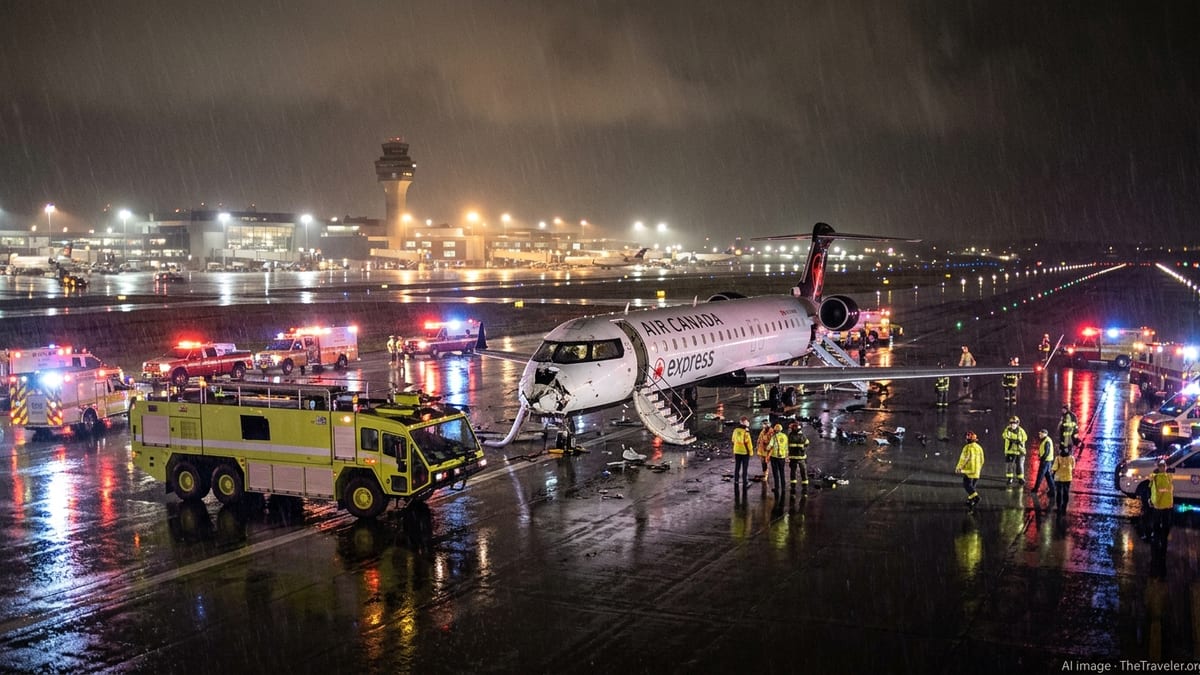
The sinkhole comes less than two months after a deadly runway collision at LaGuardia, adding to heightened scrutiny around conditions and resilience at the New York airport.
Flight Delays, Cancellations and Diversions Mount
With one of LaGuardia’s two runways shut, delays quickly rippled through the system. National radio and television outlets report that departures to LaGuardia were subject to a formal ground delay program, with average postponements approaching or exceeding an hour and a half for many flights. Some services faced significantly longer waits as the afternoon progressed.
Published information from flight-tracking platforms shows dozens of cancellations linked to the incident, as airlines trimmed schedules rather than operate heavily delayed rotations. Several inbound flights were diverted to alternative airports in the region, including John F. Kennedy International and Newark Liberty, to ease pressure on LaGuardia’s reduced-capacity operation.
Travelers shared images of crowded gate areas and snaking security and check-in lines as passengers attempted to rebook or adjust onward connections. For many, missed meetings, disrupted vacations and extended time on the tarmac added to ongoing frustrations around reliability at New York–area airports.
The disruption extended beyond New York, affecting hub schedules across the country as aircraft and crews fell out of position. Industry analysts note that LaGuardia’s role as a key business and shuttle airport along the Northeast Corridor means even a partial closure can have outsized knock-on effects on airlines’ afternoon and evening banks.
Emergency Repairs and Infrastructure Concerns
Reports indicate that maintenance and engineering teams moved rapidly to stabilize the affected area, working to assess whether the sinkhole stemmed from underlying soil erosion, drainage problems or a failure in previously completed pavement works. Images shared by local outlets show heavy equipment and inspection crews clustered near the damaged section of Runway 4/22.
While early updates suggested the sinkhole was localized, any structural issue beneath a runway surface is treated as a serious safety concern. Aviation experts commenting in media coverage note that even small voids can expand under the repeated stress of aircraft movements, making conservative closures and extensive testing a standard response.
The incident is likely to reignite debate about the pace of infrastructure investment at LaGuardia, which has undergone a multibillion-dollar terminal overhaul in recent years while still managing aging airfield assets. Federal construction impact reports have previously flagged recurring runway and taxiway maintenance, including seasonal overnight closures designed to extend pavement life and reduce the risk of unplanned failures.
Travel-industry observers suggest the sinkhole could prompt a fresh review of drainage systems, subsurface monitoring and long-term runway rehabilitation plans at the airport, particularly in light of more frequent heavy rain events and the recent runway collision.
Advice for Affected and Upcoming Travelers
Publicly available airline advisories show that several major carriers introduced flexible rebooking options on Wednesday for passengers traveling through LaGuardia, allowing itinerary changes without standard fees in many cases. These waivers typically apply for a limited window and may permit routing through other New York–area airports where capacity is available.
Travel experts quoted in media coverage recommend that passengers due to fly to or from LaGuardia in the next 24 to 48 hours monitor their flight status closely and be prepared for schedule changes or equipment swaps. Same-day travelers are encouraged to arrive early, anticipate longer lines and carry essential items in hand luggage in case of extended ground holds.
For those with tight connections or time-sensitive trips, considering alternate airports such as JFK or Newark may offer more options if the runway remains restricted or repairs take longer than initially projected. However, shifting bookings can also create crowding at neighboring hubs, so flexible timing and routes may be necessary.
Observers also note that travelers with travel insurance policies should review coverage terms, as some plans may compensate for lengthy delays or additional expenses stemming from infrastructure-related disruptions.
LaGuardia’s Reliability Challenges Under Spotlight
The sinkhole incident underscores the fragile balance at LaGuardia, an airport that handles tens of millions of passengers each year within tight physical constraints and dense surrounding airspace. Historical performance data compiled by federal agencies and aviation groups has long placed LaGuardia among the country’s more delay-prone airports, particularly during peak hours and adverse weather.
Recent years have brought significant improvements on the passenger experience side, with new terminals, expanded gate areas and upgraded amenities earning accolades from international airport quality rankings. Yet the events of March 2026, when a runway collision closed the airport for hours, and the latest sinkhole closure highlight ongoing stress on airfield operations.
Aviation analysts point out that as climate patterns shift and severe weather events become more common, New York’s coastal airports face growing pressure to modernize drainage, strengthen pavements and plan for more frequent maintenance windows. Unplanned incidents such as sinkholes, while relatively rare, can serve as high-profile reminders of the need for long-term resilience planning.
For travelers, the latest LaGuardia chaos is another prompt to build extra time into itineraries involving the New York region, remain alert to operational disruptions and consider backup options when schedules are inflexible.