


Even before you land in Rome, the great Vatican dilemma tends to appear in trip chats and group texts: if time or energy is limited, should you prioritize the Sistine Chapel at the end of the Vatican Museums, or St Peter’s Basilica on the square outside? Both are world famous, both can be overwhelming, and both are almost guaranteed to be crowded. Yet the impact they leave on travelers is surprisingly different. Understanding how each visit actually feels on the ground can help you decide which Vatican experience will stay with you long after your flight home.
Get the latest updates straight to your inbox!
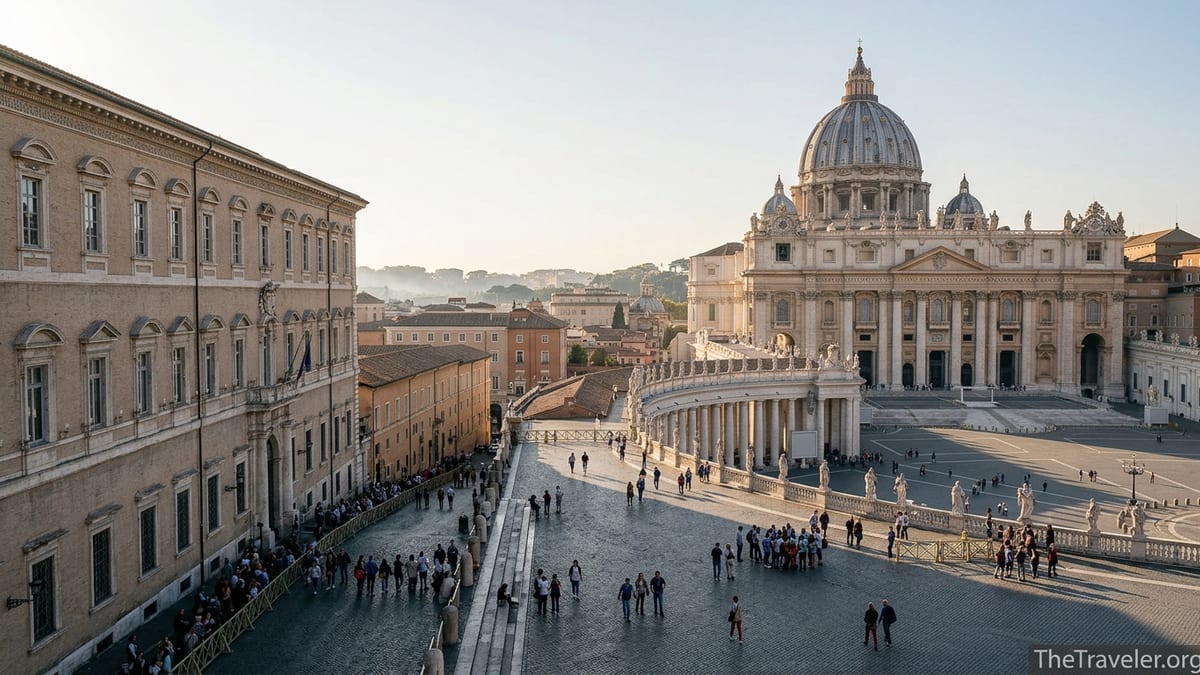
Two Icons, Two Very Different Kinds of Awe
The Sistine Chapel is, at heart, a compact rectangular room attached to a sprawling museum complex. The experience is about density: nearly every inch of wall and ceiling is alive with frescoes, with Michelangelo’s ceiling and Last Judgment drawing your eye upward and forward. Travelers often describe an almost intellectual shock here, a feeling of finally standing beneath images they have seen on postcards and in textbooks since childhood, now larger and more intense than expected.
St Peter’s Basilica delivers a different kind of awe. Walking from the colonnades into the nave, your first impression is usually scale. The building is so vast and proportioned so cleverly that photographs rarely prepare you for it. Many visitors say that what stays with them is not one single artwork but the volume of space, the shafts of light crossing the nave, the smell of incense, the low murmur of pilgrims and choir rehearsals.
Because of this contrast, the two places tend to resonate with different travelers. Art lovers, design students and anyone who has studied Renaissance history often say the Sistine Chapel is their emotional peak in Vatican City. Others, including many visitors who are not religious, report that St Peter’s feels more moving overall, in part because you can breathe, sit, and linger without being hurried along by guards.
In practical terms, the Sistine Chapel comes bundled with the Vatican Museums, while entry to St Peter’s Basilica itself is free. That simple difference shapes not only budgets but the psychological weight of each visit. Paying for timed tickets and queuing security to reach the chapel can make it feel like the “main event,” while the basilica sometimes surprises people precisely because it does not require a separate ticket.
What the Visit Actually Feels Like: Atmosphere and Crowds
Reaching the Sistine Chapel means committing to the Vatican Museums. Even if you follow the shortest route, expect to walk through several kilometers of galleries, staircases and corridors before you enter the chapel toward the end of the circuit. On typical high-season days, museums staff and recent visitor reports describe the chapel as shoulder to shoulder, with ushers repeatedly hissing “silenzio” and “no photos” as they direct the slow-moving crowd toward the exit. In May and June 2026, travelers were still reporting around one thousand people inside at peak moments, with little space to sit and a constant shuffle forward.
The atmosphere, though, is complex. Despite the density and the firm crowd control, many people describe a sudden pocket of quiet in their own minds in the first minute or two, as their eyes adjust to the ceiling and the Last Judgment. Some linger toward the side walls to take in the earlier Renaissance fresco cycles by Botticelli and Perugino, but first-time visitors often find their attention pulled almost exclusively to Michelangelo’s work.
St Peter’s Basilica faces its own crowd issues, especially mid-morning when bus tours and group pilgrimages arrive. The security line on the square can easily reach 30 to 60 minutes on busy weekends. Once inside, however, the space absorbs people more effectively. You can usually step aside under a side chapel, sit on a pew near the crossing, or pause in front of Michelangelo’s Pietà without feeling physically compressed in the way you might inside the Sistine Chapel.
During late afternoon, after about 4 pm on many days, the basilica often grows noticeably calmer. Independent travelers and bloggers visiting in 2025 and 2026 regularly note that this is when the atmosphere shifts from “monument” back toward “living church,” with vespers, small groups in prayer, and soft organ rehearsals creating a slower rhythm that some visitors find deeply affecting.
Time, Tickets and Money: How Each Fits Into a Real Itinerary
The Sistine Chapel cannot be visited on its own. You must purchase admission to the Vatican Museums, either through the official ticket office or an authorized reseller. As of mid 2026, a standard adult museum ticket typically hovers in the equivalent of the mid to high twenties in US dollars when bought directly, with third-party “skip the line” and guided tours ranging from roughly 50 to well over 100 dollars per person depending on group size and extras like early entry. Families of four can easily spend the equivalent of 150 to 250 dollars for a morning in the museums with the chapel at the end.
In terms of time, a focused highlights visit where you walk briskly through the galleries and give the Sistine Chapel about 20 to 30 minutes usually takes around 2.5 to 3 hours door to door. A more relaxed visit that pauses in the Raphael Rooms, Gallery of Maps and a few favorite collections can stretch to 4 or 5 hours. Because the chapel is at the end, fatigue matters: visitors who rushed through the museums or came at the tail end of a long Rome day often say they were too tired or overstimulated to fully absorb the ceiling by the time they arrived.
By contrast, entry to St Peter’s Basilica is free. You pass a security check with metal detectors on the square, and once inside you can stay as long as you wish. The main paid extras are optional: the climb to the dome, which usually costs the equivalent of around 10 to 12 dollars depending on whether you use the partial elevator, and occasional guided tours or audio guides. Even with these add-ons, a couple can experience St Peter’s for less than the price of a single guided Vatican Museums ticket.
This cost difference shapes emotional impact more than many people expect. Travelers on tight budgets frequently describe the basilica as one of their best “value” experiences in Rome, precisely because it rivals or exceeds major paid attractions in terms of scale and atmosphere. On the other hand, those who have invested in early-access tours of the Sistine Chapel often say that the relative quiet and extra space made that splurge the most unforgettable part of their trip.
Art, Architecture and Spiritual Charge: What Stays With You
From an art historical perspective, the Sistine Chapel is the denser and more concentrated experience. The ceiling panels, including the famous Creation of Adam, and the massive Last Judgment behind the altar are milestones of Western art. For travelers who have studied these works, the emotional kick often comes from finally perceiving the details that reproductions flatten: the intense blues, the muscular modeling of figures, the faint hairline cracks, even the way light from the windows interacts with the frescoes at different times of day.
However, the very intensity of this visual field can make the experience feel rushed or overwhelming, especially when you are sharing the space with hundreds of others. Conversation is not allowed, photography is banned and the room functions as both chapel and high-security art gallery, so the emotional charge can be more solitary and interior. Some visitors leave exhilarated, others slightly dazed, unsure whether they have truly “seen” the paintings they traveled so far to encounter.
St Peter’s Basilica delivers its impact through a combination of architecture and ritual. Even visitors who do not attend mass often stumble into moments that feel unexpectedly intimate: a baptism taking place in a side chapel, a confession line with pilgrims from multiple continents, a small choir rehearsing Latin hymns beneath Bernini’s bronze baldachin. These unscripted scenes, set within a building that took over a century to complete and involves contributions from Bramante, Michelangelo, Bernini and others, tend to linger in people’s memories as much as the famous artworks themselves.
For many travelers, the emotional high point is the view from the dome. After hundreds of narrow steps, you emerge onto a terrace that looks across the colonnades of St Peter’s Square toward the Tiber and the rooftops of Rome. The climb is physically demanding, but the combination of exertion, height and panorama leaves a surprisingly strong impression. First-time visitors often say that it is here, rather than inside the nave, that they suddenly grasp Vatican City as a tiny sovereign state embedded inside modern Rome.
Crowd Strategies That Change the Experience
Because crowds shape both comfort and impact so strongly in Vatican City, timing can make the difference between a transcendent memory and a box checked off a list. For the Vatican Museums and Sistine Chapel, travel planners and local guides consistently point to the 8 am opening slot as the best crowd-avoidance move in 2026, especially on Tuesdays and Thursdays outside peak holiday weeks. The first 60 to 90 minutes of museum opening tend to have thinner crowds, giving you a calmer first look at the chapel before the densest wave arrives mid-morning.
If you cannot secure an early slot, late afternoon is the next best window. Several up-to-date guides and recent visitors note that by around 3:30 pm, when the museum is due to close at 6 pm, tour groups begin to thin and the flow slows slightly. A practical strategy used by some travelers is to walk directly, and fairly quickly, toward the Sistine Chapel soon after entry, spend focused time there while you are still fresh, and then loop back through other galleries at your own pace if your ticket rules and route options allow.
For St Peter’s Basilica, the main crowd bottleneck is the security line in the square. If you arrive between about 9 am and 11 am in high season, expect to queue. Pilgrimage groups, Papal Audience days and major Catholic feast days can all spike numbers. In ordinary weeks, going either early morning shortly after opening or late afternoon after 4 pm often yields shorter waits and a more contemplative interior. Remember that the dress code is enforced at both sites: shoulders and knees should be covered, and entry can be refused, which can add stress if you are turned away and have to improvise.
These timing choices can directly influence which site feels more impactful. A traveler who experiences the Sistine Chapel at near-maximum capacity after a long museum trudge, then wanders into a relatively open and quiet St Peter’s at dusk, will often report the basilica as the more powerful moment. Reverse the timing, and the impression can flip.
Which Leaves a Bigger Impact for Different Types of Travelers?
There is no single answer to the question of which Vatican experience “wins,” but clear patterns emerge when you listen to how different travelers talk about their visits afterward. Art enthusiasts, students of Renaissance history and visitors who book in-depth, small-group tours frequently describe the Sistine Chapel as their essential Vatican moment. They often arrive having read about the chapel’s iconography, restoration history and Michelangelo’s reluctant commission, and they tend to see the crush of people as a trade-off worth making to stand beneath those frescoes in person.
First-time visitors to Rome with limited art background, families with children, and travelers more interested in atmosphere than specific artworks are more likely to name St Peter’s Basilica as their emotional highlight. The narrative they share often includes the feeling of walking into a space far bigger than they expected, the play of light on the marble floor, and the sense of stepping into a place that functions daily as both pilgrimage site and parish church.
Budget-conscious travelers and those averse to intense crowds sometimes choose to invest their money and patience elsewhere. Some opt to admire the Vatican Museums’ exterior and focus their paid tickets on Rome’s other heavy hitters such as the Colosseum or the Borghese Gallery, then visit St Peter’s Basilica and climb the dome for a fraction of the price of a full Vatican Museums tour. Others, particularly those returning to Rome, do the opposite: they skip the basilica entirely, dedicate a morning to the museums and Sistine Chapel with a specialized guide, and report that the depth of interpretation magnified the impact of the art far beyond what they felt on a previous, more casual visit.
If your schedule allows both, many travelers find that separating them across two different parts of the day works best. For example, you might book an early morning museum slot and chapel visit, then plan St Peter’s for late afternoon on another day when your legs and mind are fresher. Spacing them out in this way lets each experience resonate on its own terms instead of collapsing into one long, exhausting “Vatican day.”
The Takeaway
In the simplest terms, the Sistine Chapel is likely to leave the bigger impact if you are driven by a love of painting, fascinated by Michelangelo, or willing to endure a compressed, crowded environment in exchange for a moment with one of the world’s great masterpieces. Its power is concentrated and visual, intensified by the knowledge that you are seeing the same ceiling that cardinals look up at during papal conclaves.
St Peter’s Basilica, on the other hand, often leaves a deeper overall impression on a broader range of travelers. Its combination of colossal architecture, active worship, free entry and optional dome climb gives it more room to surprise you. The experience feels less like checking off an artwork and more like entering a living backdrop to centuries of faith, politics and ceremony.
If you must choose only one, let your own instincts guide you. Ask whether you feel more drawn to standing under a legendary ceiling, absorbing every painted figure despite the crush of visitors, or to stepping inside one of the largest churches on earth, where you can wander, sit, and look up at a dome that has anchored the skyline of Rome for centuries. Either choice can define your time in the city. If you can manage both, with smart timing and realistic expectations about crowds and fatigue, you may find that each deepens your appreciation of the other.
FAQ
Q1. Is the Sistine Chapel or St Peter’s Basilica more crowded?
The Sistine Chapel usually feels more crowded because it is a relatively small room at the end of the Vatican Museums route, often packed wall to wall at peak times. St Peter’s Basilica sees huge visitor numbers but its enormous interior disperses people more, so it often feels less claustrophobic once you are inside.
Q2. Which is more expensive to visit, the Sistine Chapel or St Peter’s Basilica?
The Sistine Chapel requires a paid Vatican Museums ticket or tour, which can cost the equivalent of several dozen dollars or more per person. Entry to St Peter’s Basilica is free, with only optional extras like the dome climb or guided tours costing a modest additional fee.
Q3. Can I see both the Sistine Chapel and St Peter’s Basilica in one day?
Yes, many travelers do both in a single day, often visiting the Vatican Museums and Sistine Chapel first, then heading to St Peter’s. However, it can be tiring and overwhelming, so spacing them across different parts of the day or on separate days usually makes each experience more enjoyable.
Q4. Is it possible to visit the Sistine Chapel without touring the entire Vatican Museums?
No, there is no separate public entrance to the Sistine Chapel. All standard visitors reach it only by walking through the Vatican Museums, whether on their own or as part of a guided tour. Some specialized tours may take more direct internal routes, but they still pass through museum spaces.
Q5. Which has a stronger spiritual atmosphere for non-Catholic visitors?
Experiences differ, but many non-Catholic travelers report that St Peter’s Basilica feels more spiritually charged, in part because you can sit quietly, attend a service if you wish, and observe ongoing rituals. The Sistine Chapel is visually overwhelming yet operates more like a high-security gallery where silence is enforced and visits are relatively brief.
Q6. How much time should I allow for each site?
For the Vatican Museums and Sistine Chapel together, plan at least 2.5 to 3 hours for a brisk visit and up to 4 or 5 hours if you want to see major galleries in some depth. For St Peter’s Basilica, many visitors spend about 60 to 90 minutes inside, plus extra time if they choose to climb the dome or attend a service.
Q7. What is the best time of day to visit the Sistine Chapel for fewer crowds?
Early morning entry around opening time is often the calmest, especially on midweek days outside peak holidays. Late afternoon can also be less intense than the late morning rush, though it depends on the season and day of the week.
Q8. What is the best time of day to visit St Peter’s Basilica?
Early morning or late afternoon typically offer shorter security lines and a more reflective interior. Mid-morning can be very busy with tour groups and pilgrims, and some days are busier due to Papal events or religious holidays.
Q9. Which site is better for travelers with limited mobility?
Both locations involve walking and security checks, but the basilica’s interior is largely on one level with space to sit and rest. The Vatican Museums require more walking through long corridors and staircases, and the route to the Sistine Chapel can feel demanding. The dome climb at St Peter’s involves many steps and is not suitable for those with significant mobility issues.
Q10. If I have to choose only one, which should I see on a first visit to Rome?
If you are passionate about Renaissance painting and prepared for crowds, the Sistine Chapel may be your top priority. If you want a broader mix of architecture, atmosphere and flexibility, St Peter’s Basilica often provides a more balanced and less stressful experience, especially on a short first trip.