


More news on this day
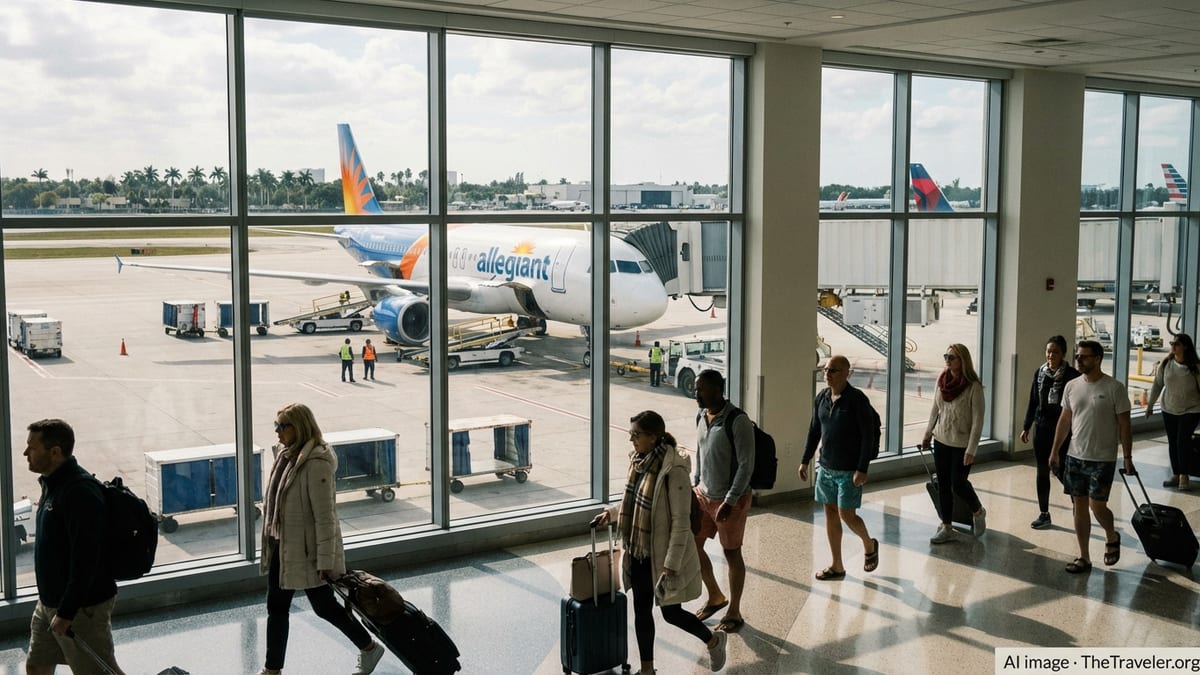
Hundreds of travelers faced long waits and missed connections at Fort Lauderdale-Hollywood International Airport on July 4 as 81 delayed flights and four cancellations disrupted a major holiday travel corridor linking the United States with Canada, the Bahamas, Mexico and Caribbean destinations.
Get the latest news straight to your inbox!
Holiday Crowds Meet Tight Airline Schedules
The disruptions at Fort Lauderdale-Hollywood International Airport arrived at the height of Independence Day travel, when airlines typically operate on tight schedules and flights run close to capacity. Publicly available flight tracking dashboards for Saturday showed dozens of departures and arrivals from Fort Lauderdale running late, with delays often spilling into the 30 to 60 minute range and, in some cases, longer.
The pattern mirrors a broader national picture of strain on the aviation system during peak periods. Aggregated data for the United States indicated thousands of delayed flights nationwide, meaning Fort Lauderdale’s 81 delays formed a significant share for a single airport and had an outsized impact on regional connectivity.
With only four cancellations recorded at Fort Lauderdale, most passengers were eventually able to fly. However, tight turnaround times meant that even modest delays compounded throughout the day, affecting downstream flights and making it harder for travelers to hold on to their original itineraries, especially those relying on connections to island and cross-border destinations.
Airlines generally treat a holiday weekend schedule as a finely balanced network, and any operational constraint, from congested airspace to localized weather or crew scheduling limits, can quickly translate into rolling pushbacks at departure gates.
Key Hub for Canada, Bahamas, Mexico and the Caribbean
Fort Lauderdale-Hollywood International Airport serves as a critical gateway for short- and medium-haul routes across the Americas. Airport statistics and carrier route maps show a dense web of services to Canadian cities, Bahamian airports, popular Mexican beach destinations and high-demand Caribbean leisure markets.
Low-cost and hybrid carriers have built Fort Lauderdale into a primary base, operating high-frequency links to Nassau, Grand Bahama and several Out Island gateways, as well as routes into Mexico’s Caribbean coast and western shoreline. Canadian airlines and U.S. partners also use the airport as a winter and shoulder-season entry point for visitors heading to South Florida cruise terminals and onward island connections.
When an airport with this route profile experiences delays and cancellations, the ripple effects extend well beyond Florida. Missed evening departures from Fort Lauderdale can translate into full flights and limited rebooking options on island routes that may operate only once or twice per day, leaving some travelers effectively stranded overnight or forced to reroute through alternate hubs such as Miami, Orlando or Atlanta.
Public data from Broward County and aviation analytics firms highlight just how concentrated Fort Lauderdale’s international partnerships are. In a recent month, carriers serving Canada, the Bahamas, Mexico and Caribbean nations collectively moved hundreds of thousands of passengers through the airport, underscoring the significance of even a single day’s disruption for tourism-driven economies.
Passengers Confront Long Lines and Missed Connections
As delays accumulated, travelers reported crowded gate areas, lengthening security lines and rebooking queues that grew through the afternoon and evening hours. Social media posts and shared screenshots of departure boards showed clusters of flights marked late by 30 minutes or more, creating uncertainty for families and holiday groups attempting to coordinate onward ground transport, cruise departures or interline connections.
For travelers connecting through Fort Lauderdale from domestic U.S. cities to international destinations, missed connections were a particular concern. A delayed arrival from the Midwest or Northeast could easily cause passengers to miss a last evening departure to Nassau, Montego Bay or Cancún, with the next available seat sometimes not departing until the following day.
Some visitors heading home to Canada and Mexico also faced tight margins. When northbound flights left outside their scheduled windows, travelers risked missed rail and bus links or additional overnight stays on arrival. For budget-conscious passengers who chose Fort Lauderdale for its typically competitive fares, the added cost of hotel rooms and meals rapidly eroded the savings of their original bookings.
The disruption underscores how a relatively modest number of cancellations can still cause widespread inconvenience when paired with a much larger wave of delays at a hub airport heavily focused on leisure and cross-border travel.
Strain on an Already Delay-Prone Airport
Industry rankings and performance dashboards in recent months have consistently placed Fort Lauderdale among U.S. airports with elevated delay rates. Comparative analyses for 2026 list the facility within a group of large airports where roughly one in four flights arrives or departs behind schedule, putting it among the more challenging hubs for on-time performance.
Analysts point to a combination of high traffic volumes, a strong presence of low-cost carriers operating tight rotations, and the airport’s role as a gateway to weather-sensitive tropical destinations. Afternoon thunderstorms in South Florida, common throughout the summer, can quickly reduce runway capacity and trigger air traffic management initiatives that ripple through airline schedules.
Federal aviation data and local planning documents show that, even under normal conditions, Fort Lauderdale operates with limited slack during busy periods. While long-term projects aim to expand capacity and improve resilience, near-term travel days remain vulnerable to cascading delays when external factors, such as regional weather or system-wide congestion, intersect with peak holiday demand.
On a day like July 4, any operational bottleneck can translate into the sort of widespread pushbacks and extended gate holds that travelers experienced, even when total cancellations remain comparatively low.
Guidance for Upcoming Travelers Through Fort Lauderdale
The latest disruption serves as a cautionary example for passengers planning to use Fort Lauderdale-Hollywood International Airport later in the summer. Aviation data platforms and airport statistics suggest that high leisure demand and afternoon storm patterns are likely to continue, keeping pressure on schedules serving Canada, the Bahamas, Mexico and the Caribbean.
Travel experts who monitor delay statistics often recommend booking earlier flights out of Fort Lauderdale when possible, since morning departures are less exposed to knock-on effects from earlier disruptions and weather-related ground stops that tend to form later in the day. Allowing additional connection time, particularly for international links, can also provide a buffer if departure times slide.
Passengers are also advised, based on historical delay patterns, to monitor flight status frequently on the day of travel and to arrive early at the airport when large crowds are expected. Doing so can reduce the risk of missing check-in or boarding cutoffs if security or check-in lines lengthen unexpectedly.
For travelers heading to or from Canada, the Bahamas, Mexico or Caribbean resort destinations, the events at Fort Lauderdale illustrate how quickly a busy hub can become congested. Building extra time into itineraries and remaining flexible about routing through alternate airports can help mitigate the impact of sudden waves of delays and isolated cancellations during peak holiday periods.