


More news on this day
A SkyWest-operated Delta Connection service from Bozeman to West Yellowstone on June 10 triggered an unusual chain of events when Flight SKW4320, a Mitsubishi CRJ-701ER, twice diverted from its intended destination, first returning to Bozeman Yellowstone International Airport before ultimately heading back to Salt Lake City, according to publicly available flight-tracking data reviewed that evening.
Get the latest news straight to your inbox!
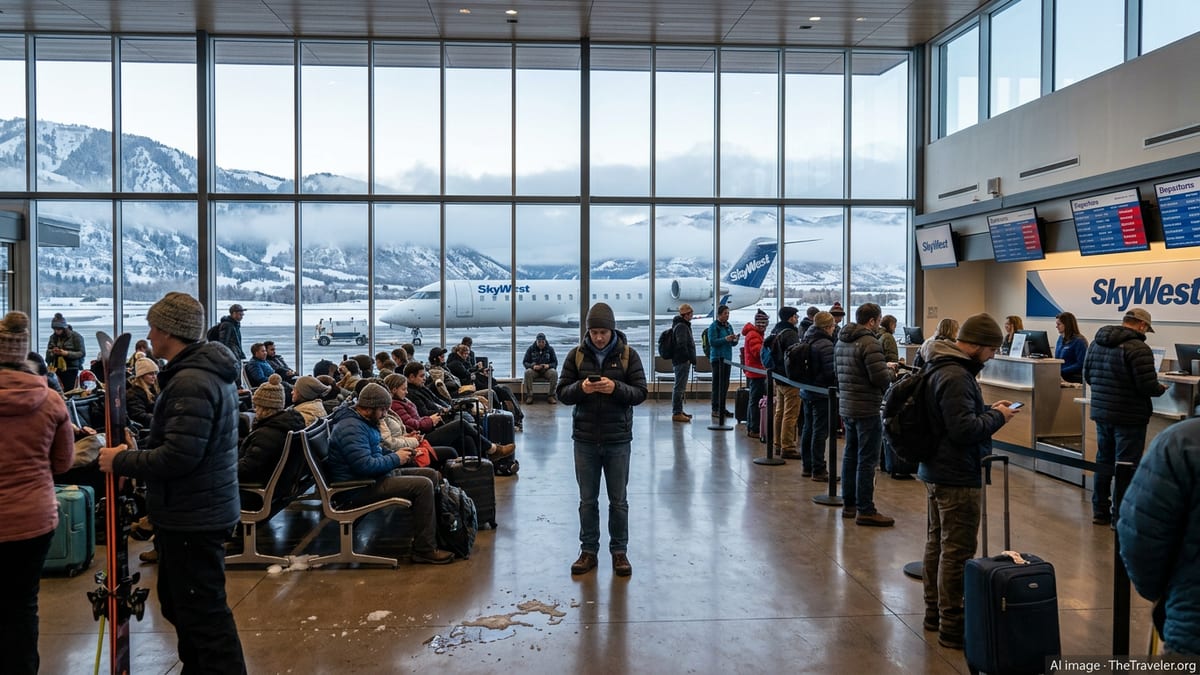
A Routine Short Hop Turns Into a Prolonged Ordeal
The regional service, marketed by Delta Air Lines and operated by SkyWest, was scheduled to fly the brief sector linking Bozeman, Montana, with nearby West Yellowstone, a key gateway for Yellowstone National Park visitors at the height of the early summer travel period. The route typically covers a short distance and is often used by tourists connecting from larger hubs such as Salt Lake City.
Publicly available information indicates that the CRJ-701ER departed Bozeman on time and began tracking toward West Yellowstone before the flight path shifted, showing the aircraft turning back toward Bozeman instead of beginning its descent to the smaller regional airport. Shortly after the return, tracking data showed a second repositioning, with the aircraft later flying south toward Salt Lake City rather than attempting another arrival into West Yellowstone.
While specific operational details have not been formally outlined in public notices, the pattern displayed on flight-tracking platforms is consistent with a double diversion, a scenario that remains relatively rare on short regional hops. For travelers on board, the sequence effectively transformed what is normally a quick intra-Montana segment into a multi-leg journey spanning several hours and two larger airports.
The diversion unfolded as broader data sets showed another day of strained U.S. airline operations on June 10, with thousands of delayed flights and a smaller but still significant number of cancellations across major carriers and their regional partners. Within that environment, even a single aircraft and crew caught up in an irregular operation can have an amplified impact on passengers attempting to reach smaller seasonal destinations.
Conditions at West Yellowstone and Challenges of Regional Operations
West Yellowstone Airport serves as a seasonal gateway, with SkyWest providing Delta Connection service using regional jets that link the town with larger hubs. The airport’s limited infrastructure, variable mountain weather, and shorter operating season can complicate scheduling and contingency planning, especially during periods of strong demand for park access.
Published airport information and regional aviation references indicate that smaller airports like West Yellowstone can be more susceptible to shifting weather, performance limitations, or runway conditions that may force crews to make conservative decisions about whether to continue an approach. In such cases, diversion to a better-equipped field with longer runways, more robust ground support, and maintenance access is a standard outcome.
Bozeman Yellowstone International Airport, by contrast, functions as a major regional gateway with a wide range of mainline and regional operations. Summer 2026 schedules show a dense pattern of service from Delta and other carriers into Bozeman, underscoring the role of the airport as a primary staging point for travel in and out of the Yellowstone region. When irregular operations occur, Bozeman often serves as the default diversion or consolidation point for flights serving smaller nearby fields.
Salt Lake City, one of Delta’s primary hubs in the western United States, provides another layer of resilience. A diversion there typically offers access to additional aircraft, crews, and rebooking options, as well as overnight accommodations when schedules unravel late in the day. For SKW4320 and its passengers, the eventual repositioning to Salt Lake City appears to have placed the aircraft back inside that hub structure, allowing the operator to reset the aircraft’s next assignments and passengers’ onward connections.
Passengers Caught in the Middle of a Complex Travel Day
For travelers booked on Flight SKW4320, the effect of the double diversion was immediate and practical: missed connections, lost park time, and uncertainty about when or even whether they would reach West Yellowstone as planned. The disruption also came at a sensitive point in the calendar, as June marks the start of the busy summer season for both airlines and national park visitors.
Broader operational snapshots from June 10 show that SkyWest and other major U.S. airlines were already grappling with a surge of delays and scattered cancellations, creating a tight environment for rebooking. When a regional jet is diverted twice, available seats on alternative flights can be limited, especially to niche destinations served by only one or two daily frequencies or operated only on certain days of the week.
Publicly available consumer guidance emphasizes that passengers facing diversions are generally rebooked on the next available flight to their original destination, space permitting. However, in cases where the destination is a small seasonal field such as West Yellowstone, options may quickly narrow, and travelers can find themselves routed through larger airports, shifted to later days, or offered ground transportation as an alternative.
Travel-sector commentary has highlighted that such irregular operations can be particularly disruptive for those on tightly planned itineraries that revolve around check-in times at lodges, timed park entries, or prepaid tours. In these scenarios, a double diversion can reverberate far beyond the flight itself, affecting accommodations, car rentals, and activity bookings across the Yellowstone region.
Double Diversions Highlight Systemwide Strain
Although diversions are a routine safety tool in aviation, the pattern that emerged on June 10 fits within a broader picture of strain across the domestic air network. Public data summarizing the day’s performance show thousands of delays across hubs in the Midwest, South, and on both coasts, affecting mainline brands and their regional affiliates alike.
Analysts and industry observers have pointed to a combination of factors shaping the 2026 summer travel season, including strong passenger demand, limited slack in aircraft and crew availability, and the heightened sensitivity of tight schedules to weather or air traffic control constraints. In that context, a single regional jet diverted away from a small airport may set off a chain of adjustments that ripple through multiple flights over the course of a day.
Flight SKW4320’s trajectory, with a departure from Bozeman, return to the same airport, and later repositioning to Salt Lake City, illustrates how regional connectivity into seasonal destinations can be among the first parts of the network to feel the impact when conditions deteriorate. With aircraft and crews already operating at near-full utilization, there is less room to absorb additional flying or extended duty times after an unexpected diversion.
Similar patterns have been observed in other recent cases involving SkyWest-operated services feeding larger carriers, where a diversion or return to origin has led to cancellations of later segments or schedule overhauls. While each incident has its own causes and context, together they reflect the pressure points present across regional aviation as airlines balance high demand with finite resources.
What Travelers Can Take Away From the SKW4320 Disruption
The SKW4320 episode underscores several practical lessons for travelers heading into the peak summer months, particularly those flying into small or seasonal airports like West Yellowstone. First, even short regional hops can be vulnerable to diversions that fundamentally alter the shape of a trip, so building flexibility into itineraries and avoiding extremely tight connections can reduce the risk of cascading disruption.
Consumer guidance from transportation agencies and travel experts consistently recommends monitoring flight status frequently, especially on days with widespread operational strain. Many travelers now rely on a combination of airline apps, third-party flight-tracking tools, and airport information screens to gain earlier insight into potential diversions or returns to origin.
For those bound for national parks or remote vacation destinations, additional contingency planning such as flexible lodging reservations, refundable ground transport, or a one-night buffer near a larger gateway airport can help mitigate the effects of events like a double diversion. While such preparations do not prevent irregular operations, they can soften the impact when a flight that should have taken less than an hour turns into an all-day journey through multiple hubs.
The SKW4320 diversion sequence also highlights the ongoing importance of understanding regional airline branding. Tickets sold under major carriers like Delta may be flown by partners such as SkyWest using different aircraft types and operating from specific regional gates. When irregular operations strike, recognizing these relationships can help travelers navigate rebooking conversations and better anticipate which parts of the network are most likely to be affected.