


Overnighting at Dublin Airport is something many travelers consider, especially with the surge in early-morning departures to Britain, Europe and North America. Whether you are trying to save on hotel costs or simply have an awkward connection, it helps to know how realistic it is to sleep in the terminals, what airport hotels actually offer, and how early you really need to be at security. This practical guide pulls together on-the-ground experience and current airport information to help you decide the best plan for your night at Dublin Airport.
Get the latest updates straight to your inbox!
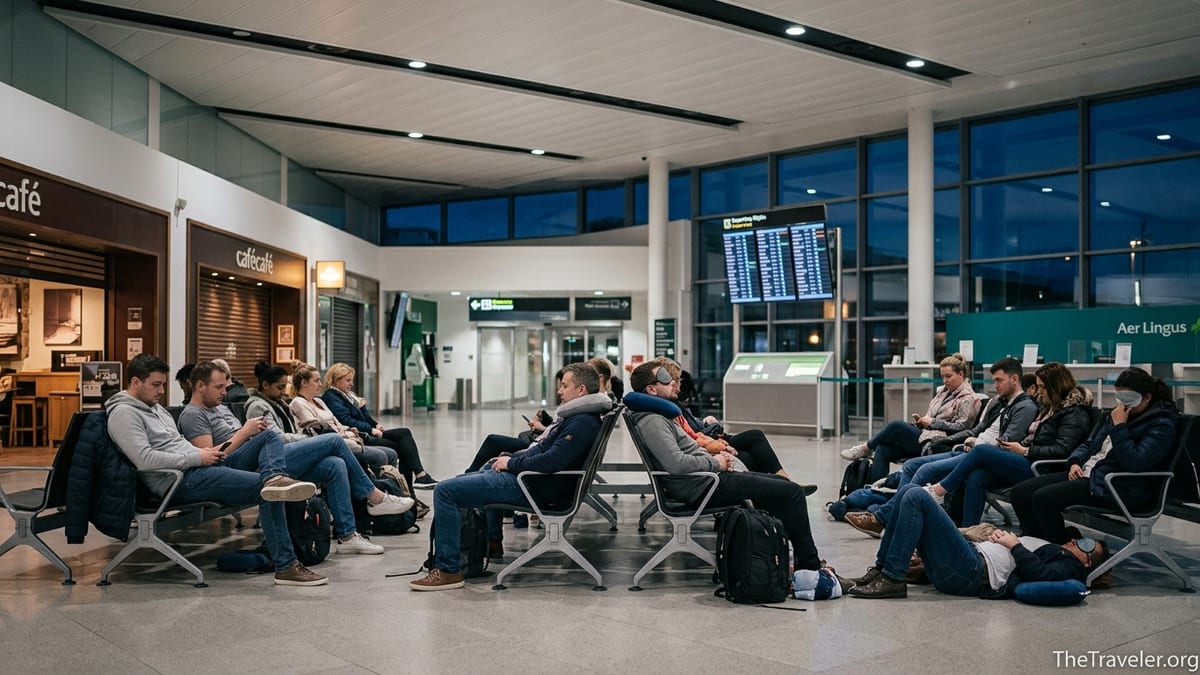
Is Sleeping Inside Dublin Airport Realistic?
Dublin Airport operates 24 hours, and it is common to see passengers resting on benches and floors in both Terminal 1 and Terminal 2 overnight. Airport police and security typically tolerate quiet sleepers in public landside areas as long as you are not causing a disturbance or blocking walkways. Travelers often report that Terminal 2 feels a little calmer and slightly more modern, while Terminal 1 can be busier and more worn, but both see overnight sleepers near the check in halls and arrivals seating.
You should, however, expect bright lighting, regular cleaning activity and announcements through the night. There is no official “sleep zone,” no reclining chairs and very limited padded seating, so comfort is basic. Many people stretch out on rows of metal benches where they can find two or three empty seats together, or sit upright in café areas that have closed for the night. Arriving in the late evening gives you a better chance of claiming a more comfortable spot before it fills up.
The airport does not run a blanket or sleep pod service, so if you intend to stay inside, bring your own eye mask, earplugs and a warm layer. Even in summer, air conditioning can make the terminals feel chilly at 3:00 in the morning. In winter months, outside temperatures can drop close to freezing and the cold seeps into the building whenever doors open, so a light down jacket or fleece is useful even if you think you will not need it in the daytime.
For some travelers, the lack of privacy and the hard seating make a full night’s sleep unrealistic. If you value rest before a long-haul flight, one of the airport hotels is usually a better option, especially if you are arriving late in the evening or traveling with children or older relatives.
Understanding Terminals, Security Hours and Early Flights
Dublin Airport has two terminals. Terminal 1 handles a mix of low cost and European carriers, while Terminal 2 is home to Aer Lingus and the main transatlantic services. Security for Terminal 1 typically opens from around 3:00 a.m., and Terminal 2 security from around 3:30 a.m., though the airport advises passengers to always check its latest guidance and your airline’s recommendations before travel, as procedures and opening hours can change.
For a 6:00 a.m. European departure, airlines commonly suggest arriving around 2 hours before, and for long haul flights many still recommend roughly 3 hours. With security opening around 3:00–3:30 a.m., passengers on the very first wave of flights often wait landside until the lanes open, then move quickly to airside to find breakfast and their gate. If you are sleeping at the airport, this means you will almost certainly spend most of the night in the public areas before security, then join the first queues when they start to form.
Check in and bag drop times vary by airline, and some desks open 2 to 3 hours before departure rather than staying open all night. For instance, early-morning Aer Lingus transatlantic flights usually see bag drop desks opening well before dawn, but you may not be able to check your luggage at midnight for a morning flight. If you are planning to wander around or sit more comfortably before going through security, confirm with your airline when you can actually drop bags to avoid being stuck guarding suitcases.
Fast Track security is sold by Dublin Airport for both terminals and can be useful at busy peak times, but the benefit depends on when you travel. Early morning is the busiest period, and buying Fast Track in advance can shorten the time you stand in line once the lanes are open. It will not, however, allow you to go through security before the rest of the terminal opens, so it is not a substitute for an overnight stay or early arrival if you are worried about long queues.
Where to Sleep Inside: Spots, Comfort and Safety
Inside Terminal 1, overnight sleepers often gravitate to quieter corners near the end of the departures hall and some seating areas off to the side of check in zones, where there can be long benches with armrests only at the ends. These fill up first. Others rest in arrivals, to the left and right of the sliding doors where rows of chairs face the exit. Terminal 2 has a large, bright departures hall with seating along the windows and a mezzanine level where some travelers report being able to stretch out on bench seating or carpeted floor away from the main flow.
If you are staying the night, aim to choose a spot with a wall behind you rather than in the middle of open space, and avoid directly blocking entrances, retail shutters or emergency exits. Cleaners and security make regular rounds and may ask you to move if you are obstructing their work. Keep your valuables under your head or inside your clothing, and use a small cable lock to secure backpack zippers or to attach a bag handle to your belt or arm while you sleep.
Lighting in both terminals stays bright throughout the night, and the public address system can be intrusive. Many overnight travelers bring cheap foam earplugs from a pharmacy and a simple eye mask, which together can make a huge difference to the quality of your broken sleep. A scarf or hoodie that can double as a pillow is also sensible, as the metal seats are hard against your neck and back.
Personal security inside Dublin Airport is generally good, with visible police presence and CCTV coverage. Still, standard big-airport common sense applies. Do not leave electronics or bags unattended while you hunt for food or the restroom, and if you are traveling solo and feel uncomfortable, position yourself near a 24 hour café, vending area or information desk rather than in a deserted corner. Families often cluster together on the floor near the walls using jackets as makeshift mattresses, and solo travelers sometimes sit close to them to feel less isolated.
Airport Hotels: When Paying for a Bed Makes Sense
For many travelers with an early morning flight from Dublin, an airport hotel is the most practical compromise between cost and comfort. Two of the closest options, the Maldron Hotel Dublin Airport and the Radisson Blu Hotel Dublin Airport, sit on the airport campus with complimentary 24 hour shuttle buses running to both terminals. The Maldron is roughly a five minute walk from the terminal buildings for those who prefer to skip the bus, while the Radisson Blu advertises a shuttle frequency that generally keeps waiting times short even late at night.
Just beyond the main campus, there are also two Clayton properties near Dublin Airport. These hotels operate 24 hour shuttle buses as well, with pick up zones at designated hotel shuttle stops near Terminal 1 and Terminal 2. For a typical midweek night outside of peak holiday dates, you might see flexible rates at these hotels ranging from roughly 130 to 220 euro for a standard double, depending on demand and how far ahead you book. In peak summer or around major events in Dublin, prices can be higher, so booking early is wise if you know you will need a bed.
Airport hotels are particularly useful if you are arriving into Dublin on a late evening flight and leaving again the following morning, or if you are traveling with children who need proper sleep before a long day. Many of these hotels offer “park, stay and fly” packages that combine one night’s accommodation with up to a week or more of parking in their car parks and return shuttle transfers. This can be good value for families driving from elsewhere in Ireland; for example, a couple coming from Galway the night before a 7:00 a.m. flight could park at a hotel like the Clayton, sleep in a family room, then take the shuttle to check in around 4:30 a.m.
There are also hotels slightly further away but still within a short taxi ride, such as properties around Santry or by the main road into the city. These may be a bit cheaper on busy dates but will not have the same dedicated shuttle frequency as the campus hotels. If you choose one of these, factor in the cost and reliability of a very early taxi, especially for flights leaving before 7:00 a.m.
Food, Drinks and Late Night Options at the Airport
Food and drink options at Dublin Airport are extensive during daytime and early evening hours, but become more limited overnight. Landside, many cafés and fast food outlets close by late evening, reopening around 4:00 a.m. to catch the first morning wave. Airside, several coffee bars and grab and go spots in both terminals open very early, selling pastries, breakfast rolls, porridge pots and barista coffee. Pricing is in line with major European airports: a basic cappuccino might cost around 3 to 4 euro, with a pastry adding another 3 to 4 euro, and a simple hot breakfast plate or breakfast roll typically costing over 10 euro.
If you know you will be inside the airport overnight, it is worth bringing some of your own snacks or a simple cold meal, especially if you have dietary requirements or want to avoid paying airport prices at 4:30 in the morning. Travelers often pack wraps, fruit, nuts or instant noodle cups that can be rehydrated with hot water from a café. Keep any liquids inside the allowances if you have not yet passed security, but solid food is generally fine through the scanners.
Outside the terminal buildings, the petrol station and convenience stop near the airport often runs 24 hours and can provide emergency sandwiches, crisps and drinks if you venture out by taxi or on foot earlier in the night. However, this is not practical for most people trying to rest inside the terminals, and the surrounding area is not designed for pedestrians at 2:00 a.m. In practice, most overnight guests make do with vending machines, bottled drinks from the last open shop and whatever food they brought themselves.
For early morning comfort, some travelers choose to pay for lounge access rather than an airport hotel. Independent lounges in Dublin Airport typically open before 5:00 a.m. and can be accessed either via certain premium tickets or day passes purchased in advance. The cost is usually in the region of what you might spend on two or three separate airport meals, but in return you get soft seating, hot breakfast buffet items, pastries, juice and coffee. This can be attractive if you have slept in the terminal and want a quiet place to recharge and eat before boarding a long flight.
Practical Comfort Tips for an Overnight at DUB
If you decide to sleep at Dublin Airport rather than booking a hotel, preparation matters. Wear comfortable clothing in layers so that you can adjust to the cooler temperatures overnight and the warmer, busier environment once the morning rush begins. Light trainers or slip on shoes make it easier to relax on a bench, and a spare pair of socks can make a hard floor slightly more bearable if you find yourself without a seat.
Pack a small “overnight at the airport” kit in your hand luggage. Many regular travelers include a thin travel blanket or large scarf, an inflatable or microbead pillow, earplugs, a sleep mask, hand sanitizer, a toothbrush and travel size toothpaste. Dublin’s washrooms are generally clean, and being able to brush your teeth and wash your face around 4:00 a.m. can make you feel far more human before a long day of travel. A portable power bank is also valuable, as power outlets are scattered but not always available right next to comfortable seating.
Think through your luggage strategy. If you arrive from the city center late at night with a full size suitcase and a smaller cabin bag, it can be awkward to manage both while hunting for a spot to sleep. Left luggage services have operated in Terminal 1 in the past, but opening hours and arrangements change, so check current information before relying on them. If possible, consolidate valuables in a smaller bag that can sit under your head while larger bags sit against a wall or under your legs.
Finally, manage your expectations. Sleeping at Dublin Airport is utilitarian rather than comfortable. You are trading the cost of a room for a night on a hard bench in a brightly lit public space, but in return you are already on site for your flight and avoid a bleary taxi ride at 3:30 a.m. For solo budget travelers or backpackers with flexible plans, this is often an acceptable trade. For families, business travelers or anyone with a crucial meeting after landing, the cost of an airport hotel is usually justified.
Weighing Up: Stay Airside, Landside or in a Hotel?
Because security lanes at Dublin Airport do not usually operate all night, most overnight sleepers remain landside on the public side of the terminals. If you arrive on a late flight and are rechecking bags onto a separate booking the next morning, you may need to exit into arrivals and check in again, which means you will also be spending the night on the public side. Only those already airside with onward connections through the same ticket and checked bags will find themselves sleeping near the gates or in airside seating.
Sleeping landside gives you immediate access to airline check in counters once they open, but food and drink options are thinner during the night. Airside, on the other hand, you typically find more cafés opening earlier and a bit more choice in terms of outlets and restrooms. If you can check in and go airside soon after security opens around 3:00–3:30 a.m., a common strategy is to accept a shorter, lighter sleep landside until about 2:45 a.m., then join the first security queues and move to airside for breakfast and a more relaxed wait.
Choosing between the terminal floor and an airport hotel largely comes down to your budget, how much you value sleep, and who you are traveling with. As a rule of thumb, if your flight leaves before about 7:30 a.m. and you are within a reasonable budget, an airport hotel can give you 4 to 6 hours of proper sleep after a late check in, a hot shower and a quick shuttle ride. If your departure is closer to 9:00 a.m. or later, some travelers prefer to stay in Dublin city, enjoy an evening meal in town, then catch an early taxi or airport express coach around 5:00 or 6:00 a.m.
If you are connecting from a late arrival to an early departure on separate tickets and are concerned about immigration lines, baggage reclaim and recheck times, an overnight hotel close to the airport can also provide a security buffer. You can clear immigration at a normal pace, collect your bags, sleep a few hours at a nearby hotel, and then return early enough to deal with any check in issues without the stress of staying in a public terminal all night.
The Takeaway
Sleeping at Dublin Airport is possible, legal in practice for quiet travelers, and widely done, but it is not particularly comfortable. Seats are hard, lights stay bright and the noise never fully stops. For budget conscious solo travelers with early flights, a night on a terminal bench can make sense if you arrive prepared with warm layers, an eye mask and earplugs, and realistic expectations about how much actual sleep you will get.
If rest is a priority, the cluster of airport hotels around Dublin Airport, especially the on campus options with 24 hour shuttles, provide a far better night’s sleep and an easy start to an early departure. Weigh the price of a room against the value of arriving rested for a long haul journey or an important day on arrival. With a bit of planning, you can turn an awkward overnight at Dublin Airport into a manageable and even reasonably efficient part of your trip.
FAQ
Q1. Is it allowed to sleep overnight at Dublin Airport?
Yes. Dublin Airport operates 24 hours and quietly sleeping in public seating areas is generally tolerated, especially in Terminal 1 and Terminal 2 landside. You may be asked to move if you block walkways or exits, but normal, discreet overnight rest is common.
Q2. Are there any 24 hour food options inside the terminals?
Overnight food choice is limited. Most cafés and restaurants close late evening and reopen around 4:00 a.m. Vending machines sell drinks and snacks through the night, and some grab and go outlets start serving very early, but you should not expect full hot meals at 2:00 a.m.
Q3. What time does security open in Dublin Airport for early flights?
Security in Terminal 1 typically opens from around 3:00 a.m. and in Terminal 2 from around 3:30 a.m., though these times can change. Always check the airport’s latest guidance and your airline’s recommendations, especially if you have a very early departure.
Q4. Is it safer to sleep in Terminal 1 or Terminal 2?
Both terminals are monitored and generally safe, with regular security and police patrols. Some travelers find Terminal 2 a bit quieter and more modern, while Terminal 1 can feel busier. In either case, keep valuables on your person and choose a spot near other travelers and visible staff if you are alone.
Q5. Which hotels are closest to Dublin Airport for an overnight stay?
The Maldron Hotel Dublin Airport and the Radisson Blu Hotel Dublin Airport are on the airport campus and run complimentary 24 hour shuttle buses to both terminals. Nearby Clayton hotels also operate 24 hour shuttles and are popular with early morning passengers.
Q6. How much does an airport hotel near Dublin usually cost?
Prices vary by date and demand, but a standard double room at an airport hotel often falls somewhere in the region of 130 to 220 euro per night if booked in advance on a typical midweek date, with higher rates in peak summer or during major events.
Q7. Can I stay in an airport lounge overnight at Dublin?
Lounges at Dublin Airport do not typically stay open all night, but several open very early in the morning. Buying lounge access can be worthwhile after an overnight in the terminal, giving you quieter seating, breakfast and showers where available before your flight.
Q8. Are there showers available inside Dublin Airport?
Dublin Airport does not widely advertise public landside showers, and availability can change. Some lounges have showers for guests, so if you need to freshen up before a long flight, booking lounge access or an airport hotel room with late night or early morning use is usually the most reliable option.
Q9. What should I pack if I plan to sleep at Dublin Airport?
Pack warm layers, a light travel blanket or scarf, an eye mask, earplugs, a small pillow, basic toiletries and a portable power bank. Having snacks and a refillable water bottle also helps, as options can be limited and expensive in the early hours.
Q10. Is it better to stay in Dublin city or at the airport before an early flight?
If your flight leaves after mid-morning, staying in the city and taking an early coach or taxi can work well and lets you enjoy the evening downtown. For departures before about 7:30 a.m., many travelers prefer staying at an airport hotel or, on a tighter budget, sleeping at the airport itself to avoid a very early and potentially stressful journey from the city.