


More news on this day
Australian travellers flying to or through the Middle East are being urged to reassess not only their final destinations but also transit stops, as updated Smartraveller guidance clarifies that a “reconsider travel” warning applies equally to connecting flights and airport layovers in the region.
Get the latest news straight to your inbox!
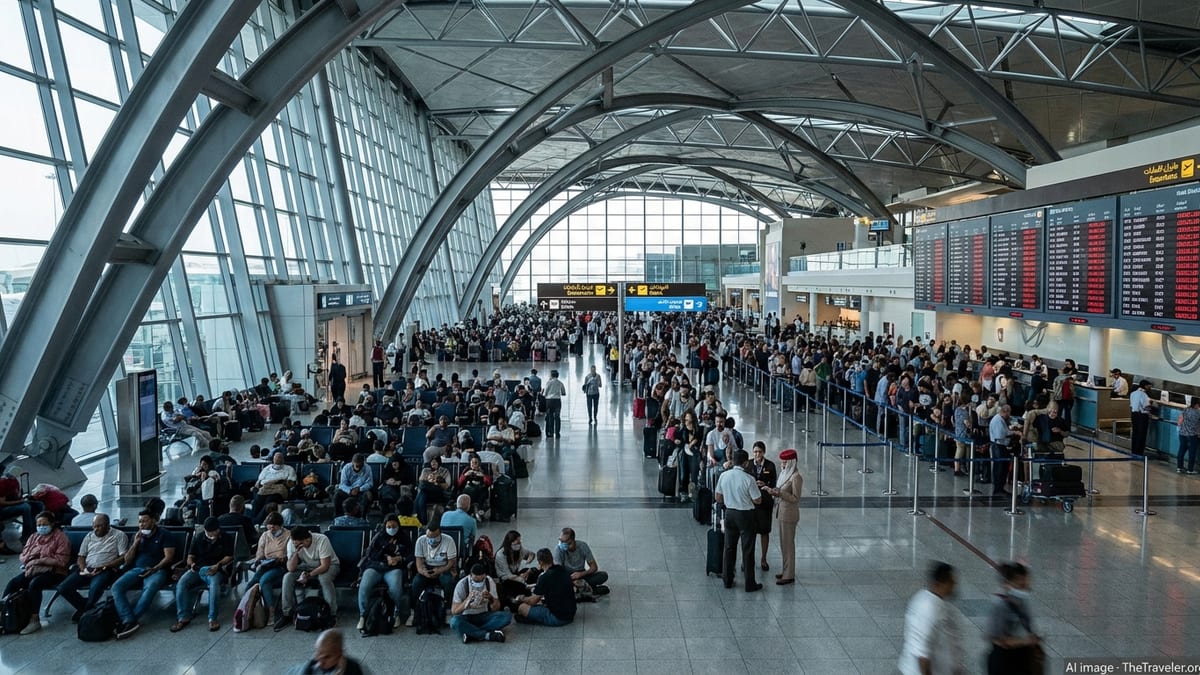
Updated wording highlights transit risks through Gulf hubs
Recent updates to Australia’s Smartraveller platform have drawn new attention to how official advisories are meant to be interpreted when planning complex itineraries through the Middle East. The guidance clarifies that a Level 3 “reconsider your need to travel” alert is not limited to travellers staying in a country but also covers those passing briefly through its airports.
Publicly available commentary summarising the changes notes that statements such as “reconsider your need to travel also means reconsider your need to transit” have been added or highlighted in connection with Level 3 destinations in the Gulf. This follows a broader review of advice for major aviation hubs in the United Arab Emirates, Qatar and neighbouring states, where large numbers of Australians connect on long-haul routes between Australia, Europe and Africa.
Travel industry bulletins and specialist aviation outlets report that the shift is particularly significant for passengers booked on popular one-stop options via Dubai, Abu Dhabi and Doha. While these hubs remain operational and continue to handle high passenger volumes, the clarified advice signals that Australians are expected to weigh up security and disruption risks even when they do not plan to leave the airport transit area.
The move comes after a period of volatility linked to conflict and tension across parts of the Middle East, which has led to periodic spikes in travel warnings and, at times, temporary “do not travel” classifications. The current Level 3 setting for several Gulf states reflects an assessment that the situation has improved from the most severe phase, but still warrants additional caution for both stays and transits.
How “reconsider travel” differs from “do not travel”
Smartraveller’s advisory scale ranges from Level 1 “exercise normal safety precautions” to Level 4 “do not travel”. A Level 3 alert, framed as “reconsider your need to travel”, sits one step below the highest level and is designed to prompt Australians to seriously question whether a trip or routing is essential in light of heightened risk.
Guidance materials explaining the system state that “do not travel” advice applies to all forms of presence in the country, including transit and layovers. Travel and consumer reports now highlight that the same principle is intended to apply by extension at Level 3 for the Middle East, where some risks may be associated with being in or near major transport facilities even for short periods.
Insurance industry documents and consumer advocacy resources indicate that many policies treat official advisories as a key reference point when deciding coverage. Some policy wording explicitly links exclusions to Level 3 and Level 4 advice, noting that assistance or claims may be limited if a traveller chooses to visit or transit through a location that is the subject of higher-level government warnings.
This interaction between official advice and private insurance decisions is one reason why the clarification around transit has drawn such attention. A traveller who assumes that a Level 3 warning does not apply to a two-hour layover may find that both government guidance and their insurer view the risk in broader terms, potentially affecting what support is available if flights are disrupted or an incident occurs.
Knock-on effects for popular long-haul routes
The Middle East’s role as a global aviation crossroads means that any shift in perceived risk quickly reverberates through airline schedules, booking patterns and traveller behaviour. Carriers based in the region have spent years building extensive networks linking Australian cities with Europe, the United Kingdom and Africa, often offering competitive fares and convenient one-stop connections.
Since the clarification that “reconsider travel” also encompasses transit, travel trade journals and frequent flyer forums have reported a rise in questions from passengers about alternative routings that avoid certain hubs. Some Australian travellers are reportedly exploring options via Southeast Asia or North Asia instead, trading longer travel times or higher fares for itineraries that do not cross through Gulf airports carrying Level 3 advisories.
At the same time, there are indications that many travellers continue to fly via the Middle East, particularly where alternatives involve multiple extra stops or extensive detours. For these passengers, the updated messaging is less about forcing route changes and more about encouraging them to remain informed about security conditions, allow extra time for connections and maintain flexible plans in case of sudden disruptions.
Aviation analysts note that airlines typically maintain services to destinations that remain open and are judged operationally safe, even where governments advise higher levels of caution. However, route planners and scheduling teams closely monitor official advisories, regional tensions and demand trends, adjusting capacity and timings when traveller confidence appears to shift.
Practical considerations for Australians planning trips
For Australians now reviewing future trips, the clarified Smartraveller wording means itineraries should be checked not only for final destination countries but also for any intermediate stops. Travellers who booked tickets months in advance, before the most recent language changes, may wish to revisit their routing in light of the new emphasis on transit considerations.
Consumer travel guidance suggests that passengers begin by reviewing their airline’s change and cancellation policies, as many lower-cost fares may carry substantial fees for voluntary rerouting. Where the official advisory level has risen since booking, some carriers may offer more flexibility, but this is generally assessed case by case and is not guaranteed.
Prospective travellers are also being advised by public information campaigns and travel insurers’ published materials to read policy documents carefully before departure. Particular attention is recommended for clauses related to government travel warnings, acts of war or terrorism, and exclusions that may apply once a destination is placed at Level 3 or above. Comprehensive coverage that remains valid in higher-risk regions can be more costly and may involve additional eligibility checks.
Experts in risk-aware travel planning commonly recommend that Australians register their international journeys with appropriate consular services, keep family members informed of their routing and retain digital copies of travel documents. Even when incidents are unlikely, such steps can smooth communication if disruptions occur at short notice in or around major transit hubs.
Broader context of Middle East security concerns
The clarification around transit comes against a backdrop of ongoing instability in parts of the Middle East, where periodic escalations have at times prompted widespread airspace closures, diversions and airport lockdowns. International coverage over recent months has described how conflict flare-ups can ripple rapidly through global aviation networks, stranding passengers or forcing airlines into long detours.
In this context, Smartraveller’s decision to emphasise that Level 3 guidance extends to transits reflects a cautious approach to managing Australians’ exposure to risk in a region where conditions can change with little warning. While not a blanket prohibition on travel, it signals that journeys touching Middle Eastern hubs require a higher threshold of justification and preparation than more routine routes.
Other governments have issued parallel advisories urging citizens to postpone non-essential trips to some Gulf states, particularly where security assessments cite potential threats to transport infrastructure. These advisories often stop short of instructing airlines to halt flights, leaving individual travellers, carriers and insurers to make case-by-case decisions based on their own risk calculations.
As northern summer peak travel continues, the situation underscores how rapidly shifting geopolitics can intersect with everyday travel planning. For many Australians, the latest Smartraveller messaging serves as a reminder that a simple transit stop, once treated as a neutral space between destinations, may now carry its own set of considerations when it sits within a region subject to elevated travel warnings.