


More news on this day
Rail operator SNCF has restored services on the key corridor south of Bordeaux after a six-day shutdown caused by wildfires in the Gironde, gradually reopening a route that links the Nouvelle-Aquitaine region with the French Basque coast and Spain at the height of the summer travel season.
Get the latest news straight to your inbox!
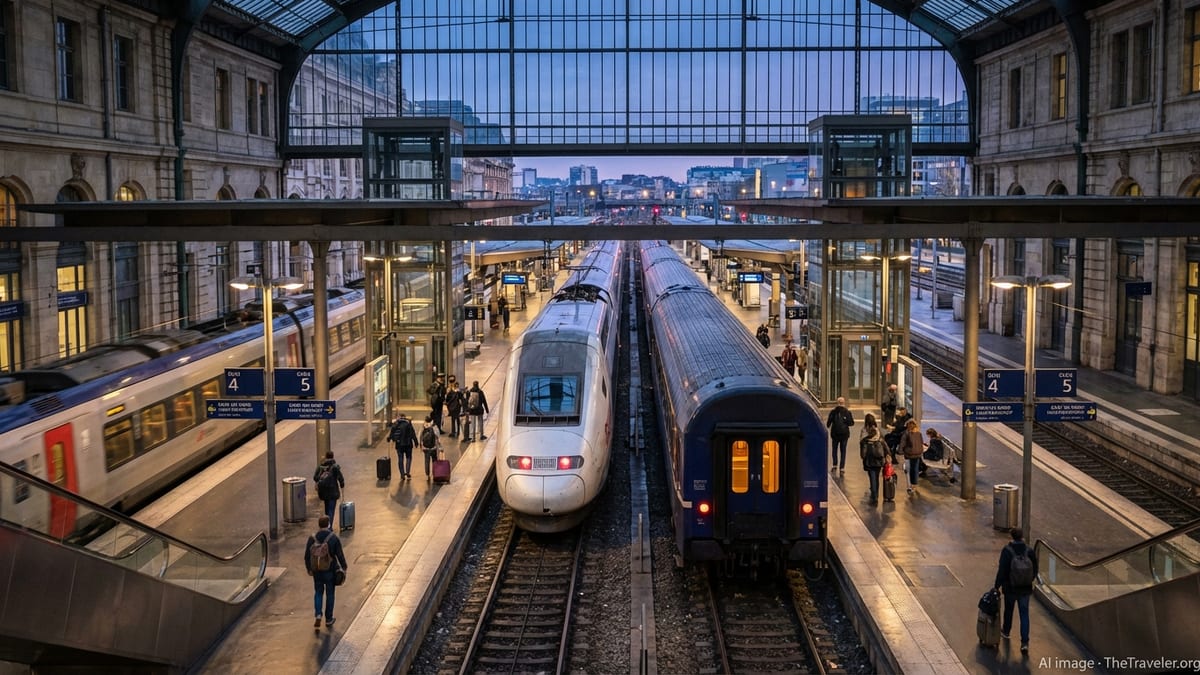
Key Bordeaux–southwest axis reopens after wildfire damage
Published coverage indicates that trains resumed on the line between Bordeaux and the Landes on Saturday, following nearly a week of cancellations as fire crews tackled major blazes in forested areas south of the city. The interruption had halted high-speed and regional services toward destinations such as Arcachon, Dax, Bayonne, Biarritz and Hendaye.
Reports from local media and traveler updates show that the suspension initially applied to all traffic south of Bordeaux, with TGV services from Paris terminating at Bordeaux Saint-Jean and no trains running beyond Morcenx. The line is a critical segment of the Atlantic axis that connects northern France with the Basque Country and the Spanish border, meaning the closure quickly produced significant knock-on delays and capacity constraints.
According to publicly available information, infrastructure managers focused first on securing the trackside environment in the fire zone, including overhead power lines, signaling equipment and lineside vegetation. Only after those inspections were completed and access routes for emergency services confirmed safe did planners authorize a staged return of traffic, prioritizing core long-distance links.
Initial timetables suggest that services are restarting with adjusted frequencies and extended journey times while temporary speed restrictions remain in place through the affected sector. Rail users are being advised through digital channels to check individual trains on the day of travel, as patterns may evolve over the coming days.
Six days of disruption at the height of the summer season
The six-day interruption came during one of the busiest periods of the year for rail travel in France, coinciding with peak holiday departures and ongoing international tourism to the Atlantic coast. Published coverage and social media posts from travelers describe crowded concourses in Bordeaux and a surge in demand for alternative routes via Toulouse and other inland lines.
Publicly available information shows that, during the closure, SNCF suspended ticket sales on affected services and offered fee-free exchanges or refunds for passengers booked to travel through the wildfire zone. Some long-distance passengers were rerouted onto remaining seats on trains to alternative destinations, while others switched to rental cars and long-distance coaches, adding extra pressure to already constrained road networks around Bordeaux.
Local accounts from the Gironde and Landes regions indicate that the loss of direct trains also created challenges for tourism-dependent communities along the coast. Resorts such as Arcachon and the beaches of the Landes typically rely heavily on rail links from Bordeaux and Paris, both for day-trippers and for longer-stay visitors who prefer not to drive. The closure temporarily reduced accessibility just as many businesses were entering their peak weeks.
Although air services to Bordeaux–Mérignac airport continued to operate, reports from travelers suggest that onward rail connections from the city toward the coast and Basque Country were either unavailable or heavily disrupted until the line reopened. This contributed to longer door-to-door journey times for both domestic and international visitors.
Safety inspections and gradual ramp-up of services
Background documentation on the French rail network indicates that any incident affecting trackside equipment triggers a multi-stage process before normal operations can resume. After the fires south of Bordeaux, this involved detailed checks of rails, sleepers, ballast and catenary, as well as verification of signaling and communications systems exposed to heat and smoke.
Publicly available guidance from SNCF Réseau outlines how such events are classified and managed, with phased scenarios that range from immediate suspension of traffic to controlled restoration once infrastructure integrity is confirmed. In the case of the Gironde fires, the proximity of flames to the right-of-way and the need to keep access open for emergency vehicles led to the full closure of a long stretch of the main line.
Reports indicate that, as conditions improved and fire intensity decreased, rail planners introduced a restricted number of test and positioning movements before reintroducing commercial services. Trains are understood to be operating under local speed limits through the most affected segments, a standard measure that allows teams to monitor infrastructure behavior in real conditions while limiting stress on components.
Operational plans also appear to include additional staff deployment at key junctions and stations to manage residual disruption, with contingency paths preserved in case renewed firefighting operations require rapid adjustments to traffic.
Ongoing impact on travelers and booking conditions
While the physical reopening of the line marks a turning point, the effects on passengers are expected to continue for several days. Published travel advisories for the region highlight the risk of short-notice timetable changes as operators refine their schedules and as any remaining works are completed along the corridor.
Booking platforms and news reports indicate that SNCF is maintaining flexible exchange and refund conditions for journeys directly affected by the fire-related closure. Passengers whose trains were canceled during the six-day period are generally eligible for rebooking at no extra charge or reimbursement under existing passenger rights frameworks, though processing times may vary.
For upcoming departures, publicly available information encourages travelers to verify the status of their train on the morning of travel and to allow extra time for connections in Bordeaux, particularly for itineraries that combine high-speed services with regional links toward smaller coastal towns. Some services may run with reduced capacity if rolling stock and crew diagrams have not yet fully returned to their pre-incident patterns.
Travel forums and local guides suggest that visitors with tight schedules, such as same-day transfers to Spain or to more remote Atlantic resorts, consider building additional buffer time into their plans in case of residual congestion on the reopened section.
Wildfire risk and infrastructure resilience in southwest France
The six-day suspension south of Bordeaux has drawn renewed attention to how climate-related risks intersect with critical transport links in southwest France. The corridor crosses extensive pine forests in the Gironde and Landes, areas that have seen repeated wildfire episodes in recent summers, affecting both local communities and the broader regional economy.
Recent official and academic publications note that France’s rail infrastructure managers are increasingly incorporating extreme weather and wildfire scenarios into maintenance and investment planning. This includes vegetation management along rights-of-way, improved monitoring of assets exposed to high temperatures, and contingency routing options where parallel lines exist.
In the case of Bordeaux and the Atlantic coast, the main line to the southwest carries a mix of high-speed, intercity and regional traffic, leaving limited spare capacity when sections are forced out of service. Transport analysts cited in public reports argue that diversifying routes and strengthening coordination between road, rail and emergency services could help reduce the disruption from future incidents of a similar scale.
For summer travelers, the reopening of the route south of Bordeaux signals a return of a key option for reaching the Atlantic beaches and the Basque Country by train. However, the events of the past week serve as a reminder that, in a region where wildfire risk is rising, flexibility and real-time information are likely to remain essential parts of planning any long-distance journey.