


Snorkeling can be the highlight of a family beach holiday, but only if your child feels comfortable, safe and able to see the underwater world clearly. That starts with choosing the right kid-size snorkel gear and taking the time to test it before you ever step onto a reef or join a boat tour. This guide walks you through masks, snorkels, fins, life vests, rash guards and supervision strategies, with real-world examples of what works for families and what to avoid.
Get the latest updates straight to your inbox!
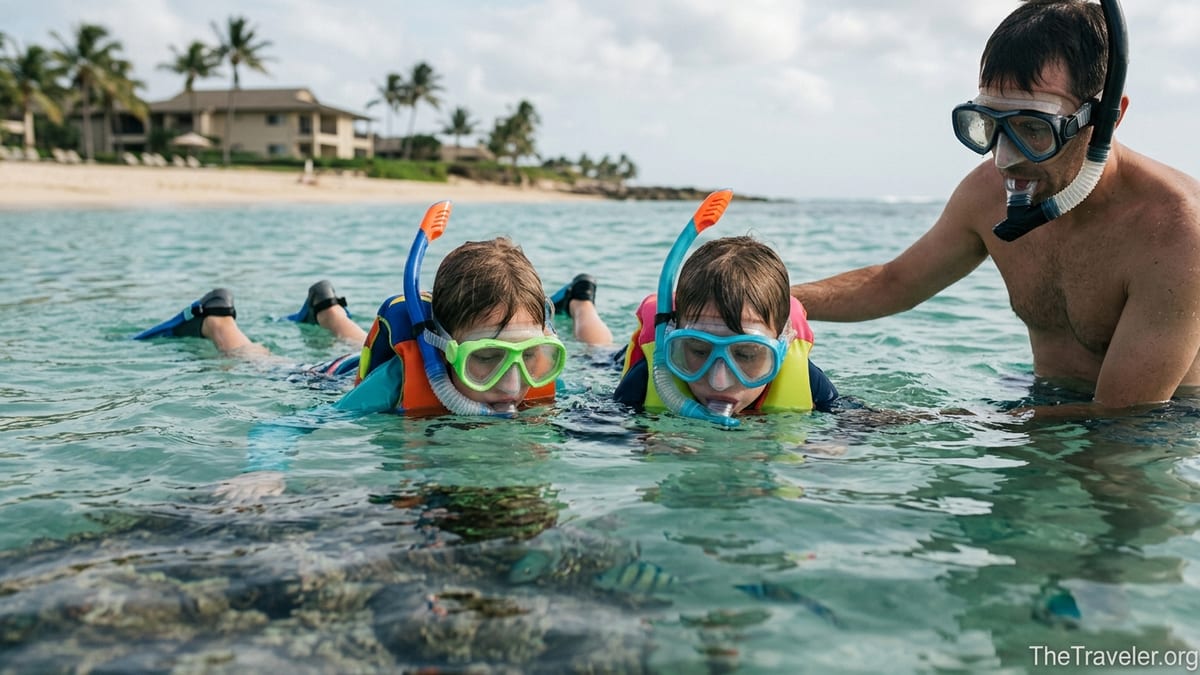
Why Kid-Specific Snorkel Gear Matters
Walk into any beach shop in Hawaii, Florida or Mexico and you will see walls of bright plastic masks and fins marketed to children. Many of these are toy-grade sets that look fun in the aisle but leak, fog and fall off in real water. A good rule of thumb for parents is to treat kids’ snorkel gear like you would a bicycle helmet: it needs to fit properly, stay put and function reliably rather than just look cute or cheap.
Dedicated kids’ snorkel sets from established water-sports brands are designed around smaller faces and lighter bodies. For example, the Cressi Mini Palau youth set and Seavenger Junior sets are widely available in the United States and typically cost around 50 to 80 dollars for mask, dry snorkel and adjustable fins. These use soft silicone skirts and tempered glass lenses similar to adult gear, but in reduced sizes so the mask can actually seal on a small face and the fins do not twist a child’s knees or ankles.
Parents sometimes assume a “small” adult mask will work for an 8- or 9-year-old. In practice, that often leads to water seeping in from under the eyes or around the cheeks, and children quickly lose confidence. A true junior or “mini” mask is shallower, narrower and has a shorter distance from nose to chin. The difference is obvious when you hold an adult mask over a child’s face and see the skirt extending well past their temples.
Investing in kid-specific gear also pays off in energy and warmth. Properly sized fins help propel children gently without overworking their small leg muscles, and a well-fitted mask allows them to relax and breathe instead of constantly resurfacing to clear leaks. This can be the difference between a 5-minute struggle and a 30-minute, memory-making swim over a calm reef.
Choosing a Child-Size Mask and Dry Snorkel
The single most important piece of kids’ snorkel gear is the mask. A simple fit test works the same way in a dive shop in Key Largo as it does at a sporting goods chain in Denver. Have your child place the mask on their dry face without using the strap, then inhale gently through the nose. If the skirt seals correctly, the mask will suction and stay in place for a second or two on its own. If it falls off or you see gaps along the cheeks or under the nose, try a different model or smaller size.
Look for a mask with a soft silicone skirt and an easily adjustable strap. Avoid rigid plastic skirts or very stiff rubber, which often appear in low-price packs at big-box stores. On the shelf, these might be labeled for ages 5 to 12 and cost under 20 dollars, but in the pool they frequently pinch or fail to seal. By comparison, a mid-range kids’ mask from brands like Cressi, Mares or US Divers will usually have a softer feel if you press the edge against your own wrist, and that softness transfers directly to comfort on your child’s face.
For the snorkel, a “dry-top” design is generally the most forgiving for kids. These have a small float or valve at the top that closes when a wave splashes over or when a child dips below the surface, helping to keep water out of the tube. Many kid-friendly sets explicitly advertise a dry snorkel with a purge valve near the mouthpiece, which makes it easier for children to blow out any water that does enter. When you are looking at packaging in a store near the beach, phrases such as “splash guard,” “dry top” and “purge valve” are worth prioritizing for younger users.
One area where parents should be particularly cautious is full-face snorkel masks that cover the entire face and integrate the snorkel into the mask. Some families find them comfortable, but there have been safety concerns around certain models, including a 2026 warning from the US Consumer Product Safety Commission about specific full-face masks and a number of case reports involving children and potential carbon dioxide buildup. For kids, traditional separate mask and snorkel sets are still the safer default, and they also teach skills that transfer easily to swim lessons and future scuba training.
Picking Fins That Help, Not Hinder
Fins are where it is most tempting to “buy big so they last.” Unfortunately, oversized fins can be more than just annoying. When foot pockets are too large, children clench their toes and ankles to keep fins from slipping off, which can cause cramps and strain. Long, stiff blades make it difficult for smaller legs to kick smoothly, and can increase the risk of bumping coral or other swimmers during a tour.
For family travel, short-blade or “snorkeling” fins are usually ideal. Many kids’ sets use open-heel designs with an adjustable strap, and are sized in flexible ranges such as 9 to 13 or 1 to 4 in US shoe sizes. A good practical test is to have your child try the fins on dry, then jump lightly in place and walk a few steps on a padded surface. The heel strap should keep the fin snug without digging in, and the front of the foot should not slide around. If a child can easily kick off the fin sideways with a shake, it is too big.
Parents shopping online will often see gear bundles branded as “junior” or “youth” with comments mentioning use in destinations like Cancun, Maui or the Florida Keys. Checking real-world feedback about how often fins slipped off or caused blisters can be almost as valuable as the size chart. A common pattern in reviews is that families who stick with reputable water-sports brands or sets tested by multiple users report fewer problems than those who chose unbranded sets based only on low price.
For toddlers who are just playing at the water’s edge or in a hotel pool, fins may not be necessary at all. At that age, practicing with a mask and snorkel in waist-deep water is usually more beneficial than adding propulsion. Older children who plan to join guided reef excursions or boat trips will benefit from properly sized fins because they allow them to keep up with adults in light current without working as hard.
Life Vests, Snorkel Vests and Rash Guards
Even confident swimmers should have some type of flotation when snorkeling in open water, especially where there may be waves, current or boat traffic. For younger children, a US Coast Guard approved life jacket in the appropriate weight category remains the gold standard on boats and at busy beaches in the United States. These vests are designed to keep a child’s head above water even if they become tired or momentarily panicked.
For older kids and teens who can already float and swim unassisted, a dedicated snorkel vest can be a comfortable compromise. These inflatable vests are commonly provided by tour operators in places like Hawaii or the Caribbean and are meant to be worn over a rash guard or swim shirt. Parents can partially inflate the vest so the child has gentle lift at the surface but can still duck under briefly to see fish. When buying your own, look for models clearly labeled for youth or with a chest size range that realistically matches your child rather than assuming an adult “small” will adjust down far enough.
Rash guards and swim shirts play a quieter but crucial safety role: protecting children from sun and minor scrapes. A long-sleeve, UPF 50 rated rash guard can eliminate the need to constantly reapply sunscreen on shoulders and backs during a two-hour snorkel session, and reduces the risk of sunburn that might otherwise cut a trip short. Many major swim brands now offer kids’ rash guards in the 20 to 40 dollar range, and parents can often find them in resort shops alongside snorkel sets, especially in sunny destinations where UV exposure is intense.
When checking tags, it is worth confirming that the top specifically lists a UPF rating, ideally UPF 50. Some generic swim shirts look similar but do not necessarily block as much UV. For practical travel packing, a single long-sleeve rash guard per child, combined with a broad-brimmed hat for boat rides and reef-safe sunscreen on exposed areas, will usually cover most family snorkeling scenarios.
Pool Testing and Comfort Before You Hit the Ocean
One of the most useful steps families can take is to treat the hotel pool or a calm lake as a test lab before venturing into open water. On the first afternoon of a beach holiday, have children try their masks, snorkels and vests in waist-deep pool water. Let them take their time adjusting straps, clearing minor leaks and practicing breathing through the snorkel with their face in the water.
A common real-world pattern is that gear issues show up almost immediately in the pool. Maybe the mask fogs constantly, a fin rubs one heel or the snorkel mouthpiece feels too large. These are small problems when you are ten steps from a towel and a beach shop in Kona or Cozumel, but they can feel overwhelming if you discover them for the first time halfway through a paid boat trip. Early pool sessions give you time to swap out a mask, buy a small bottle of anti-fog or add thin neoprene socks under fins if a child complains about rubbing.
Comfort also includes emotional comfort. Children who have never breathed through a snorkel may panic briefly the first time they submerge their face and hear their own breathing echo in the tube. Practicing slow, relaxed breaths in the shallow end, with a parent holding their hand, can transform that nervousness into excitement. If a child continues to struggle, it can be helpful to let them use just the mask while holding a parent’s shoulder and breathing through the mouth or nose until they are ready to add the snorkel.
Parents should pay attention to how long kids can stay relaxed in the pool without shivering. A child who is cold after 10 minutes in a shaded hotel pool may tolerate even less time in wind-exposed ocean water. In cooler destinations such as California or parts of the Mediterranean outside peak summer, adding a thin shorty wetsuit or at least a thick rash guard and swim leggings can dramatically increase how long children stay comfortable.
Supervision, Safety Rules and What Not to Buy Too Big
No amount of gear can replace close adult supervision when kids are snorkeling. Families should plan for a ratio of at least one attentive adult in the water for every one or two children, especially under age 10. On a guided tour, that might mean one parent stays with a younger child near the boat while another explores slightly farther with a confident older sibling. Many experienced guides in popular spots like Hanauma Bay or Key West will quietly recommend that one adult snorkel without fins or with minimal gear so they can maneuver easily to assist children if needed.
Before entering the water, it helps to agree on simple rules: stay within arm’s reach of your adult, keep your vest on fully fastened, and signal by lifting one hand if you want to stop or feel uncomfortable. Older children can also learn to watch out for boat lanes, shallow coral heads and stronger surge near rocky points. Parents should be cautious about pushing distance or depth on the first outing. Ten relaxed minutes over a sandy patch with a few fish is better than 40 minutes of tears on a choppy outer reef.
In terms of buying strategy, the idea of “growing room” can be risky with safety gear. Life jackets, snorkel vests, masks and fins should all be chosen for current fit rather than future growth. An oversized life jacket can ride up around a child’s face in the water, and an oversized mask or snorkel can make it difficult for them to clear water effectively. If you are trying gear on in person, adjust straps snugly and have your child move, twist and gently bob as they would in waves to make sure nothing shifts dramatically.
The one area where it may be reasonable to allow a little extra room is in rash guards and swim shirts, which can fit slightly loose without affecting safety. Even here, tops that are so large they balloon or trap air can ride up and expose skin to the sun. In general, parents can save money by choosing versatile colors and unisex designs in mid-range brands, and then passing gear down to younger siblings or cousins once a child outgrows it rather than buying oversized in the first place.
Real-World Buying and Renting Tips for Traveling Families
Most resort destinations that attract family travelers offer a mix of rental gear and retail shops. In Hawaii, for instance, you will find everything from basic rental sets at beachfront kiosks for around 10 to 20 dollars per day to multi-day rentals from dive shops that include higher quality masks and fins. Similar patterns exist in Caribbean islands and Florida Keys towns that host snorkel tours. Renting can be practical if your child is still growing quickly or if you rarely snorkel, but it is wise to bring at least your own kid-fitted mask from home.
Families who travel frequently often prefer to invest in a complete personal set for each child. A mid-range setup in the United States might look like this: a junior mask and dry snorkel combo for 30 to 50 dollars, adjustable short fins for 30 to 40 dollars and a long-sleeve UPF 50 rash guard for 25 to 35 dollars. Add a basic mesh bag for carrying gear and you still stay well under the cost of several days of rentals on a typical week-long trip, while ensuring familiarity and consistent fit.
When ordering online ahead of a trip, consider buying from retailers that accept easy returns so you can test at home. Try all gear in a bathtub or local pool weeks before departure, rather than waiting until you arrive at your destination. If something does not feel right, you will have enough time to exchange sizes. Packing-wise, kids’ fins are often short enough to fit diagonally in a carry-on suitcase; placing masks in their original boxes or a padded corner of the bag helps protect the tempered glass from impacts.
On site, do not hesitate to ask tour operators or snorkel rental counters about child-appropriate gear. Many operators keep smaller vests, masks and fins specifically for younger guests, and experienced staff can help adjust straps or swap sizes on the spot. If the gear offered does not seem to fit your child securely, it is reasonable to use your own mask and snorkel while perhaps borrowing just a vest from the tour company if required.
The Takeaway
Successful, low-stress family snorkeling comes down to three pillars: properly sized kid-specific gear, patient practice in safe water and realistic expectations about time and conditions. Compact junior masks and dry snorkels from reputable brands, short adjustable fins and well-fitted life or snorkel vests help children feel secure and capable. Add a good rash guard and you solve both comfort and sun exposure in one step.
Families who take an afternoon to test equipment in a pool, tighten straps and troubleshoot leaks usually find that open-water outings are dramatically easier. When children already trust their gear and know what it feels like to breathe calmly through a snorkel, they can spend their energy marveling at fish rather than battling foggy lenses or slipping fins. In turn, parents can focus more on the shared experience and less on constant problem-solving.
For most kids, snorkeling should feel like an easy extension of playing in the pool: relaxed, buoyant and closely supervised. Choosing not to buy gear too big, staying conservative with conditions and keeping outings short and positive will help build a lifelong comfort in the water. The right equipment is simply a tool to unlock that comfort, one child-sized mask and fin kick at a time.
FAQ
Q1. At what age can kids start snorkeling safely?
Many children can begin basic snorkeling around ages 5 to 6 in calm, shallow water with a properly fitted mask and very close adult supervision. Younger toddlers can still enjoy looking underwater with a mask while standing or being held, but they should not rely on snorkels for breathing.
Q2. Should I buy my child a full-face snorkel mask?
Given ongoing safety concerns and the complexity of full-face snorkel masks, most experts still recommend traditional separate mask and snorkel sets for children. They are easier to remove quickly, simpler to clear and better for teaching transferable water skills.
Q3. Is it better to rent or buy snorkel gear for kids?
If you snorkel regularly or have multiple children, buying kid-specific masks and fins often makes sense, especially when you can test fit at home. For occasional trips, you might rent fins and vests at your destination but still bring your child’s personal mask and snorkel for consistency.
Q4. How tight should a child’s mask be?
The mask should feel snug but not painful. It should pass the suction test on a dry face with only light inhalation, and the strap should sit comfortably high on the back of the head without leaving deep marks after a short swim.
Q5. Do kids really need a dry snorkel?
A dry-top snorkel is not strictly required, but it can make snorkeling much easier for beginners who are nervous about water entering the tube. The float or valve at the top helps reduce accidental gulps, which often boosts confidence during early sessions.
Q6. What kind of flotation is best for children while snorkeling?
For boat trips and busy beaches, a Coast Guard approved life jacket in the correct weight range is the safest choice for younger children. Older, confident swimmers may use a youth snorkel vest for gentle lift at the surface, but it should be properly sized and worn over a rash guard.
Q7. Are fins necessary for kids in shallow water?
In very shallow, calm water close to shore, fins are optional and some children may actually feel more coordinated without them. Fins become more helpful on guided reef tours or in areas with light current where extra propulsion reduces fatigue.
Q8. How can I stop my child’s mask from fogging?
First, make sure the inside of a new mask has been cleaned of factory film with gentle, non-abrasive soap. Before each swim, use a commercial anti-fog solution or a small amount of baby shampoo diluted with water, then rinse lightly so a thin film remains on the lens.
Q9. What should my child wear under a snorkel vest or life jacket?
A long-sleeve UPF 50 rash guard is ideal under vests because it prevents chafing and adds sun protection. For cooler water, pairing the rash guard with swim leggings or a thin shorty wetsuit keeps children warmer and more comfortable for longer sessions.
Q10. Is it okay to buy snorkel gear a size up so it lasts longer?
For safety-critical items like masks, snorkels, fins and life jackets, it is better to buy for current fit rather than growth. Oversized gear can leak, slip or ride up in the water, increasing risk and frustration. If you want longevity, choose adjustable designs and hand items down as children grow.