


Buying snorkel gear for the first time can feel strangely stressful. You are imagining sea turtles in Hawaii or colorful reefs in Cozumel, but you are also staring at a wall of masks and plastic sets that all look the same and range from under 30 dollars to over 200. The right beginner kit will make snorkeling feel easy and fun from day one. The wrong one can mean leaky masks, gag-inducing snorkels and sore feet before you even find the fish. This guide walks you through the essentials so you can buy with confidence, using real examples of masks, dry snorkels, fins and travel sets that first-time snorkelers actually use on today’s reefs.
Get the latest updates straight to your inbox!
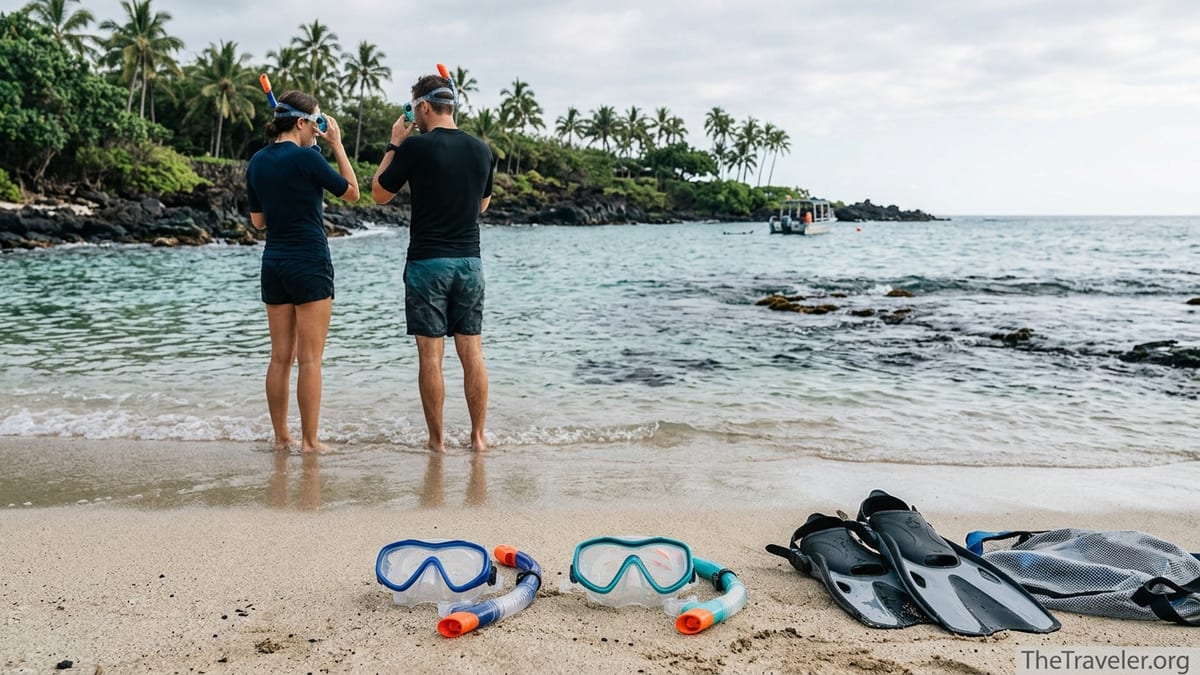
How to Think About Your First Snorkel Kit
The biggest mistake beginners make is shopping by color and price first, and by fit and function second. A neon set in a beach shop in Oahu for 39 dollars might look fine on the rack, but if the mask skirt is stiff plastic instead of soft silicone it will probably leak as soon as you duck under a wave. A better approach is to decide what kind of trip you are taking, how often you expect to snorkel in the next few years, and then choose gear that matches that reality.
For example, if you are flying from Denver to Maui for one week and you mostly want to float over shallow reefs, an all-in-one travel set like the Cressi Palau SAF set, typically around 90 to 120 dollars, can be ideal. It includes an easy-fitting silicone mask, a dry-top snorkel and short adjustable fins that fit in a suitcase, plus a mesh bag to carry everything to the beach. If, on the other hand, you live in Florida and plan to snorkel every few weekends, you might do better buying a slightly higher-end mask and snorkel separately, and then adding fins later.
Think of snorkel gear as something you will likely keep for at least five years if you choose well. Replacing a leaking 25 dollar mask halfway through a trip in the Virgin Islands is both annoying and wasteful. Spending a bit more upfront on the pieces that matter most, especially the mask and snorkel, dramatically increases the odds that your first experience in the water will be relaxed instead of frustrating.
Choosing a Beginner-Friendly Mask
Your mask is the single most important piece of snorkel gear. If it leaks or pinches, nothing else really matters. Beginners should almost always look for a low-volume, tempered-glass mask with a soft silicone skirt. Well-known examples include the Cressi Onda and Marea masks used in several of the brand’s snorkel sets, as well as simple single-lens masks from U.S. Divers and TUSA in the 35 to 70 dollar range.
When you are in a dive shop in places like Key Largo or Kona, staff will often do a simple “suction test.” You place the mask on your face without using the strap, inhale slightly through your nose, and see if it stays in place for a few seconds. If it does, the skirt is probably sealing well against your face shape. If the mask immediately falls off or you feel air hissing in around your cheeks, try a different model. This quick test is worth doing even in a big-box store on the mainland before your trip.
Avoid very cheap masks that use hard plastic instead of silicone around the face. They tend to feel fine for 30 seconds in front of a mirror but will dig into your forehead and leak once waves push against them. Look closely at the packaging. Quality travel sets like the Cressi Palau or U.S. Divers Cozumel DX sets clearly note “100 percent silicone skirt” and “tempered glass lens.” Masks in the 20 to 30 dollar range without brand names or clear material information are more of a gamble, especially for people with smaller or wider faces.
If you wear prescription glasses and have a strong prescription, consider a mask that can take corrective lenses. Some dive centers in tourist hubs such as Cozumel and Bonaire rent prescription masks, but if you plan ahead you can buy a basic two-window mask from a known brand and have your optician order prescription lenses that pop into the frame. It is an investment, but seeing the reef clearly instead of through a blur makes a surprising difference in how much you enjoy snorkeling.
Dry-Top Snorkels: What Beginners Should Look For
Many people try snorkeling once with an old-fashioned snorkel that fills with water and decide that the activity is not for them. Modern dry-top snorkels are designed to prevent that experience. A dry snorkel has a splash guard and a small mechanical valve or float at the top. When a wave passes over you or you duck below the surface to look at a turtle in Hanauma Bay, the valve closes to keep most water out. When you resurface, the valve opens again so you can breathe normally.
A good example is the Cressi Supernova Dry snorkel, which is bundled in several of the company’s sets. It has a dry-top valve at the top and a purge valve at the bottom by the mouthpiece so that if any water does sneak in, you can simply blow gently and it exits through the purge instead of forcing you to cough. Similar designs appear in U.S. Divers’ Phoenix dry snorkels, often sold in the 30 to 40 dollar range or as part of 80 to 120 dollar sets.
For first-time snorkelers, especially those who are a bit anxious about breathing in the ocean, this style of snorkel is worth prioritizing. When you rent gear on a half-day boat trip in places like the Florida Keys, you might get a basic semi-dry snorkel without a true closing valve, which is fine if you are confident in the water but less forgiving for nervous beginners. Owning a proper dry snorkel means your breathing feels much closer to normal, which helps you relax and enjoy the reef rather than constantly thinking about waves.
Be cautious about extremely bulky full-face snorkel masks. Some travelers love them for casual floating in calm bays, and higher-end models from established brands can be safe when used correctly. However, cheaper versions sold online can have poor airflow, make it harder to equalize pressure if you dive down a few meters, and are not allowed on some guided tours. As a new snorkeler, a traditional two-piece setup with a separate mask and dry snorkel is still the most versatile and widely accepted choice.
Comfortable Fins and Travel-Ready Sets
Fins do not need to be aggressive or long to work well for beginners. In fact, short travel fins are often easier to control and pack. Open-heel adjustable fins like those in the Cressi Palau SAF set or the U.S. Divers Proflex line are designed to be worn barefoot or with thin neoprene socks. They have a flexible foot pocket and a strap with quick-adjust buckles, making them forgiving if your feet swell a bit in the heat or you share fins between family members with slightly different sizes.
On a family trip to St. John in the U.S. Virgin Islands, for example, it is common to see parents carrying a single large suitcase loaded with four sets of short fins, masks and snorkels. Each set packs into its own mesh bag and weighs around 3 to 4 pounds, which is manageable on most airlines. Travelers often comment that open-heel travel fins are easier to walk in when entering from rocky beaches in the Mediterranean or the Canary Islands because you can shuffle in carefully instead of tiptoeing in long, stiff fins.
When evaluating travel sets, hold the fins and flex them gently. You want a blade that bends smoothly rather than feeling like brittle plastic. The idea is to get efficient propulsion without straining your ankles. Entry-level sets from big sporting goods chains might be as cheap as 40 to 60 dollars for mask, snorkel and fins, but the fins are often the first component to crack or have straps fail. Sets from specialist brands typically start around 80 to 130 dollars for adults and use more durable materials.
Pay attention to sizing charts. A Cressi Palau fin labeled S/M will typically cover several shoe sizes, for example roughly men’s 4 to 7, while M/L might fit men’s 8 to 11. If you are between sizes and plan to wear thin reef socks to prevent blisters on a week-long trip to places like the Maldives or the Red Sea, it is usually safer to size up.
Budget vs Premium: Where to Spend and Where to Save
Beginner snorkelers often ask whether it is worth paying for a premium brand when you can see entire kits on online marketplaces for under 50 dollars. The honest answer is that you do not need top-tier professional gear, but there is a noticeable difference between no-name bundles and mid-range sets from established manufacturers like Cressi, U.S. Divers, TUSA or Mares.
On the budget side, you can expect to spend around 70 to 120 dollars for a decent adult travel set that includes a silicone mask, dry-top snorkel and short open-heel fins. The Cressi Palau SAF and similar sets from U.S. Divers’ Cozumel or Lux lines fall into this bracket and are widely used by vacation snorkelers in Caribbean destinations and Southeast Asia. These kits are a significant step up from resort rental gear, which is often heavily used and sized generically.
Premium setups start to matter if you foresee snorkeling frequently, have a difficult-to-fit face, or want specific features like ultra-clear glass, very soft skirts for sensitive skin, or prescription-ready frames. In that case, you might spend 80 to 150 dollars on a standalone mask such as a higher-end TUSA or Scubapro model, 40 to 60 dollars on a separate dry snorkel, and 80 to 150 dollars on more advanced fins. This kind of investment makes more sense for someone who plans multiple trips a year to reef destinations like Belize, Indonesia or the Galapagos rather than for a single cruise.
A smart compromise for many travelers is to buy a mid-range mask and dry snorkel at home, then rent fins at the destination. Masks and snorkels are more personal items and more likely to cause problems if they do not fit or are poorly maintained. Fins, on the other hand, are easier to clean and size, and most reputable snorkel tour operators in places like Cozumel, Maui or the Great Barrier Reef stock a wide range of sizes. This approach keeps luggage lighter and lowers upfront cost while still giving you the comfort of your own well-fitting mask and snorkel.
Common Mistakes First-Time Snorkelers Make With Gear
One of the most common gear mistakes is overtightening the mask strap. New snorkelers often pull the strap as tight as possible, thinking it will prevent leaks. In reality, this can distort the silicone skirt and create gaps, especially around the temples. The correct tension is just enough to keep the mask gently in place. When you are in the water off a beach in Curacao or Cancun, try loosening the strap slightly if you have persistent leaks, and make sure stray hair is not caught under the skirt.
Another frequent error is skipping the anti-fog step. Even good masks will fog if you go straight from the box into warm tropical water. Before your first use, gently clean the inside of the glass with a little non-abrasive dish soap and rinse thoroughly. On tour boats in Thailand or Mexico you will often see guides spit lightly into their masks, rub it around and rinse quickly in the sea as a basic anti-fog measure. You can also carry a small bottle of commercial anti-fog spray, usually under 10 dollars, which is useful if you wear contact lenses and prefer not to use spit.
Beginners also underestimate how tiring it can be to swim in chop with no fins or with fins that are too stiff. In places like Hawaii, where shore entries can involve dealing with small surf, having appropriately flexible fins can be a safety factor as much as a comfort issue. Choosing short, medium-flex fins and practicing a relaxed flutter kick in a hotel pool or shallow lagoon before venturing out to a deeper reef makes a noticeable difference in how long you can explore comfortably.
Finally, a lot of first-timers leave tags and packaging on until the day of their tour. It is far better to try everything in a local pool or calm bay at home if you can. Even five minutes of floating around with your mask and snorkel in a lake or community pool in the weeks before a big trip can reveal fit issues and let you adjust straps, trim any excess, and get used to breathing through the snorkel so that your first moments on a coral reef feel familiar rather than strange.
Real-World Buying Scenarios for Travelers
Imagine a couple from Chicago heading to the Riviera Maya for a resort week with one planned boat trip and several casual off-beach snorkels. They might visit a local sporting goods store in spring and find a wall of box kits between 40 and 80 dollars. If they choose a mid-priced set from a known snorkel brand, check that the mask skirt is silicone, verify the snorkel is labeled “dry-top” or “splash guard with purge valve,” and test the mask fit in the store, they will likely arrive in Mexico with gear that performs significantly better than the resort’s mixed rental pile.
Now picture a family of four flying to the Big Island of Hawaii. Airline baggage fees and trunk space in a rental car are considerations. In this case, buying four coordinated travel sets with short fins that nest inside each other, such as Cressi-style Palau kits or comparable options from U.S. Divers, makes sense. Each child can carry their own mesh bag, and the parents know that everyone has a correctly sized mask and snorkel that will not be fighting for limited sizes on a busy tour boat.
For a solo traveler backpacking through Southeast Asia, carrying full fins might be less attractive. Many long-term travelers in that situation opt to bring only their own mask and dry snorkel, perhaps spending 80 to 100 dollars total for quality pieces that pack into a corner of their backpack. They then rent fins day-by-day from local operators in Thailand, the Philippines or Indonesia for just a few dollars per excursion. This saves weight while still ensuring that the most personal and critical parts of the kit are familiar and reliably comfortable.
There is also the “test at home, upgrade later” scenario. A traveler might start with a budget-friendly Decathlon or big-box store set for a first trip to the Canary Islands, discover that they love snorkeling, and then upgrade the mask and snorkel before a later journey to the Maldives. The initial set still has value as a spare for guests or casual beach days, while the newer premium pieces become the main travel kit for more serious snorkeling adventures.
The Takeaway
For beginners, the best snorkel gear is not the flashiest or most expensive set on the shelf, but the kit that fits comfortably, keeps water out of your eyes and mouth, and is easy to travel with. Prioritize a soft silicone mask that seals well on your face, a true dry-top snorkel with a purge valve, and fins that are short, adjustable and flexible enough that your legs do not tire quickly. Established brands that focus on snorkel and dive equipment are usually a safer bet than anonymous bargain bundles, and mid-range travel sets around 80 to 130 dollars can provide an excellent balance of quality and convenience.
Where you are going, how often you will snorkel, and how much luggage space you have should guide whether you buy a full set, only a mask and snorkel, or piece together a more premium kit over time. Avoid common first-timer mistakes like overtightening your mask, skipping anti-fog preparation, or taking untested gear straight into open water. With a bit of planning and realistic expectations, your first snorkel kit can turn floating over coral gardens in Hawaii, Mexico or Greece into a relaxed, memorable highlight instead of a battle with leaking gear.
FAQ
Q1. Do I really need my own snorkel gear, or is rental equipment fine for a first trip?
Rental gear is acceptable for a single casual outing, but it is often heavily used and sized generically. If you plan to snorkel more than once or twice in a week, owning at least your own mask and dry snorkel greatly improves comfort and hygiene, and you can still rent fins at the destination to save luggage space.
Q2. How much should a good beginner snorkel set cost?
For adults, expect to spend roughly 70 to 120 dollars for a decent travel set that includes a silicone mask, dry-top snorkel and short adjustable fins from a recognized brand. Spending much less usually means compromises in fit or durability, while spending more tends to add refinements that matter most to frequent snorkelers.
Q3. What is the difference between a dry snorkel and a semi-dry snorkel?
A dry snorkel has a mechanical valve or float at the top that closes when submerged, greatly reducing how much water enters during waves or brief dives. A semi-dry snorkel has a simple splash guard that deflects surface spray but does not fully seal if the top goes under, so you may need to clear more water with a forceful exhale.
Q4. Are full-face snorkel masks safe for beginners?
Higher-quality full-face masks from established brands can be safe for relaxed surface use in calm water, but they are not ideal for diving below the surface, can feel hot, and some tour operators ban cheaper models. For flexibility and wide acceptance on boats and guided tours, a traditional mask plus separate dry snorkel is usually a better first choice.
Q5. How do I know if a mask fits my face properly?
Place the mask on your face without using the strap, inhale lightly through your nose and see if it stays in place for a few seconds. If it holds with gentle suction and you do not feel gaps around your cheeks or forehead, it likely fits. If it falls off immediately or pinches uncomfortably, try a different shape or size.
Q6. Should I choose open-heel fins or full-foot fins as a beginner?
Open-heel adjustable fins with short blades are usually best for beginners and travelers. They are easy to fit, can be worn barefoot or with thin socks, and pack compactly. Full-foot fins can work well if you snorkel mostly from sandy beaches and find a pair that matches your shoe size closely, but they offer less flexibility with sizing.
Q7. Can I snorkel comfortably without fins?
In very calm, shallow water you can float and look down without fins, but they add a lot of efficiency and control, especially in light current or mild surf. Fins let you move with smaller, slower kicks and help you get back to shore or the boat more easily, so they are strongly recommended for most destinations.
Q8. How should I pack snorkel gear for air travel?
Most travelers pack masks and snorkels in carry-on luggage to protect the glass and avoid loss, while fins and mesh bags go in checked bags. Short travel fins fit diagonally in standard suitcases. Rinse gear with fresh water at your destination, let it dry, and avoid storing it in direct sun or with sharp objects that could damage the silicone.
Q9. Are cheap anti-fog sprays worth buying, or is spit enough?
Spit works reasonably well for many people and is free, which is why you see guides use it on tour boats. However, a small bottle of commercial anti-fog solution, usually under 10 dollars, is more hygienic, especially if you wear contact lenses or share masks within a family. Using either method is better than skipping anti-fog entirely.
Q10. How long should a beginner snorkel set last?
With basic care such as rinsing in fresh water after use, drying out of direct sunlight and avoiding hard impacts, a mid-range snorkel set can easily last five years or more. Mask skirts may gradually yellow and straps can eventually wear, but for most vacation snorkelers a good-quality first kit will cover many trips before anything needs replacing.