


South Lake Tahoe has just leapt onto Expedia’s global watch list as the number one trending destination for 2027, after a reported near‑200 percent jump in searches. That kind of attention is no accident. Straddling the California and Nevada border, South Lake Tahoe blends big‑mountain skiing, clear‑water beaches and a full casino and dining scene into one compact resort town. This guide explains how to plan both summer and winter trips, with concrete examples of what to do, where to stay and what you can expect to spend.
Get the latest updates straight to your inbox!
Why South Lake Tahoe Is Suddenly Everywhere
Expedia and its sister brands have named South Lake Tahoe one of their Destinations of the Year, highlighting it as the fastest‑rising location on their list based on flight and accommodation searches. Local tourism officials report that searches on Expedia’s platforms are up roughly 195 percent year over year, putting South Lake Tahoe at the top of the company’s trending list for 2027. In practical terms, this means more flights, more package deals and more competition for the best lake‑view rooms in peak periods.
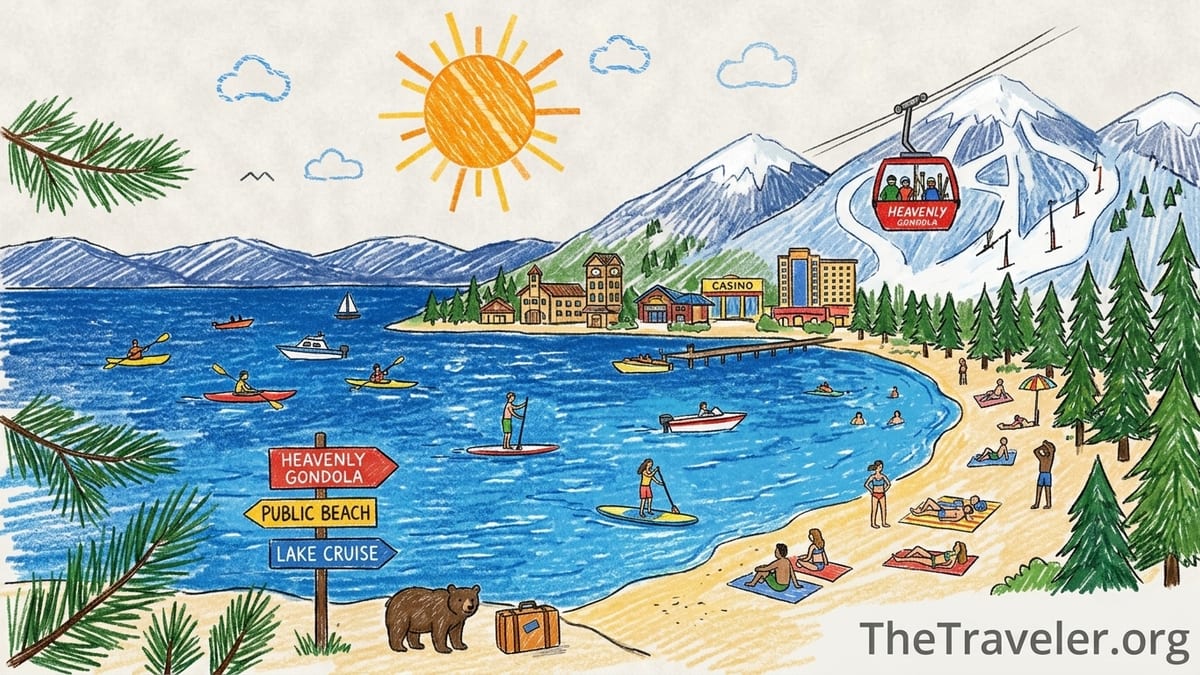
Part of the surge comes from how neatly South Lake Tahoe works in both winter and summer. In January you can ride the Heavenly Gondola directly from the pedestrian village to ski terrain that tops out around 10,000 feet. In July you can step off that same village plaza and be on a boat rental dock or a lakeside bar within minutes. Few mountain towns offer three major ski areas within an easy drive, a walkable core of hotels and casinos, and sandy public beaches all tied together by one small city.
Location helps, too. South Lake Tahoe is roughly a one‑hour drive from Reno‑Tahoe International Airport and about two hours from Sacramento International Airport, according to the Lake Tahoe Visitors Authority. That puts it within weekend range for West Coast travelers and on the radar for longer‑haul visitors who can combine it with San Francisco or Yosemite. The town itself is the largest community anywhere around Lake Tahoe, so visitors find a wider range of lodging and dining than in the smaller villages on the north and west shores.
For trip planners, the “fastest‑growing destination” label is a signal to book earlier than you might have in the past. In recent seasons, visitors have reported that key winter weekends such as Presidents’ Day and the week between Christmas and New Year’s Eve now sell out for central South Lake Tahoe hotels months in advance. The same is increasingly true for late July and early August lake‑view properties when school holidays and beach weather coincide.
Winter: Skiing Heavenly, Sierra‑at‑Tahoe and Kirkwood
South Lake Tahoe’s winter draw centers on three ski resorts: Heavenly Mountain Resort, Sierra‑at‑Tahoe and Kirkwood. Heavenly is the headliner, with around 97 marked runs and close to 30 lifts spread across California and Nevada slopes. It rises to a lift‑served elevation of about 10,040 feet, which usually helps keep snow coverage more reliable in low‑snow years. Sierra‑at‑Tahoe, about 25 minutes west of town on Highway 50, offers around 48 runs and a laid‑back, tree‑skiing atmosphere. Kirkwood, roughly a 45‑minute drive south on Highway 88, is known for steeper terrain and deep snowpacks.
Lift ticket prices change often, but current published ranges give a realistic planning benchmark. Time Out and other recent guides cite Heavenly’s daily window lift tickets in the range of about 170 to 275 dollars for adults in peak season, depending on the specific day and how early you buy. Visitors who purchase multi‑day passes or Epic‑brand season passes can usually reduce the per‑day cost significantly versus same‑day window rates. Sierra‑at‑Tahoe and Kirkwood sometimes price individual days slightly lower than Heavenly, but on busy Saturdays you should still plan for a triple‑digit lift ticket if you have not bought in advance.
Driving and parking are a key part of the winter experience. Heavenly offers several access points, including the California Lodge area, which currently provides free parking on many weekdays outside peak periods, according to resort transportation guidance. On peak winter weekends and holidays, however, a reservations system may apply at some base areas, and day‑use parking near the Heavenly Village gondola is managed by the City of South Lake Tahoe with hourly or daily fees. Sierra‑at‑Tahoe notes that general parking is free in its main lots, with a preferred zone available for around 35 dollars per day, while some days require a paid reservation in high‑demand periods. Kirkwood uses a mix of free day lots and paid or reservable premium parking near its main lifts.
Conditions can vary widely through the season. South Lake Tahoe’s city weather averages suggest roughly 88 inches of snowfall at town elevation in a typical year, with far more accumulation higher on the surrounding peaks. In a big winter this translates into frequent powder days at Heavenly and Kirkwood. It also means that chain controls and road closures on Highway 50 and Highway 88 are real possibilities. Many visitors build at least one “flex day” into their schedule to allow for storms, using it to ski a lower‑key day at Sierra‑at‑Tahoe, explore cross‑country and snowshoe trails near Echo Summit, or simply stay close to base in the Heavenly village.
Summer: Beaches, Boating and Alpine Trails
In summer, South Lake Tahoe essentially turns itself inside out. The focus moves from the lifts to the lakeshore, and the same hotels that serve skiers become beach bases. Popular public spots within or just outside the city limits include Pope Beach, Baldwin Beach and Nevada Beach. Day‑use fees for these managed beaches are generally in the ballpark of 10 to 15 dollars per vehicle, collected at entrance kiosks operated by federal land managers or concessionaires, and many lots fill by late morning on hot weekends.
Water activities range from simple swims and picnics to full‑day boat rentals. A basic tandem kayak rental at a lakeside outfitter near South Lake Tahoe often starts around 40 to 60 dollars for two hours in peak July dates, while small stand‑up paddleboards might rent for 30 to 50 dollars over the same timeframe. Powerboat rentals vary widely with size and season, but visitors can realistically expect to pay somewhere from 400 dollars for a few hours in a compact runabout up to 1,000 dollars or more for a full‑day pontoon boat over key holiday weekends, plus fuel.
Hiking and biking become the main alpine activities away from the shoreline. Trailheads along Highway 89 and near the Tahoe Rim Trail give access to high‑country routes overlooking Emerald Bay and Desolation Wilderness. Parking at some of these trailheads is free, while others use paid kiosks or digital payment systems in the roughly 5 to 15 dollar range per day. Many visitors use South Lake Tahoe as a base for half‑day hikes such as the moderate climb to Eagle Lake above Emerald Bay or sections of the Van Sickle Bi‑State Park that conveniently start just behind the Heavenly Village area.
Summer also brings a calendar full of events. Outdoor concerts at the lakefront outdoor arena on the Nevada side draw touring bands and can anchor a weekend trip, though tickets for big‑name acts often land well above 100 dollars once fees are included. On the California side, smaller festivals and farmers markets pop up in parks and along the main highway, while outfitters offer evening cruises with light appetizers and drinks that typically cost between 80 and 150 dollars per person depending on the vessel and duration. Travelers tying a Tahoe stop into a wider Nevada and California road trip often use these evening cruises or concerts as their main “splurge” experience.
Where to Stay: From Motel Strips to Lakeside Resorts
As South Lake Tahoe has climbed Expedia’s rankings, lodging prices have followed. Large hotel search engines report that the most expensive time to visit tends to be July, when some data sets show average nightly hotel prices for central South Lake Tahoe trending above 600 dollars for a mix of high‑end rooms. Broader overviews that include the city’s smaller motels and budget inns suggest that a typical July night still averages in the low‑ to mid‑hundreds, with two‑star properties commonly clustering around 60 to 100 dollars on quieter midweek dates and three‑star options starting near 80 to 120 dollars outside peak holidays.
In practical terms, this means that a couple aiming for a central, midrange hotel within walking distance of the Heavenly Gondola can expect many summer and winter weekend nights to price in the 200 to 300 dollar range if booked a few months ahead. Recent searches on major booking platforms show three‑star hotels near the village occasionally dropping under 150 dollars per night on shoulder‑season weekdays in May or early November, while four‑star casino‑hotel towers on the Nevada side have advertised some weeknight rates in the mid‑100s between major holidays, rising several times higher for New Year’s Eve.
Budget travelers often target older motels along Lake Tahoe Boulevard, a short drive or 15‑ to 20‑minute walk from the gondola area. Many of these independent properties offer basic queen rooms with parking and Wi‑Fi that can land between about 70 and 150 dollars per night outside the busiest windows. The trade‑off is that these properties typically lack on‑site restaurants and lake access, and they can book solid over event weekends and major storms when last‑minute skiers head up from the Bay Area.
Families or groups sometimes find better value in vacation rentals and condo hotels on both sides of the border. A two‑bedroom condo with a small kitchen near the ski shuttle routes may cost 300 to 450 dollars per night in January, but can accommodate four to six people, bringing the per‑person nightly rate down near or even below typical motel levels. When comparing, travelers should factor in cleaning fees, resort fees and parking charges, which can add 50 to 100 dollars per night or more to the sticker rate in some complexes.
Seasonal Costs and How to Build a Realistic Budget
Putting the pieces together, a realistic per‑day budget for South Lake Tahoe depends heavily on season and travel style. A winter weekend for two intermediate skiers staying in a midrange hotel within walking distance of Heavenly might look like this: 250 to 300 dollars per night for lodging, 400 to 500 dollars for two single‑day Heavenly lift tickets at or near window rates, 80 to 150 dollars for shared ski or snowboard rentals, and 120 to 200 dollars for meals and drinks if you eat out for every meal. That places a fully loaded ski day weekend in the general range of 850 to 1,150 dollars per day for two people before transportation.
Summer budgets can stretch further if you lean on the many free or low‑cost outdoor options. A couple staying three blocks off the lake in a simple motel might spend 150 to 200 dollars per night on lodging in June, 20 to 30 dollars on beach parking and day‑use fees, 60 to 100 dollars on a half‑day kayak or paddleboard rental, and 80 to 150 dollars on casual meals. That can keep a summer day for two in the neighborhood of 300 to 450 dollars, again excluding flights or gas. Adding one splurge, such as an evening lake cruise at 100 to 150 dollars per person, will raise the daily average.
Transport costs vary by origin. Travelers driving from the San Francisco Bay Area should factor in roughly 190 to 220 miles each way, which at contemporary fuel prices can translate to 40 to 80 dollars in gas for a standard rental car, plus parking fees near the lifts or in central garages that often fall between 10 and 40 dollars per day. Those flying into Reno‑Tahoe International Airport may pay 60 to 120 dollars per day for a rental car in peak ski season, or choose shuttle services that currently quote per‑person one‑way fares in the 40 to 70 dollar range for the roughly one‑hour run up to South Lake Tahoe.
One cost line that has grown as Tahoe’s popularity has increased is resort and facility surcharges. Many hotels and casinos in the core area now add nightly resort fees, sometimes positioned around 25 to 45 dollars per room, covering Wi‑Fi, pool access and local shuttle services. Ski resorts also increasingly require parking reservations on popular days, with fees around 20 to 35 dollars for prime spots near base lodges. Travelers who plan ahead can blunt some of these charges by visiting Monday through Thursday, using public transit where available, and choosing properties that bundle parking into their nightly rates.
Practical Tips for Booking in Peak Demand
With South Lake Tahoe carrying a “fastest‑growing” designation on a major platform, timing and flexibility have become essential. Data from Expedia’s traveler trend reports show that people are searching and booking ski towns further in advance than in previous years, often three to six months ahead for major winter holidays. For South Lake Tahoe, this means that if you aim to ski over Christmas week, New Year’s or Presidents’ Day, it is wise to secure your lodging by late summer and your lift tickets or season pass by early autumn promotional windows.
Shoulder seasons remain the best value. Late April often still offers spring skiing at Heavenly, with lift tickets discounted relative to mid‑winter and hotel rates dipping once school breaks end. Likewise, September brings warm days and cooler nights, the lake remains swimmable for many visitors, and crowds thin substantially after Labor Day. Hotel search engines show that midweek nights in these months can undercut midsummer and midwinter weekend rates by 30 percent or more in some properties, especially for stays arriving Sunday through Wednesday.
Travelers who must visit in peak times can still find savings through package deals and alternative sleeping arrangements. Bundling flights, hotel and car on a single booking platform sometimes unlocks discounted nightly rates or resort credits. Groups of friends often rent a house or condo slightly away from the casino corridor, then use ski shuttles or designated drivers to reach Heavenly and the nightlife. This can trade a short walk for meaningful savings, particularly when divided among four or more guests.
Finally, it pays to monitor local regulations and environmental conditions. South Lake Tahoe and surrounding agencies regularly update rules around short‑term rentals, parking, campfires and bear‑safe food storage. During periods of high wildfire risk, wood‑burning fire pits and certain outdoor activities may be restricted. In winter storms, Caltrans and Nevada transportation authorities can impose chain controls with relatively little notice. Following local tourism and transport channels in the weeks before arrival will help ensure that your carefully laid plans stay workable.
Crafting Your Ideal South Lake Tahoe Itinerary
Because South Lake Tahoe functions as both a beach town and a ski base, the shape of your trip will depend on the season more than the place. A classic winter long weekend might include a full day at Heavenly, with lunch at an on‑mountain lodge overlooking the lake, followed by an evening exploring the restaurants and casinos around the state line. Day two could shift to Sierra‑at‑Tahoe or Kirkwood for a change of scenery and terrain, then finish with a quieter dinner in a neighborhood bistro away from the gondola crowds.
A summer visit can center on the opposite rhythm: one day fully by the water with a picnic at Baldwin or Pope Beach, swimming, paddleboarding and an evening drink at a lakeside bar; another day spent hiking above the lake in the morning and browsing shops in Heavenly Village in the late afternoon. On a third day, many visitors drive over to Emerald Bay to photograph the classic views, then circle back through the Nevada side beaches for a more secluded afternoon swim.
Families often find South Lake Tahoe manageable precisely because it is compact. Teens can roam the village arcades and ice‑cream shops while adults enjoy live music in a nearby bar. In winter, ski schools at Heavenly and the other mountains offer group and private lessons that take the pressure off parents who are not comfortable teaching. In summer, bike rentals on flat multi‑use paths around town let kids safely build confidence while adults enjoy the scenery.
Whether you are coming for powder or paddleboards, the rapidly rising international interest highlighted in Expedia’s data suggests that the “secret” of South Lake Tahoe is well and truly out. Approaching the trip with clear seasonal priorities, a realistic budget and firm advance bookings will help ensure that this suddenly in‑demand corner of the Sierra Nevada still feels like your own personal discovery.
Conclusion: A Year‑Round Destination Worth Planning For
South Lake Tahoe’s new status as one of Expedia’s fastest‑growing destinations is grounded in what travelers experience on the ground. Winter brings chairlifts, deep snow and lively après scenes under casino lights. Summer brings beaches, boats and long golden evenings along the lakefront. The town’s position as the largest community around Lake Tahoe means visitors can choose among everything from retro motels to high‑rise suites, from quick burritos to multi‑course tasting menus, often within a short walk of each other.
At the same time, this popularity has real effects on prices and availability. Lift tickets, lakefront rooms and rental cars have all become more expensive in peak weeks, and many of the most appealing properties now sell out months ahead. For travelers who plan in detail, however, the rewards remain significant: the ability to combine big‑mountain terrain, a major freshwater lake and a full resort town’s worth of amenities in a single trip.
For would‑be visitors, the key takeaway is simple. Think about South Lake Tahoe less as a last‑minute add‑on and more as a destination that merits the same level of forward planning as any major national park or European city break. Book early, travel midweek where possible, and match your itinerary closely to the season’s strengths. Do that, and you will understand why this corner of the Sierra Nevada is suddenly sitting at the top of global travel trend lists.