


More news on this day
Travelers affected by disruption on Southern Cross services will be offered a $50 voucher under a newly announced travel delay policy, marking a fresh attempt to standardize compensation as delays continue to frustrate passengers worldwide.
Get the latest news straight to your inbox!
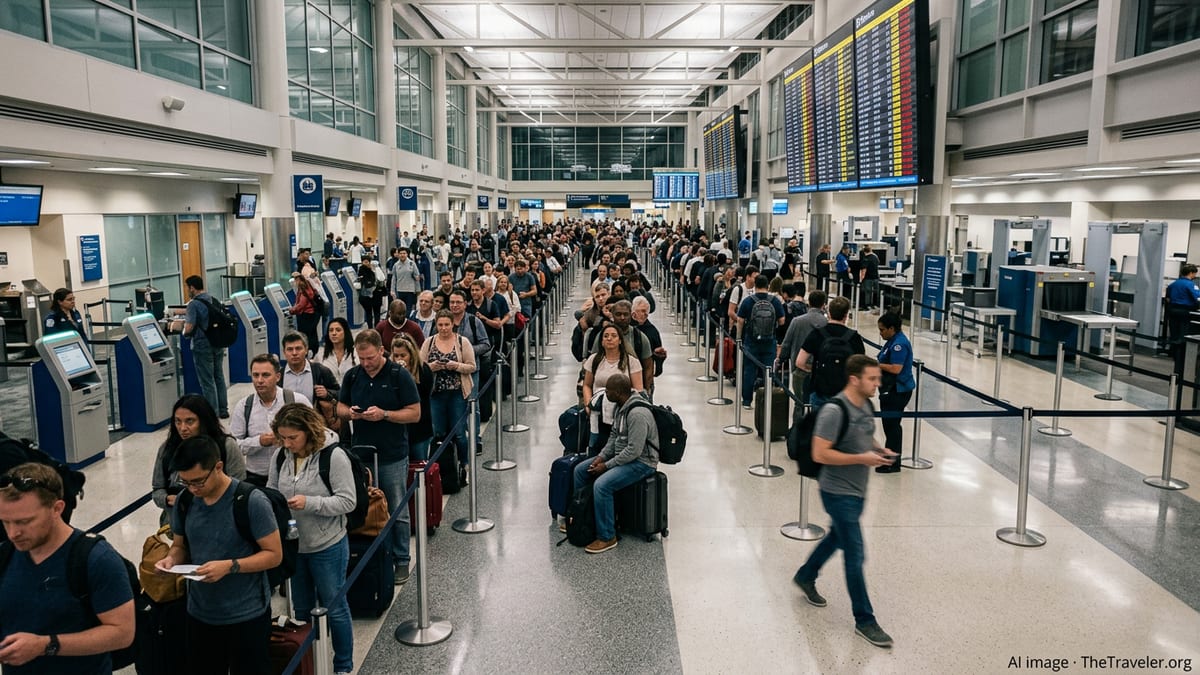
New delay policy aims to simplify compensation
Southern Cross is introducing a flat $50 voucher for passengers whose journeys are disrupted by qualifying delays, creating a simple headline benefit in an area often dominated by complex insurance clauses and varying carrier rules. Publicly available information indicates the voucher will be issued when delays meet a defined threshold, rather than requiring travelers to calculate partial refunds against their original fare or submit extensive claims paperwork.
The move places Southern Cross alongside a growing set of transport and insurance brands that are formalizing financial redress for disruption, ranging from cash payments to meal and hotel allowances. Similar schemes in rail and aviation have largely focused on refunds or partial fare credits, but a fixed-value voucher is designed to be easier for travelers to understand and to redeem on future bookings or related services.
While many existing policies hinge on trip-cancellation or missed-connection clauses, the new Southern Cross framework treats delay itself as a trigger for a modest but automatic benefit. Industry observers note that this can be particularly attractive for leisure travelers on shorter itineraries, where the cost of meals or ground transport during a delay can quickly rival the value of a low-cost ticket.
Details of how and when vouchers are issued are expected to be set out in updated terms and conditions, with an emphasis on clear definitions of covered events, minimum delay times and excluded causes such as extreme weather or air traffic control restrictions.
How the $50 voucher fits into wider disruption trends
The Southern Cross initiative emerges amid a broader shift toward codified disruption support, as travel providers respond to years of elevated cancellations and delays. Reports on train and airline policies across markets such as the United Kingdom and North America show that many operators now set out tiered compensation levels linked to delay length, sometimes starting at just 15 minutes, in an effort to restore confidence and reduce complaints.
Unlike tiered refund schemes that can require lengthy forms and supporting documents, a single-value voucher is positioned as a more predictable outcome for passengers. Travelers know in advance the approximate level of support they can expect if their itinerary is pushed back beyond the stated threshold, regardless of the original ticket price.
Analysts suggest such measures can also help providers manage operational risk and customer expectations. By clearly signaling what is and is not covered, companies can reduce ad hoc goodwill payments and deliver a more uniform response to disruption. The Southern Cross voucher, while limited in monetary terms, is likely to be marketed as a visible sign of accountability when services do not run as planned.
For travel insurers and booking intermediaries, the policy illustrates how ancillary benefits are increasingly used to differentiate products. Fixed cash-equivalent vouchers can be layered on top of more traditional coverage for accommodation, rebooking costs and lost baggage, providing a hybrid model of immediate relief and longer-term claims support.
Eligibility, exclusions and practical steps for travelers
Although full policy documents have yet to be widely circulated, standard industry practice suggests that travelers will need to meet several criteria to receive the $50 voucher. These typically include holding a valid booking on an affected service, experiencing a delay beyond a specified minimum period, and ensuring that the disruption is attributable to operational or technical causes within the provider’s control.
Travelers are usually required to retain boarding passes, booking confirmations and any delay notifications issued at the gate or via mobile apps. Such records can be important when submitting a claim or requesting a voucher, particularly where multiple carriers or connecting services are involved. According to published guidance from comparable schemes, claims are often subject to a time limit, with some programs requiring submissions within a matter of weeks after travel.
Exclusions are also expected to play a central role. Many delay policies do not cover disruptions linked to severe weather, security incidents or decisions by airport or rail authorities, which are categorized as outside the carrier’s direct control. In addition, if a traveler accepts alternative compensation such as a full fare refund or complimentary hotel stay, this may affect their eligibility for further benefits like the Southern Cross voucher.
Passengers planning to rely on the new policy are encouraged to check how the voucher interacts with separate travel insurance or credit card protections. In some cases, external insurers treat carrier-provided vouchers as partial mitigation, which can reduce the value of any additional payout for meals or accommodation during the delay.
What the change signals for future travel protections
The introduction of a standardized $50 delay voucher from Southern Cross highlights evolving expectations in the travel market, where passengers increasingly look for automatic, clearly defined remedies when journeys are disrupted. Consumer advocates have long argued that opaque policies and discretionary goodwill gestures leave travelers uncertain about their rights, particularly during peak seasons when customer service channels are stretched.
Market commentary indicates that structured benefits like vouchers are becoming a baseline expectation rather than a niche perk. As more travelers compare policies before booking, a tangible, easy-to-understand delay benefit can influence decisions between competing providers, especially on routes where schedules are prone to congestion or weather-related disruption.
The Southern Cross policy is also likely to add to pressure on other operators and insurers to refine their own offerings. Even relatively modest compensation can set a benchmark in competitive markets, prompting rivals to match or exceed the benefit level or to streamline their claims processes. Observers note that, over time, this kind of incremental change can contribute to a broader culture in which delay compensation is viewed as a routine element of service rather than an exception granted on a case-by-case basis.
As travel demand continues to recover and infrastructure remains under strain in many regions, the effectiveness of the Southern Cross voucher program will be watched closely. Its success will hinge not only on the financial value of the $50 payment, but also on how consistently it is applied and how easy it is for passengers to claim when their plans are unexpectedly put on hold.