


More news on this day
Global travelers heading to and from the United States will soon gain easier access to dozens of new city pairs as Southwest Airlines and Singapore Airlines roll out a fresh interline partnership that links the U.S. domestic giant’s network with the Southeast Asian carrier’s long-haul routes.
Get the latest news straight to your inbox!
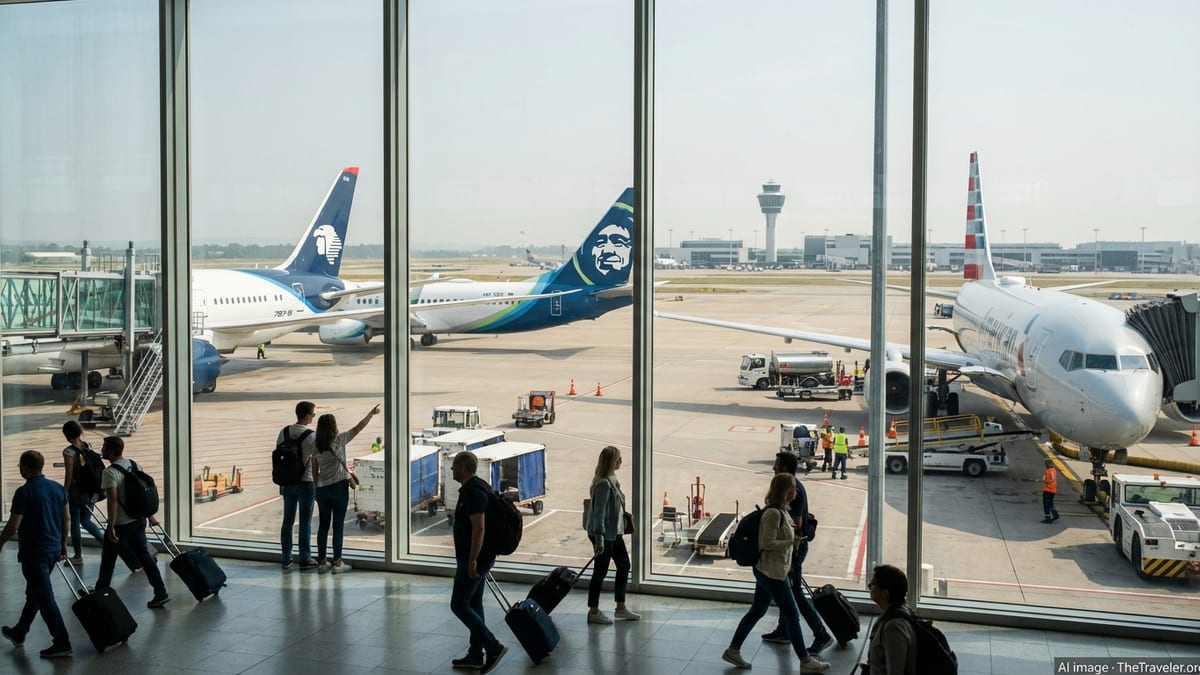
New Partnership Connects U.S. Heartland With Southeast Asia
According to publicly available company information released in early June, the interline agreement allows customers to book single-ticket itineraries that combine Singapore Airlines’ long-haul services with Southwest’s extensive domestic schedule. The arrangement is designed to make it simpler for international travelers to reach secondary and mid-sized U.S. destinations that are not typically served nonstop from Asia.
Singapore Airlines currently flies between its Singapore Changi hub and several major West Coast gateways, including Los Angeles, San Francisco and Seattle/Tacoma. Southwest also operates significant schedules at these airports, creating common points where passengers can connect between the two carriers on one itinerary rather than stitching together separate tickets.
Publicly available coverage of the deal indicates that tickets featuring the combined itineraries are being offered through Singapore Airlines’ usual sales channels, as well as through travel agents and online travel agencies. That structure places Singapore Airlines in the role of marketing carrier, while Southwest provides the U.S. domestic legs that distribute passengers across nearly 120 destinations in its network.
The move aligns with Singapore Airlines’ longstanding strategy of using partnerships to deepen access in key markets. With the United States ranking among its most important long-haul regions, tapping directly into a large domestic operator is expected to give the Asian carrier more reach without adding its own short-haul aircraft or crews.
Southwest Builds Out a Rapidly Growing Partnership Portfolio
The tie-up with Singapore Airlines is the latest in a series of international collaborations for Southwest, which for decades focused almost exclusively on point-to-point flying within the United States. Recent investor and corporate materials show that the Dallas-based carrier has been steadily constructing a portfolio of interline partners, including airlines based in Europe, Asia and the Middle East.
Industry reports note that Singapore Airlines becomes at least the eighth foreign carrier in Southwest’s partnership stable, joining names such as Icelandair, Turkish Airlines, Philippine Airlines, EVA Air and Condor. Separate announcements have also pointed to plans for interline connectivity with Taiwan’s China Airlines, indicating that Southwest is increasingly comfortable linking its domestic network with overseas long-haul specialists.
The current generation of agreements largely stop short of full codeshare arrangements. Instead, they focus on facilitating through-ticketing and coordinated schedules, allowing travelers to remain on a single booking and often a single reservation record when their trip spans multiple airlines. For Southwest, which built its brand on simplicity, this approach keeps operational control largely in-house while still capturing new flows of connecting traffic.
Analyst commentary highlighted in financial and aviation trade coverage suggests that these partnerships act as a lever for Southwest to tap international demand without committing to its own intercontinental fleet. By relying on partners’ long-haul aircraft while providing the domestic feed, Southwest can participate in global travel flows while staying focused on its core narrowbody operations.
How the Interline Deal Changes the Passenger Journey
For travelers, the practical impact of the new Southwest and Singapore Airlines collaboration is felt most clearly at booking and during connections in U.S. gateways. Single-ticket itineraries typically mean that a traveler’s full journey appears under one reservation, simplifying changes, irregular operations handling and, in many cases, minimum connection time planning between flights.
Travel industry guidance explains that interline tickets often allow carriers to coordinate schedules and check passengers through to their final destination, although the exact services can vary by agreement. Some observers note that baggage handling and through-check arrangements may remain limited for certain Southwest partnerships, so travelers are being encouraged to verify specific conditions at the time of purchase.
Even with variations in baggage or boarding processes, the ability to combine flights under one ticket can reduce the risk and complexity associated with self-connecting on separate reservations. If a long-haul sector into Los Angeles or San Francisco runs late, having the onward domestic leg on the same itinerary may improve rebooking options compared with completely independent tickets.
From a routing perspective, the link between Singapore Airlines and Southwest opens new two-stop combinations across the United States. Passengers arriving from Asia can now use major West Coast gateways as springboards to cities across the Midwest, South and Mountain West in a way that more closely resembles the connectivity provided by traditional alliance hubs.
Strategic Implications for U.S. and Asia-Pacific Aviation
Industry analysts view the interline agreement as part of a broader trend in which U.S. carriers outside the three large global alliance networks seek selective partnerships to remain competitive in long-haul markets. For Southwest, which has long stood apart from the alliance model, deepening ties with overseas airlines is seen as a way to attract higher-yield international traffic while maintaining its independent branding.
For Singapore Airlines, the tie-up comes as competition intensifies on transpacific routes, with North American and Asian rivals also pursuing connecting traffic strategies through hub banks in major coastal cities. Access to Southwest’s domestic footprint offers an additional selling point when courting corporate accounts and leisure travelers who value one-stop or two-stop journeys to smaller U.S. communities.
Observers note that, at a system level, the growing web of interline deals effectively broadens global travel access for passengers whose trips begin or end in the United States. Instead of being limited to cities served by alliance carriers, travelers gain more flexibility to mix and match long-haul and domestic operators while still benefiting from some of the protections and conveniences associated with traditional one-ticket itineraries.
The partnership also underscores how airlines are rethinking network design and commercial strategy in the wake of shifting demand patterns. Rather than investing heavily in new long-haul aircraft or launching their own transoceanic services, carriers like Southwest are opting to knit their networks together with those of established international airlines, creating a looser but still effective form of global connectivity.
What Travelers Should Watch in the Months Ahead
As the interline partnership between Southwest and Singapore Airlines beds in, travel experts anticipate that schedule coordination and booking options will continue to evolve. Itineraries may be refined as both airlines analyze demand patterns, identify strong connecting flows and adjust departure times to optimize transfer windows at shared gateways.
Publicly available information indicates that, for now, itineraries that pair Singapore Airlines and Southwest flights are primarily sold through Singapore Airlines and intermediary channels rather than through Southwest’s own website. Travelers accustomed to purchasing direct from Southwest may therefore encounter the partnership mainly when planning trips that originate outside the United States or when working with travel advisors.
Aviation observers will also be watching for any incremental changes in customer experience, such as potential enhancements to baggage handling, lounge access policies or disruption management for passengers holding joint itineraries. While the current focus is on basic interline connectivity, history in other markets suggests these arrangements can deepen over time if they prove commercially successful.
For now, the launch of the Southwest and Singapore Airlines partnership marks another step in the quiet expansion of cross-border connectivity centered on the United States. As more carriers adopt similar models, travelers may find that stitching together complex international journeys becomes progressively simpler, even when they are flying with airlines that operate outside traditional alliance structures.